Warehouse safety equipment is one of the broadest categories in industrial supply. The term encompasses everything from personal protective equipment for individual operators through to structural protection systems for entire facilities. The breadth makes it tempting to address each category in isolation: PPE managed by HR or operations, racking protection managed by warehousing, fire safety managed by facilities, and so on. Yet the most successful UK warehouse operators consistently demonstrate that integrated specification across the warehouse safety equipment portfolio produces stronger safety performance, better operational outcomes, and more efficient management than fragmented approaches.
This article takes the integrated view of warehouse safety equipment. It examines the major categories that contribute to a comprehensive warehouse safety equipment programme, the connections between them, and the specification approach that produces coherent outcomes. The Rack Armour range supplied by Hall-Fast Industrial Supplies receives particular attention as one of the most strategically important categories — protecting the structural foundation of the warehouse — but the wider portfolio is examined to support the integrated approach.
The Rack Armour range is available at the Rack Armour section. Hall-Fast's wider portfolio of warehouse safety equipment is available through the brands page, and discussion can be initiated through the Contact page.
Defining the Scope of Warehouse Safety Equipment
The scope of warehouse safety equipment is broad enough to require explicit definition. For the purposes of this article, the category includes all the specialist equipment whose primary purpose is reducing the risk of harm to people, stock or operations within the warehouse environment. The boundary excludes general operational equipment whose safety contribution is incidental to its primary function, while including some equipment whose safety role is part of broader operational utility.
Within this scope, several major categories emerge. Personal protective equipment (PPE) protects individual operators including high-visibility clothing, safety footwear, gloves, eye protection, hearing protection and respiratory protection. Structural protection equipment protects the warehouse fabric and its racking from impact damage including the Rack Armour range. Fire safety equipment addresses fire prevention, detection and response. Emergency response equipment supports response to incidents including first aid, spill response and evacuation. Electrical safety equipment addresses risks from electrical installations and equipment. Working-at-height equipment supports safe access to elevated work positions. Manual handling equipment reduces risks from lifting and moving stock. Visual aids and signage communicate hazards, procedures and operational arrangements. Vehicle and traffic management equipment manages forklift and pedestrian interactions.
Each of these categories has its own specifications, regulatory frameworks, supplier landscape and integration considerations. The integrated approach to warehouse safety equipment considers the categories together, recognising that they interact and reinforce each other within the warehouse environment.
Personal Protective Equipment: The Individual Layer
Personal protective equipment is the most familiar category of warehouse safety equipment to most workforce members. PPE worn by individual operators provides the final layer of protection against hazards that engineering and administrative controls have not eliminated. The PPE specification depends on the specific hazards identified in the risk assessment for the operation.
High-visibility clothing is essentially universal in warehouse environments. The specifications for hi-vis garments are governed by EN ISO 20471, with classes determined by the area of fluorescent material and reflective tape. Class 2 garments are appropriate for most warehouse environments; Class 3 may be required for higher-risk environments including those with vehicle traffic at higher speeds or in conditions of reduced visibility.
Safety footwear protects the feet from impact, compression, penetration and other hazards. The specifications are governed by EN ISO 20345, with category designations indicating specific protective features. The S3 specification is widely appropriate for warehouse work, providing toe protection, anti-penetration midsole, water resistance and energy-absorbing heel. Specific environments may warrant additional features.
Gloves protect the hands from cuts, abrasions, impacts and other risks. The specifications are governed by EN 388, with numerical designations indicating performance against abrasion, cut, tear and puncture. The appropriate specification depends on the specific hazards faced by operators in their actual work tasks.
Eye protection (governed by EN 166), hearing protection (EN 352), and respiratory protection (EN 149 and related standards) address specific hazards as identified by risk assessment. Not all warehouse environments require all categories of PPE, but most environments require some combination.
The PPE category interacts with other warehouse safety equipment categories in several ways. The visibility provided by hi-vis garments interacts with the visual environment created by floor markings, signage and the hi-vis finish of equipment such as Rack Armour units. The protection provided by PPE complements the engineering controls that reduce the underlying hazard exposure. The discipline of consistent PPE use forms part of the wider safety culture that supports all the safety equipment categories.
For Hall-Fast customers seeking integrated supply across the warehouse safety equipment portfolio, the brands page provides access to the broader product range that includes PPE alongside the Rack Armour foundation.
Structural Protection: The Foundation Layer
Structural protection equipment protects the physical fabric of the warehouse — the building structure, the racking system, and the fixed equipment — from damage that would otherwise compromise the safe operation of the facility. This category includes the Rack Armour range as its most strategically important element, alongside complementary protection categories.
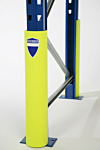
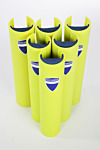
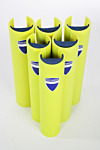
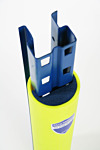
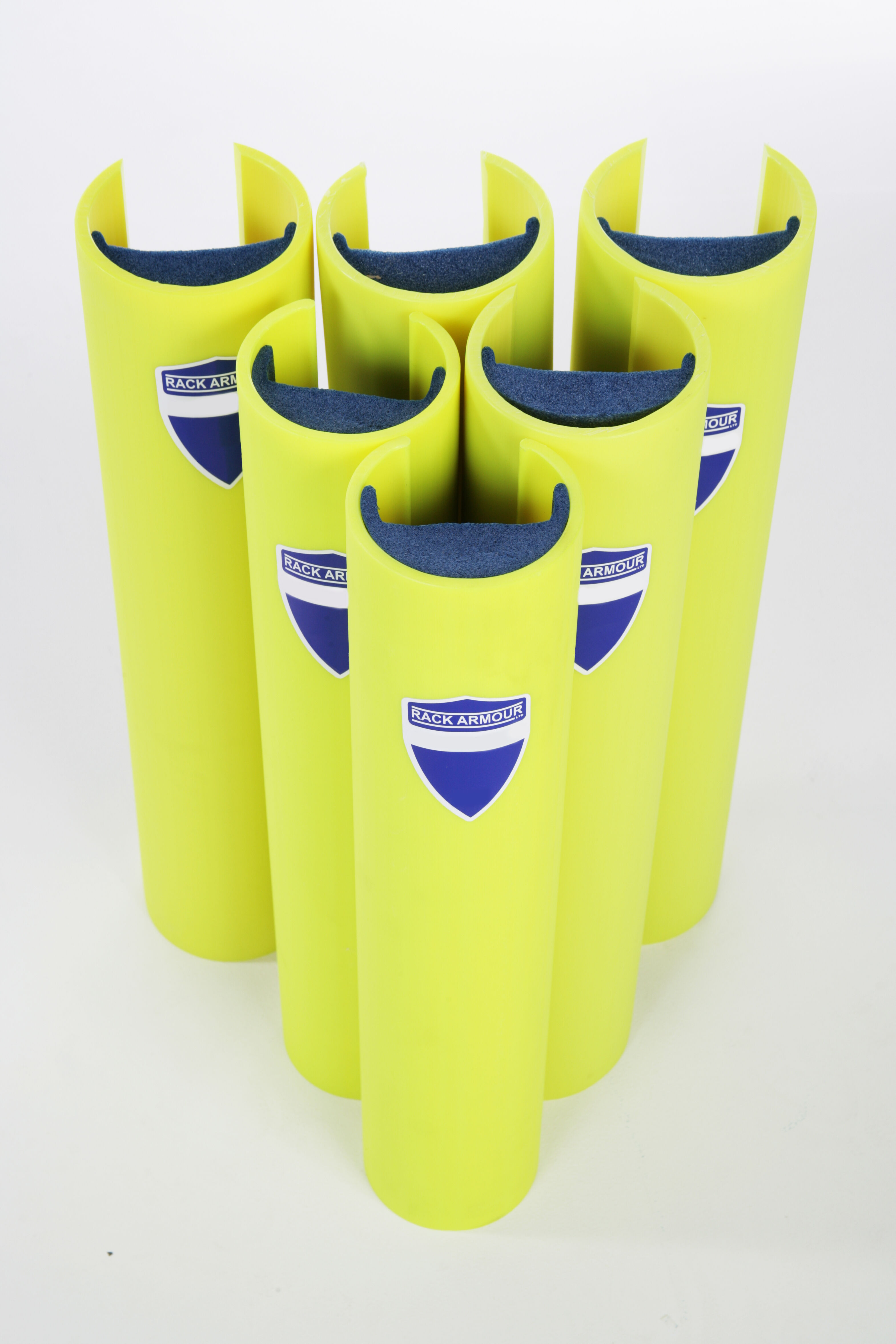
The Rack Armour range protects the lower section of pallet racking uprights from forklift impact. The full range covers upright sizes from small through XXL, in both hi-vis yellow and safety yellow finishes. The small hi-vis yellow suits lighter-duty applications. The medium hi-vis yellow and medium safety yellow cover typical pallet racking. The large hi-vis yellow and large safety yellow suit heavier-duty applications. The XL hi-vis yellow and XL safety yellow suit drive-in and high-bay applications. The XXL hi-vis yellow addresses the largest profiles. The small safety yellow completes the safety-yellow range.
The installation tools and larger installation tool support reliable in-house installation, ensuring correct tensioning of the strapped fixings.
Beyond upright protection, structural protection includes bollards (protecting fixed structures and equipment from forklift contact), barriers (separating zones and protecting specific assets), guards (around fixed equipment such as conveyors), and similar items. Each addresses specific protection requirements within the wider structural protection layer.
The category as a whole is foundational to warehouse safety because it protects the structural integrity of the facility. Failure of structural protection — leading to upright damage, building damage, or equipment damage — produces consequences that propagate through other safety domains. A bay collapse from inadequate upright protection becomes a fire risk from disrupted electrical infrastructure, a manual handling risk from displaced stock, and a personal safety risk from falling material. Comprehensive structural protection prevents these cascading consequences.
Fire Safety Equipment
Fire safety in warehouses is a substantial topic in its own right, governed by the Regulatory Reform (Fire Safety) Order 2005 and supported by guidance from the Fire Protection Association and similar bodies. Warehouse fire safety equipment includes fire detection systems (smoke detectors, heat detectors, flame detectors), fire suppression systems (sprinklers, gas suppression, manual extinguishers), fire compartmentation features (fire doors, fire walls, fire dampers), evacuation equipment (alarms, signage, emergency lighting), and fire-fighting equipment (extinguishers, hose reels, hydrants).
The fire safety category has connections to the structural protection category. Damaged racking can create fire risks through several mechanisms: collapsed stock can disrupt sprinkler coverage; damaged uprights can compromise compartmentation; falling material can create ignition sources or fuel accumulations. Comprehensive structural protection through the Rack Armour range supports fire safety by maintaining the structural integrity that fire safety arrangements depend on.
The fire safety category also has connections to evacuation and emergency response. The visual environment of the warehouse — including the hi-vis yellow finish of Rack Armour units — supports evacuation by providing visual reference points and orientation in conditions of reduced visibility. The clear aisles maintained through good housekeeping (which itself depends on the racking and protection arrangements supporting orderly storage) support rapid evacuation.
For Hall-Fast customers, the brands portfolio supports specification across complementary categories including fire safety equipment alongside the structural protection foundation provided by Rack Armour.
Emergency Response and First Aid Equipment
Emergency response equipment supports the operation when incidents occur despite the preventive measures across other equipment categories. The category includes first aid equipment (first aid kits, defibrillators, eyewash stations, emergency showers), spill response equipment (absorbents, containment, decontamination), and emergency communication equipment (radios, mobile devices, alarm systems).
The specification of emergency response equipment depends on the specific hazards present in the operation. Operations handling chemicals require specific spill response capability. Operations with high-energy equipment may warrant defibrillators on-site. Operations in remote locations may need more comprehensive on-site capability than urban operations with rapid emergency services access.
The integrated approach to warehouse safety equipment recognises that emergency response equipment complements rather than substitutes for preventive equipment. Comprehensive structural protection through the Rack Armour range reduces the frequency of incidents requiring emergency response; the emergency response capability addresses incidents that occur despite the preventive measures.
OUR PRICE PROMISE
OUR PRICE PROMISE!
We will not be beaten on price on any authentic Rack Armour product anywhere in the United Kingdom. If you find a better price on the internet or receive a quotation from any other supplier, please let us know and we will match it. From the integrated warehouse safety equipment perspective, this commitment ensures that the structural protection foundation — which supports all the other safety categories through maintaining warehouse integrity — is available at the most competitive purchase pricing.
Working-at-Height Equipment
Working-at-height equipment supports safe access to elevated positions in the warehouse. The category includes ladders (step ladders, extension ladders, fixed access ladders), mobile elevating work platforms (scissor lifts, boom lifts, mast lifts), order picker trucks (which combine forklift functionality with operator elevation), and fall protection equipment (harnesses, lanyards, anchorage points).
The working-at-height category is particularly important in warehouses with high-bay racking where regular access to upper levels is required for stock placement, retrieval and inspection. The Working at Height Regulations 2005 require employers to ensure work at height is properly planned, supervised and carried out by competent people using appropriate equipment.
The category interacts with the structural protection layer in several ways. Order picker trucks and similar elevating equipment operate near the racking, with potential for contact during manoeuvring. Comprehensive Rack Armour protection addresses contacts from this equipment alongside contacts from conventional forklifts. The visibility provided by hi-vis yellow protection supports the orientation of operators working at height, where their visual reference to the warehouse environment may be different from ground-level operators.
Manual Handling Equipment
Manual handling equipment reduces the physical demands of moving stock and equipment within the warehouse. The category includes pump trucks, electric pallet trucks, sack trucks, lifting trolleys, conveyors and other equipment that mechanises moves that would otherwise be performed manually.
The Manual Handling Operations Regulations 1992 require employers to avoid hazardous manual handling so far as reasonably practicable, and where it cannot be avoided, to assess the risks and reduce them. Mechanised handling equipment is the primary means of reducing manual handling exposure in most warehouse operations.
The category interacts with structural protection through the contact risks of mechanised equipment. Pump trucks and electric pallet trucks can contact racking uprights during manoeuvring; the Rack Armour range absorbs these contacts alongside the more substantial contacts from forklift trucks. The smaller Rack Armour sizes are particularly suited to areas of pump truck activity where the impact profile is different from forklift contact.
Visual Aids, Signage and Communication Equipment
The visual environment of the warehouse — including signage, floor markings, lighting and the colour conventions of equipment — forms a category of safety equipment in its own right. The visual environment communicates hazards, procedures, operational arrangements and emergency information to all parties present in the warehouse.
Signage includes mandatory signs (procedures that must be followed), prohibition signs (procedures that must not be followed), warning signs (hazards that must be noted), safe-condition signs (information about safe arrangements), and fire signs (emergency-related information). The specifications are governed by the Health and Safety (Safety Signs and Signals) Regulations 1996 and supporting standards.
Floor markings include aisle boundaries, pedestrian walkways, hazard zones, equipment positions and reference points. The colour conventions support consistent interpretation across the workforce and over time.
Lighting affects the visibility of all the visual cues and is itself a safety equipment consideration. Inadequate lighting compromises operator orientation, hazard recognition and emergency response. Modern LED lighting offers significant energy efficiency, light quality and lifetime cost advantages over older lighting technologies.
The hi-vis yellow finish of Rack Armour units is part of this visual environment, with the hi-vis range providing maximum visibility and the safety yellow alternatives providing a more traditional warehouse-yellow appearance.
Vehicle and Traffic Management Equipment
Vehicle and traffic management equipment manages the interactions between forklifts, other warehouse vehicles and pedestrians within the warehouse environment. The category includes pedestrian barriers, vehicle barriers, speed limiters, warning systems (lights, alarms, beacons), traffic lights and traffic-flow management.
The category interacts strongly with the structural protection layer. The aisle widths and traffic patterns shaped by traffic management equipment affect the contact risks that structural protection addresses. Comprehensive Rack Armour protection absorbs the contacts that arise within the traffic management framework.
For warehouses with substantial vehicle activity, integrated specification across traffic management and structural protection produces stronger overall outcomes than specification of either category in isolation.
The Integrated Specification Approach
The integrated specification approach to warehouse safety equipment considers the categories together, recognising the connections between them and the cumulative effect on overall safety performance.
The starting point is comprehensive risk assessment. The risks present in the specific operation are identified, assessed for likelihood and consequence, and prioritised. The risk assessment is the foundation of the specification — the equipment specified should address the identified risks rather than reflect generic specifications applied without reference to specific context.
The specification across categories should be coherent. Equipment in different categories should integrate aesthetically (consistent colour conventions), functionally (compatible mounting and fixing standards), and operationally (consistent maintenance regimes and lifecycle profiles). The Rack Armour range, with its hi-vis yellow or safety yellow finish, integrates with complementary equipment in the wider brands portfolio for the coherent specification approach.
The procurement should be coordinated. Single-supplier consolidation across as many categories as possible — through Hall-Fast — produces efficiency in ordering, invoicing, supply chain management and ongoing relationship. The Hall-Fast Price Promise ensures competitive purchase pricing on the foundation Rack Armour specification.
The implementation should be planned. The various categories may be installed at different stages — racking protection at racking installation, traffic management at layout finalisation, signage as part of operational commissioning. The integrated planning ensures that the categories support each other through the implementation period.
The ongoing management should be unified. Inspection regimes covering all the categories, maintenance schedules across the portfolio, replacement and renewal coordinated across categories — these unified approaches produce stronger management than fragmented category-by-category arrangements.
For operators developing or refining their integrated approach, conversation with Hall-Fast through the Contact page can address the specification across the portfolio and the supplier relationship that supports comprehensive supply.
Sector-Specific Variations
Different operational sectors have different specification emphasis across the warehouse safety equipment categories. Cold storage operations emphasise PPE for thermal protection alongside the structural protection appropriate to the heavy-duty racking typically used. Pharmaceutical operations emphasise documentation, demonstrable arrangements and the orderly visual environment. Chemical operations emphasise emergency response capability for hazardous material incidents. Retail and e-commerce operations emphasise comprehensive coverage supporting high-throughput environments. General manufacturing emphasises balanced specification appropriate to the specific manufacturing context.
For each sector, the integrated specification across categories — anchored by comprehensive Rack Armour upright protection — supports the sector-specific safety requirements. Conversation through the Contact page can address sector-specific specification across the portfolio.
Workforce Considerations: Equipment for People
A specific dimension of warehouse safety equipment worth examining is the workforce experience of the equipment programme. The equipment is ultimately for people — operators, supervisors, managers, visitors — and the workforce experience shapes the effectiveness of the programme.
Equipment that workers find uncomfortable, awkward or impractical tends to be circumvented over time. PPE that fits poorly is left off. Procedures that take too long are shortcut. Equipment that gets in the way is moved or removed. The most successful programmes specify equipment that workers find genuinely useful and supportive rather than burdensome.
The Rack Armour range exemplifies this principle. The polymer construction is forgiving to forklift contact (less damaging to forklifts than steel alternatives), so operators do not need to fear contact in the way they might with bolt-down steel guards. The hi-vis yellow visibility supports operator orientation rather than complicating it. The unobtrusive installation does not interfere with forklift access to the racking. The result is equipment that operators experience as supportive rather than burdensome.
For operators considering the workforce dimension of their specification choices, the Rack Armour range and the wider brands portfolio emphasise specifications that support workforce engagement rather than producing burdensome compliance requirements. The conversation through the Contact page can address the workforce considerations alongside the technical specification.
Documentation, Compliance and Audit
Warehouse safety equipment programmes require documentation that supports compliance, audit and ongoing management. The documentation requirements span the categories, with specific requirements for each category but a common need for integrated record-keeping.
Procurement records document what was specified, when it was supplied, by which supplier and at what cost. These records support audit and procurement governance, and provide the foundation for ongoing replacement and renewal planning.
Installation records document when equipment was installed, by whom, and any specific arrangements. These records support traceability and form the foundation for ongoing maintenance.
Inspection records document the ongoing assessment of equipment condition. The inspection regimes covering different categories may be integrated into a single warehouse inspection regime or maintained as separate category-specific regimes; either approach can work, but consistency over time is important.
Maintenance records document the ongoing care of the equipment, including replacement of consumables, repair of damaged items, and renewal as units reach end of operational life.
Training records document the workforce competencies in respect of the equipment, including initial training and ongoing refresher arrangements.
Incident records document events that involve the equipment, including damage absorbed by structural protection, near-misses, and any actual incidents requiring response.
The integrated documentation approach ties these record categories together for unified management. Hall-Fast can support the documentation function through providing the supplier-side records that complement the customer's records. The Contact page is the route to discussing documentation requirements alongside the technical specification.
Working with Hall-Fast: The Integrated Supplier Relationship
Hall-Fast Industrial Supplies provides the integrated supplier relationship that supports comprehensive warehouse safety equipment programmes. The decades of experience supplying UK warehousing, summarised at the About page, include extensive familiarity with the integrated specification approach.
The Rack Armour range provides the foundation of the structural protection category. The wider brands portfolio supports specification across complementary categories including PPE, fire safety, emergency response, manual handling, working at height, traffic management and visual aids.
The supplier relationship supports several specific functions for the integrated approach. Initial specification advice across the portfolio. Coordinated supply that simplifies procurement and ensures consistent commercial terms. Ongoing replenishment for replacement and expansion across all categories. Continuous engagement on specification updates, new product availability, and emerging best practice. Documentation support that integrates with the customer's records. Coordination across the operational lifetime that supports the long-term management of the warehouse safety equipment programme.
The Contact page is the route to these conversations. Many of Hall-Fast's most successful customer relationships extend across the portfolio rather than focusing on any single category, supporting the integrated approach that produces strongest outcomes.
Frequently Asked Questions
Where do I start with an integrated programme? The recommended starting point is comprehensive risk assessment, followed by specification of the foundation categories — structural protection (anchored by Rack Armour upright protection) and PPE — with subsequent categories specified as the foundation programmes mature.
How do I justify the integrated investment? The integrated case combines safety performance, regulatory compliance, insurance economics, operational reliability and workforce engagement. Hall-Fast can support specific business case development through the Contact page.
Can Hall-Fast support multi-site programmes? Yes — many of Hall-Fast's customer relationships span multiple sites within larger operators' portfolios. The integrated supplier relationship supports portfolio-level specification and supply arrangements.
How does the integrated approach work for smaller operations? Smaller operations actually benefit particularly from integrated supplier relationships because the management overhead of multiple supplier relationships can be disproportionate to the operational scale. Hall-Fast's approach supports smaller operations effectively alongside larger ones.
What about emerging categories I haven't seen here? New categories of warehouse safety equipment continue to emerge as technology evolves. Hall-Fast stays current with developments through ongoing industry engagement; conversation through the Contact page is the route to discussing emerging specification options.
Lifecycle Management Across the Equipment Portfolio
The lifecycle management of warehouse safety equipment requires coordinated thinking across the categories. Different categories have different lifecycle profiles, and the integrated approach manages these profiles together rather than addressing each in isolation.
PPE typically has the shortest lifecycle. Disposable items such as eye protection and respiratory protection may be replaced at every shift. Reusable items such as hi-vis garments, footwear and gloves typically last months to a year or two before replacement is needed. Hearing protection and similar items have intermediate lifecycles depending on use intensity. The PPE category requires ongoing replenishment and lifecycle management more intensive than other categories.
Structural protection equipment such as the Rack Armour range typically has the longest lifecycle. The polymer construction supports operational lives commonly extending to a decade or more without typical replacement need. The lifecycle management focus is on inspection (confirming continued serviceability), occasional replacement (where damage indicates end-of-life for specific units), and periodic specification review (against current operational reality and any developments in the product range).
Fire safety equipment has a mixed lifecycle profile. Detection systems and suppression systems typically operate for years with periodic testing, recharge or service. Extinguishers require annual servicing and periodic replacement. Fire doors and compartmentation features last for decades subject to maintenance. The integrated lifecycle management coordinates these various profiles within the wider safety management system.
Emergency response equipment lifecycles depend on the specific items. First aid supplies require periodic replenishment. Defibrillators have multi-year lifecycles with periodic battery and pad replacement. Spill response equipment depends on the consumables involved. The integrated approach manages the emergency response lifecycle alongside the wider portfolio.
Working at height equipment has lifecycles depending on equipment type. Ladders and steps may last for years with periodic inspection. Mobile elevating work platforms typically have multi-year lifecycles with periodic service. Fall protection equipment has specific replacement requirements after use or after expiry of certification.
Manual handling equipment lifecycles depend on equipment type, use intensity and operating conditions. Pump trucks typically last years; electric trucks have multi-year lifecycles with battery replacement and periodic service.
The integrated lifecycle management brings these various profiles into a coherent management framework. Hall-Fast's role through the Contact page supports the lifecycle management by providing reliable replenishment supply, consistent specification advice, and coordinated supplier engagement across the categories.
Training and Competence Development
The workforce competencies required to use warehouse safety equipment effectively are themselves a specification consideration. Equipment that requires substantial training to use correctly differs in its operational implications from equipment that is intuitive in use. The training and competence development programme should be considered alongside the equipment specification.
PPE generally requires modest training — most workers can use basic PPE correctly with brief familiarisation. More specialist PPE (respiratory protection requiring fit testing, hearing protection requiring task-specific selection) may require more substantial training. The integrated approach considers training needs alongside the PPE specification.
Structural protection equipment such as Rack Armour requires specific competence for installation but not for ongoing operational use. Workers operating in protected zones need awareness of the protection arrangements but not specific operational competence beyond their normal forklift training. The installation competence is typically maintained by maintenance teams or specific designated installers.
Fire safety equipment competence varies. Operating manual extinguishers requires specific training (and confidence under stress). Fire wardens require training in evacuation procedures. Specialist suppression systems may require trained operators or remain under engineered control without operator intervention.
Emergency response equipment competence includes first aid certification, defibrillator awareness, spill response training and similar specialist competencies as appropriate to the operation.
Working at height equipment requires substantial competence. The Working at Height Regulations require competent persons for any work at height, with specific training for specific equipment types.
Manual handling equipment competence includes the formal training required for forklift operation (typically attaining certification recognised across the UK industry) alongside the broader manual handling competencies that workers develop through experience.
The integrated training and competence programme considers these requirements together, identifying the cumulative competence development needed by different roles. Hall-Fast can support training coordination through the Contact page, drawing on the experience of supplying many UK warehouse operations.
Adapting to Operational Change
Warehouse operations rarely remain static. Layout changes, throughput growth, product mix evolution, workforce changes, automation introduction — all produce ongoing change in the operational environment. The integrated warehouse safety equipment programme needs to adapt to these changes rather than remaining static.
Layout changes typically affect traffic patterns, racking configuration, and operational flow. The structural protection programme — anchored by Rack Armour upright protection — needs to follow the racking through any reconfiguration. The strapped fixing system of Rack Armour supports this adaptability without leaving fixing-point damage that would constrain layout options.
Throughput growth typically increases the operational stresses on the safety system. Higher forklift activity, more pallet movements, busier picking zones — all increase the contact frequency that protection equipment addresses. Comprehensive premium specification provides margin for throughput growth without immediate need for protection upgrade.
Product mix evolution may change the specific risk profile. New product types may have different handling characteristics, different storage requirements, or different consequences from damage events. The protection programme may need to evolve in response.
Workforce changes — including the introduction of new operators, agency staff, or different shift patterns — affect the operational risk profile. Comprehensive protection that supports new operators during their familiarisation period continues to deliver value through workforce transitions.
Automation introduction is an increasingly common operational change. Robotic shuttles, automated guided vehicles, and similar equipment introduce new contact patterns and new interactions with the racking system. The protection programme may need to adapt to address these new patterns.
For operators navigating ongoing operational change, the integrated supplier relationship with Hall-Fast through the Contact page supports the adaptive specification that change requires. The continuity of supply across product families — including the comprehensive Rack Armour range — supports specification consistency through change.
Sustainability Considerations Across Equipment Categories
Sustainability has become a meaningful procurement consideration across most UK organisations, with implications for warehouse safety equipment specification alongside the more traditional cost, quality and delivery factors. The sustainability dimension varies across the categories but supports consistent themes that the integrated approach can address coherently.
The structural protection foundation provided by Rack Armour performs well on sustainability dimensions through extended operational life, material efficiency, and recyclable end-of-life characteristics. The decade-or-more typical operational life amortises the manufacturing and distribution footprint across many years of service, producing favourable per-year-of-service environmental performance compared with shorter-lived alternatives.
PPE sustainability is a more challenging area because of the higher replacement frequency and the diverse material composition of typical PPE items. Reusable PPE specifications, where operationally appropriate, support better sustainability than disposable alternatives. The integrated supply relationship with Hall-Fast through the Contact page can address sustainability considerations alongside operational specification.
Fire safety equipment sustainability has its own dimensions including the materials used in extinguisher contents (some have favourable environmental profiles than others), the lifecycle of detection and suppression systems, and the disposal arrangements for end-of-life equipment.
The visual environment — signage, floor markings, lighting — has sustainability implications through energy consumption (particularly relevant for lighting), durability of the marking and signage materials, and the chemical composition of paint and coating materials.
The integrated sustainability approach across categories produces stronger outcomes than category-by-category consideration. The supplier relationship with Hall-Fast across the brands portfolio supports consistent sustainability thinking through the procurement process.
Closing Thoughts
Warehouse safety equipment is a comprehensive category that rewards comprehensive integrated specification. The categories examined in this article — PPE, structural protection, fire safety, emergency response, working at height, manual handling, visual aids, traffic management — work together to produce safety performance that exceeds what any individual category could achieve alone. The integrated approach supported by an integrated supplier relationship produces the strongest outcomes.
The Rack Armour range from Hall-Fast Industrial Supplies provides the foundation of structural protection — the category that protects the warehouse fabric and racking that all the other categories depend on. The full range is available at the Rack Armour section. The installation tools and larger installation tool support reliable implementation. The wider brands portfolio covers complementary categories for the integrated specification approach.
To take the next step on your warehouse safety equipment programme, visit the Contact page for specification advice, integrated procurement support, or quotation across multiple categories. Background information about Hall-Fast is available at the About page.
The integrated investment in warehouse safety equipment delivers compounding benefits across the operational lifetime of the warehouse: lower incident rates, better regulatory positioning, favourable insurance economics, stronger workforce engagement and the operational reliability that supports business performance. Make this investment with confidence, with the integrated approach that produces strongest outcomes, and with a supplier relationship that brings depth of experience and breadth of supply to the partnership.
A Final Note on Strategic Coherence
The integrated approach succeeds when the specification across categories reflects coherent strategic thinking rather than ad-hoc decisions over time. Operations that develop a clear strategic framework for warehouse safety equipment — with stated principles, standard specifications and coordinated supply arrangements — typically produce stronger outcomes than operations that procure reactively as individual needs arise.
The strategic coherence supports several specific benefits. Procurement efficiency through standardisation and consolidated supply. Operational consistency across sites and over time. Cultural reinforcement through visible coherent investment in safety. Audit readiness through systematic documentation. Continuous improvement through coordinated review across categories.
For operators developing strategic coherence in their warehouse safety equipment approach, Hall-Fast offers the supplier relationship that supports the strategic thinking. The Rack Armour foundation, the wider brands portfolio, and the engagement through the Contact page all contribute to the strategic capability that compounds value across years of operational warehousing.