Racking safety equipment is the collective term for the specialist devices designed to protect pallet racking systems, the people who work near them, and the operations that depend on them. The category encompasses a surprising variety of distinct products, each addressing specific risks within the broader pallet racking environment. Understanding the categories — what they do, when they apply, how they relate to each other — is the foundation of designing a coherent racking safety equipment programme.
This article provides a comprehensive guide to the racking safety equipment categories used in UK warehousing. It examines each category, the specific risks it addresses, the typical specification choices, and the role it plays within the integrated safety system. The Rack Armour range supplied by Hall-Fast Industrial Supplies receives particular attention as one of the most strategically valuable categories, but the wider equipment family is examined to support comprehensive specification rather than fragmented purchasing.
The Rack Armour range is available at the Rack Armour section. Hall-Fast's wider portfolio of warehouse safety equipment is available through the brands page, and discussion can be initiated through the Contact page.
The Scope of Racking Safety Equipment
Racking safety equipment as a category includes all the specialist devices designed to mitigate risks specifically associated with pallet racking systems. The boundary is sometimes drawn loosely — some discussions include broader warehouse safety equipment that interacts with racking environments — but the focused definition that suits this article includes equipment whose primary purpose is racking-related risk mitigation.
Within this focused definition, several distinct categories emerge. Upright protectors and column guards (such as Rack Armour) protect the structural uprights from impact damage. Beam protectors and end guards address risks at the end of rack runs and in transit zones. Anti-collapse mesh and rear cladding prevent stock from falling out of racking. Pallet stops, pallet barriers and load retainers prevent pallets from being pushed through to the back of racking. Aisle protection equipment including barriers, guards and bollards manages the interface between forklift activity and racking. Floor markings, signage and visual aids communicate the operational arrangements. Inspection equipment supports the assessment regimes that maintain ongoing safety performance.
Each of these categories has its own specification choices, supplier landscape, and integration considerations. The most successful racking safety equipment programmes consider the categories together rather than individually, recognising that the categories interact and complement each other rather than substituting for each other.
Upright Protectors: The Front Line
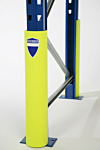
Upright protectors are the most visible and widely-used category of racking safety equipment in UK warehousing. They fit to the lower section of pallet racking uprights — the columns or posts that bear the weight of stored goods — and absorb the impact of forklift contact, pump truck collisions and other incidents that would otherwise damage the upright itself.
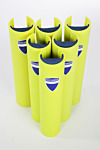
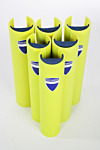
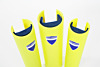
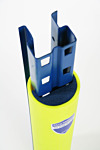
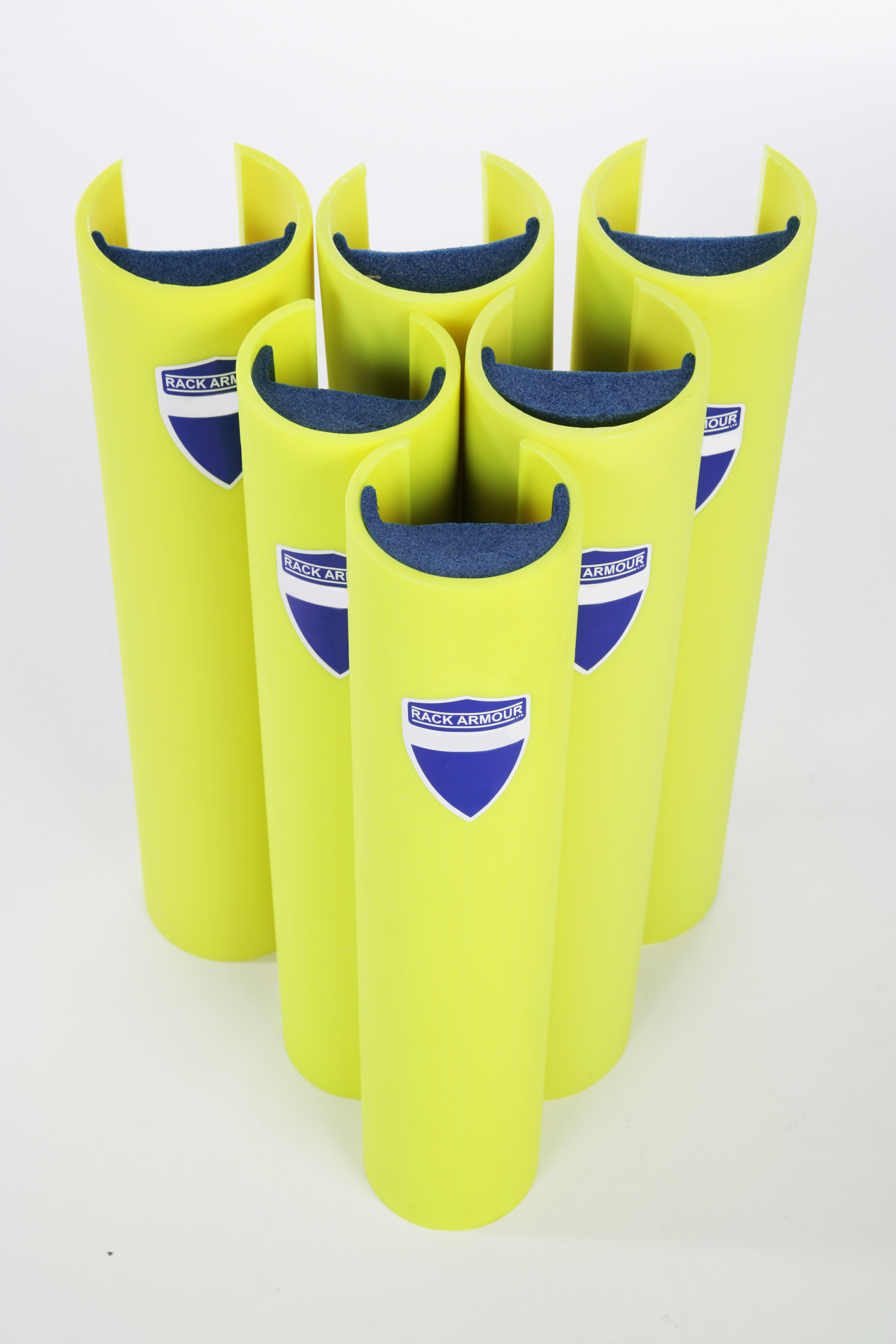
The Rack Armour range is the leading premium specification in this category. The polymer construction absorbs impact through controlled deformation, returning to original shape after impact and continuing to provide protection through repeated impact events. The strapped fixing system requires no concrete drilling and produces no floor damage. The hi-vis yellow finish supports operator orientation in the warehouse environment.
The range covers all common upright sizes found in UK warehousing. The small hi-vis yellow and small safety yellow suit lighter-duty shelving and small-section racking. The medium hi-vis yellow and medium safety yellow suit typical pallet racking. The large hi-vis yellow and large safety yellow suit heavier-duty pallet racking. The XL hi-vis yellow and XL safety yellow suit drive-in and high-bay applications. The XXL hi-vis yellow addresses the largest profiles in modern heavy-duty installations.
The installation tools and larger tool are essential equipment for in-house installation, ensuring correct tensioning of the strapped fixings for reliable long-term performance.
Upright protectors are typically the highest-value category within racking safety equipment because they address the most frequent risk (forklift contact with uprights) at the most critical location (the load-bearing upright structure). Comprehensive coverage of trafficked uprights is the recommended specification approach for nearly every UK warehouse.
Beam Protectors and End Guards
Beam protectors fit to the horizontal beams of pallet racking, addressing the risk of pallet contact during placement and retrieval. The risk profile differs from upright protection: beam contact typically affects the structural beams rather than the load-bearing uprights, with somewhat different consequences. Beam protection is less universally specified than upright protection but is valuable in specific operational contexts including operations with less experienced operators, narrow-aisle applications, or particularly demanding throughput conditions.
End guards protect the ends of rack runs — the vertical structures at the ends of aisles where forklift turning movements bring trucks close to the racking. The end-of-aisle position is one of the higher-risk locations in any warehouse because of the geometry of forklift manoeuvring. End guards may take various forms including reinforced upright protectors, dedicated end frames, or barrier systems designed specifically for the end-of-aisle position.
For most operations, the upright protection programme covers the end-of-aisle uprights with the same Rack Armour specification used elsewhere, often with additional protection or larger specifications at the end positions specifically. The choice depends on the specific risk profile of the operation. Discussion through the Contact page can address the appropriate specification for end-of-aisle positions in specific operations.
Anti-Collapse Mesh and Rear Cladding
Anti-collapse mesh and rear cladding address the risk of stock falling out of pallet racking — either from the back of single-sided racking or from above where stock might shift in transit. The risk is particularly significant in operations with mixed pallet types, irregular loads, or operational practices that produce occasional load instability.
Anti-collapse mesh is typically a steel mesh attached to the rear of single-sided racking, preventing stock from falling out of the back of the rack into pedestrian areas or aisles behind. The mesh is sized to retain typical loads while allowing visibility through the rack for inventory and inspection purposes.
Rear cladding refers to solid panels (typically steel) attached to the rear of racking for similar protective purposes. The choice between mesh and cladding depends on visibility requirements, load characteristics, and aesthetic preferences.
Both anti-collapse mesh and rear cladding are typically specified at racking installation rather than retrofit, though retrofit installation is possible. They address risks that are operationally specific rather than universal, and the specification depends on the assessment of fall-risk in the specific operational context.
Pallet Stops, Pallet Barriers and Load Retainers
Pallet stops and pallet barriers prevent pallets from being pushed through to the back of pallet racking — a risk particularly relevant in pick-from-pallet operations where operators may inadvertently push pallets too far during placement. Pallets pushed through to the back can fall, contact rear cladding, or interact with adjacent racking in undesirable ways.
Pallet stops typically take the form of bars or stops fitted at the back position of each pallet location, providing a physical limit to how far the pallet can be pushed. The specification varies with the racking design and the operational characteristics.
Load retainers (sometimes called pallet protectors in this specific context) address the risk of loads shifting forward and falling from the front of pallet racking. They take various forms from simple bars at the front of pallet locations to more sophisticated retention systems for specific operational contexts.
For most operations with comprehensive upright protection from the Rack Armour range, pallet stops and load retainers are specified additionally where the operational context warrants. The combination of upright protection, pallet stops and load retainers produces a layered approach to load and stock management within the racking system.
Aisle Protection: Barriers, Guards and Bollards
Aisle protection equipment manages the interface between forklift activity and the wider warehouse environment. The category includes pedestrian barriers, machine guards around fixed equipment, bollards protecting structural columns and other features, and aisle markings that organise traffic flow.
Pedestrian barriers separate pedestrian walkways from forklift operating zones. The barriers may be temporary (for specific operational periods) or permanent (for routinely-segregated areas). The specifications include impact resistance to absorb forklift contact, height to provide visible separation, and connectivity for continuous coverage.
Machine guards protect fixed equipment such as conveyors, sortation systems and packing stations from forklift contact. The specification depends on the value and vulnerability of the equipment being protected.
Bollards protect specific features — building structural columns, dock door frames, fire equipment, building services connections — from forklift contact. The specification depends on the protection requirement of the specific feature and the access requirements that must be maintained.
Aisle markings organise traffic flow through visual cues. Floor paint, marker tape and signage all contribute to the visual environment that supports correct operator behaviour. The visual environment integrates with the physical protection equipment to produce the overall safety system.
Floor Markings, Signage and Visual Aids
The visual environment of the warehouse — the markings, signs, lighting and visual cues that support orientation and behaviour — is a category of safety equipment in its own right. While not always classified under "racking safety equipment" specifically, the visual environment interacts directly with the racking and the protection equipment in ways that affect overall safety performance.
Floor markings include aisle boundaries, pedestrian walkways, hazard zones, and reference points that support correct positioning. The marking specifications include colour conventions, durability, visibility under various lighting conditions, and conformity to relevant safety standards.
Signage includes directional signs, hazard warnings, capacity indicators (particularly important on racking), and instruction signs at specific locations. The signage on racking specifically — including pallet weight limits, beam capacity ratings, and aisle identification — is part of the racking safety equipment family in the broadest sense.
Visual aids extend to the colour conventions used for protection equipment itself. The hi-vis yellow finish of Rack Armour units is part of this visual environment, communicating the presence of protection in ways that operators absorb daily. The choice between hi-vis and safety yellow variants — including the hi-vis and safety yellow medium options — affects the overall visual signature of the warehouse.
OUR PRICE PROMISE
OUR PRICE PROMISE!
We will not be beaten on price on any authentic Rack Armour product anywhere in the United Kingdom. If you find a better price on the internet or receive a quotation from any other supplier, please let us know and we will match it. This commitment supports the comprehensive specification of premium racking safety equipment by removing purchase-cost objection from the procurement decision and supporting the integrated approach to safety equipment specification.
Inspection Equipment
The inspection regime that maintains ongoing racking safety depends on appropriate equipment for the inspection task. The category includes basic items — torches, measuring tapes, inspection mirrors — and more specialist equipment for specific inspection tasks.
Torches and lighting equipment support inspection in the often poorly-lit interior of high-bay racking, particularly important for inspections of the back of racking or upper levels. Measuring tapes support assessment of damage geometry where deflection or deformation is observed. Inspection mirrors allow visual access to areas not directly visible. Camera equipment may be used for documentation of inspection findings.
For specialist inspection tasks — such as deflection measurement against SEMA criteria — more specialist equipment may be appropriate. Some operations engage external SEMA-approved inspectors who bring their own equipment for the annual professional inspection.
The inspection equipment is the specification dimension of the inspection regime that complements the cultural and procedural elements covered in companion articles.
How the Categories Integrate
The comprehensive view of racking safety equipment recognises that the categories work together rather than independently. A coherent specification considers the whole system rather than the individual elements.
Upright protectors (such as Rack Armour) form the foundation of impact mitigation, addressing the most frequent and most consequential risk. Comprehensive coverage of trafficked uprights produces the strongest foundation.
Beam protection and end-of-aisle protection address specific risks beyond the upright base — specifically the higher-risk geometry at end positions and the beam-level risks during pallet handling.
Anti-collapse mesh and rear cladding address the consequences of incidents that the impact mitigation has not prevented — keeping stock contained even if some load instability occurs.
Pallet stops, pallet barriers and load retainers address operational risks within the racking — keeping pallets in their correct positions during normal operation.
Aisle protection extends the safety system beyond the racking itself to the wider operational environment, recognising that risks at the interfaces matter as much as risks in the core racking zones.
Floor markings, signage and visual aids tie the whole system together by communicating the operational arrangements to all parties — operators, visitors, contractors — in ways that support correct behaviour.
Inspection equipment supports the ongoing maintenance of the system, ensuring that the elements continue to function effectively over time.
The integration of these categories produces a system whose total effectiveness exceeds the sum of the parts. Operations that specify across the categories tend to outperform operations that focus on individual categories in isolation.
Specifying Across Categories: The Procurement Approach
Procurement of racking safety equipment is most effective when approached as an integrated programme rather than a series of disconnected purchases. Several specific considerations support the integrated approach.
Site survey across all categories identifies the comprehensive specification need. A survey focused only on upright protection misses the beam-level, aisle-level and visual considerations that contribute to the overall system. A comprehensive survey produces a specification document that addresses the warehouse as a system.
Supplier selection benefits from considering the full range. Suppliers who specialise in single categories may produce excellent specifications within their category but cannot support the integration. Suppliers who offer the full range — such as Hall-Fast through the brands portfolio — support the integrated specification and the consistent commercial relationship across the programme.
Implementation sequencing benefits from coordination across categories. Different categories may be installed at different stages — some during racking installation, some as retrofit programmes, some as ongoing operational additions. The sequencing should be planned to support the operational schedule and the cumulative development of the safety system.
Documentation and management benefits from integrated record-keeping. The records of upright protectors, beam protection, aisle equipment, signage and other categories form a comprehensive picture of the safety system. Integrated records support inspection, audit and continuous improvement across the categories.
Hall-Fast's role in integrated procurement includes supply across the Rack Armour range as the foundation, complemented by the wider brands portfolio that supports specification across complementary categories. The Contact page is the route to integrated procurement conversations.
Sector-Specific Specification Considerations
Different operational sectors have different specification emphasis across the racking safety equipment categories. A brief sector-by-sector review illustrates the variation.
Cold storage and frozen food typically emphasises comprehensive premium upright protection (heavier-duty profiles, hi-vis yellow finish for visibility in challenging lighting), with attention to materials performance at sub-zero temperatures. Specification includes Rack Armour XL or XXL hi-vis yellow for primary trafficked uprights, supplementary protection at end-of-aisle positions, and visual aids supporting orientation in low-visibility conditions.
Pharmaceuticals and medical devices typically emphasises documented specification, demonstrable inspection regimes, and the visible orderly environment expected by regulators. Specification includes Rack Armour medium or large hi-vis yellow for typical applications, with strong supporting documentation and inspection arrangements.
Chemicals and hazardous materials typically emphasises premium specification across all categories, with particular attention to consequences of damage events. Specification supports the demonstrable best-practice approach that regulatory and insurance interests expect.
Third-party logistics typically emphasises comprehensive demonstrable safety arrangements that support client confidence and contractual positioning. Specification across the full range supports the audit-ready evidence of professional warehouse operation.
Retail and e-commerce fulfilment typically emphasises comprehensive coverage with strong visual environment, supporting the high-throughput operations and large workforce typical of the sector. The full range from small to larger sizes covers the diverse racking types typically present.
General manufacturing typically emphasises a balanced specification across categories appropriate to the specific manufacturing context, with adjustments for the particular materials being stored and the production-line dependencies on warehouse stock.
For each of these sectors, conversation with Hall-Fast through the Contact page can address sector-specific specification.
Working with Hall-Fast: An Integrated Supply Relationship
Hall-Fast Industrial Supplies provides the integrated supplier relationship that supports comprehensive racking safety equipment programmes. The decades of experience supplying UK warehousing, summarised at the About page, include extensive experience across all the categories examined in this article.
The Rack Armour range provides the foundation of the upright protection category. The comprehensive product family covers the upright sizes used across UK warehousing. The installation tools and larger tool support reliable installation. The hi-vis yellow and safety yellow variants support different visual environments.
The wider brands portfolio supports specification across complementary categories. The Hall-Fast Price Promise ensures competitive purchase pricing on authentic Rack Armour products. The supplier relationship through the Contact page supports continuous engagement on specification, supply and continuous improvement across the operational lifetime of the protection programme.
For operations seeking to develop or strengthen integrated racking safety equipment programmes, Hall-Fast offers the depth of experience and the breadth of supply that support comprehensive specification. Many of Hall-Fast's most successful customer relationships have evolved into long-term partnerships that span multiple equipment categories and multiple sites within the customer's portfolio.
Implementation Strategy: From Survey to Operational Programme
Translating the integrated approach to operational programme involves several stages. Site survey across all categories identifies the comprehensive specification need. Specification development translates the survey findings into a detailed equipment list with sizes, quantities and locations. Procurement coordinates the supply across categories, applying the Hall-Fast Price Promise and confirming delivery scheduling. Implementation planning considers the operational sequence — which categories install first, how the work integrates with operational activity, what disruption is acceptable. Installation executes the planned implementation with appropriate documentation. Integration brings the new equipment into the wider safety management system including inspection regimes, training updates and operational procedures. Continuous improvement maintains the programme as a living capability rather than a static asset.
Each of these stages benefits from supplier support through the Contact page. The integrated supplier relationship reduces the burden on the customer's procurement and operational teams and supports better outcomes through consistent expert engagement.
Frequently Asked Questions
Should I specify all categories at once or phase the implementation? The choice depends on operational context and budget arrangements. Phased implementation is operationally manageable and allows learning between phases. Comprehensive specification at single point supports the integrated cultural messaging that comprehensive safety priority communicates. Many operations choose phased implementation prioritising the highest-risk categories first.
How do I prioritise across the categories? Upright protection (such as Rack Armour) is typically the highest-priority category because it addresses the most frequent and most consequential risk. Subsequent priorities depend on the specific risk profile of the operation, with input from site survey identifying the most valuable supplementary categories.
What about my existing equipment that may not be ideal? The integrated approach should incorporate existing equipment into the programme rather than discard it. Existing equipment that provides reasonable protection may continue in service until end-of-life, with replacement on a planned basis as part of the continuous improvement of the programme.
Can Hall-Fast support my full programme rather than just Rack Armour? Yes — the brands portfolio covers a wide range of complementary safety equipment, and Hall-Fast's experience supports integrated specification conversations through the Contact page. Many of the most successful customer relationships extend across multiple equipment categories.
How do I justify the comprehensive investment to my finance team? The case combines the expected loss avoidance (calculated across the categories), the favourable insurance economics, the operational benefits of comprehensive protection, and the cultural and reputational dimensions. Hall-Fast can support specific business case development through the Contact page.
Lifetime Cost Considerations Across the Equipment Categories
Each category of racking safety equipment has its own lifetime cost profile, and understanding these profiles supports better procurement decisions. Some categories involve relatively low purchase cost but require frequent replacement; others involve higher purchase cost but deliver extended operational life. The total lifetime cost — purchase plus installation plus replacement plus maintenance — typically tells a different story from the headline purchase price alone.
Upright protectors in the Rack Armour range exemplify the favourable-lifetime-cost story. The premium polymer construction supports operational lives commonly extending to a decade or more without typical replacement need. The strapped fixing system requires no concrete drilling and produces no floor damage that would compound the replacement task. The polymer material does not corrode, does not require painting, and absorbs repeated impacts without degradation. The cumulative purchase cost across a ten-year operational period is typically just the initial installation, with very modest ongoing replacement for occasional damaged units.
Beam protectors, anti-collapse mesh, pallet stops and similar racking-mounted equipment typically have similarly favourable operational lives when specified appropriately. The fixed-installation nature of these categories means that once installed correctly they continue functioning without significant ongoing intervention. The cumulative cost across the operational period is dominated by the initial installation rather than by replacement.
Aisle protection equipment — barriers, guards, bollards — sits in a different cost profile depending on the specific specification. Premium specifications with strong impact resistance typically offer extended operational lives; lower specifications may need replacement after significant impacts. The specification choice affects the lifetime cost meaningfully.
Floor markings, signage and visual aids typically require periodic refreshment. Floor paint wears under forklift traffic and may need re-application every few years. Signage may fade or become outdated. The cumulative cost across operational periods includes these refreshment cycles in ways that the purchase-price analysis overlooks.
Inspection equipment and the consumable items associated with inspection regimes typically represent modest ongoing cost. The investment in good-quality inspection tools pays back through more reliable inspections rather than through capital cost considerations.
The integrated lifetime cost analysis across all categories typically supports premium specification across the range, with the Hall-Fast Price Promise ensuring that the premium specification is available at competitive purchase prices. The Contact page is the route to lifetime cost discussion alongside specification.
Compatibility and Standardisation Across Categories
A practical consideration in integrated programmes is the compatibility and standardisation of equipment across categories. Equipment that fits together aesthetically and functionally produces a more coherent operational environment than equipment chosen without regard to integration.
Colour conventions are one important standardisation dimension. The hi-vis yellow finish of Rack Armour units interacts with the colour conventions of complementary equipment such as bollards, barriers and floor markings. A coherent colour scheme — typically yellow as the primary safety colour with red for critical hazards and other conventions — produces a unified visual environment that supports operator orientation and reinforces the cultural messaging of comprehensive safety investment.
Mounting and fixing standards may also benefit from consistency where compatible. Equipment that fits standard upright profiles, standard beam dimensions, or standard floor fixing patterns simplifies installation, replacement and maintenance compared with bespoke mounting requirements that vary across categories.
Aesthetic consistency matters more than is sometimes recognised. A warehouse with comprehensive Rack Armour upright protection looks like a professionally managed operation; the same warehouse with mismatched protection products of varying age, condition and specification looks less professional. The cultural messaging to operators, visitors and stakeholders is shaped by the visible consistency of the safety arrangements.
Documentation standards across categories support unified record-keeping. Equipment with consistent product reference systems, common installation documentation and shared inspection criteria simplifies the management of the wider safety system over time.
For operators seeking these standardisation benefits, the conversation with Hall-Fast through the Contact page can address how the Rack Armour specification integrates with the wider brands portfolio and supports the standardisation objectives across the integrated programme.
Operational Disruption Management During Installation
Installation of racking safety equipment in operational warehouses requires careful management to minimise disruption to ongoing operations. Different categories have different installation profiles and disruption implications.
Upright protector installation — particularly the Rack Armour range with its strapped fixing system — is among the lowest-disruption installation tasks. No concrete drilling, no welding, no extended setup. A single upright can be protected in a few minutes by a competent installer with the appropriate installation tool or larger installation tool. Installation can typically proceed in operational warehouses with appropriate coordination — installing in one aisle while operations continue in others, or scheduling around peak operational periods.
Floor-mounted equipment installation — bollards, barriers, fixed bollards — requires more substantial installation work including concrete drilling and structural fixing. Disruption is greater, with affected zones needing to be cleared during the installation activity.
Beam-level equipment installation — pallet stops, beam protectors — typically requires the affected racking to be partially or fully cleared during installation. The disruption depends on whether the racking can continue partial operation during the work.
Anti-collapse mesh and rear cladding installation typically requires the back of the affected racking to be accessible, which may mean clearing pedestrian zones behind the racking or working from the front through cleared bays.
Floor marking installation — paint, tape — requires the marked areas to be clear during application and cure, which may require zonal closures during evening or weekend periods.
Signage installation generally produces minimal disruption beyond the local activity at the installation point.
The integrated planning of an installation programme considers these disruption profiles together, scheduling activities to minimise cumulative disruption while supporting the operational realities of the warehouse. Hall-Fast's experience supplying installations across many UK warehouses includes familiarity with the practical scheduling that supports successful implementation. The Contact page is the route to discussing installation planning alongside specification.
Maintenance Regimes Across Categories
The maintenance regimes for racking safety equipment vary across the categories and benefit from integration into a coherent overall maintenance approach.
Rack Armour upright protectors require minimal maintenance under normal operational conditions. The polymer construction is corrosion-resistant, the strapped fixings remain tensioned, and the units typically continue performing without intervention through years of service. Maintenance attention focuses on inspection (confirming continued serviceability) and replacement (where damage indicates end-of-life for specific units).
Steel-based equipment such as bolt-down guards or steel barriers may require periodic painting to maintain corrosion resistance, particularly in environments with humidity, chemical exposure or temperature variation. The maintenance requirement for steel equipment is one consideration that contributes to the favourable lifetime cost case for polymer alternatives like Rack Armour.
Floor markings require periodic refreshment as discussed. Many operations schedule annual or biennial floor marking refresh as part of routine warehouse maintenance.
Anti-collapse mesh and rear cladding require occasional inspection for damage, with replacement of damaged sections as needed. The fixed installation typically resists routine wear.
Signage requires occasional inspection for fading, damage or obsolescence, with replacement as needed.
Inspection equipment requires routine care of the tools themselves — torches with charged batteries, cameras with cleaned lenses, measuring tools in calibration where appropriate.
The integrated maintenance regime brings these activities into a coherent schedule, with shared documentation and shared management. The supplier relationship with Hall-Fast through the Contact page supports the maintenance regime by providing replacement equipment efficiently and by offering specification advice as the equipment ages or operational requirements evolve.
Vendor Consolidation Versus Multi-Vendor Approach
A strategic question worth examining when designing the integrated programme is whether to consolidate the supply across as few vendors as possible or to spread the supply across multiple specialist vendors. The choice has implications for procurement efficiency, specification coherence, ongoing support and commercial leverage.
The consolidation approach — using a single supplier such as Hall-Fast for as much of the equipment portfolio as possible — produces several advantages. Procurement is simplified through single ordering, single invoicing and single supply chain relationship. Specification coherence benefits from a single supplier perspective across the categories. Ongoing support is centralised, with a consistent point of contact for queries, replacement orders, and continuous improvement discussions. Commercial leverage may be stronger because the consolidated volume across categories produces stronger commercial relationships than spread orders would.
The multi-vendor approach produces different advantages. Specialist vendors may offer deeper expertise in their specific category. Competitive pricing may be sharper through head-to-head competition rather than packaged supply. Risk is spread across multiple suppliers, reducing single-supplier dependencies.
For most UK warehouse operators, the consolidation approach with Hall-Fast across the brands portfolio — including the comprehensive Rack Armour upright protection range and complementary equipment categories — typically produces the strongest overall outcome. The consolidation benefits typically outweigh the diversification benefits, particularly given Hall-Fast's depth of expertise across the categories and the Price Promise that ensures commercial competitiveness on the foundation Rack Armour specification.
Discussion of the strategic supply approach can be initiated through the Contact page. Many of Hall-Fast's most established customer relationships have evolved into the integrated supply pattern that supports comprehensive racking safety equipment programmes across the operational lifetime of the warehouse.
Closing Thoughts
Racking safety equipment is a comprehensive category that rewards comprehensive specification. The categories examined in this article — upright protectors, beam protection, anti-collapse mesh, pallet stops, aisle protection, visual aids, inspection equipment — work together to produce safety performance that exceeds what any individual category could achieve alone. The integrated approach supported by an integrated supplier relationship produces the strongest outcomes.
The Rack Armour range from Hall-Fast Industrial Supplies provides the foundation of the upright protection category. The full range is available at the Rack Armour section. The installation tools and larger installation tool support reliable installation. The wider brands portfolio covers complementary categories for the integrated specification approach.
To take the next step on your racking safety equipment programme, visit the Contact page for specification advice, integrated procurement support, or quotation across multiple categories. Background information about Hall-Fast is available at the About page.
The investment in comprehensive racking safety equipment delivers compounding benefits across the operational lifetime of the warehouse. Make this investment with confidence, with the integrated approach that produces strongest outcomes, and with a supplier relationship that brings depth of experience to the partnership. Your warehouse, your workforce and your operation deserve the comprehensive approach that integrated racking safety equipment specification produces.
A Closer Look at the Strategic Position of Upright Protection
Within the integrated programme, upright protection deserves a closer look because of its strategic position at the foundation of the safety system. The upright is the most critical element of the racking system structurally — it bears the load and its failure produces the most severe consequences. The upright is also the most exposed element to forklift contact, sitting at floor level in the path of every truck movement near the racking. The combination of high consequence and high exposure makes upright protection the highest-leverage safety investment in most warehouses.
The Rack Armour range addresses this strategic position with premium specification across the upright sizes used in UK warehousing. The polymer construction provides reliable impact absorption across years of operational use. The hi-vis or safety yellow finish supports the visual environment that operators interact with daily. The strapped fixing system simplifies installation and supports operational practicality. The supply through Hall-Fast brings the experience and reliability that strategic investment warrants.
For operators developing their racking safety equipment programmes, the recommendation is to begin with comprehensive Rack Armour upright protection and then build outward to complementary categories. This sequencing addresses the highest-leverage risk first, builds the cultural foundation of visible safety investment, and creates the framework for subsequent additions. The conversation with Hall-Fast through the Contact page can support this strategic approach.