Pallet rack safety is too often treated as a technical question with technical answers. Specify the right racking, fit the right protection, do the inspections, tick the boxes. Yet warehouse operators with the strongest safety records consistently report that the technical measures are necessary but not sufficient. The decisive factor — the one that separates operations with sustained excellent safety performance from those that experience repeated incidents despite similar technical specifications — is safety culture. The shared values, daily behaviours, leadership signals, and operational habits that determine how seriously safety is treated when no one is watching.
This article focuses on pallet rack safety from the cultural and leadership perspective. It examines how to build, sustain and continuously improve a warehouse culture in which pallet rack safety is treated as a non-negotiable priority rather than an inconvenience. The technical measures — racking specification, protection equipment, inspection regimes — sit within this cultural framework as expressions of underlying commitment rather than substitutes for it. The audience is warehouse managers, safety professionals, operations leaders and the senior management whose decisions shape the safety climate of their facilities.
The Rack Armour range supplied by Hall-Fast Industrial Supplies provides the technical foundation that supports a strong pallet rack safety culture. The range is available at the Rack Armour section. Hall-Fast's wider portfolio of warehouse safety equipment is available through the brands page, and discussion can be initiated through the Contact page.
Defining Pallet Rack Safety
Before exploring culture, it is worth being precise about what pallet rack safety actually involves. Pallet rack safety is the integrated system of measures that prevents harm to people, stock and operations from incidents involving the pallet racking system. The scope includes: structural integrity of the racking itself; safe storage practices including correct loading and weight distribution; protection of the racking from impact damage; inspection and maintenance regimes; operational procedures around the racking; and the response to damage events when they occur.
Each of these elements has its own technical specifications, regulatory frameworks and industry guidance. The Health and Safety Executive provides foundational guidance on workplace safety. The Storage Equipment Manufacturers' Association (SEMA) publishes detailed technical guidance on racking safety including the influential SEMA codes. European standard EN 15635 governs the application and maintenance of storage equipment. UK-specific guidance from organisations such as the British Industrial Truck Association (BITA) addresses the forklift dimension. The combined framework is comprehensive and well-developed.
Yet despite this strong technical framework, racking incidents continue to occur in UK warehouses. The reasons are rarely failures of the framework itself — the standards exist and are well-publicised. The reasons are typically failures of implementation: gaps between the formal specifications and the daily reality of operational practice. These gaps are cultural, not technical, and they require cultural responses.
What Safety Culture Actually Means
Safety culture is one of those concepts that everyone references but few define precisely. The most useful definition focuses on practical observables: a strong safety culture is one in which the daily behaviours of all workforce members — operators, supervisors, managers, leaders — consistently align with safety priorities. The hallmark is consistency between what people say about safety and what they actually do.
Several specific characteristics distinguish strong safety cultures from weak ones. Open reporting: workforce members raise safety concerns, near-misses and damage events without fear of blame, and the reports are received constructively rather than defensively. Visible leadership: senior managers and leaders are visibly engaged with safety, walking the warehouse, asking questions, listening to operators, and demonstrating commitment through their attention rather than just their words. Just response to incidents: when incidents occur, the response focuses on systemic learning rather than individual blame, while still holding individuals accountable for genuinely culpable actions. Continuous improvement: the operation actively learns from experience, makes adjustments based on learning, and treats safety as an evolving capability rather than a fixed achievement. Resource allocation: safety initiatives receive genuine resourcing — time, money, attention — rather than being expected to deliver results without investment. Integration with operations: safety is integrated into how operations actually run rather than being a separate parallel function that operations work around.
Operations with these cultural characteristics typically have better safety performance, and the difference is sustained over time rather than depending on any specific manager or moment. The culture itself becomes the engine of safety performance.
The Connection to Pallet Rack Safety
Pallet rack safety specifically benefits from strong safety culture in several specific ways. Open reporting brings damage events and near-misses to attention promptly, allowing analysis and response before patterns become entrenched. Visible leadership signals to operators that pallet rack safety is taken seriously by the organisation, supporting the operator behaviours that prevent contact in the first place. Just response to incidents encourages reporting and supports systemic improvement of layout, training, equipment and protection. Continuous improvement keeps the protection programme evolving with the operation rather than becoming static. Resource allocation ensures the protection equipment is genuinely available rather than being deferred to never-arriving budget cycles. Integration with operations means the safety measures are designed to work in the real operational environment rather than as theoretical specifications that operators have to work around.
Without strong culture, even excellent technical measures struggle to deliver their full value. The Rack Armour range supplied by Hall-Fast can be specified to the highest standard and installed comprehensively, but if the operational culture is weak — operators avoiding reporting, supervisors looking the other way at corner-cutting, managers prioritising short-term throughput over longer-term safety — the technical investment will deliver less than it could. The technical and cultural dimensions reinforce each other; strong on one and weak on the other produces less than strong on both.
Leadership Signals: What Senior Management Actually Communicates
Senior management's communication on pallet rack safety operates on multiple channels simultaneously. The explicit channel includes safety policies, written communications, formal meetings and presentations. The implicit channel includes resource allocation decisions, response to incidents, behaviour during site visits, and the questions managers ask in routine operational discussions. The implicit channel typically carries more weight than the explicit channel — operators learn what really matters from what managers actually do, not from what they say.
A leader who walks the warehouse, looks at the racking, asks operators about damage events, listens carefully to the answers, and follows up on issues identified communicates that pallet rack safety matters. The same leader's verbal commitment to safety in formal meetings is reinforced by the actual behaviour. A different leader who never leaves the office, treats safety meetings as compliance overhead, responds defensively to bad news, and treats damage events as operational embarrassment rather than learning opportunities communicates that safety is a tax paid to satisfy external expectations rather than a genuine priority. The verbal commitment to safety in formal meetings is undermined by the actual behaviour.
Specific leadership behaviours that reinforce strong pallet rack safety culture include: regular site visits with explicit attention to racking and protection; willingness to learn about technical aspects of pallet rack safety rather than treating it as a specialist black box; constructive engagement with safety reports including damage logs, inspection findings and near-miss data; resource allocation that genuinely supports protection programmes including the comprehensive Rack Armour specifications appropriate to the operation; recognition of operators and supervisors who actively support safety; consistent response to incidents that supports learning rather than blame.
These behaviours are individually unremarkable but collectively powerful. Operations where senior leaders consistently demonstrate them tend to have stronger safety culture and better safety performance than operations where the leadership is less engaged.
Operator Engagement: The People Closest to the Racking
If senior leadership shapes the cultural climate, operators shape the daily operational reality. The forklift operators, pickers, supervisors and warehouse staff who work with the racking every shift are the people whose behaviours directly determine whether contacts occur, whether damage is reported, whether protection equipment is respected, and whether the operational practices that support safety are actually followed.
Engaging operators in pallet rack safety culture involves several elements. First, operators need to understand why safety matters — not just the abstract message that "safety is important" but the specific reasons that pallet rack safety affects them personally. Risks to themselves and colleagues from rack collapse. Operational continuity that protects jobs and earnings. Pride in working in a well-managed environment. Personal contribution to outcomes that matter.
Second, operators need to be involved in the decisions that affect their daily work. The specification of protection equipment such as Rack Armour benefits from operator input on which locations are highest-risk, what would be most useful, and what they would change about the current arrangements. The inspection regimes benefit from operator participation including reporting of issues observed during routine work. The damage analysis benefits from operator perspective on what factors contributed to specific events.
Third, operators need to see their input taken seriously. When operators report concerns or suggestions and see no response, they stop reporting. When they see their input acknowledged, considered and (where appropriate) acted on, they engage more deeply. The feedback loop matters more than any individual response — operators who see the loop working continue to participate.
Fourth, operators benefit from genuine training and development on pallet rack safety. The basic forklift training that new operators receive covers operating skills, but the deeper understanding of why pallet rack safety matters, how the protection system works, what the warning signs of damage are, and how to escalate concerns is often developed through experience rather than formal training. Operations with strong cultures invest in this deeper training and refresh it periodically.
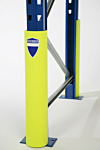
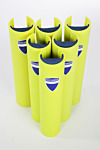
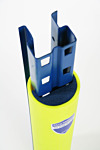
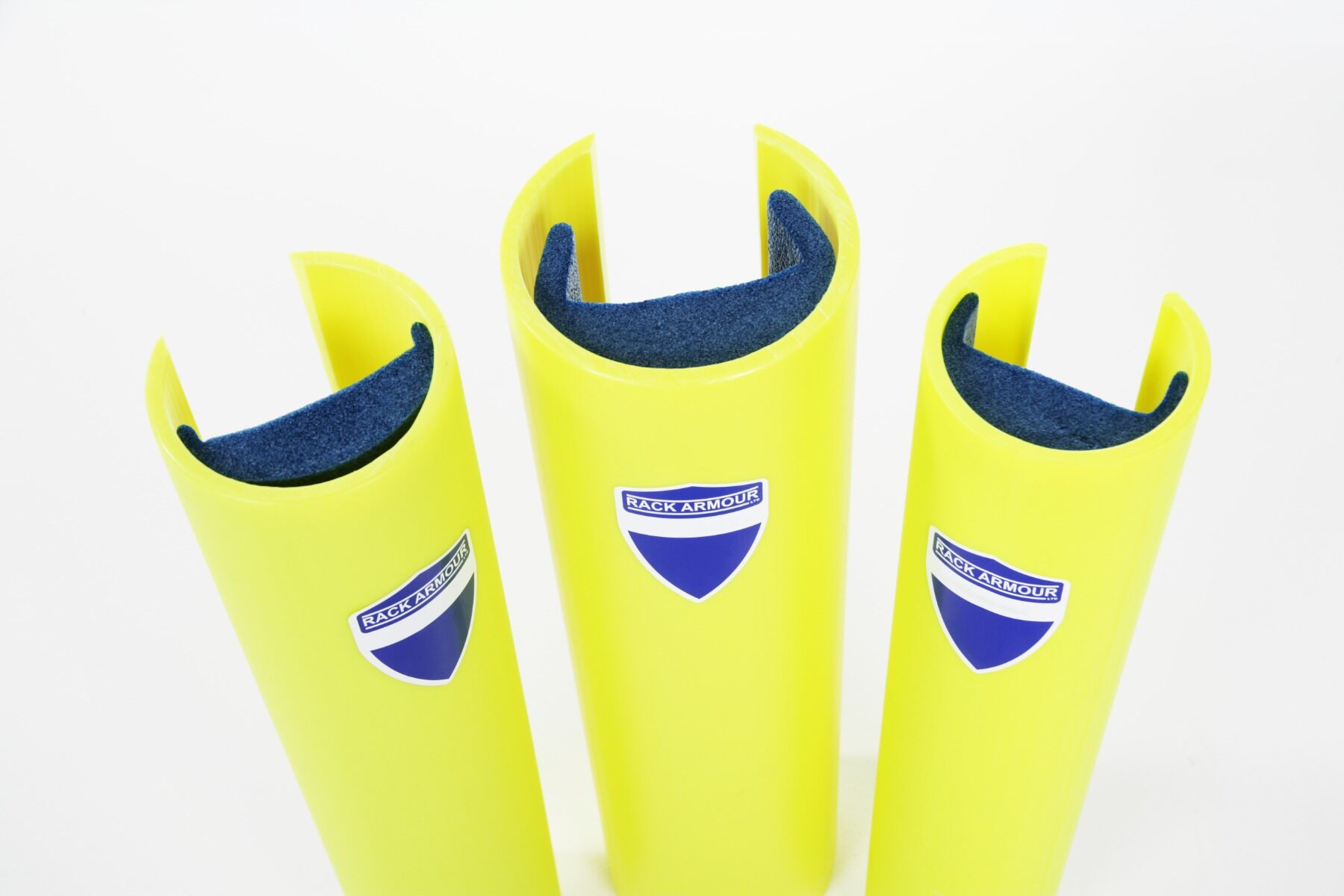
The Rack Armour range supports operator engagement through its visible presence in the warehouse. The hi-vis yellow specification is itself a form of communication — every protected upright is a visible reminder that the operation invests in safety. The comprehensive product range including small, medium, large, XL and XXL hi-vis yellow, and safety yellow alternatives including small, large and XL, allows operations to specify protection that fits the operational environment and the cultural messaging that supports operator engagement.
Building the Reporting Culture
A specific cultural capability worth examining in detail is the reporting culture: the systematic practice of operators reporting damage events, near-misses and concerns, and the operation responding constructively to those reports. Strong reporting cultures produce data that drives improvement; weak reporting cultures produce gaps in awareness that allow problems to fester.
The barriers to strong reporting culture are well-documented. Fear of blame: operators who suspect that reporting will lead to disciplinary action withhold information. Fear of inconvenience: operators who suspect that reporting will lead to operational disruption may delay or downgrade their reports. Fatigue and habit: operators who have seen previous reports go nowhere stop bothering. Practical friction: reporting systems that are hard to use, time-consuming, or unclear discourage participation.
Overcoming these barriers requires deliberate cultural construction. The blame dimension requires consistent management response that focuses on learning rather than discipline, with discipline reserved for genuinely culpable behaviour rather than the inevitable mistakes that occur in any operation. The inconvenience dimension requires operational responses that minimise disruption while still treating reports seriously. The fatigue dimension requires visible follow-up on reports, demonstrating that the input matters. The friction dimension requires reporting systems designed for ease of use, ideally accessible from the work environment and quick to complete.
The data produced by a strong reporting culture is genuinely valuable. Patterns of contact at specific locations may indicate layout issues, lighting concerns, or other systemic factors that warrant attention. Patterns at specific times may indicate fatigue or workload issues. Patterns associated with specific operators may indicate training needs. Patterns associated with specific equipment may indicate maintenance concerns. None of these patterns can be identified from individual incidents — they emerge from accumulated data over time.
Hall-Fast can support the reporting culture through providing the supplier-side records that complement the operational reporting. Damage events that result in replacement of Rack Armour units are themselves data points; the supply records support the analysis of patterns over time. Discussion through the Contact page can address how the supplier relationship supports the reporting and analysis dimensions of the safety culture.
The Inspection Regime as Cultural Expression
Inspection regimes — the systematic checking of racking condition, protection equipment status, and operational compliance — are typically discussed in technical terms. Frequency of inspection, qualifications of inspectors, scope of inspection, documentation of findings. These technical dimensions matter, but the cultural dimension matters as much.
Inspection regimes operating within strong safety cultures are taken seriously by all parties. Inspectors approach their work professionally, looking for issues rather than ticking boxes. Operators engage with inspections constructively, providing information and accepting findings. Managers respond to findings with appropriate action rather than treating them as administrative inconvenience. The inspection process produces real outcomes — corrective action where needed, learning where appropriate, recognition where deserved.
Inspection regimes operating within weak cultures often deteriorate into rituals. Inspectors may go through the motions without genuine attention. Operators may avoid inspectors or provide minimal information. Managers may sign off findings without action. The inspection process produces paperwork without outcomes, and over time the inspectors themselves may become demoralised by the lack of impact.
The shift from ritual to genuine inspection requires cultural support from leadership. When senior managers ask about inspection findings, follow up on observed issues, and visibly value the inspection process, the cultural dynamic shifts. Inspectors take their work more seriously, operators engage more constructively, and the inspection regime starts producing the outcomes it should.
The SEMA framework provides a strong technical foundation for racking inspection, including weekly visual checks by trained warehouse staff and annual professional inspection by competent inspectors. The Rack Armour range supports the inspection regime by being itself easy to inspect — the protection condition is visible, the strapped fixings are checkable, and any issues are apparent without specialised equipment. Comprehensive coverage of trafficked uprights with the appropriate Rack Armour specification simplifies the inspection task and supports its consistent execution.
OUR PRICE PROMISE
OUR PRICE PROMISE!
We will not be beaten on price on any authentic Rack Armour product anywhere in the United Kingdom. If you find a better price on the internet or receive a quotation from any other supplier, please let us know and we will match it. This promise removes a common barrier to comprehensive protection — the perceived cost of premium specification — and supports the cultural commitment to taking pallet rack safety seriously through the procurement decisions that visibly demonstrate priority.
Just Culture: Response to Incidents
When incidents occur — and they will occur in any active warehouse operation — the response is one of the most powerful cultural signals an operation produces. The response shapes how operators view future incidents and whether they will be reported, how supervisors handle issues they observe, and how managers think about safety as a priority.
The "just culture" framework provides a useful structure for thinking about incident response. The framework distinguishes several categories of contributing factor: human error (an unintentional mistake by a competent operator); at-risk behaviour (a deliberate choice to act outside procedure but without intent to cause harm); and reckless conduct (a deliberate choice to act with awareness of substantial risk). Each category warrants a different response.
Human error response focuses on system improvement. Why did the error occur? What system factors contributed? What changes would prevent recurrence? The operator who made the error is generally not the focus of the response — the focus is on the system that allowed the error to produce the outcome.
At-risk behaviour response focuses on coaching and culture. Why did the operator choose to deviate from procedure? What pressures, perceptions or norms supported the choice? What changes in supervision, training or culture would prevent recurrence? Discipline is generally not appropriate for at-risk behaviour unless it is repeated despite intervention.
Reckless conduct response focuses on accountability. The operator who acts with conscious disregard for substantial risk is appropriately held accountable through disciplinary process. Reckless conduct is rare in well-managed operations but does occur, and the cultural response must address it firmly to maintain credibility of the wider safety framework.
The just culture framework supports strong reporting because operators understand that the response to events depends on the actual circumstances rather than mechanically punishing the messenger. Honest reports of human error or at-risk behaviour produce constructive responses; only genuinely reckless conduct attracts discipline. This framework, when consistently applied, builds the trust that underpins reporting culture.
For pallet rack safety specifically, just culture supports the systematic learning from contact events that drives improvement. Each event becomes a learning opportunity rather than a discipline incident, and the operation gradually develops the deep understanding of its specific risk profile that supports targeted improvement.
Operational Practice: Where Culture Meets Reality
Operational practice — the actual day-to-day procedures, behaviours and routines — is where safety culture either becomes real or remains aspirational. Strong cultures produce strong operational practice; weak cultures produce gaps between intention and reality.
Several specific operational practices support pallet rack safety. Pre-shift briefings that include safety messages relevant to the day's operation. Operator handover routines that pass on relevant safety information between shifts. Layout discipline that maintains the planned aisle widths, marked walkways, and protected zones. Equipment discipline that ensures forklifts are operating within design parameters, with operators checking equipment before starting shifts. Loading discipline that respects pallet weight limits, distribution requirements, and beam capacity ratings. Housekeeping that keeps aisles clear of debris, stock placed correctly, and damaged items removed promptly. Damage response that addresses identified issues before they compound, including isolating affected bays and arranging repair.
Each of these practices is technically straightforward but operationally demanding. Maintaining the disciplines across thousands of operational hours, multiple shifts, varied throughput, and changing personnel requires sustained cultural support. The supervisors who reinforce the disciplines through their daily attention, the managers who reinforce them through their oversight, and the leaders who reinforce them through their visible priority all contribute to the operational reality.
The Rack Armour protection programme integrates into these operational practices. Pre-shift briefings can reference the protection arrangements. Operator routines include checking the integrity of protection in their operating zones. Damage response includes inspection of the affected protection alongside the underlying racking. Continuous improvement of the protection programme — supported through ongoing engagement with Hall-Fast via the Contact page — feeds into the operational practice over time.
Continuous Improvement: The Long View
A final cultural dimension worth examining is the orientation toward continuous improvement. Safety performance is not a fixed achievement; it is an evolving capability that develops over time through deliberate effort. Operations with strong cultures of continuous improvement consistently outperform operations that treat safety as a static goal.
Continuous improvement of pallet rack safety operates across multiple levels. Individual incidents produce specific lessons that feed back into procedure, training and equipment specification. Patterns across multiple incidents produce more substantial insights that may drive layout changes, equipment upgrades or operational redesign. External developments — new technology, evolving regulations, industry experience, supplier innovations — produce opportunities to enhance the programme. The cumulative effect over years is substantial improvement that compounds across the operational lifetime of the facility.
The Rack Armour range itself reflects continuous improvement. The introduction of the XXL hi-vis yellow specification reflects the move toward heavier-duty racking in modern UK warehousing. The development of the installation tools and larger installation tool reflects operational feedback on installation efficiency. Hall-Fast's role in continuous improvement includes bringing these developments to customers' attention through the ongoing supplier relationship, supporting the cultural commitment to staying current with evolving best practice.
For operators committed to continuous improvement, the conversation with Hall-Fast through the Contact page is part of the wider engagement that supports cultural development. Many of Hall-Fast's most successful customer relationships have evolved into long-term partnerships oriented toward continuous improvement of warehouse safety, drawing on the About page heritage of decades of UK warehouse experience.
Multi-Site Operations and Cultural Standardisation
For operators with multiple UK warehouses, cultural standardisation across the portfolio is an additional consideration. Different sites may have developed different cultural norms over time, with different effective safety performance. The aspiration of consistent safety culture across the portfolio supports operational consistency, transferability of staff between sites, and management efficiency.
Cultural standardisation is harder than technical standardisation. Specifying the same Rack Armour products across all sites is straightforward; cultivating the same cultural climate at each site is much harder. The cultural dimension depends on local management, established practices, workforce composition and historic experience — all of which vary between sites in ways that resist top-down standardisation.
Successful approaches to cultural standardisation in multi-site operations typically combine several elements. Clear central expectations for safety performance, communicated consistently. Local autonomy on implementation, allowing each site to develop the specific practices that work in its context. Inter-site networks that share experience, learning and effective practices across the portfolio. Consistent leadership signals from corporate level that reinforce the priority. Centralised supplier relationships — including with Hall-Fast — that support consistent specification and supply across the portfolio.
The Rack Armour range supports the technical dimension of multi-site standardisation through its comprehensive coverage of upright sizes and the consistent product quality that supports cross-portfolio specification. The conversation with Hall-Fast through the Contact page can address portfolio-level commercial arrangements alongside the cultural and operational aspects of multi-site programmes.
Frequently Asked Questions
How do I assess our current safety culture? Several approaches exist. Anonymous workforce surveys can produce valuable data on perceptions of safety priority, reporting climate, and management commitment. Walk-throughs by experienced safety professionals can identify the visible signs of cultural strength or weakness. Damage data analysis can reveal whether the operation is detecting and learning from incidents or missing patterns that should be apparent. The strongest assessments combine these approaches.
Where do I start if our culture is weak? Cultural change takes time and sustained leadership. Quick wins include visible leadership engagement with safety, improved reporting systems, prompt response to identified concerns, and visible investment in safety equipment such as comprehensive Rack Armour protection. Deeper change requires sustained effort across years rather than weeks.
How does technical investment support cultural development? Technical investment communicates priority. Comprehensive Rack Armour specification with hi-vis yellow finish is visible communication that the operation takes pallet rack safety seriously. The investment supports the cultural messaging that operators and visitors absorb daily. Without the technical investment, the cultural messaging lacks substance; with it, the messaging is reinforced.
What about smaller operations where senior management is also operational? Smaller operations actually have a cultural advantage in some respects: senior management is closer to the operational reality, communications loops are shorter, and the cultural climate can be shaped more directly. The challenge is finding time for genuine engagement with safety amid the many demands on owner-operator attention. The discipline of regular safety attention pays back in operational outcomes.
How does Hall-Fast support cultural development specifically? Hall-Fast's role is primarily technical — providing the Rack Armour products and the supplier relationship that supports the technical foundation of safety. But the supplier relationship has a cultural dimension too: the engagement with Hall-Fast on specification, ongoing supply and continuous improvement supports the cultural orientation toward ongoing development of the safety programme. The Contact page is the route to this engagement.
Onboarding and the New-Starter Cultural Experience
The cultural experience of new starters — operators, supervisors, managers joining the operation — shapes their long-term engagement with the safety culture. The first few weeks of a new starter's experience set expectations that prove difficult to change later. Operations that take the onboarding cultural dimension seriously gain ongoing value; operations that neglect it lose value compared with what their existing culture could otherwise sustain.
Effective onboarding for pallet rack safety includes several elements beyond the basic technical training. New starters benefit from explicit communication about the operation's approach to safety, including the reporting culture, the just culture framework, the inspection regimes, and the leadership commitment that supports the technical measures. They benefit from meeting key people in the safety function — supervisors, safety officers, and where possible the senior leaders whose visible commitment underpins the culture. They benefit from understanding the role they themselves are expected to play, including the active reporting of concerns and the engagement with continuous improvement.
The physical induction tour of the warehouse should explicitly address pallet rack safety. The protection arrangements — including the visible Rack Armour units in their hi-vis or safety yellow finish — should be pointed out, with explanation of why they are present and how they function. The damage history of the operation, presented constructively, helps new starters understand the real risks they face and the systems in place to manage them. The expected behaviours — pre-shift checks, reporting routines, response to observed concerns — should be communicated explicitly rather than assumed.
This investment in onboarding pays back through stronger long-term cultural participation. New starters who experience a thoughtful engagement with safety culture from their first day continue to engage with it throughout their tenure. Those who experience cursory or token engagement during onboarding tend toward similar engagement throughout their tenure. The pattern established during onboarding tends to persist.
For operations developing or refining their onboarding approach, the technical aspects can be supported by Hall-Fast through detailed product information about the Rack Armour range and supporting documentation accessible through the Contact page. The cultural aspects depend primarily on operational leadership but benefit from the technical foundation that visible comprehensive protection provides.
The Role of Supervisors in Cultural Reinforcement
Between senior leadership (which sets the cultural climate) and operators (whose daily behaviours produce the safety outcomes) sit the supervisors whose direct engagement with operational reality makes them critical cultural agents. Supervisors translate strategic intent into operational practice, reinforce expectations through daily contact, and shape the experience of operators in ways that directly affect cultural strength.
Effective supervisor engagement with pallet rack safety culture includes several elements. Active presence in the operational areas they supervise, observing actual practice and engaging constructively with operators on what they observe. Consistent reinforcement of the expected behaviours — pre-shift checks, reporting concerns, treating protection equipment with respect, escalating issues that need management attention. Constructive response to operator-raised concerns, taking them seriously and following up visibly. Personal modelling of the behaviours expected of operators, including respect for safety procedures and visible engagement with the safety culture themselves.
Supervisors who consistently demonstrate these behaviours strengthen the cultural climate of their teams. Supervisors who undermine the expectations — by ignoring observed at-risk behaviour, dismissing operator concerns, modelling shortcuts themselves, or treating safety as an inconvenience — weaken the culture regardless of leadership intent.
The supervisor role is challenging because it sits at the intersection of multiple pressures. Operational throughput targets compete for supervisor attention. The supervisor's own performance assessments may emphasise productivity over safety. The personal relationships that supervisors build with their teams can produce reluctance to raise difficult issues. The discipline of consistent cultural reinforcement requires sustained personal commitment.
Operations with strong cultures invest in their supervisors specifically. Training programmes that develop supervisor capability in safety culture leadership. Performance frameworks that genuinely value safety alongside productivity. Recognition for supervisors who consistently support strong cultural outcomes. Coaching from senior management for supervisors who are developing their cultural leadership skills.
Hall-Fast's role in supporting the supervisor function includes providing the technical resources and information that allow supervisors to engage knowledgeably with the protection programme. The detailed product information for the Rack Armour range, including specifications for the hi-vis yellow and safety yellow variants, supports supervisors in answering operator questions and reinforcing the rationale for the protection arrangements. The Contact page is the route to additional information that supports the supervisor's cultural leadership role.
External Stakeholders and the Cultural Reputation
A final dimension of pallet rack safety culture worth examining is the perception of external stakeholders — customers, regulators, insurers, suppliers, the wider community. The cultural reputation of an operation affects its commercial position in ways that matter increasingly in modern business.
Customers conducting due diligence on warehouse operations typically include warehouse safety in their assessment. The visible condition of the racking, the protection arrangements, the documentation of safety programmes, and the behaviours of staff all communicate the cultural climate. Operations with strong cultural reputations win commercial advantage; those with weak reputations lose it. The investment in comprehensive Rack Armour protection is part of the visible evidence that supports favourable customer assessment.
Regulators, where they engage with specific sectors, form impressions during inspections that affect their disposition toward the operator over time. An operation with visible strong safety culture and well-managed protection arrangements typically benefits from constructive regulatory engagement; an operation with visible weakness attracts more intensive scrutiny. The cultural and technical investment supports favourable regulatory positioning.
Insurers, as discussed in companion articles, factor the cultural and technical evidence into renewal terms. Strong evidence supports favourable terms; weak evidence supports less favourable terms across multiple cover categories. The compounding effect across multiple renewal cycles makes the cultural-reputation dimension financially material.
For operations seeking to strengthen their cultural reputation among external stakeholders, the visible technical investment in protection is one of the most accessible levers. The comprehensive Rack Armour range supplied through Hall-Fast supports this visible investment, with the documentation and supplier relationship that demonstrates active management of the protection programme to external parties. The Contact page is the route to discussing how the technical foundation supports the wider cultural and reputational dimensions of safety performance.
Closing Thoughts
Pallet rack safety is a cultural capability built on a technical foundation. The technical measures — appropriate racking, comprehensive protection such as the Rack Armour range, robust inspection regimes, sound operational procedures — are necessary. But they are not sufficient. The culture that uses the technical measures determines whether the full value is delivered.
Building strong pallet rack safety culture requires sustained leadership commitment, visible operational priority, engaged workforce participation, robust reporting and learning processes, just response to incidents, and orientation toward continuous improvement over time. The cultural elements reinforce the technical elements and vice versa. Operations strong on both consistently outperform operations strong on only one.
The Rack Armour range from Hall-Fast Industrial Supplies provides the technical foundation. The full range covers the upright sizes found across UK warehousing. The installation tools and larger tool support reliable installation. The brands portfolio provides complementary safety equipment for an integrated approach. The Hall-Fast Price Promise ensures competitive pricing on authentic Rack Armour products.
To take the next step, visit the Contact page for specification advice, quotation, or supply support. Background information about Hall-Fast is available at the About page.
The culture you build today shapes the safety performance of your operation for years to come. The technical investment you make today supports that culture and is supported by it. Make both with confidence, with the long view in mind, and with a supplier relationship that brings depth of experience to the partnership. Your warehouse, your workforce and your customers all deserve the integrated approach to pallet rack safety that strong culture and strong technical foundation together produce.