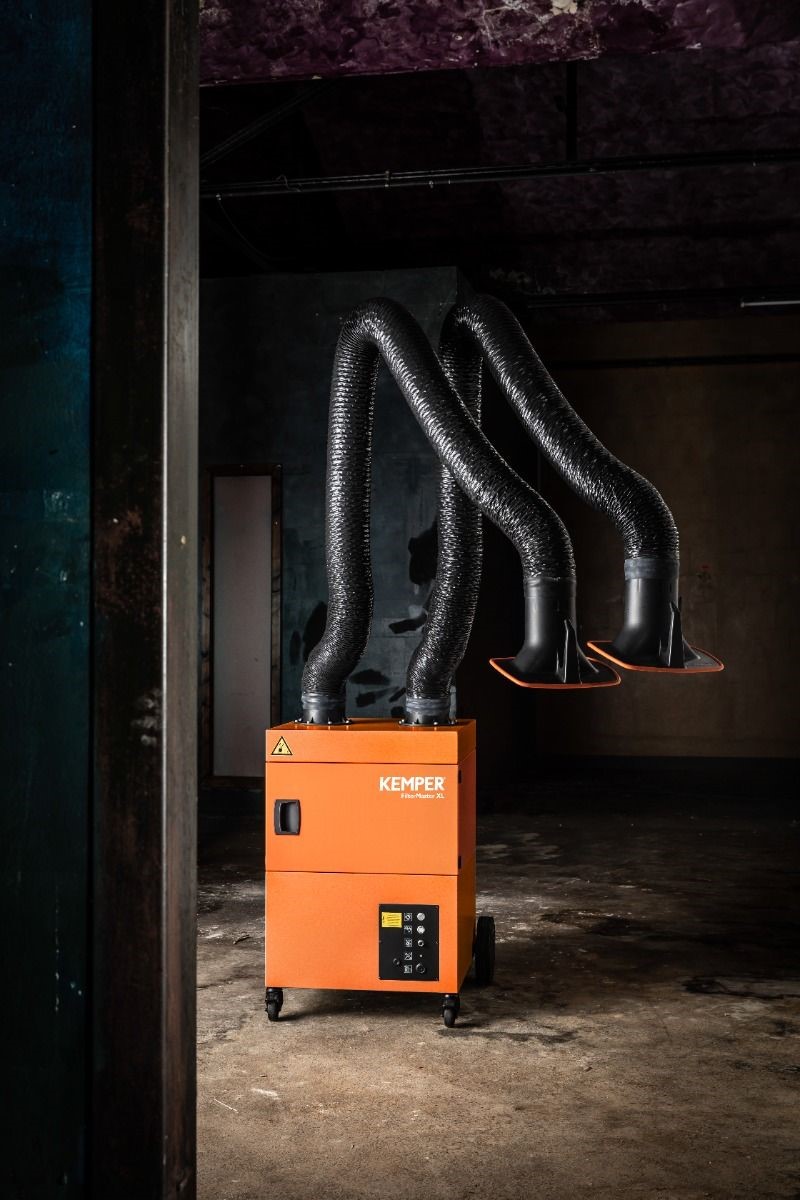
Introduction
Each welding process generates a unique profile of fumes, gases, and particulates, requiring specialized ventilation approaches for optimal safety and efficiency. This comprehensive guide examines the specific ventilation requirements for major welding processes, providing detailed recommendations for creating effective control systems tailored to each application.
Understanding these process-specific requirements will help you select and implement the most appropriate ventilation solutions, ensuring both regulatory compliance and worker protection while optimizing operational efficiency. Whether you're working with MIG, TIG, stick welding, or other specialized processes, this guide will provide the detailed information you need to create a safer welding environment.
Metal Inert Gas (MIG) / Gas Metal Arc Welding (GMAW)
MIG welding is one of the most common welding processes, used across industries for its versatility and productivity. However, its ventilation requirements vary significantly based on specific parameters.
Fume Characteristics and Concerns
MIG welding produces a moderate to high volume of fumes with specific characteristics:
- Fume Generation Rate: 3-8 g/min (standard parameters)
- Particle Size Distribution: 0.1-1.0 μm (primarily respirable)
- Primary Contaminants: Iron oxide, manganese, silicates, plus alloying elements
- Special Concerns: Ozone generation, particularly with aluminum and higher voltages
Fume Generation Factors
Several factors affect fume generation in MIG welding:
|
Factor |
Lower Fume Production |
Higher Fume Production |
|
Transfer Mode |
Short circuit |
Spray transfer |
|
Shielding Gas |
Argon-rich mixtures |
CO₂-rich mixtures |
|
Wire Feed Speed |
Lower settings |
Higher settings |
|
Voltage |
Lower settings |
Higher settings |
|
Material |
Carbon steel |
Galvanized steel |
|
Technique |
Push technique |
Pull technique |
Specialized Ventilation Approaches
Source Capture Solutions
For MIG welding, effective source capture solutions include:
- Extraction Arms
- Positioning: 8-12 inches from arc, at 45° angle
- Required Airflow: 650-850 CFM per arm
- Capture Velocity: 100-150 fpm at arc
- Hood Size: 6-8 inch diameter for optimal balance of capture and visibility
- On-Gun Extraction
- Advantages: Moves with the weld, consistent capture efficiency
- Airflow Requirements: 60-100 CFM (high vacuum)
- Weight Considerations: Ergonomic impact of additional weight
- Effectiveness: 75-85% fume reduction with proper technique
- Downdraft Tables
- Best For: Smaller workpieces that fit entirely on the table
- Airflow Requirements: 100-150 CFM per square foot of table surface
- Limitations: Reduced effectiveness for welds not directly over grates
- Enhancement Options: Side-draft panels for improved capture
General Ventilation Specifications
For facility-wide protection when working with MIG welding:
- Air Changes: Minimum 8-10 air changes per hour
- Make-up Air: Heated make-up air systems to replace extracted air
- Monitoring: CO₂ and O₂ monitoring in high-production environments
- Room Layout: Strategic placement of general ventilation intakes away from welding stations
Process Modifications for Reduced Emissions
Beyond ventilation, consider these process adjustments to reduce fume generation:
- Shielding Gas Optimization
- Argon-rich mixtures typically produce fewer fumes than CO₂-rich mixtures
- Helium additions can reduce fume generation in some applications
- Optimized flow rates can minimize turbulence and fume dispersion
- Parameter Adjustments
- Using pulsed MIG can reduce fume generation by 20-40%
- Operating in the lower end of acceptable voltage ranges
- Optimizing wire feed speed for minimal spatter
- Material Selection
- Low-fume wire formulations can reduce emissions by 25-45%
- Cleaner base materials with fewer contaminants and coatings
- Special alloys designed for reduced fume generation
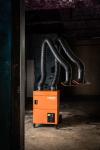
Kemper offers specialized MIG welding extraction solutions that account for these unique process characteristics, including on-gun extraction systems and optimized extraction arms.
Tungsten Inert Gas (TIG) / Gas Tungsten Arc Welding (GTAW)
TIG welding produces significantly fewer particulate fumes than other processes but presents special ventilation challenges related to gas generation and radiation.
Fume and Gas Characteristics
TIG welding has a distinct emission profile:
- Particulate Fume Generation: Very low (0.1-0.5 g/min)
- Primary Concern: Gas generation rather than particulates
- Key Gases: Ozone (O₃), nitrogen oxides (NOₓ), argon
- UV Radiation: Significant UV production contributing to ozone formation
- Special Materials Concerns: Beryllium, thorium (from electrodes), chromium
Ozone Formation Factors
Ozone formation in TIG welding is influenced by:
|
Factor |
Lower Ozone Production |
Higher Ozone Production |
|
Base Material |
Carbon steel |
Aluminum, magnesium |
|
Current Level |
Lower amperage |
Higher amperage |
|
Arc Length |
Shorter arc |
Longer arc |
|
Shielding Gas |
Helium mixtures |
Pure argon |
|
Electrode Type |
Ceriated, lanthanated |
Pure tungsten |
Specialized Ventilation Requirements
Due to its unique profile, TIG welding requires specialized ventilation considerations:
Low-Flow Extraction Systems
- Close-Proximity Extraction
- Position: 4-8 inches from arc
- Flow Rate: 200-350 CFM (lower than MIG requirements)
- Design Features: Smaller hoods with less interference
- Special Need: Minimal air movement to avoid shielding gas disruption
- Gas-Specific Filtration
- Ozone Removal: Activated carbon or catalytic filters
- NOₓ Control: Specialized chemical media
- Monitoring: Consider ozone monitors for aluminum TIG operations
- Maintenance: More frequent carbon filter replacement when welding aluminum
- Radiation Shielding Integration
- UV Barriers: Incorporate UV-blocking screens with ventilation
- Booth Design: UV-absorbing curtains with integrated ventilation
- Personal Protection: Face-supplied air systems for prolonged work
Facility Considerations for TIG Operations
- Ambient Air Movement: Maintain 50-100 fpm air movement in TIG areas
- Ceiling Height: Higher ceilings preferred to allow ozone dispersion
- HVAC Integration: Account for argon (heavier than air) potential accumulation
- Specialized Areas: Consider dedicated TIG booths with specialized ventilation
Process Optimization for Reduced Emissions
- Current Control
- AC balance optimization for aluminum (reduced cleaning action)
- Pulsed TIG to reduce overall energy input
- Minimum effective amperage selection
- Electrode Management
- Proper electrode selection (consider ceriated or lanthanated vs. thoriated)
- Correct electrode diameter and preparation
- Minimal arc length for required penetration
- Shielding Gas Optimization
- Consider helium mixtures for reduced ozone
- Optimize flow rates to minimize turbulence
- Gas lens diffusers for more laminar flow with lower overall rates
Shielded Metal Arc Welding (SMAW / Stick Welding)
Stick welding typically generates the highest volume of fumes among common processes, with composition heavily influenced by electrode coating type.
Fume Characteristics and Generation
SMAW welding produces substantial fumes with process-specific characteristics:
- Fume Generation Rate: 5-15 g/min (varies widely by electrode)
- Particle Size: Primarily in 0.2-1.0 μm range (deeply respirable)
- Primary Components: Complex mixture from electrode coating and core wire
- Electrode Coating Impact: Major determinant of fume composition and quantity
Electrode Type and Fume Generation
|
Electrode Type |
Relative Fume Rate |
Key Contaminants |
Special Concerns |
|
E6010/E6011 (Cellulosic) |
Very High |
Iron oxide, silicates, manganese |
High particulate load |
|
E7018 (Low Hydrogen) |
Moderate |
Iron oxide, fluorides, manganese |
Potential fluoride exposure |
|
E7024 (Iron Powder) |
High |
Iron oxide, titanium dioxide |
High overall particulate volume |
|
E308/E309 (Stainless) |
Moderate-High |
Chromium (including Cr VI), nickel |
Carcinogenic components |
|
E4043 (Aluminum) |
Moderate |
Aluminum oxide, silicates |
Ozone generation |
Specialized Ventilation Solutions
The high fume generation of SMAW demands robust ventilation approaches:
High-Volume Extraction Systems
- High-Flow Extraction Arms
- Position: 12-18 inches from arc at 45° angle
- Flow Rate: 800-1000 CFM per arm
- Hood Size: 8-10 inch diameter for improved capture
- Special Features: Wider hood designs specific to stick welding
- Multiple Capture Points
- Primary Arm: Positioned for arc capture
- Secondary Capture: Additional points for fume rising from cooling weld
- Implementation: Dual-hood systems or supplementary capture points
- Control: Independent control of multiple extraction points
- Enhanced Filtration Requirements
- Pre-Filters: More substantial pre-filtration stages
- Filter Capacity: Higher dust loading capacity
- Specialized Media: Process-specific filter selection
- Monitoring: Filter differential pressure monitoring
Stick-Specific Booth Design
For dedicated stick welding stations:
- Booth Dimensions: Minimum 5 ft width, 7 ft height
- Air Movement: 100-150 fpm at breathing zone
- Backdraft Design: Preferred over downdraft for stick applications
- Spark Arrestance: Enhanced spark protection in ventilation system
Process Modifications for Reduced Exposure
- Electrode Selection
- Low-fume electrode formulations where applicable
- Electrode diameter optimization (smaller diameter often = less fume per weld)
- Alternative electrodes for specific applications
- Technique Refinement
- Shortest practical arc length to reduce fume generation
- Optimal angle to direct fumes away from breathing zone
- Consistent travel speed to minimize overall fume production
- Power Source Optimization
- Lowest practical current settings for required penetration
- Waveform control where available (pulsed, square wave)
- Power source matching to electrode type
Flux-Cored Arc Welding (FCAW)
Flux-cored welding combines high productivity with potentially high fume generation, creating unique ventilation challenges.
Fume Characteristics
FCAW fume profile varies significantly between self-shielded and gas-shielded types:
- Fume Generation Rate:
- Self-shielded: 10-25 g/min (very high)
- Gas-shielded: 5-15 g/min (high)
- Particle Composition: Complex mixture from flux and wire
- Special Concerns: High levels of alkali metals, fluorides, and complex compounds
- Visible Characteristics: Dense, visible plume with potential for lateral spread
Self-Shielded vs. Gas-Shielded Comparison
|
Aspect |
Self-Shielded FCAW |
Gas-Shielded FCAW |
|
Fume Generation |
Very high |
High |
|
Key Contaminants |
Aluminum compounds, lithium, barium |
Iron oxide, manganese, fluorides |
|
Plume Behaviour |
More directional, affected by arc force |
More influenced by shielding gas flow |
|
Ventilation Challenge |
Highly concentrated, caustic fumes |
Similar to high-volume MIG |
Specialized Ventilation Approaches
FCAW requires robust, high-capacity ventilation solutions:
High-Volume Capture Systems
- Enhanced Extraction Arms
- Position: 10-14 inches from arc, following direction of work
- Flow Rate: 900-1200 CFM for self-shielded, 800-1000 CFM for gas-shielded
- Hood Design: Wider capture area with side baffles
- Mounting: Consider boom-mounted systems for mobility with stability
- Multiple Extraction Points
- Implementation: Primary and secondary extraction points
- Positioning: Account for typical plume direction and spread
- Control: Variable speed control based on operation
- Integration: Coordinated systems for overall capture
- Enhanced Filtration Systems
- Capacity: High dust-loading capacity
- Pre-Filtration: Multiple stages for heavy loading
- Chemical Considerations: Media selection for specific flux compositions
- Maintenance: More frequent inspection and cleaning cycles
Fixed Station Designs for FCAW
- Backdraft Booths: 150-200 fpm capture velocity
- Side-Draft Integration: Supplementary side capture for wider plumes
- Material Handling: Integration with positioners and turntables
- Spark Management: Enhanced spark arrestance and fire prevention
Process Modifications for Exposure Reduction
- Wire Selection
- Low-manganese formulations where applicable
- Optimal wire diameter for application (minimize over-welding)
- New generation low-fume flux formulations
- Parameter Optimization
- Voltage and wire feed speed balance for minimal fume
- Travel speed adjustment to reduce overall fume per weld length
- Optimal stick-out length (excessive stick-out increases fume)
- Technique Refinement
- Work angle adjustment to direct fumes away from breathing zone
- Gun manipulation to enhance capture effectiveness
- Sequencing to allow fume clearing between sections
Kemper offers specialized high-capacity extraction systems designed specifically for the demands of flux-cored welding, with robust filtration and enhanced capture capabilities.
Specialized and Advanced Welding Processes
Beyond common processes, several specialized welding methods present unique ventilation challenges that require process-specific approaches.
Submerged Arc Welding (SAW)
SAW produces minimal visible fumes but presents other challenges:
- Fume Characteristics: Low visible fume but significant invisible gases
- Primary Concerns: Fluoride compounds from flux, CO and CO₂ generation
- Special Hazards: Thermal decomposition products from flux
- Ventilation Approach:
- Low-velocity, high-volume capture (400-600 CFM)
- Positioning 18-24 inches from arc
- Focus on thermal plume capture above flux layer
- Specialized filtration for flux particles and decomposition products
Plasma Arc Welding and Cutting
Plasma processes generate unique contaminants requiring specialized ventilation:
- Primary Emissions: Nitrogen oxides, ozone, metal oxides
- Special Concerns: Very high UV radiation, enhancing ozone formation
- Water Table Integration: For cutting applications
- Ventilation Requirements:
- High-velocity capture (1000+ CFM for cutting)
- Specialized gas filtration for NOₓ and ozone
- Water mist integration in some applications
- Enhanced UV protection in booth design
Laser Welding and Cutting
Laser processes generate smaller volumes of fumes with specific characteristics:
- Fume Profile: Fine particulates, potential for metal vapor
- Special Concerns: Nanoparticle generation
- Ventilation Approach:
- Direct source extraction integrated with beam path
- HEPA filtration with nanoparticle capability
- Enclosed process environments with controlled extraction
- Potential for cleanroom-type approaches in precision applications
Robotic Welding Systems
Automated welding presents unique challenges and opportunities for ventilation:
- Fume Volume: Often higher due to duty cycle and parameters
- Capture Approach:
- Integrated hood designs specific to robot movement patterns
- Zoned extraction activated by robot position
- Programmed ventilation coordination with weld sequence
- Custom enclosures with optimized airflow patterns
Aluminum-Specific Welding Applications
Working with aluminum requires specialized ventilation approaches:
- Primary Concerns: High ozone generation, aluminum oxide particulates
- MIG Aluminum:
- Enhanced extraction rates (700-900 CFM)
- Ozone-specific filtration components
- More frequent filter maintenance
- Possible integration of supplementary ozone control
- TIG Aluminum:
- Primary focus on ozone rather than particulates
- UV shielding integrated with ventilation
- Catalytic conversion systems for ozone
- Enhanced area ventilation in addition to source capture
Ventilation System Integration with Welding Processes
Beyond process-specific extraction, comprehensive ventilation requires integration with overall welding operations:
Welding Position Impact on Ventilation
The position of welding significantly affects ventilation needs and design:
|
Welding Position |
Plume Behaviour |
Ventilation Adaptation |
|
Flat (1G/1F) |
Rising vertically |
Standard overhead capture |
|
Horizontal (2G/2F) |
Rising at angle from vertical |
Side-angle capture, wider hood |
|
Vertical (3G/3F) |
Following weld direction |
Moving capture point with welder |
|
Overhead (4G/4F) |
Falling toward welder |
Enhanced capture below weld, respiratory PPE |
Multi-Process Facilities
For shops running multiple welding processes:
- Zoned Approach
- Dedicated areas for high-fume processes
- Process-specific ventilation in each zone
- Separate filtration optimized for process type
- Flexible systems that adapt to changing needs
- Adjustable Systems
- Variable air volume systems
- Programmable extraction parameters
- Controls linked to process selection
- Modular components for different processes
- Centralized vs. Dedicated
- Process evaluation for centralized feasibility
- Contamination concerns between processes
- Filtration requirements compatibility
- Maintenance and service optimization
Weld Preparation and Post-Weld Operations
Complete ventilation planning must consider the entire welding process:
- Pre-Weld Activities
- Grinding and preparation dust control
- Chemical cleaning vapor extraction
- Material handling emissions
- Integration with main welding ventilation
- Post-Weld Operations
- Cooling weld emissions capture
- Slag removal dust control
- Heat treatment fume management
- Finishing operation integration
Ventilation System Monitoring and Validation
Ensuring ongoing effectiveness of process-specific ventilation requires systematic monitoring:
Process-Specific Performance Metrics
Different welding processes require monitoring of different parameters:
|
Process |
Critical Monitoring Parameters |
Recommended Frequency |
|
MIG/GMAW |
Capture velocity, filter loading |
Monthly |
|
TIG/GTAW |
Ozone levels, gas filtration effectiveness |
Monthly |
|
SMAW/Stick |
Particulate concentrations, arm positioning |
Weekly |
|
FCAW |
Heavy metal concentrations, system capacity |
Weekly |
|
Specialized Processes |
Process-specific contaminants |
Per manufacturer |
Testing and Verification Methods
- Airflow Visualization
- Smoke tubes to verify capture patterns
- Process-specific testing positions
- Documentation of effective capture distance
- Video recording for training purposes
- Contaminant Monitoring
- Personal sampling in breathing zone
- Area monitoring for specific process contaminants
- Real-time monitoring systems for immediate feedback
- Specialized testing for process-specific concerns
- System Performance Verification
- Duct velocity measurements
- Filter pressure differential monitoring
- Capture velocity at specified distances
- Overall system airflow verification
Common Challenges and Troubleshooting
Even with properly designed ventilation systems, challenges specific to different welding processes may arise. Here's how to address common issues:
MIG/GMAW Process Challenges
|
Issue |
Possible Causes |
Solutions |
|
Visible fume escaping capture |
Extraction arm too far from arc |
Position hood 8-12 inches from weld, reposition frequently |
|
Shielding gas disruption |
Too much airflow, wrong hood position |
Position hood at 45° angle, reduce flow rate if possible |
|
Spatter buildup in extraction system |
Capture point too close |
Maintain minimum 8-inch distance, install spark arrestors |
|
Inconsistent capture |
Cross-drafts affecting plume |
Install side shields, address facility air currents |
TIG/GTAW Process Challenges
|
Issue |
Possible Causes |
Solutions |
|
Welder discomfort/headaches |
Ozone accumulation |
Verify ozone-specific filtration, check for aluminum-specific settings |
|
Arc instability with extraction |
Airflow affecting shielding gas |
Reduce extraction rate, reposition hood to side position |
|
Thoriated electrode concerns |
Radioactive material in dust |
Consider switching to ceriated/lanthanated electrodes, use HEPA filtration |
|
UV exposure alongside fumes |
Inadequate shielding |
Integrate UV shields with ventilation design |
Stick/SMAW Process Challenges
|
Issue |
Possible Causes |
Solutions |
|
Rapid filter loading |
High particulate generation |
Install proper pre-filtration, consider automated cleaning systems |
|
Visible fume plume during electrode changes |
Intermittent extraction |
Maintain extraction during breaks, install wider capture hoods |
|
Excessive heat in capture system |
Hot particles from process |
Ensure proper ducting materials, consider cooling sections |
|
Fluoride exposure (low hydrogen electrodes) |
Inadequate gas filtration |
Add specific chemical filtration for fluoride compounds |
FCAW Process Challenges
|
Issue |
Possible Causes |
Solutions |
|
System overloading |
Extremely high fume generation |
Increase system capacity, enhance pre-filtration stages |
|
Poor visibility at workpiece |
Dense fume cloud |
Increase extraction rate, consider supplementary general ventilation |
|
Respiratory complaints despite ventilation |
Ultra-fine particles |
Verify filter efficiency for smaller particles, consider supplementary PPE |
|
Rapid filter blinding |
High loading with sticky compounds |
Implement pulse-cleaning technology, more frequent maintenance |
Integration with Other Safety Systems
Effective welding safety requires coordination between ventilation and other protective measures:
Coordinated Protection Strategies
|
Welding Process |
Primary Ventilation Approach |
Complementary Protection Systems |
|
MIG/GMAW |
Source capture with extraction arms |
Welding screens, reflective surfaces for UV protection |
|
TIG/GTAW |
Low-flow extraction with ozone control |
UV face shields, specialized booth lighting |
|
SMAW/Stick |
High-volume extraction with spark control |
Heat-resistant booth materials, flame-resistant clothing |
|
FCAW |
Robust extraction with enhanced filtration |
Supplementary respiratory protection during high-volume work |
|
Plasma/Laser |
Enclosed systems with specialized extraction |
Light/radiation shields, emergency stops integrated with ventilation |
Ventilation System Monitoring Integration
Modern systems increasingly integrate monitoring across safety systems:
- Real-time air quality sensors that adjust ventilation rates automatically
- Data logging systems that track both exposure levels and system performance
- Maintenance alert systems that predict filter replacement needs based on actual usage
- Worker position tracking that optimizes extraction based on welder location
- Integrated facility management that coordinates all safety systems from a central platform
Training and Best Practices for Process-Specific Ventilation
Proper training is essential for maximizing the effectiveness of process-specific ventilation:
Process-Specific Training Elements
|
Process |
Key Training Focus |
Specific Techniques |
|
MIG/GMAW |
Hood positioning, travel patterns |
"Lead with the hood" technique for consistent capture |
|
TIG/GTAW |
Gas flow integration, minimal disruption |
Positioning extraction to side opposite shielding gas flow |
|
SMAW/Stick |
Continuous capture during electrode changes |
Two-handed technique for simultaneous handling and extraction |
|
FCAW |
System capacity management, pre-cleaning |
Strategic work sequencing to prevent system overloading |
|
Specialized Processes |
Integration with automation, position optimization |
Process-specific capture techniques for each application |
Best Practice Documentation
Develop and maintain process-specific best practice documentation that includes:
- Visual Positioning Guides: Illustrations showing optimal extraction positioning for each process
- Process-Specific Checklists: Pre-work verification of proper ventilation setup
- Troubleshooting Flowcharts: Process-specific guides for addressing common ventilation issues
- Performance Indicators: Process-specific metrics for verifying ventilation effectiveness
- Maintenance Schedules: Customized maintenance protocols based on process requirements
Future Trends in Process-Specific Ventilation
The field of welding ventilation continues to evolve with new technologies addressing process-specific challenges:
Emerging Technologies
- Process-Adaptive Systems: Ventilation that automatically adjusts to detect which welding process is being used
- Gun-Integrated Sensors: Welding equipment that measures fume generation in real-time
- Nano-Filtration Media: Enhanced filtration specifically designed for the ultra-fine particles in modern welding processes
- AI-Optimized Extraction: Systems that learn optimal capture patterns for specific processes and materials
- Augmented Reality Integration: Visual guidance for optimal extraction positioning overlaid on welder's view
- Predictive Maintenance: Systems that predict maintenance needs based on specific process usage patterns
Regulatory Trends
Expect evolving regulations to increasingly focus on process-specific requirements:
- More stringent process-specific exposure limits, particularly for stainless steel welding
- Requirements for process-specific monitoring and documentation
- Enhanced training requirements for specialized processes
- Technology-forcing standards that drive innovation in control methods
- Process-specific certification requirements for ventilation system designers
Conclusion
Different welding processes produce significantly different fume profiles and require tailored ventilation approaches for effective control. Understanding these process-specific requirements enables you to implement ventilation solutions that protect workers while optimizing productivity and operational efficiency.
Key takeaways from this guide include:
- MIG/GMAW welding requires moderate to high volume extraction with careful positioning to balance capture efficiency and welder access
- TIG/GTAW welding produces minimal particulates but requires specialized approaches for ozone and gas control
- Stick/SMAW welding typically generates the highest fume volumes and requires robust, high-capacity extraction systems
- Flux-cored welding, especially self-shielded types, demands enhanced filtration and high-volume capture
- Specialized processes like plasma, laser, and robotic welding benefit from custom-engineered ventilation solutions
The most effective approach combines process-specific engineering controls with proper training, maintenance protocols, and ongoing monitoring to ensure consistent protection. By matching your ventilation approach to your specific welding processes, you can achieve better protection with lower overall energy consumption and operational costs.
Kemper's process-specific ventilation solutions are engineered to address the unique challenges of each welding method, providing optimal protection and compliance across all welding applications. Our range includes specialized solutions for every process type, from TIG-specific low-flow systems with ozone control to high-capacity extraction for flux-cored applications.
For expert guidance on selecting and implementing the right ventilation system for your specific welding processes, contact our Kemper specialists at sales@hall-fast.com.
This guide is intended for informational purposes only and should not be considered legal advice. Regulations change frequently, and we recommend consulting with regulatory specialists for your specific situation.