The Complete Industrial Buyer's Guide
Browse our full range of very heavy duty pallet trucks at Hall-Fast — trusted UK suppliers of industrial handling equipment.
Introduction: When Standard Pallet Trucks Simply Are Not Enough
In demanding warehouse, manufacturing and logistics environments, a standard pallet truck quickly reaches its limits. When you are moving loads that exceed 2,500 kg, working across uneven industrial flooring, or operating around the clock in high-throughput facilities, you need equipment engineered specifically for extreme conditions. That is exactly where very heavy duty pallet trucks come in.
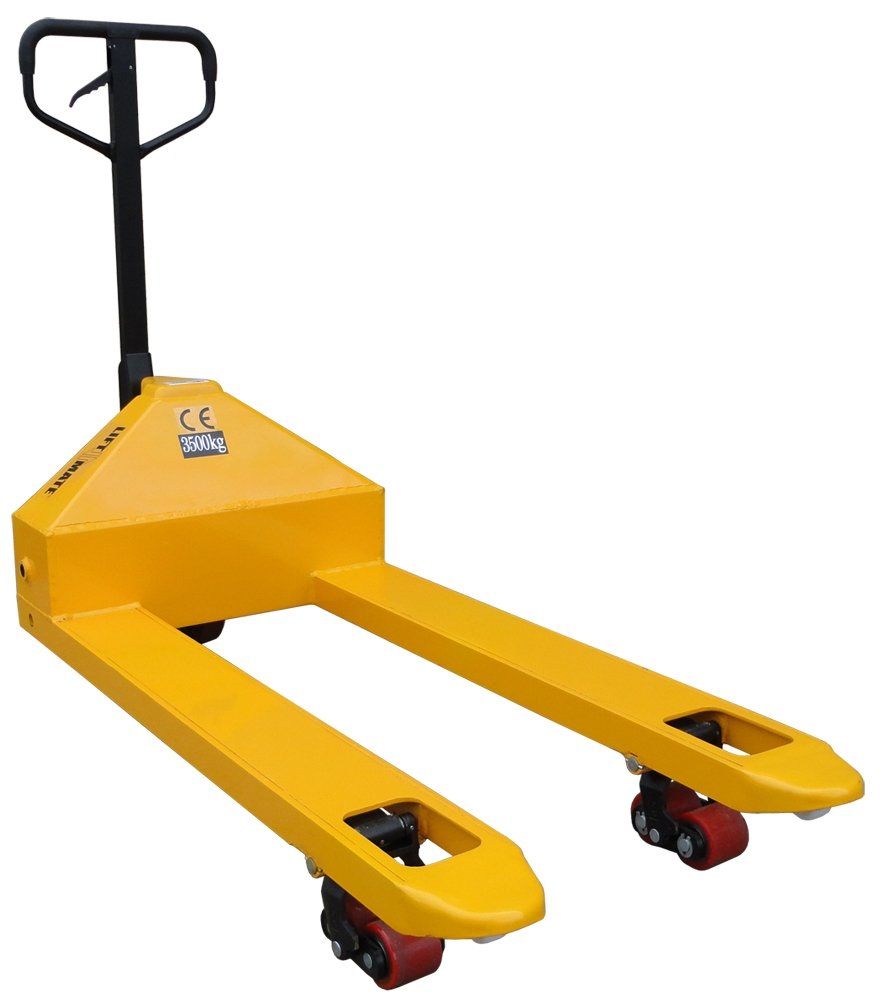
A very heavy duty pallet truck is not simply a larger version of a standard model. It is a purpose-built piece of handling equipment constructed with reinforced steel frames, oversized hydraulic systems, heavy-gauge forks and precision-engineered castors designed to move loads safely and efficiently — even under the most punishing conditions day after day.
This comprehensive guide covers everything industrial buyers, warehouse managers, procurement professionals and site supervisors need to know before investing in a very heavy duty pallet truck. We explore how these machines work, what specifications to look for, which industries rely on them most, how to maintain them, and why choosing the right supplier makes all the difference to your operation's safety and efficiency.
What Is a Very Heavy Duty Pallet Truck?
A very heavy duty pallet truck — sometimes called a high-capacity pallet truck, extra heavy duty pallet truck or industrial pallet truck — is a manual or powered ground-level handling device designed to lift, transport and lower palletised loads that far exceed the capacity of standard equipment.
While a typical standard pallet truck has a load capacity in the region of 2,000 kg to 2,500 kg, very heavy duty models are rated to handle loads of 3,000 kg, 4,000 kg, 5,000 kg and beyond. Some specialist models can move loads of up to 8,000 kg or 10,000 kg, making them the workhorses of heavy manufacturing, steel distribution, quarrying and large-scale warehousing.
How They Differ from Standard Pallet Trucks
The differences between a standard and a very heavy duty pallet truck are not merely superficial. They run through every component:
• Frame construction: Very heavy duty pallet trucks use thicker, higher-grade steel throughout the frame and chassis to prevent flexing or deformation under extreme loads.
• Hydraulic system: The pump and cylinder are significantly larger in bore and built to much tighter engineering tolerances, ensuring consistent lift performance even under maximum load.
• Fork dimensions: Forks are typically longer, wider and constructed from heavier gauge steel with reinforced heel sections to prevent bending.
• Castors and wheels: Steer and load wheels are substantially larger in diameter, wider in profile and made from harder-wearing materials such as nylon, polyurethane or vulcanised rubber, depending on the floor surface.
• Tiller and control handle: Ergonomically designed for greater mechanical advantage, allowing operators to manoeuvre heavy loads without excessive physical strain.
• Entry height: Very heavy duty models typically maintain low fork entry heights to fit standard pallet profiles, even with their reinforced build.
Taken together, these engineering enhancements mean a very heavy duty pallet truck can withstand the rigours of constant industrial use at loads that would destroy a standard model within days.
Key Specifications to Understand Before You Buy
When evaluating very heavy duty pallet trucks, a number of core specifications should inform your decision. Understanding these figures — and knowing what they mean for your specific application — is essential to making the right choice.
Load Capacity
Load capacity is the maximum weight the pallet truck is rated to lift and transport safely. For very heavy duty models, this typically ranges from 3,000 kg at the entry level through to 5,000 kg, 6,000 kg or even higher for specialist long-fork and wide-fork configurations. Always ensure the rated capacity comfortably exceeds your maximum anticipated load — operating equipment at or near its rated maximum reduces component life and increases the risk of failure.
Fork Length and Width
Standard fork lengths for pallet trucks are typically 1,150 mm, but heavy duty models are often available in extended fork lengths of 1,200 mm, 1,500 mm or 2,000 mm to accommodate oversized or double-stacked pallets. Fork width determines compatibility with different pallet types — European pallets (EUR/EPAL) require a specific fork spacing, while industrial pallets and custom platforms may need wider or narrower configurations.
Fork Height: Lowered and Raised
The lowered fork height determines whether the pallet truck can slide under a given pallet. Most standard pallets have a bottom board clearance of around 90 mm to 100 mm. Very heavy duty pallet trucks are engineered to maintain lowered heights of 80 mm to 85 mm despite their heavier frame. The raised fork height — typically around 200 mm — determines how high the load can be lifted for manoeuvring.
Wheel and Castor Configuration
Very heavy duty pallet trucks feature a range of wheel configurations to suit different operating environments:
• Single load wheels: Common on standard capacity models, less suitable for very heavy loads due to point loading on the floor.
• Tandem (double) load wheels: Standard on very heavy duty models, spreading the load across a greater surface area and reducing floor stress.
• Nylon wheels: Hardwearing and low-maintenance; suitable for smooth concrete and hardwood floors.
• Polyurethane wheels: Quieter operation, better floor protection, excellent load-bearing capacity. Preferred in many industrial settings.
• Rubber wheels: Best for uneven surfaces, outdoor use and environments where vibration reduction is important.
• Vulkollan wheels: Premium material offering exceptional load capacity and durability; often specified for the most demanding applications.
Steering Wheel and Tiller Design
The steering wheel (front wheel) of a very heavy duty pallet truck must be sized to provide sufficient manoeuvrability given the weight being moved. Larger diameter steering wheels reduce the effort required to turn and navigate in tight spaces. The tiller — the handle assembly used to pump, steer and lower the load — should be ergonomically designed, well-balanced and feature a comfortable grip with easy-to-use control buttons for lifting and lowering.
Pump Mechanism
A quality very heavy duty pallet truck uses a multi-stage pump mechanism that builds hydraulic pressure progressively with each downward stroke of the tiller. Key pump features to look for include adjustable descent speed valves, overload protection mechanisms, and oil-sealed systems that remain reliable in cold or wet working environments.
Industries and Applications: Who Uses Very Heavy Duty Pallet Trucks?
Very heavy duty pallet trucks find application across a wide range of industries wherever loads consistently exceed standard equipment capacity. Their versatility and relatively low cost compared to powered alternatives make them invaluable in the following sectors:
Steel, Metal and Engineering
Steel coils, plate stock, structural sections and heavy fabrications routinely exceed 3,000 kg. Very heavy duty pallet trucks with extended forks and tandem load wheels are essential in steelworks, metal service centres, engineering workshops and fabrication plants. They allow safe movement of material from storage racks to machining centres, cutting tables and dispatch areas without the cost and space requirements of a forklift for every movement.
Manufacturing and Production
Heavy manufacturing facilities produce finished goods, subassemblies and raw material movements of considerable weight. Automotive components, heavy machinery parts, industrial equipment assemblies and large-format tooling all require handling equipment rated well above standard capacity. Very heavy duty pallet trucks bridge the gap between manual handling and full forklift operations, offering flexibility in tight production environments.
Logistics, Distribution and Warehousing
Large-scale distribution centres handling dense, heavy goods — such as ceramic tiles, stone products, paper rolls, beverages in bulk, bottled water pallets and construction materials — benefit significantly from very heavy duty pallet trucks. These facilities often deal with consolidated loads where individual pallets are exceptionally heavy, requiring equipment that can handle them reliably across all shifts.
Printing and Paper
Paper and board stock is exceptionally heavy. Reels, sheets and large format paper pallets regularly exceed 2,500 kg per pallet. Very heavy duty pallet trucks are a standard piece of kit in commercial printing facilities, paper mills, packaging plants and stationery warehouses, where paper products must be moved from storage to press lines with precision and safety.
Food and Beverage
Bulk food products — canned goods, bottled beverages, sacked produce and frozen goods on multi-tier pallets — can generate very high pallet weights. Food and beverage distribution centres require very heavy duty pallet trucks that can operate in cold store environments as well as ambient warehouses, often necessitating stainless steel options or specific low-temperature lubricant specifications.
Construction Materials and Building Supplies
Bricks, blocks, concrete products, tiles, slabs, timber and roofing materials are sold and distributed on pallets that are often heavily loaded. Builders merchants, construction product distributors and materials handling on construction sites all benefit from very heavy duty pallet trucks as a cost-effective way of moving heavy loads without expensive plant equipment.
Quarrying, Mining and Aggregates
In environments where heavy raw materials are processed and packaged, very heavy duty pallet trucks provide ground-level handling capacity to move packed product from processing to storage or loading areas. Their robust construction also makes them suitable for the demanding floor conditions typically found in these environments.
Very Heavy Duty vs Standard Pallet Trucks: A Detailed Comparison
Choosing between a standard and a very heavy duty pallet truck is not simply about the weight of the loads you move today. It is about understanding total cost of ownership, operational reliability and safety over the long term.
Component durability: Very heavy duty models use thicker steel and more robust hydraulic components. Where a standard pallet truck might fail within weeks of regular heavy-load use, a very heavy duty model is engineered to deliver thousands of hours of reliable service under the same conditions.
Safety margin: Using a pallet truck at or beyond its rated capacity dramatically increases the risk of hydraulic failure, fork deformation, wheel collapse and operator injury. Very heavy duty models provide the appropriate safety margin for high-weight operations — the rated capacity should be treated as an absolute maximum, not a routine operating target.
Floor protection: Tandem load wheels and larger diameter steering wheels on very heavy duty models distribute load forces more evenly across the floor surface, reducing the risk of floor damage — an important consideration in facilities with expensive epoxy or resin-coated floors.
Operator fatigue: Although very heavy duty pallet trucks are manual, their larger tiller assemblies, better-balanced hydraulic systems and quality castor materials mean operators expend less effort than they would forcing a standard truck beyond its limits.
Long-term economics: The upfront cost of a very heavy duty pallet truck is higher than a standard model. However, when calculated against reduced breakdown frequency, lower maintenance costs, extended service life and the avoided costs of operator injuries and floor damage, the very heavy duty model almost always represents superior value over a three-to-five year period.
Manual vs Powered Very Heavy Duty Pallet Trucks
Very heavy duty pallet trucks are available in both manual and powered (electric) configurations, and the choice between them depends on a number of operational factors.
Manual Very Heavy Duty Pallet Trucks
Manual models are operated entirely by the physical effort of the operator — pumping the tiller raises the load, pulling or pushing moves it, and controlled release of the tiller lowers it. Despite their simplicity, high-quality manual very heavy duty pallet trucks are remarkably capable. For operations involving shorter distance moves, lower volume requirements, or environments where powered equipment is not practical or permitted, manual very heavy duty pallet trucks are the ideal solution.
Key advantages of manual very heavy duty pallet trucks include:
• No battery charging requirements or downtime.
• No electrical components to fail or maintain.
• Lower purchase cost and minimal ongoing running costs.
• Suitable for use in hazardous or ATEX-rated environments where electrical equipment restrictions apply.
• Compact and lightweight enough relative to powered alternatives to be used in tighter spaces.
• No specialist operator certification typically required (though manual handling training is recommended).
Powered Very Heavy Duty Pallet Trucks
Powered or electric very heavy duty pallet trucks use a battery-driven motor to lift and propel the load, dramatically reducing operator effort. They are ideal for high-throughput operations, long travel distances within facilities, or environments where operator health and safety considerations make manual propulsion of very heavy loads impractical.
Key advantages of powered very heavy duty pallet trucks include:
• Greatly reduced operator fatigue across extended shifts.
• Higher throughput capacity in busy operations.
• Consistent lift speed and travel pace regardless of load weight.
• Suitable for moving very heavy loads over longer distances.
• Often fitted with additional safety features such as belly buttons and automatic speed reduction in curves.
The choice between manual and powered depends on your load weights, travel distances, shift patterns, budget and available charging infrastructure. For many operations, a combination of both types delivers the optimum balance of flexibility and efficiency.
Choosing the Right Very Heavy Duty Pallet Truck for Your Operation
With a clear understanding of the specifications and options available, selecting the right very heavy duty pallet truck for your specific needs comes down to a structured evaluation process. Work through the following questions before making your purchase decision:
Step 1 — Define Your Maximum Load Requirements
Start with the heaviest pallet or load you will ever need to move. Add a safety margin of at least 20% above this figure and use the result as your minimum required capacity. If your heaviest load is 3,500 kg, look for a truck rated to at least 4,200 kg. Choosing equipment with genuine headroom above your working load is one of the most important decisions you will make.
Step 2 — Assess Your Pallet and Load Dimensions
Measure the pallet base dimensions and fork entry gap height of the pallets you use. Confirm that the fork length, width and spacing of your chosen pallet truck are compatible. Consider whether extended fork lengths are needed for non-standard pallets or oversized loads. Also check that the lowered fork height of the truck will slide under your pallets without difficulty.
Step 3 — Evaluate Your Floor Surface
The floor surface in your facility has a direct bearing on the wheel specification of the very heavy duty pallet truck you choose. Smooth concrete or epoxy-coated floors are ideal for nylon or polyurethane wheels. Rough, uneven or outdoor surfaces require rubber or pneumatic tyres. Speak to your supplier about the specific conditions in your facility to ensure you get the right wheel specification for reliable, long-term performance.
Step 4 — Consider Operating Environment
Temperature extremes, moisture, chemicals and dust all affect the performance and longevity of pallet truck components. Cold store operations require trucks with low-temperature lubricants and seals. Washdown environments may require stainless steel components. Chemical or ATEX-rated environments may restrict the use of certain materials or electrical components. Always declare your operating environment to your supplier so they can confirm the suitability of the equipment.
Step 5 — Calculate Your Throughput and Shift Pattern
How many loads will you move per day? How long are your operational shifts? Will the truck be in near-continuous use or used periodically throughout the day? High-intensity operations with heavy loads demand the most robust equipment with the highest-quality components — including premium hydraulic systems, Vulkollan or polyurethane wheels, and reinforced frames — to withstand the cumulative stress of sustained high-load use.
Step 6 — Plan for Operator Safety and Training
Even with the best equipment, safe outcomes depend on properly trained operators. Before your very heavy duty pallet truck arrives on site, ensure all users receive appropriate manual handling and equipment-specific training. Establish clear routes through the facility, confirm that floor load ratings can accommodate the laden pallet truck, and implement a pre-use inspection regime to catch any developing issues before they become safety incidents.
Safety Standards and Compliance for Very Heavy Duty Pallet Trucks
Very heavy duty pallet trucks used in UK workplaces are subject to a range of regulatory requirements and standards. Understanding these obligations is essential for employers, facilities managers and procurement teams.
PUWER — Provision and Use of Work Equipment Regulations 1998
The Provision and Use of Work Equipment Regulations 1998 (PUWER) apply to all work equipment, including pallet trucks. Under PUWER, employers must ensure that work equipment is suitable for its intended use, maintained in safe working order, inspected at appropriate intervals, and used only by people who have received adequate information, instruction and training.
LOLER — Lifting Operations and Lifting Equipment Regulations 1998
Although pallet trucks primarily transport loads at ground level rather than elevating them to height, the lift function of a pallet truck means LOLER may apply. Under LOLER, lifting equipment must be of adequate strength and stability, marked with its safe working load, inspected by a competent person at appropriate intervals, and used in a manner that is planned, supervised and carried out safely. In practice, this means very heavy duty pallet trucks should be inspected — typically every six months for trucks used to lift persons, or as otherwise determined by a competent person for goods-only applications.
CE and UKCA Marking
Quality very heavy duty pallet trucks should carry appropriate CE or UKCA marking, indicating that the manufacturer declares conformity with applicable European or UK product safety directives. When purchasing, always confirm that the equipment carries appropriate conformity marking and is accompanied by a Declaration of Conformity document.
Safe Working Load (SWL) Marking
All very heavy duty pallet trucks should be clearly marked with their Safe Working Load. This marking should be visible to the operator during normal use. Never operate a pallet truck above its stated SWL and ensure that all potential operators are aware of and understand this limit.
Operator Training
While very heavy duty pallet trucks do not require a formal licence to operate in the way that fork lift trucks do, appropriate training is both a legal requirement under PUWER and a fundamental element of workplace safety. Operators should be trained in safe pre-use inspection, correct pump technique, safe load approach and positioning, speed control in laden and unladen states, emergency load lowering, and route hazard awareness.
Maintenance, Inspection and Service: Keeping Your Pallet Truck in Peak Condition
Even the most robust very heavy duty pallet truck requires regular inspection and maintenance to deliver its full potential service life and remain safe in use. The following maintenance regime reflects best practice for industrial pallet truck fleets.
Pre-Use Inspection
Before every shift, operators should conduct a brief visual inspection of the pallet truck, checking for:
• Hydraulic oil leaks around the pump, cylinder and hose connections.
• Fork condition — cracks, bends, excessive wear to the fork tips or heel sections.
• Wheel condition — flat spots, splits, loose wheel bolts or uneven wear.
• Tiller operation — smooth pump action, correct function of lift and lower control.
• Castor pivot condition — free movement, no excessive play or stiffness.
• Frame integrity — no cracks, distortion or visible damage.
• SWL marking — legible and undamaged.
Any defects identified during pre-use inspection should be reported immediately and the truck removed from service until rectified by a competent person.
Routine Maintenance
A scheduled maintenance programme should include:
• Hydraulic oil check and change: Check hydraulic oil level and condition regularly. Very heavy duty pallet trucks used intensively may require more frequent oil changes than the manufacturer's baseline recommendation. Always use the specified hydraulic fluid grade.
• Wheel and castor lubrication: Castor bearings should be lubricated at regular intervals in accordance with the manufacturer's schedule. Neglect leads to premature bearing failure, increased rolling resistance and operator strain.
• Pump and valve adjustment: The release valve controls descent speed and the overload protection valve prevents use above the rated SWL. Both should be checked and adjusted by a competent engineer if behaviour deviates from normal.
• Chain and linkage inspection: The scissor link mechanism connecting the forks to the hydraulic cylinder should be inspected for wear, lubricated at recommended intervals, and replaced when wear exceeds limits.
• Tiller pivot and spring check: The tiller return spring and pivot mechanism should be checked for correct function — the tiller should return smoothly to the upright position and remain stable in the operating position during use.
Periodic Formal Inspection
In addition to operator pre-use checks and routine maintenance, very heavy duty pallet trucks should be subject to periodic formal inspection by a competent person — typically a qualified service engineer. This inspection should encompass all aspects of the equipment's condition, load testing (where applicable), and documentation of findings. Results should be recorded and retained as part of the equipment's maintenance record.
Common Problems and Troubleshooting
Even well-maintained very heavy duty pallet trucks occasionally develop problems. Understanding the most common issues and their causes allows operators and maintenance teams to identify and address problems quickly.
Forks fail to lift or lift too slowly: This is typically caused by low hydraulic oil level, air in the hydraulic system, a faulty pump valve, or a blocked hydraulic filter. Check the oil level first, then bleed the system if necessary. If the problem persists, a service engineer should inspect the pump and valve assembly.
Forks descend unexpectedly or will not hold position: Unexpected descent usually indicates a failing or contaminated release valve, damaged hydraulic seals in the cylinder, or hydraulic oil contamination. This is a safety-critical defect — remove the truck from service immediately and arrange for professional repair.
Steering is stiff or unresponsive: Stiff steering can result from insufficient castor bearing lubrication, floor debris ingress around the castor pivot, or a bent or damaged castor housing. Lubricate castor bearings, clean the pivot area and inspect the castor housing for damage.
Wheels wear rapidly: Rapid wheel wear often indicates operation on an abrasive floor surface with an inappropriate wheel material, overloading of the truck, or misalignment of the wheels due to castor damage. Confirm wheel material suitability for the floor surface and inspect castor alignment.
Pump handle is difficult to operate: Excessive pump effort often indicates the hydraulic oil is too cold (in cold store operations), the pump mechanism needs lubrication, or internal pump components are worn. Check oil grade and temperature suitability, lubricate the pump mechanism and arrange service if the problem persists.
What to Look for in a Very Heavy Duty Pallet Truck Supplier
Choosing the right supplier for your very heavy duty pallet truck is as important as choosing the right product. Look for suppliers who offer the following:
• Proven range of very heavy duty models: A supplier with a dedicated range of heavy-capacity pallet trucks — rather than simply a single token model — demonstrates genuine expertise in this product category and the ability to match the right specification to your needs.
• Technical knowledge and pre-sales support: Before you buy, you should be able to speak with someone who understands the technical specifications of the equipment and can advise you based on your specific application, floor surface, load characteristics and operating environment.
• Quality brands and certifications: Equipment should carry CE or UKCA marking, be manufactured to relevant standards, and come with a clear Declaration of Conformity. Be cautious of unbranded or uncertified equipment offered at unusually low prices.
• Comprehensive after-sales and spare parts support: When your equipment needs maintenance or develops a fault, you need rapid access to spare parts and service support. A reputable supplier holds key spares in stock and can provide prompt service.
• Competitive pricing with no compromise on quality: Very heavy duty pallet trucks represent a significant investment. A good supplier will offer competitive pricing on quality equipment without recommending false economies that compromise safety or service life.
• Fast and reliable delivery: Industrial operations cannot afford long lead times on essential handling equipment. Look for suppliers who hold stock and can offer prompt despatch.
Why Choose Hall-Fast for Your Very Heavy Duty Pallet Truck?
Hall-Fast Industrial Supplies has been supplying UK businesses with industrial handling equipment and workplace supplies for decades. Our very heavy duty pallet truck range has been carefully selected to meet the needs of demanding industrial, manufacturing and logistics operations across the country.
When you shop with Hall-Fast, you benefit from:
• An extensive range: We stock very heavy duty pallet trucks across a wide range of load capacities, fork dimensions and wheel specifications, ensuring we can match the right truck to your exact requirements.
• Expert advice: Our experienced team can help you select the appropriate specification for your application, taking into account your loads, floor surface, operating environment and budget.
• Quality-assured products: Every very heavy duty pallet truck in our range is manufactured to high quality standards and supplied with appropriate documentation and conformity marking.
• Competitive trade pricing: Hall-Fast works with businesses of all sizes, offering competitive pricing that reflects our buying power and commitment to delivering value to our customers.
• Reliable despatch and delivery: We understand that your operation depends on having the right equipment when you need it. Our logistics arrangements are designed to get your order to you as quickly as possible.
• Account facilities available: For businesses with ongoing requirements, Hall-Fast offers account facilities to simplify procurement and consolidate invoicing.
• Trusted UK supplier: Hall-Fast is an ISO 9001:2015 accredited supplier, giving you confidence in our quality management processes and commitment to service excellence.
View our complete range of very heavy duty pallet trucks or contact our team on 01623 645645 or at sales@hall-fast.com to discuss your requirements.
Frequently Asked Questions About Very Heavy Duty Pallet Trucks
What is the maximum load capacity of a very heavy duty pallet truck?
Very heavy duty pallet trucks are typically available with rated load capacities ranging from 3,000 kg up to 5,000 kg for standard models, with specialist long-fork and extra-heavy-duty versions extending to 8,000 kg and beyond. Always select a model whose rated capacity comfortably exceeds your maximum working load.
Do I need a licence or certification to operate a very heavy duty pallet truck?
Manual pallet trucks — including very heavy duty models — do not require a formal operator licence in the way that counterbalance forklift trucks do. However, under PUWER, employers must ensure that operators have received adequate training and instruction. Electric powered pallet trucks may have different training requirements depending on their specification and the operating environment.
How often should a very heavy duty pallet truck be inspected?
Pre-use visual inspection should be carried out by the operator at the start of every shift. Formal inspection by a competent engineer should be conducted at intervals determined by a risk assessment — typically every 6 to 12 months for standard operations, or more frequently in particularly demanding environments. LOLER regulations may require 6-monthly thorough examination for equipment used in lifting operations.
What type of wheels should I specify for my very heavy duty pallet truck?
Wheel specification depends on your floor surface. Nylon wheels are hardwearing and maintenance-free on smooth concrete. Polyurethane wheels offer quieter operation and better floor protection. Rubber wheels suit rougher or outdoor surfaces. Vulkollan wheels deliver premium load capacity and durability for the most demanding applications. Consult your supplier if you are unsure which specification is right for your floor.
Can very heavy duty pallet trucks be used outdoors?
Standard very heavy duty pallet trucks are primarily designed for indoor use on relatively smooth surfaces. For outdoor use or rough surface applications, you will need a model specified with rubber or solid rubber wheels and, ideally, additional corrosion protection on the steel components. Discuss your outdoor use requirements with your supplier before purchasing.
How long should a very heavy duty pallet truck last?
With appropriate specification, regular maintenance and correct use within rated capacity, a quality very heavy duty pallet truck should deliver many years of reliable service — often seven to ten years or more in well-maintained operations. Key factors affecting service life include operating intensity, floor quality, maintenance frequency and adherence to the rated load capacity.
What is the difference between tandem and single load wheels?
Single load wheels are fitted at the end of each fork arm as a single wheel. Tandem load wheels feature two wheels per fork arm, arranged in tandem (one behind the other). Tandem wheels distribute the load over a greater contact area, improving stability, reducing point loading on the floor, and generally offering better performance under very heavy loads. Most very heavy duty pallet trucks feature tandem load wheels as standard.
Are spare parts readily available for very heavy duty pallet trucks?
Availability of spare parts varies by brand and model. When purchasing, confirm with your supplier that key wear components — wheels, tiller springs, seals, oil — are available from stock. Hall-Fast can advise on parts availability for the models we supply and support ongoing maintenance needs.
Conclusion: Invest in the Right Equipment from the Start
In any industrial operation where loads regularly exceed standard pallet truck capacity, investing in a very heavy duty pallet truck is not a luxury — it is a safety and operational necessity. The consequences of using underspecified equipment in heavy load environments are severe: increased risk of equipment failure, operator injury, floor damage, load loss and unplanned operational downtime.
A properly specified very heavy duty pallet truck, matched to your specific load weights, floor surface, operating environment and throughput requirements, will deliver reliable, safe performance day after day — and will prove its value many times over through reduced maintenance costs, longer service life and the prevention of costly incidents.
The key decisions — load capacity, fork dimensions, wheel specification, manual or powered, single or tandem wheels — all have clear answers once you have mapped your operational requirements. Take the time to specify correctly, choose a reputable supplier, ensure operators are properly trained, and implement a structured maintenance regime. Do this, and your very heavy duty pallet truck will be one of the most dependable pieces of equipment in your facility.
Explore the Hall-Fast range of very heavy duty pallet trucks today, or speak to our specialist team on 01623 645645 to find the perfect solution for your operation. We are ready to help you move more, safely.
Hall-Fast Industrial Supplies Ltd | 01623 645645 | sales@hall-fast.com | hall-fast.com