Speed bumps and speed humps are among the simplest and most effective traffic-calming products available to UK warehouses, distribution centres, factories, and outdoor yards. The fundamental principle — a raised obstacle in the floor or road surface that physically forces vehicles to slow down — addresses the speed-related risk that signage and instruction alone cannot reliably control. Whether you are slowing forklifts in pedestrian-shared zones, controlling van speeds in a logistics yard, or managing approaches to loading docks, the right speed bump or speed hump in the right location is a high-impact safety investment. This comprehensive guide walks through everything you need to know about specifying speed bumps and speed humps for UK warehouses and yards.
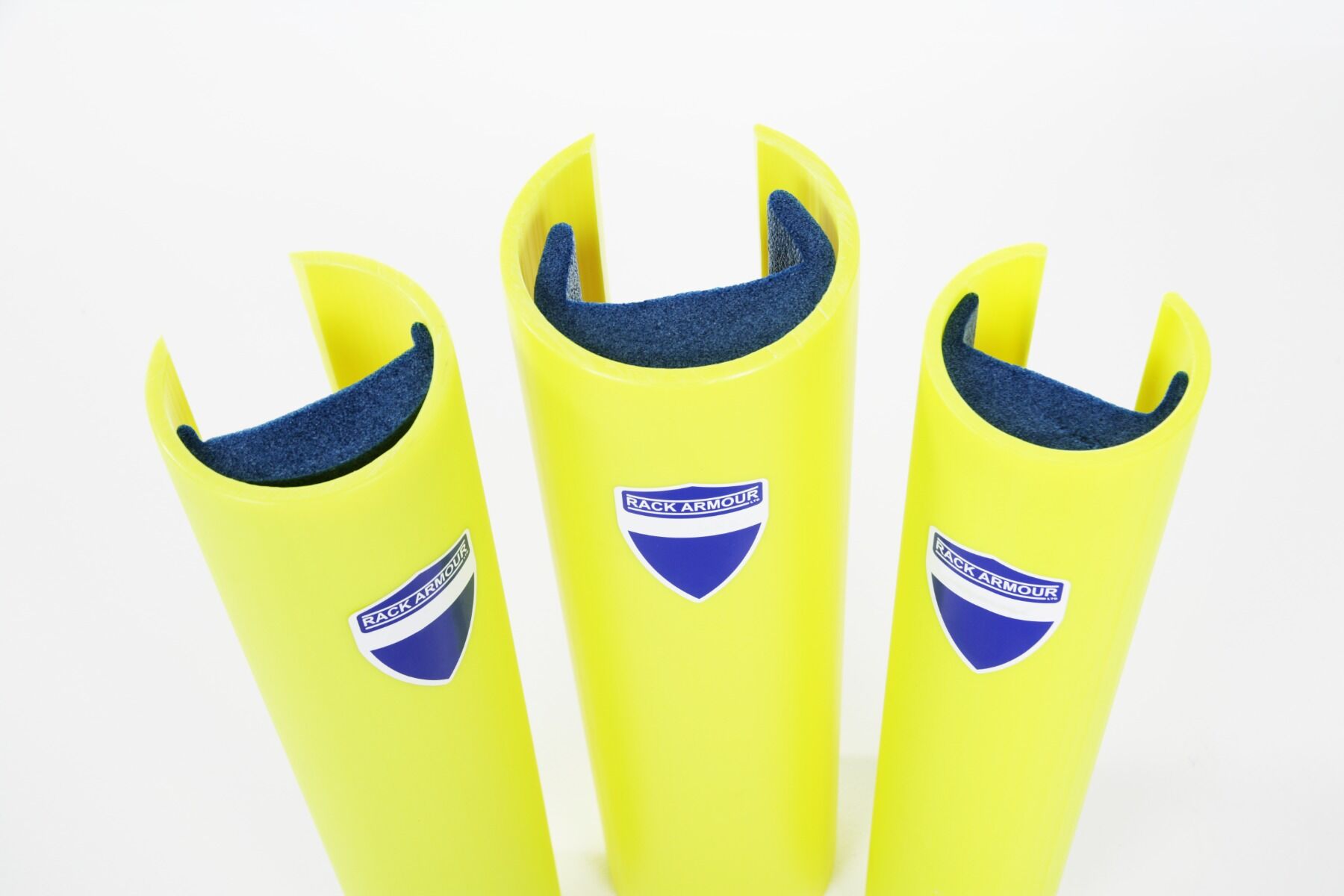
Hall-Fast Industrial Supplies is one of the UK's leading distributors of warehouse safety equipment, including speed bumps and traffic-calming products. We are also the home of Rack Armour, the UK's leading polymer upright protector for pallet racking. Browse our wider brand portfolio, learn about Hall-Fast on the About page, or get in touch via the contact page. Our price promise applies on every authentic Rack Armour product: if you find a better price, let us know and we will match it.
Speed bumps versus speed humps: the difference
The terms 'speed bump' and 'speed hump' are often used interchangeably, but they refer to different products with different applications. Understanding the distinction is the first step in specifying the right product for your operation.
Speed bumps
Speed bumps are short, sharp profiles — typically 75 mm to 100 mm tall and 300 mm to 600 mm long in the direction of travel. The aggressive profile produces strong vertical jolts at any meaningful speed, forcing vehicles to slow to walking pace (typically 5 mph or less). Speed bumps are appropriate for environments where very low speeds are required: warehouse interiors, pedestrian-shared zones, car park entrances, and other low-speed environments.
Speed humps
Speed humps are longer, gentler profiles — typically 50 mm to 100 mm tall but extending 1.5 metres to 4 metres in the direction of travel. The longer profile gives a smoother ride at moderate speeds (typically 10-15 mph) but discourages higher speeds. Speed humps are appropriate for road environments where some flow is needed but excessive speeds must be controlled: yard roads, car park traffic lanes, and approach roads to facilities.
Speed cushions
Speed cushions are a third related product — speed humps with gaps in the lateral direction so that wider vehicles (buses, fire engines, larger HGVs) can straddle the cushion with their wheels in the gaps, while narrower vehicles must drive over the cushion and slow down. Speed cushions are common on public roads but less common in warehouse and yard environments.
Choosing between bumps and humps
As a rule of thumb: if you need vehicles down to walking pace (5 mph or less), specify speed bumps. If you need vehicles down to a controlled moderate speed (10-15 mph), specify speed humps. If you need to discourage speeds above a higher limit (20-30 mph) without forcing slow speeds, conventional speed humps with appropriate spacing are typical.
Where to use speed bumps and speed humps in your warehouse
Speed bumps and humps are most valuable in specific locations where excessive speed creates risk. Below are the most common applications.
Pedestrian-shared zones inside the warehouse
Inside the warehouse, pedestrian-shared zones — picking aisles, dispatch zones, marshalling areas — combine forklift traffic with pedestrian activity. Speed bumps in these zones force forklifts to walking pace, dramatically reducing the consequences of any unexpected pedestrian-vehicle interaction. The choice between bumps in the aisle versus bumps at the entry to the aisle depends on the layout — some operations bump every aisle, others bump the access points only.
Goods-in/goods-out access points
Goods-in/goods-out access points see high traffic, multiple vehicle types, and pedestrian activity. Speed bumps at the access points force vehicles to slow as they enter or leave, supporting safer interactions in the high-activity zone. Indoor speed bumps inside the dock door, outdoor speed bumps approaching the dock from the yard, or both — depending on the layout.
Car park entrances and exits
Vehicle car parks and visitor car parks benefit from speed bumps at entrances, exits, and pedestrian crossings. The speed control protects pedestrians moving between vehicles and buildings, reduces the risk of fender-benders in the car park, and supports the overall safety culture of the site.
Yard roads and approach roads
Outdoor yards used for HGV manoeuvring, container parking, and trailer storage benefit from speed humps along approach roads and at access points. The speed control reduces the risk of yard incidents and supports safer interactions between visiting drivers (who don't know the site) and resident operations staff.
Pedestrian crossings of yard roads
Pedestrian crossings of yard roads or vehicle traffic lanes need speed control at the approach. Speed humps before the crossing slow vehicles to a safer speed before they enter the pedestrian-interaction zone. Combined with floor markings and signage, the speed control creates a much safer crossing environment.
Approach to loading docks
HGV approaches to loading docks benefit from speed humps along the approach road. The speed control supports safer dock approaches, reduces the risk of dock damage from over-speed approaches, and gives visiting HGV drivers cues about the operational pace of the site.
Speed-restriction zones
Some warehouse sites have specific speed-restriction zones — areas around schools or residential properties, areas adjacent to public roads, areas with particularly vulnerable activities. Speed bumps or humps in these zones reinforce the speed restriction physically rather than relying on signage alone.
Types of speed bumps and speed humps
Speed bumps and humps come in various materials and constructions, each with strengths and weaknesses for different applications.
Rubber speed bumps and humps
Rubber speed bumps are the most common indoor product and a popular outdoor choice. Made from recycled or moulded rubber, they offer excellent durability, good impact tolerance, and a moderate price point. Rubber compounds resist UV degradation and weather exposure reasonably well, though they may need replacement after 5-10 years in heavy outdoor service. Rubber bumps install with through-bolts and chemical-fix anchors into the floor or road surface.
Polymer speed bumps and humps
Polymer speed bumps are typically made from heavy-duty polymer compounds engineered for warehouse and yard use. They tend to be lighter than rubber, easier to install, and competitive on price for the lower-traffic applications. Some polymer products are designed specifically for warehouse use and have profiles optimised for forklift traffic — slowing trucks effectively without being aggressive enough to risk dropped loads.
Plastic speed bumps
Plastic speed bumps are typically the lightest-duty option, suitable for car parks and low-traffic indoor applications. They are inexpensive and easy to install but have shorter service lives than rubber or industrial polymer alternatives. Plastic bumps are a good choice for temporary installations or low-traffic applications.
Modular speed bumps
Modular speed bumps are supplied in interlocking sections that bolt together to span the required width. The modular construction supports any roadway width, makes individual section replacement straightforward (replace just the damaged section, not the whole bump), and supports re-deployment if the layout changes. End-cap modules complete the installation with chamfered ends that protect the bump from being struck by vehicle wheels at the road edge.
Cable protector bumps (cable ramps)
Cable protector bumps are a specialist subset designed to allow cables, hoses, and pipes to cross traffic lanes safely. They include channels in the underside that hold the cables protected from vehicle wheels, while the upper profile slows traffic and indicates the cable location. Cable protectors are common in temporary outdoor events, construction sites, and operations where cable management is regularly required.
Steel speed bumps
Steel speed bumps are heavy-duty industrial products for very high-traffic applications. They survive the most demanding conditions but are aggressive on vehicle suspensions, more expensive than rubber or polymer alternatives, and less common in modern warehouse installations. Steel is sometimes specified for very large vehicles or military applications.
Specifying speed bumps and humps: key parameters
Effective specification involves several key parameters that need to be matched to the operational requirement.
Profile height
Profile height drives how aggressively the bump slows vehicles. Standard heights: 50 mm for moderate speed control (humps); 75 mm for stronger speed control; 100 mm for aggressive speed control (bumps). Higher profiles slow vehicles more but create more vehicle stress, more noise, and more risk of dropped loads. Specify the lowest profile that achieves the required speed control.
Profile length (in direction of travel)
Profile length determines whether the product is a bump (short, aggressive) or hump (long, gentler). Bumps for indoor warehouse and very-low-speed applications; humps for road environments where some flow is acceptable. The choice between bumps and humps is one of the most consequential specification decisions.
Width across the road
The bump or hump should span the full width of the relevant roadway or aisle to prevent vehicles steering around it. End-cap modules complete the spanning installation. Width specification depends on the lane width, with most modular bumps supporting widths from 3 metres up to substantially more in larger industrial installations.
Visibility
Speed bumps and humps must be highly visible to be effective and to avoid creating unintended hazards. Standard products use yellow with black contrast stripes for high daytime visibility, with reflective inserts for night visibility. The visibility specification should match the lighting conditions of the installation location.
Drainage (for outdoor applications)
Outdoor speed bumps and humps should not impede drainage of the road surface. Most modular products have drainage channels through the bump body that allow water to flow across without pooling. In wet climates and on cambered roads, drainage capacity is a meaningful specification consideration.
Load rating
Speed bumps and humps need to support the load of the heaviest vehicle that will cross them. For yards used by HGVs and large industrial vehicles, the bump must be rated for repeated heavy axle loads. Most industrial-grade products are rated for HGV traffic, but verify the rating for your specific application.
Mounting and fixing
Most speed bumps fix to the road surface with through-bolts and chemical-fix anchors driven into the substrate. The fixing pattern, anchor length, and torque specification should match the bump and the surface. Improper fixing is a common cause of speed bump failure, particularly in heavy outdoor use.
Indoor versus outdoor speed bumps
The distinction between indoor and outdoor speed bumps drives several specification decisions.
Indoor warehouse speed bumps
Indoor warehouse speed bumps see forklift traffic on smooth concrete floors, in controlled lighting and weather conditions. The specification typically involves: lower profile heights (50-75 mm) suited to forklift loads; gentler ramp angles to avoid load disruption; polymer or rubber construction; bright colour visibility; and bolt-down installation into the concrete floor. Sub-profile speed bumps that act primarily as visual cues are also available for the very lowest speed-control requirements.
Outdoor yard speed bumps and humps
Outdoor speed bumps face weather, UV, temperature swings, and road traffic including HGVs. The specification typically involves: weather-resistant rubber or industrial polymer; UV-stabilised pigments to maintain colour; reinforced drainage channels; reflective inserts for night visibility; and heavy-duty bolt-down installation with appropriate anchor depth into the road substrate. Outdoor service life is typically 5-10 years depending on the product and the conditions.
Cold-store speed bumps
Cold-store speed bumps face the additional challenge of cold-temperature operation. Most rubber compounds become harder and more brittle at chilled and frozen temperatures, potentially compromising the bump's performance and longevity. Cold-store-rated products use specific compounds engineered to retain their properties at low temperatures.
Wet-floor and washdown environments
Food-and-beverage operations, pharmaceutical operations, and chemical handling areas often involve wet-floor or washdown conditions. Speed bumps in these environments need water-resistant construction, secure fixing that won't loosen with thermal cycling, and surfaces that don't trap contamination.
Installation of speed bumps and humps
Speed bump installation is straightforward with the right tools and approach.
Step 1: Plan the location
Confirm the exact installation location based on the operational requirement. The bump should be where it will achieve the speed control without creating unintended hazards (such as bumps just before turns where loads might shift). Walk the location with operations staff to validate the choice.
Step 2: Mark the position
Mark the bump position on the road surface, including the position of the bolt-down points. Most modular bumps have specific bolt patterns that need to be transferred accurately to the substrate. Use a template or measure carefully.
Step 3: Drill the anchor holes
Drill anchor holes to the specified depth and diameter using a rotary hammer drill with appropriate carbide bit. Concrete substrates need a specific anchor type; asphalt substrates need different anchors with longer engagement length. Vacuum out the holes to remove concrete dust before installing anchors.
Step 4: Install anchors
Install chemical-fix anchors per the manufacturer's instructions: inject the resin, insert the anchor stud, and allow the resin to cure (typically a few hours, longer in cold conditions). Skipping or rushing the cure compromises the anchor strength and is a common cause of premature speed bump failure.
Step 5: Bolt down the bumps
Position the bump sections over the anchors and secure with the supplied bolts. Torque to the manufacturer's specification — too loose and the bumps will work loose; too tight and the bump body may crack. End-cap modules complete the installation.
Step 6: Test and adjust
After installation, test the bump by driving over it at typical operational speeds. Confirm the bump achieves the required speed control without creating unintended hazards. Drivers should slow to the target speed comfortably; faster speeds should produce uncomfortable but not dangerous jolts.
Step 7: Add signage
Add appropriate signage at the approach to the bump: speed limit signs, 'speed bump ahead' warnings, or whatever is appropriate for the location. The signage gives drivers (particularly visiting drivers who don't know the site) advance notice of the bump.
Maintenance of speed bumps and humps
Speed bumps require modest periodic maintenance to deliver full service life.
Inspection
Add the speed bumps to the routine warehouse and yard inspection. Look for: loose fixings; cracked or damaged bump bodies; faded visibility colouring; and end-caps that have come loose. Address findings promptly.
Re-tightening
Bolt fixings can work loose over time under heavy traffic. Periodic re-torqueing of the fixings (typically annually) keeps the bumps secure. Loose bumps move under traffic, accelerate their own wear, and create noise issues.
Replacement of damaged sections
Modular bumps simplify replacement — change just the damaged section without affecting the rest. Keep a small stock of replacement modules on site for rapid repair after damage. Whole-bump replacement is needed only for non-modular products or in cases of extensive damage.
Visibility refresh
Speed bump colours fade over time, particularly outdoor in UV exposure. Visibility refresh — repainting the colour stripes, replacing reflective inserts, or replacing the whole bump — restores the visibility once it has degraded below the useful threshold.
Common mistakes when specifying speed bumps
Mistake 1: Wrong profile for the application
Specifying speed bumps where speed humps are appropriate (or vice versa) creates unintended outcomes. Aggressive bumps in road environments cause vehicle damage and dropped loads; gentle humps in pedestrian zones don't slow vehicles enough to deliver the safety benefit. Match the profile to the speed control requirement.
Mistake 2: Insufficient anchor depth
Speed bumps anchored too shallowly into the substrate work loose under traffic and become a hazard themselves. Use the manufacturer's specified anchor depth and ensure the substrate is deep enough to support that depth.
Mistake 3: Poor visibility specification
Bumps that aren't highly visible become hazards rather than safety devices. Specify high-visibility colour and ensure reflective performance for night use. Refresh visibility as colours fade over time.
Mistake 4: Ignoring drainage
Outdoor speed bumps that block drainage create water pooling on the road surface, which becomes its own hazard particularly in freezing conditions. Specify products with adequate drainage channels.
Mistake 5: One bump is not enough
A single speed bump in a long approach allows vehicles to slow at the bump and accelerate away. Multiple bumps spaced appropriately maintain the speed reduction over the full length of the speed-restriction zone. The right spacing depends on the target speed but typically 10-15 metres between bumps for a 5 mph target.
Mistake 6: Forgetting to brief drivers
New speed bumps need to be communicated to staff and visiting drivers. Toolbox talks for forklift drivers, signage at site entrances, and visitor briefings all support the introduction. Without communication, the first encounter with a new bump can be unpleasant.
Speed bumps as part of a wider traffic management system
Speed bumps work most effectively as part of a wider traffic management system that combines physical controls with visual cues and operational discipline.
Speed bumps and signage
Speed limit signs reinforce the message that the bump physically enforces. Together, the sign and the bump communicate consistent expectations. Without the sign, drivers don't know the target speed; without the bump, drivers may not respect the sign.
Speed bumps and floor markings
Floor markings define the traffic lanes and the location of the speed bump. The visual cue alerts drivers to the upcoming bump before they reach it, supporting comfortable deceleration rather than emergency braking.
Speed bumps and pedestrian crossings
Pedestrian crossings combined with speed bumps create the safest possible crossing environment. The bump slows the vehicle; the crossing concentrates pedestrian activity in a defined location; the visual cues align driver and pedestrian expectations.
Speed bumps and vehicle telematics
Some operations combine physical speed control with vehicle telematics that track and report vehicle speeds. The combination provides both immediate physical control and ongoing performance management. Drivers know that excessive speeds will be physically uncomfortable and operationally tracked.
Speed bumps and infrastructure protection
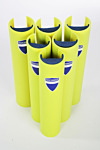
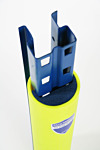
Speed bumps reduce the rate of incidents by slowing vehicles; infrastructure protection (such as Rack Armour upright protectors) absorbs the impact energy when contact does happen. The combination delivers comprehensive protection — fewer high-energy impacts because of speed control, and lower-consequence impacts when contact does occur.
Hall-Fast for speed bumps and the wider safety range
Hall-Fast supplies speed bumps, speed humps, and the full range of supporting warehouse and yard safety equipment from a single source. For your specification, get in touch via the contact page. Browse our brand portfolio to see the wider range we supply.
The Rack Armour price promise
Hall-Fast operates a comprehensive price promise on every authentic Rack Armour product we supply. If you find a better price on Rack Armour anywhere on the internet, or if you receive a quotation from another supplier that beats ours, let us know and we will match the price. Combined with speed bumps and the wider safety range, the price promise means a comprehensive specification at the most competitive total cost.
Stock and despatch
Hall-Fast holds significant UK stock of warehouse and yard safety products, supporting fast despatch on most orders. Larger orders for new-build sites are quoted with firm delivery dates.
Specifier support
Our team has specified comprehensive safety programmes for warehouses and yards across the UK. We can advise on speed bump selection, profile, mounting, and integration with the wider safety scheme. There is no charge for the specification advice.
Frequently asked questions
How fast can vehicles go over a speed bump?
The target speed depends on the bump profile. Aggressive 100 mm bumps target walking pace (5 mph or less); 75 mm bumps target around 10 mph; 50 mm humps target around 15 mph. Excessive speeds cause vehicle damage, dropped loads, and uncomfortable jolts for drivers. The bump profile is chosen to make the target speed comfortable and excessive speeds uncomfortable.
Will speed bumps damage my forklifts?
Speed bumps installed at appropriate profile heights for warehouse use don't damage forklifts when crossed at the target speed. Higher speeds may cause occasional dropped loads or accelerated suspension wear, but these are signs of excessive speed rather than fundamental compatibility issues. Match the profile height to the target speed for the application.
Can I install speed bumps myself?
Most modular speed bumps install with standard tools — a rotary hammer drill, anchor injection equipment, and basic torque tools. In-house installation is feasible for competent maintenance staff, particularly for indoor warehouse applications. Outdoor installations and HGV-rated products may benefit from contractor installation, particularly where the substrate condition needs assessment first.
How long do speed bumps last?
Indoor warehouse speed bumps typically last 10 years or more in moderate traffic. Outdoor speed bumps last 5-10 years depending on traffic and weather exposure. Modular construction makes individual section replacement straightforward when damage does occur, extending the effective life of the installation.
How do I get vehicles to slow down without speed bumps?
Several alternatives can support speed control: vehicle telematics with speed monitoring, on-truck speed limiters, signage and operational discipline, narrowed traffic lanes, road surface texture changes (rumble strips), and visual deception techniques (false-perspective markings). Most of these alternatives complement rather than replace physical speed bumps in environments where firm speed control is essential.
Are speed bumps required by regulations?
There is no UK regulation specifically requiring speed bumps in warehouses or yards. However, general health and safety duties under the Health and Safety at Work Act 1974 and associated regulations require employers to control vehicle-related risks. Speed bumps are one of the recognised tools for that control, alongside training, signage, and other measures. Risk assessments will often identify speed bumps as appropriate controls in specific zones.
Industry sector applications
3PL and logistics
3PL warehouses and yards typically install speed bumps at goods-in/goods-out approaches, in pedestrian-shared zones, and along yard roads. Multi-tenant 3PL sites often use speed bumps to enforce site-wide speed limits across operations from different clients.
Food and beverage distribution
Food and beverage operations use speed bumps in cold-store entries (with cold-store-rated products), in pedestrian-shared marshalling zones, and along yard roads. Hygiene-compatible bump materials support the food-safety operation.
Retail distribution centres
Retail DCs use speed bumps in pick aisles, around dispatch zones, and at yard access points. Network-wide standardisation supports consistent operational practice across multi-site retail networks.
Manufacturing
Manufacturing facilities use speed bumps around production zones, at access points to high-risk machine areas, and in shared pedestrian-vehicle zones. The diversity of activities in a manufacturing facility creates varied speed-bump applications.
E-commerce fulfilment
E-commerce fulfilment with high pedestrian-shared activity benefits from comprehensive speed bump coverage in operational zones. Yard speed bumps support the high vehicle traffic typical of fulfilment operations.
Pharmaceutical
Pharma warehouses with controlled material flow benefit from speed bumps in pedestrian zones and at access transitions. GDP-compatible bump materials and documented installation specifications support audit positions.
About Hall-Fast Industrial Supplies
Hall-Fast Industrial Supplies is a long-established UK distributor of industrial products to warehouses, factories, and distribution centres across the United Kingdom. Find out more about us on the About Hall-Fast page. Speed bumps and humps, Rack Armour upright protectors, and the wider range of warehouse and yard safety products are all part of our offering.
Browse our Rack Armour range, explore our wider brand portfolio, or contact us via the contact page to discuss your speed bump specification and any wider warehouse safety requirements.
Speed bump spacing and pattern design
A single speed bump rarely delivers full speed control across a long approach or restricted-speed zone. Vehicle drivers approaching a single bump tend to slow at the bump and immediately accelerate away, returning to excessive speed within a short distance. Spacing patterns address this by maintaining the speed restriction across the full zone.
Single bump installations
A single bump suits short-zone applications: a pedestrian crossing, a single access point, the entry to a goods-in dock. The bump achieves speed control at the specific point and accepts that vehicles will accelerate away on the other side. For longer zones, multiple bumps are needed.
Multi-bump zones
Speed-restricted zones longer than 30-50 metres typically need multiple bumps spaced along the length. Tight spacing (every 10-15 metres) maintains a sustained low speed; wider spacing (every 25-30 metres) allows brief acceleration between bumps but maintains an average speed within the target. The choice depends on the strictness of the speed control required.
Approach warning
Each bump should have advance warning — signage, floor marking, or visibility colour — so drivers can prepare for the deceleration. Sudden encounters with bumps cause uncomfortable jolts, dropped loads, and wear on vehicle suspensions. Visual notice 5-10 metres before the bump supports comfortable approach.
Geometric considerations
Avoid placing bumps immediately before turns or other manoeuvres. A bump just before a turn can cause loads to shift unexpectedly while the vehicle is also turning. Place bumps in straight sections where drivers can dedicate attention to the bump without other manoeuvring distractions.
Cumulative effects
Across a long approach with multiple bumps, the cumulative effect of repeated decelerations and accelerations affects fuel consumption, vehicle wear, and noise. The right number of bumps is the minimum that achieves the speed control — adding more does not improve safety beyond a point and starts to add operational cost.
Speed bumps and the regulatory environment
Speed bumps in private warehouse and yard environments operate outside the public-road regulatory framework but should still be specified to recognised standards.
Public road requirements
Public roads have specific Department for Transport requirements for speed bump and hump installation, including profile dimensions, spacing, signage, and notification requirements. These do not apply on private warehouse and yard property but represent best practice that informs private installations too.
Health and safety duties
UK warehouse operators have duties under the Health and Safety at Work Act 1974 and associated regulations to manage vehicle-related risks. Speed bumps are one tool for this duty — alongside training, signage, infrastructure protection, and other measures. Risk assessments should identify zones where speed bumps are appropriate controls.
Insurance considerations
Commercial insurance underwriters look at facility safety arrangements when assessing risk. Visible speed bumps in appropriate locations support the underwriting position alongside other safety measures. The combination of physical controls and operational discipline informs the insurance terms.
Audit and inspection
Audits and inspections under various regulatory frameworks (BRC, GDP, ISO) include facility-condition criteria. Visible, well-maintained speed bumps in appropriate locations support clean audit reports. Damaged or missing bumps create findings.
The economics of speed bumps
Speed bumps are among the most cost-effective safety investments available. Understanding the economics helps secure budget and prioritise installations.
Direct cost
A typical industrial speed bump or hump costs a modest amount per linear metre of installation, including the modular sections, end caps, and fixings. Installation labour adds to the total but is generally proportionate to the product cost. The total per-installation cost is small compared to most other warehouse equipment investments.
Avoided incident value
Speed-related incidents — pedestrian strikes, infrastructure damage, vehicle damage — generate substantial costs when they occur. Even infrequent incidents add up to material annual costs. Speed bumps that prevent or reduce the severity of such incidents pay back quickly.
Operational benefits beyond safety
Beyond the direct safety benefit, speed bumps can support operational efficiency in unexpected ways. Slower vehicle speeds in shared zones improve coordination, reduce near-miss anxiety for pedestrians, and can support faster overall throughput by reducing the disruption of incidents and near-misses. The operational benefits are harder to quantify but real.
Multi-year service life
Quality speed bumps have multi-year service lives. The initial investment is amortised across many years of use, with the per-year cost typically very small. The economic case strengthens further when considered over the full service life rather than as an upfront cost only.
Comparison with other safety investments
Compared to other warehouse safety investments — automated speed monitoring, AI camera systems, electronic vehicle controls — speed bumps deliver effective speed control at a fraction of the capital cost and with far simpler ongoing operations. The simplicity is a feature, not a limitation: bumps work without power, software, network connectivity, or training. They are immediately understood by every driver.
When to invest
The strongest case for speed bump investment is in zones where: pedestrians and vehicles share space; visiting drivers (who don't know the site) operate alongside resident drivers; speed-related incidents have occurred or are credible; alternative speed control measures have proven inadequate. In any of these scenarios, speed bumps deliver high return for modest investment. Most operations find that the second and subsequent rounds of speed bump installation extend coverage to lower-priority zones once the high-priority zones have been addressed and the prevention case proven. Phased rollout aligned with available budget periods supports steady continuous improvement of the safety position over time, building a comprehensive traffic-calming environment incrementally rather than all at once across multiple budget cycles.
Conclusion
Speed bumps and speed humps are simple, effective traffic-calming products that deliver high safety value at modest investment. The right product in the right location forces vehicles to safe speeds, supporting safer interactions between forklifts, HGVs, and pedestrians in the operational zones where speed-related risks are highest. Combined with floor markings, signage, mirrors, barriers, and infrastructure protection such as Rack Armour, speed bumps form part of a comprehensive damage-prevention and safety programme.
Hall-Fast Industrial Supplies is your UK partner for speed bumps, humps, and the wider warehouse and yard safety product range. Quality products at competitive prices, with expert specification advice and the Rack Armour price promise on our flagship product range. Get started today by browsing our brand portfolio, contacting our team for tailored advice, or asking for a quotation for your safety specification.
Visit the Hall-Fast Rack Armour brand page, explore our brand portfolio, or contact us via the contact page to discuss your speed bump and traffic management requirement.