Floor marking tape is one of the most cost-effective warehouse safety and organisational tools available. Bright, clearly-defined lines on the warehouse floor define traffic lanes, pedestrian walkways, exclusion zones, storage areas, and stop points — supporting safer forklift operations, more efficient picking, better visitor wayfinding, and stronger compliance with safety standards. Whether you are setting up a new warehouse, refreshing an existing scheme, or building floor markings into a wider damage prevention programme, this guide walks you through everything you need to know about floor marking tape for UK warehouses.
Hall-Fast Industrial Supplies is one of the UK's leading distributors of warehouse safety products including floor marking tape. We are also the home of Rack Armour, the UK's leading polymer upright protector for pallet racking. Browse our wider brand portfolio, learn about Hall-Fast on the About page, or get in touch via the contact page. Our price promise applies on every authentic Rack Armour product: if you find a better price, let us know and we will match it.
What is floor marking tape and why does it matter?
Floor marking tape is a self-adhesive tape supplied in rolls and applied directly to the warehouse floor surface to create durable, highly-visible lines and markings. Unlike floor paint, which requires careful surface preparation, drying time, and operational shutdown, floor marking tape can be applied quickly and the area returned to service immediately. Modern industrial-grade floor marking tapes deliver years of service in heavy-traffic warehouse environments, with strong colour retention, abrasion resistance, and adhesion.
The role of floor markings in warehouse safety
Floor markings communicate safety information to everyone in the warehouse — forklift drivers, pedestrians, visitors, and contractors — without requiring active attention. The visual cues are processed peripherally and unconsciously, supporting safer behaviour without demanding cognitive load. A pedestrian walking towards a yellow walkway boundary instinctively stays inside it; a forklift driver approaching a red exclusion zone instinctively avoids entering. The unconscious behavioural prompt is what makes floor marking such an effective safety tool.
Floor markings and operational efficiency
Beyond safety, floor markings support operational efficiency. Defined storage zones (5S marking) reduce the time spent searching for equipment. Marked picking aisles support faster navigation. Goods-in/goods-out marshalling areas keep pallets organised. Visitor walkways guide visiting drivers and contractors safely through operational zones. The cumulative efficiency benefit can be substantial in busy warehouses.
Compliance and audit support
Many warehouse audits — BRC food-safety, GDP pharmaceutical, ISO 9001 quality, customer-specific audits — include facility-organisation criteria that benefit from clear floor markings. 5S Workplace Organisation methodology requires marking. Health and safety audits look for clearly-defined pedestrian and traffic zones. Insurance underwriting takes facility organisation into account. Floor markings support compliance across multiple audit and inspection regimes.
Types of floor marking tape
Floor marking tape comes in several technical specifications suited to different applications. Choosing the right specification ensures the marking lasts and performs as expected.
Standard PVC floor marking tape
Standard PVC floor marking tape is the most common type for general warehouse use. The PVC backing provides good durability, the rubber-based adhesive holds well to clean concrete, and the colour range is comprehensive. Standard PVC tape suits most low-to-medium-traffic warehouse applications and is the cost-effective choice for general line-marking, walkway boundaries, and 5S marking. Typical service life in moderate-traffic environments is 1 to 3 years.
Heavy-duty industrial floor marking tape
Heavy-duty industrial floor marking tape uses thicker, tougher backing material and stronger adhesives engineered to survive heavy forklift traffic. The tape resists abrasion from forklift wheels, withstands turning loads, and survives in zones where standard PVC tape would degrade quickly. Heavy-duty tape is the right choice for forklift traffic lanes, goods-in/goods-out zones, and any other heavy-duty application. Typical service life in heavy-traffic environments is 3 to 5 years.
Aisle marking tape
Aisle marking tape is a heavy-duty subset specifically engineered for the demanding conditions of warehouse traffic aisles. Wider profiles, reinforced edges, and high-tack adhesives all contribute to longer life in the highest-traffic zones. Some aisle marking products include rounded or chamfered edges that resist forklift wheel impact better than square edges.
Anti-slip floor marking tape
Anti-slip floor marking tape combines visual marking with surface texture that improves grip in wet or oily conditions. The textured surface is the right choice for pedestrian walkways in goods-in/goods-out zones (where condensation or rain water can pool), production floors near machinery, and ramps or sloped floors. Anti-slip tape supports both visual identification and physical grip.
Photoluminescent (glow-in-the-dark) tape
Photoluminescent floor marking tape glows in the dark after exposure to ambient light, providing visibility during power outages or in darkened operational zones. Photoluminescent tape is widely used to mark emergency egress routes, fire exits, evacuation rally points, and other safety-critical paths that must remain visible if normal lighting fails. Specifications include reaction-to-fire ratings and luminance retention times.
Reflective floor marking tape
Reflective floor marking tape includes glass-bead or prismatic reflectors that return light to the source, making the marking highly visible under torch beam, vehicle headlights, or other directional lighting. Reflective tape is useful in low-light environments such as cold stores, outdoor canopy areas, and vehicle yards.
Hazard and warning tape
Hazard and warning tape uses high-contrast diagonal stripes — typically black-and-yellow or red-and-white — to mark zones where particular caution is needed. Hazard tape draws the eye and communicates 'pay attention here' instinctively. Common applications include the edges of mezzanine landings, the bases of fixed obstacles, the perimeters of equipment exclusion zones, and the boundaries of overhead-hazard areas.
Custom-printed floor marking tape
Custom-printed floor marking tape includes pre-printed text, symbols, or arrows. Common pre-printed patterns include directional arrows for one-way traffic, stop markings, hazard symbols, and zone identifiers. Custom printing supports site-specific requirements such as bay numbers, zone names, or company-specific safety symbols.
Colour conventions for warehouse floor marking
Most UK warehouses use a recognisable colour convention for floor marking, which supports faster recognition and consistency across multiple sites. The conventions are not statutory but are widely adopted across the industry.
Yellow
Yellow is the general-purpose marking colour for traffic lanes, edge boundaries, and general zone definition. Yellow communicates 'caution' or 'attention' and is the default colour for marking the boundaries between different operational zones. Yellow is highly visible against the typical grey of warehouse concrete and contrasts well with most other colours.
Red
Red marks zones that are off-limits, hazardous, or restricted. Red exclusion zones around dangerous equipment, red 'no parking' rectangles in fire-access lanes, red emergency stops, and red prohibition zones use the colour's instinctive 'stop' or 'danger' association. Red should be used sparingly to preserve its impact.
Green
Green marks safe zones, walkways, and emergency equipment locations. Green pedestrian walkways, green first-aid station markers, and green safe-assembly points all use the colour's association with safety. Some operations use green for finished-goods zones and yellow for raw-materials zones, marking material flow visually.
Blue
Blue is often used for information markings, equipment zones, and tool storage areas. Blue marking around fixed tools, blue equipment zones, and blue informational arrows are common. Blue does not have the safety-critical association of red or yellow, making it suitable for non-urgent marking.
Black-and-yellow hazard stripes
Black-and-yellow diagonal stripes are the universal 'hazard, attention required' marking. The pattern works because the high contrast and the diagonal motion both attract the eye. Used at the edges of mezzanines, around column bases, on fixed obstacles, and at the boundaries of zones with overhead hazards.
Red-and-white stripes
Red-and-white diagonal stripes are an alternative hazard pattern, sometimes used for fire-related markings or particularly serious hazards. The pattern is also common in temporary hazard marking such as during construction or reconfiguration work.
White
White is used for general-purpose marking where high contrast against dark floors is important, and for parking-bay style markings. White can also be used to mark routes and walkways in environments where other colours conflict with the operational palette.
Where to use floor marking in your warehouse
A comprehensive warehouse floor marking scheme typically covers a range of applications across the operation. Below are the most common use cases.
Pedestrian walkways
Designated pedestrian walkways through operational zones use parallel coloured lines to define the boundary. Yellow lines are most common, sometimes with a green centre stripe to reinforce the 'safe walking zone' message. The walkway should be wide enough for two-way pedestrian traffic where appropriate, and should connect entrances, exits, work zones, and welfare facilities (toilets, break areas) by safe routes.
Forklift traffic lanes
Forklift traffic lanes through goods-in/goods-out zones, between operational areas, and around the warehouse perimeter are typically marked in yellow. Heavy-duty tape is essential here because of the constant forklift wheel contact. One-way traffic lanes include directional arrows; two-way lanes typically have central separation.
Pedestrian crossings
Pedestrian crossings of forklift traffic lanes use zebra-style or distinctive marking to draw attention. The crossing should align with the natural pedestrian route, be marked clearly on the floor, and be accompanied by signage warning drivers of the crossing. Mirrors at the approach support driver visibility.
Exclusion zones
Exclusion zones around dangerous equipment, hot work areas, chemical storage, and other restricted-access zones use red marking to communicate 'do not enter'. The marking should be continuous, visible from all angles of approach, and supported by signage explaining the reason for the restriction.
Storage zones (5S marking)
5S Workplace Organisation methodology requires marking of storage zones for materials, finished goods, work-in-progress, equipment, and tools. Each zone is outlined on the floor with the contents identified by labelling. Yellow is the most common colour, with internal divisions in lighter shades or different patterns.
Pallet positions
Marked pallet positions define where pallets should be placed in marshalling, staging, and dispatch zones. The marking helps operators position pallets precisely, supporting efficient picking and dispatch. Corner-marker patterns (L-shaped marks at each pallet corner) are common, leaving the centre of the position clear.
Fire safety markings
Fire safety markings include fire extinguisher locations (typically red), fire exits and egress routes (often photoluminescent), fire access lanes that must be kept clear, and fire equipment zones. Compliance with fire safety regulations and insurance requirements typically dictates these markings.
Visitor and contractor routes
Visitor and contractor wayfinding routes from reception or site entry to specific destinations use distinctive marking to guide non-regular users safely through the operation. The route avoids forklift traffic zones where possible, uses clear directional arrows, and connects to designated waiting areas.
How to install floor marking tape
Floor marking tape installs quickly and easily compared to floor paint, but proper installation technique is critical to long service life. Below is a step-by-step guide.
Step 1: Plan the layout
Before applying any tape, plan the complete layout. Mark the lines lightly with chalk or temporary tape, walk the route from a forklift driver's and pedestrian's perspective, and confirm the layout works in practice. Look for obstacles, awkward corners, and points where the marking might not be visible from the approach. Adjust the plan before committing to the permanent tape.
Step 2: Prepare the surface
Surface preparation is the single most important factor in long tape life. Sweep the floor thoroughly to remove dust, sweep again, and then mop or vacuum to remove fine particles. For new concrete, allow the floor to cure for at least 28 days before applying tape. For oily or contaminated floors, degrease with an industrial cleaner and let the surface dry completely. Test adhesion with a small piece of tape in an unobtrusive spot before the main application.
Step 3: Mark the line
Use chalk lines, laser levels, or temporary marking tape to mark the line you will follow. A straight line drawn at the start saves enormous time and frustration when applying long runs of tape. For curved lines and corners, mark the path carefully to avoid awkward joins.
Step 4: Apply the tape
Peel back the first 30-50 cm of release liner. Position the tape carefully along the marked line and press the leading section onto the floor. Continue to peel the liner as you progress along the line, pressing the tape into the floor with firm hand pressure or a roller. Avoid stretching the tape — applied stretched, it will tend to lift and pull free over time. Take care to keep the tape straight and aligned to the marked line.
Step 5: Press firmly
After the initial application, go over the entire length of tape with a roller or firm hand pressure to ensure full contact between adhesive and floor surface. Pay particular attention to the edges of the tape, which are where lifting typically starts. A heavy roller is the most effective tool — many tape manufacturers offer purpose-designed application rollers.
Step 6: Cut to length
Cut the tape cleanly at the end of the run with sharp scissors or a utility knife. A clean cut leaves a neat finish and reduces the risk of edge-lift. For corners, mitre-cut the tape so adjoining strips meet cleanly.
Step 7: Allow adhesion to develop
Modern industrial floor marking tape adhesives reach near-full strength within 24 hours but continue to develop over the following days. Where possible, avoid heavy traffic on the newly applied tape for the first 24 hours to allow the adhesive to bond fully to the floor surface.
Maintaining floor marking tape
Floor marking tape is largely maintenance-free, but periodic inspection and prompt replacement of damaged sections keep the marking scheme working over its full service life.
Routine inspection
Add the floor markings to the routine warehouse safety inspection regime — typically a quarterly visual check by warehouse staff. Look for sections that have lifted at the edges, sections that have been damaged by forklift turns or dropped pallets, sections that have faded, and sections that have been worn by abrasion. Most checks find no significant action needed; the rare significant finding can be addressed promptly.
Replacement of damaged sections
When a section of floor marking tape is damaged, remove it and apply a fresh section. Lift the damaged tape (a heat gun helps with stubborn adhesive), clean the floor surface to remove residual adhesive, and apply a new piece of tape using the same technique as the original installation. Try to make the replacement section blend with the surrounding scheme — same colour, same width, same tape product.
Cleaning
Floor marking tape is washable with standard warehouse floor cleaning products. Avoid aggressive solvents that may attack the adhesive. Pressure washing should be done at moderate pressure and at an angle to the tape (not directly onto the edges) to avoid lifting the tape from the floor.
Refreshing the scheme
Plan to refresh the floor marking scheme periodically as part of the warehouse maintenance cycle. Even with good maintenance, most floor markings benefit from refresh every 2 to 5 years depending on traffic volume and tape specification. Treat the refresh as an opportunity to review the layout, address any operational changes, and update the scheme to current best practice.
Choosing the right floor marking tape for your warehouse
With several specifications to choose from, selecting the right floor marking tape requires matching the product to the application.
Match the tape to the traffic
Heavy-duty zones with constant forklift traffic need heavy-duty industrial tape — standard PVC tape will degrade quickly. Pedestrian walkways and 5S marking can use standard PVC tape for cost-effectiveness. Aisle traffic lanes need specialist aisle tape with reinforced edges. The mismatch between tape grade and traffic level is the single most common reason for short tape life.
Match the colour to the function
Use established colour conventions: yellow for general marking and walkways, red for restricted zones, green for safe areas and emergency equipment, blue for information and tools, black-and-yellow for hazard zones. Consistent colour use across the warehouse supports faster recognition and reduces the cognitive load on staff.
Match the width to the application
Wide tape (75-100 mm or wider) is appropriate for major boundaries, traffic lanes, and primary walkways. Narrower tape (25-50 mm) is suitable for storage zone marking and general 5S applications. Very narrow tape suits detailed marking and signage borders.
Match the surface and conditions
Anti-slip tape for pedestrian walkways in damp zones. Photoluminescent tape for emergency egress routes. Reflective tape for low-light areas. Standard tape for general indoor warehouse use. Outdoor or wet-zone applications may need specialist outdoor-rated products.
Floor marking tape as part of a wider damage prevention programme
Floor marking tape works best as part of a comprehensive warehouse damage prevention and safety programme. Combined with other prevention products, the floor marking supports a layered approach to risk management.
Combining floor marking with infrastructure protection
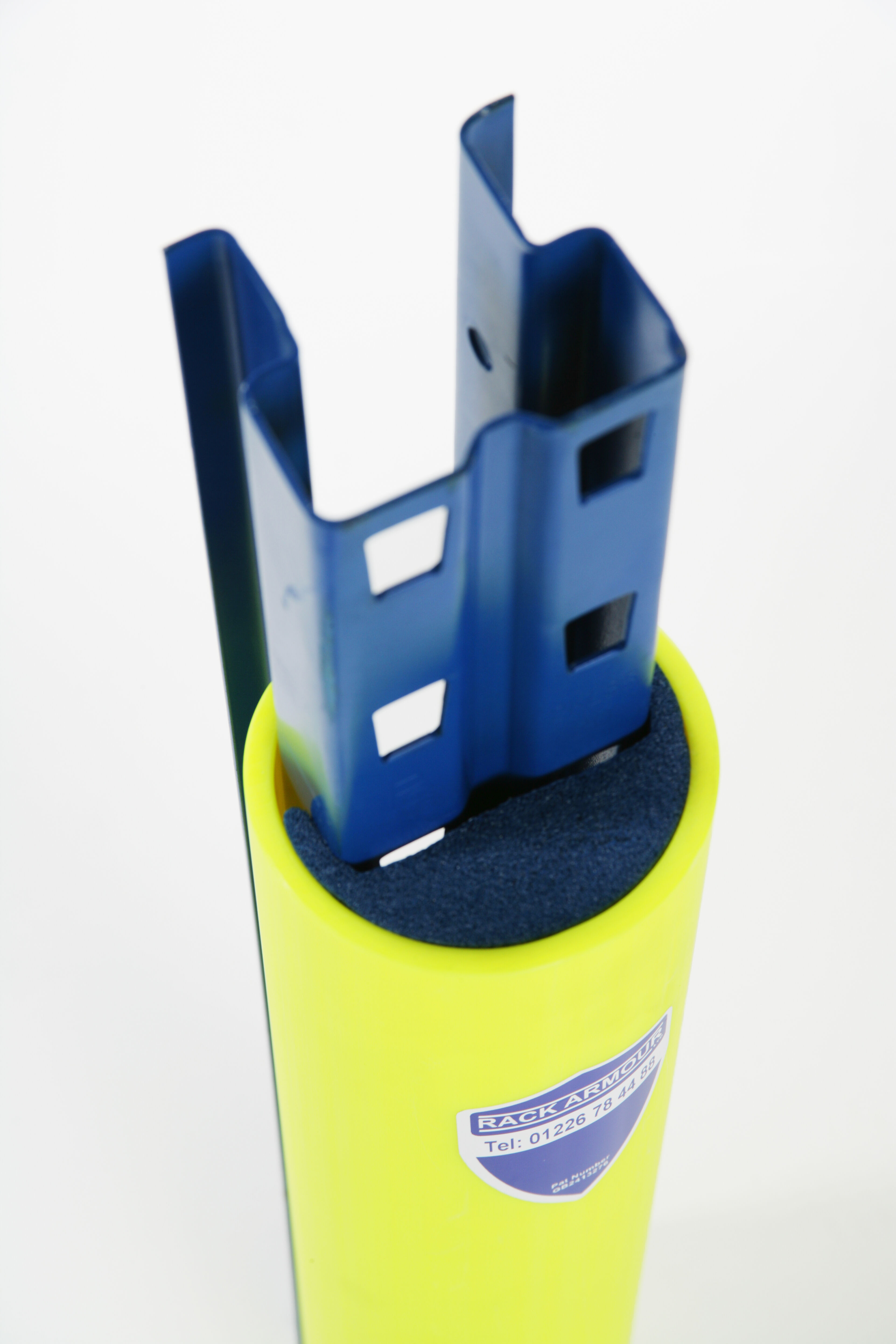
Floor marking defines the zones where forklifts should and should not operate; infrastructure protection (such as Rack Armour upright protectors) absorbs the impacts when contact does happen. The combination is particularly powerful — the floor marking reduces incident rates by improving driver awareness, and the protection limits the consequences of the incidents that still happen.
Combining floor marking with pedestrian-vehicle separation
Floor marking defines pedestrian walkways and forklift traffic lanes; A-frame barriers and continuous rail barriers create physical separation. The combined approach delivers strong pedestrian safety — the visual cue plus the physical barrier work together to keep pedestrians out of forklift zones and forklifts out of pedestrian zones.
Combining floor marking with traffic management
Floor marking defines the traffic flow; speed bumps enforce speed limits; signage reinforces the rules; mirrors support visibility at intersections. The combination creates a managed traffic environment where the rules are clear, the conditions support compliance, and the consequences of non-compliance are contained.
Combining floor marking with 5S workplace organisation
5S methodology — Sort, Set in Order, Shine, Standardise, Sustain — relies heavily on visual workplace organisation. Floor markings define every storage zone, every tool location, every material flow. Combined with shadow boards, labels, and visual management, the floor markings form the foundation of a 5S-compliant operation.
Common mistakes when specifying floor marking tape
Mistake 1: Wrong specification for the traffic
Using standard PVC tape in a heavy-traffic forklift lane is the most common mistake. The tape will lift and degrade within months rather than years, requiring repeated replacement and creating a poor visual impression. Match the tape grade to the actual traffic level.
Mistake 2: Inadequate surface preparation
Skipping or rushing surface preparation results in poor adhesion and short tape life. Even on apparently clean floors, dust and fine particulates prevent the adhesive from bonding fully. Take the time to clean thoroughly before applying tape.
Mistake 3: Stretching the tape during application
Pulling the tape tight as it's applied to keep it straight introduces stress in the adhesive bond. The tape will tend to relax and pull free over time, lifting at the edges. Apply the tape gently with the natural lay of the roll, using marked guidelines for straightness.
Mistake 4: Inconsistent colour use
Mixing colour conventions across the warehouse — yellow walkways in one zone, green walkways in another — undermines the visual communication value of the marking. Establish a consistent colour scheme and apply it throughout.
Mistake 5: Forgetting to plan for change
Warehouse layouts change over time as operations evolve. Floor marking schemes that don't accommodate change become obsolete and need expensive removal and replacement. Plan the scheme with some flexibility — modular elements that can be updated, removed, and refreshed without disturbing the wider layout.
Mistake 6: Not maintaining the scheme
A floor marking scheme that's installed and forgotten will degrade over time, with damaged sections, faded colours, and missing elements undermining the scheme as a whole. Build inspection and maintenance into the warehouse routine.
Hall-Fast and your floor marking specification
Hall-Fast supplies floor marking tape and a wide range of related warehouse safety and damage-prevention products from a single source. For your floor marking specification, get in touch via the contact page — our team can advise on tape grade, colour, width, and application based on your specific operational requirements. Browse our brand portfolio to see the wider range of warehouse products we supply.
The Rack Armour price promise
Hall-Fast operates a comprehensive price promise on every authentic Rack Armour product we supply. If you find a better price on Rack Armour anywhere on the internet, or if you receive a quotation from another supplier that beats ours, let us know and we will match the price. Combined with floor marking tape and other safety products from the wider Hall-Fast range, the price promise means a comprehensive damage prevention specification at the most competitive total cost.
Stock and despatch
Hall-Fast holds significant UK stock of warehouse safety products, supporting fast despatch on most orders. Larger orders for new-build warehouse fit-outs are quoted with firm delivery dates at the point of order.
Frequently asked questions
How long does floor marking tape last?
Service life depends on the tape specification and the traffic level. Standard PVC tape lasts 1 to 3 years in moderate-traffic environments; heavy-duty industrial tape lasts 3 to 5 years in heavy-traffic zones; specialist aisle tape can last 5+ years in the most demanding applications. Good surface preparation and prompt replacement of damaged sections extend the life of any tape grade.
Can floor marking tape be removed?
Yes. Most floor marking tape can be removed when the layout changes or the marking is no longer needed. A heat gun softens the adhesive for easier removal. Some adhesive residue typically remains and needs cleaning with an appropriate solvent. Heavy-duty tapes with stronger adhesives are harder to remove than standard tapes.
Can I apply floor marking tape over existing tape?
It is generally not recommended. The new tape will only adhere as well as the underlying tape, which is by definition near the end of its service life if you are replacing it. Better to remove the old tape, clean the floor, and apply fresh tape directly to the concrete.
What colours should I use for what purpose?
Common UK conventions: yellow for general marking and walkways; red for restricted or hazardous zones; green for safe areas and emergency equipment; blue for information and tools; black-and-yellow stripes for hazard zones; red-and-white stripes for fire-related markings; white for high-contrast general marking. Establish a consistent scheme and apply it throughout.
How wide should my floor marking lines be?
Major boundaries, traffic lanes, and primary walkways: 75-100 mm (3-4 inches) or wider. Storage zone marking and general 5S applications: 25-50 mm (1-2 inches). Very detailed marking: narrower if needed. Wider lines are more visible at distance and survive abrasion better than narrow lines.
Does floor marking tape work on all floor surfaces?
Floor marking tape works best on smooth, clean concrete or sealed floor surfaces. Rough or porous surfaces (raw concrete, asphalt, bare wood) provide less adhesion and shorter tape life. Painted floors require the paint to be fully cured and stable. Test adhesion in an inconspicuous spot before committing to a large installation.
About Hall-Fast Industrial Supplies
Hall-Fast Industrial Supplies is a long-established UK distributor of industrial products to warehouses, factories, and distribution centres across the United Kingdom. Find out more about us on the About Hall-Fast page. Floor marking tape, Rack Armour upright protectors, and the wider range of warehouse safety and damage-prevention products are all part of our offering.
Browse our Rack Armour range, explore our wider brand portfolio, or contact us via the contact page to discuss your floor marking specification and any wider warehouse damage-prevention requirements.
Industry-specific floor marking applications
Different industries place different demands on floor marking schemes. Below is a quick guide to common applications across the major UK warehouse-using sectors.
Third-party logistics (3PL)
3PL warehouses with multiple clients, varied loads, and frequently-changing operational patterns benefit from comprehensive floor marking schemes that organise the operation visually. Heavy-duty traffic lanes, clearly-defined goods-in/goods-out zones for each client, marshalling area marking, and pedestrian walkways throughout the operational floor. The marking supports both safety and operational efficiency, particularly in multi-client facilities where the layout may need to flex over time.
Food and beverage distribution
Food and beverage warehouses combine high movement with strict hygiene and audit requirements. Floor markings here must be wash-resistant for hygiene cleaning, hold up under chilled and frozen conditions in cold stores, and support the BRC and other food-safety audit requirements. Photoluminescent marking on emergency egress routes, anti-slip marking in zones where condensation pools, and clearly-defined zone boundaries support the food-safety compliance position.
Retail distribution centres
Retail DCs use floor marking to support high-throughput pick operations, defined wave zones, dispatch lane organisation, and pedestrian-vehicle separation in busy operational zones. Heavy-duty tape is essential because of the constant pallet-truck and forklift traffic. Site-wide colour conventions support consistency across multi-site retail networks.
Manufacturing facilities
Manufacturing operations use floor marking extensively for 5S workplace organisation, machine zone definition, work-in-progress storage, and material flow lanes. The marking supports lean manufacturing principles by making waste visible and supporting standardised work. Customised marking with bay numbers, machine identifiers, and process-step labels integrates with manufacturing execution systems.
E-commerce fulfilment
E-commerce fulfilment operations with high pick rates and labour-intensive operations benefit from extensive floor marking for pedestrian walkways, picking zones, packing stations, and dispatch lanes. The combination of pedestrian-shared aisles and high pallet-truck activity makes pedestrian-vehicle separation marking particularly important. Photoluminescent marking on emergency routes is widely specified.
Pharmaceutical and healthcare
Pharma warehouses operating to GDP standards require marking schemes that support audit compliance, defined material flow, controlled-substance zone separation, and emergency egress. Cleanroom-compatible tape grades are available where required. Marking schemes are typically documented as part of the facility validation package.
Beyond floor marking: a complete warehouse organisation system
Floor marking is one element of a wider warehouse organisation and visual management system. The most effective warehouses combine floor marking with complementary visual tools that together create a comprehensive, easily-understood operational environment.
Vertical signage
Vertical signs hung from the ceiling, mounted on the racking, or attached to walls communicate information that floor marking cannot — bay identifiers, aisle numbers, zone names, safety warnings, evacuation directions, and operational instructions. Vertical signage extends the visual language of the floor marking up into the three-dimensional space of the warehouse.
Pictograms and symbols
Standardised safety pictograms communicate hazards and required behaviours quickly across language barriers. Pictograms for PPE requirements, prohibition zones, mandatory actions, and warnings should follow the ISO 7010 conventions where applicable, ensuring they are immediately recognisable to all staff and visitors.
Shadow boards and tool marking
Shadow boards in tool storage and equipment areas show the location of every tool with a silhouette outline. Combined with floor marking around the equipment storage zone, the shadow board makes it instantly visible when a tool is missing or in the wrong place — supporting both 5S compliance and faster operational recovery when tools are mislaid.
Colour-coded zone identification
Beyond floor lines, complete zone identification uses colour-coded labels, signage, and even colour-coded equipment. Yellow tools used in yellow-marked zones, green safety equipment in green-marked safe areas, and red safety equipment around red restricted zones — the consistent colour use reinforces the marking scheme.
Documentation and standards
Document the floor marking scheme in a warehouse standards manual that defines colour conventions, line widths, application standards, and inspection requirements. The documentation supports consistency over time as staff change, layouts evolve, and the warehouse adapts to new operations. The standards manual also forms part of the audit and inspection package.
Training and induction
Train all warehouse staff in the floor marking scheme as part of induction and refresher training. Staff need to understand what each colour means, where they can and cannot walk, what the various symbols communicate, and how to respond to the different markings. Visitors and contractors should be briefed on the marking scheme as part of their site induction. Without this training, even the best-designed marking scheme delivers less than its full safety and operational value.
Periodic review and improvement
Review the floor marking scheme periodically — typically annually as part of the wider safety and operational review. Look at: are there new hazards or zones that need marking? Has the layout changed in ways the marking has not caught up with? Are there incidents or near-misses that suggest the marking is not working in particular zones? Use the review to drive continuous improvement of the scheme. Walk the warehouse with operational staff, supervisors, and the safety team, and capture feedback on what is working and what is not. The review document supports the budget conversation for any rework or expansion needed in the next 12 months, and provides the trail of continuous improvement that audits look for. The annual review is also a good opportunity to refresh the floor marking colour standards manual and re-circulate it across the operation. Multi-site operations benefit from sharing best practice across sites, with a network-wide standard that nonetheless allows for site-specific adaptations where they make sense — Hall-Fast can support multi-site programmes with consistent product specification.
Conclusion
Floor marking tape is one of the most cost-effective and impactful warehouse safety and organisational tools available. The right tape, applied properly to a well-prepared surface in a thoughtfully-designed scheme, supports safer forklift operations, better operational efficiency, and stronger compliance with audits and inspections. Combined with other warehouse damage prevention products — including Rack Armour upright protectors, bollards, barriers, mirrors, and signage — floor marking forms the foundation of a comprehensive prevention programme.
Hall-Fast Industrial Supplies is your UK partner for floor marking tape and the wider warehouse safety product range. Authentic, well-specified products supported by expert advice and competitive pricing — and on Rack Armour, the Hall-Fast price promise that means we will match any genuine competing offer.
Get started today by browsing the Hall-Fast Rack Armour range, exploring our brand portfolio, or contacting us via the contact page for tailored specification advice and pricing.