Convex warehouse mirrors are one of the most cost-effective safety investments available to UK warehouse operators. The simple principle — a curved mirror surface that compresses a wide field of view into a small, visible reflection — eliminates blind spots at intersections, around blind corners, in goods-in/goods-out access points, and anywhere forklifts and pedestrians cross paths. The right mirror in the right location prevents the kind of corner-on-corner collisions and pedestrian-strike incidents that cause serious injury and significant infrastructure damage. This comprehensive guide walks through everything you need to know about specifying convex mirrors for UK warehouses.
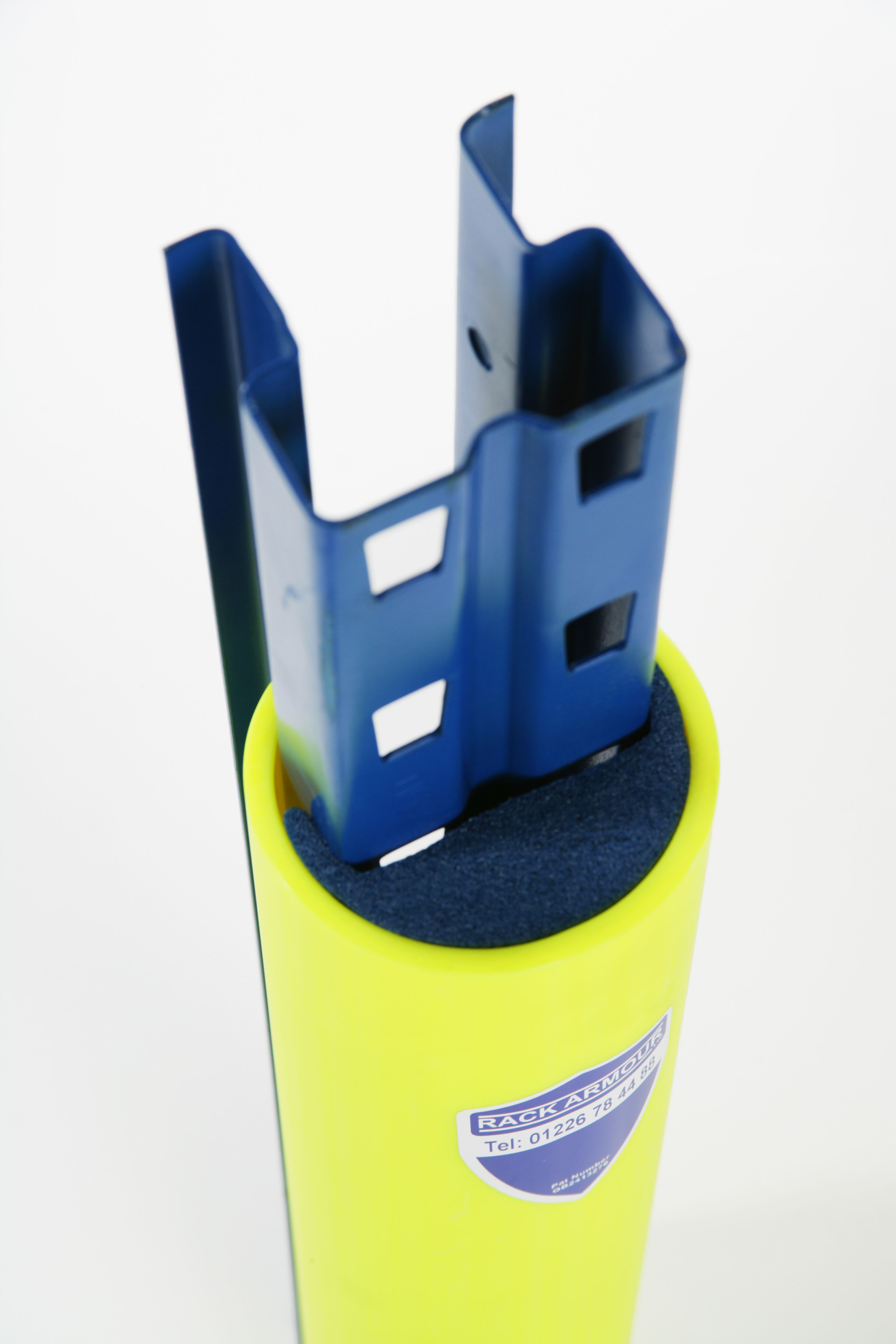
Hall-Fast Industrial Supplies is one of the UK's leading distributors of warehouse safety equipment including convex mirrors. We are also the home of Rack Armour, the UK's leading polymer upright protector for pallet racking. Browse our wider brand portfolio, learn about Hall-Fast on the About page, or get in touch via the contact page. Our price promise applies on every authentic Rack Armour product: if you find a better price, let us know and we will match it.
How convex mirrors work and why they matter
A convex mirror is a curved reflective surface — convex meaning the surface curves outwards towards the viewer. The curvature has a remarkable effect on the field of view: where a flat mirror reflects only what is directly in front of it (a narrow field of view), a convex mirror compresses a much wider field into a smaller, recognisable image. Standing in front of a convex mirror, you can see the area to your left, your right, behind you, and in front of you — all at once.
The trade-off: distance perception
The wide field of view comes with a trade-off: the image is compressed, so objects appear smaller than they actually are, and distance perception is altered. Anyone using the mirror for the first time needs to learn this: the truck that looks far away in the convex reflection may be much closer than it appears. Forklift drivers and pedestrians using convex mirrors learn to compensate after a short familiarisation, and the improved field of view massively outweighs the distance compression.
Why convex mirrors prevent incidents
A high proportion of warehouse forklift incidents happen at intersections, blind corners, and access points where the driver could not see oncoming traffic or pedestrians until it was too late. Convex mirrors eliminate the blind spot, letting drivers see what is approaching the intersection from the perpendicular direction before they themselves enter it. The driver sees the pedestrian, the pedestrian sees the truck, and both can adjust their movement to avoid contact. The same logic applies to forklift-on-forklift encounters at intersections.
The economic case
Convex mirrors are inexpensive compared to most warehouse safety equipment. A typical industrial convex mirror costs less than the excess on a single forklift insurance claim. The investment is recouped from the very first incident the mirror helps to avoid, and the multi-year service life of a quality mirror means many years of accident prevention from a single small purchase. Few warehouse safety investments deliver a stronger return.
Types of convex warehouse mirror
Convex mirrors come in several different types, each engineered for specific applications. Selecting the right type for each location is the foundation of an effective mirror programme.
Round convex mirrors
Round convex mirrors are the classic shape — a circular reflective surface with a single curvature in all directions. The curvature compresses a roughly hemispherical field of view into the visible area. Round mirrors work well at four-way intersections where the field of view needs to extend equally in all horizontal directions. Common diameters range from 300 mm for short viewing distances up to 1000 mm or larger for long viewing distances and outdoor applications.
Rectangular convex mirrors
Rectangular convex mirrors are wider than they are tall, with curvature primarily in the horizontal direction. The wide format compresses a wide horizontal field while preserving more accurate vertical proportion. Rectangular mirrors work well at T-intersections and in situations where the relevant traffic is mostly horizontal — long aisles converging from the sides — and where vertical detail is less important.
Half-dome (180-degree) mirrors
Half-dome mirrors are designed to mount in a corner where the wall meets the ceiling, providing a 180-degree field of view in front of the mirror. The half-dome is the right choice for monitoring T-intersections where two corridors meet a third at a perpendicular angle. The mirror compresses the full 180-degree horizontal field into the visible reflective area.
Quarter-dome (90-degree) mirrors
Quarter-dome mirrors mount at the corner of a wall where two perpendicular corridors meet, providing a 90-degree field of view. The quarter-dome covers exactly the right field for an L-shaped corridor junction, letting drivers approaching the corner see what is coming from the perpendicular direction.
Full-dome (360-degree) mirrors
Full-dome mirrors are typically ceiling-mounted and provide a 360-degree field of view of the floor below. The full-dome is the right choice for monitoring four-way intersections from above, providing all-direction visibility from a single mirror. Larger full-domes can monitor a substantial floor area, supporting CCTV-style oversight as well as immediate driver visibility.
Outdoor (weather-resistant) convex mirrors
Outdoor convex mirrors are engineered to survive UK weather — rain, frost, sun, and temperature swings. Weather-resistant housings, anti-fog coatings, and corrosion-resistant fittings all contribute to long outdoor service life. Outdoor mirrors are essential for yards, loading dock approaches, outdoor canopy areas, and any external location where drivers approach blind corners.
Hemispherical (full-dome) safety mirrors
Hemispherical safety mirrors are similar to full-dome but with a more pronounced curvature, supporting wider fields of view at the cost of more compressed images. They are typically used in retail and security applications but also have warehouse applications in narrow areas or busy intersections where field of view trumps image clarity.
Forklift-mounted mirrors
Forklift-mounted mirrors are convex mirrors fitted to the forklift itself rather than to the warehouse infrastructure. They give the driver visibility around the truck — particularly the rear and the sides — supporting safer reversing and turning. Forklift-mounted mirrors complement infrastructure-mounted mirrors rather than replacing them.
Choosing the right size of convex mirror
Mirror size is one of the most important specification decisions. A mirror that is too small will not be visible from the relevant viewing distance; a mirror that is too large is wasted investment. The right size matches the viewing distance from the relevant approach point or driver position.
Viewing distance and mirror size
As a general guide for round convex mirrors: 300 mm diameter for viewing distances up to about 5 metres; 450 mm for viewing distances up to about 10 metres; 600 mm for viewing distances up to about 15 metres; 800 mm for viewing distances up to about 20 metres; and 1000 mm or larger for longer distances and outdoor applications. The exact relationship depends on lighting conditions, the angle of the mirror, and the size of the obstacles being detected, but these guidelines provide a starting point.
Field of view considerations
Smaller mirrors with tighter curvatures can deliver wider fields of view but with more image compression. Larger mirrors with gentler curvatures deliver less compressed images but with narrower fields of view. The trade-off is between seeing a wider area at low resolution and seeing a smaller area at higher resolution. For most warehouse applications, the wider field of view at moderate compression is the better choice.
Mounting height
Mirror mounting height affects both the field of view (higher mountings see further) and the angle of the reflected image (higher mountings show the floor at a steeper angle). Typical warehouse mirror mounting heights range from 2.5 metres to 4 metres, depending on the height of the obstacles, the height of the forklift driver position, and the layout of the area.
Where to install convex mirrors in your warehouse
A typical warehouse benefits from convex mirrors at multiple specific locations. Below are the most common applications.
Aisle intersections
Where two or more aisles meet, traffic from each aisle approaches the intersection without seeing what is coming from the perpendicular direction. A convex mirror at the intersection — typically full-dome ceiling-mounted, or a pair of half-domes on the corners — eliminates the blind spot. Drivers approaching the intersection see oncoming traffic from all directions in the mirror, supporting safer entry and reducing the risk of perpendicular collisions.
Goods-in and goods-out access points
Goods-in/goods-out areas typically have high traffic, multiple vehicles, and pedestrians. Convex mirrors at the entry and exit points let forklift drivers see what is happening on the other side before they enter. Outdoor-rated mirrors at dock entry points are particularly important because of the weather exposure and the mix of HGV and forklift activity.
Around fixed obstacles
Building columns, racking ends, free-standing equipment, and other fixed obstacles create blind spots in otherwise open areas. A convex mirror mounted on or near the obstacle lets drivers see what is on the far side. In open warehouse areas with multiple columns, mirrors on each column transform the operating environment from a series of blind navigation problems into a clear visibility environment.
Pedestrian crossings
Pedestrian crossings of forklift traffic lanes benefit from mirrors at the approach. Forklift drivers see whether a pedestrian is approaching the crossing; pedestrians see whether a forklift is coming. The mirror supports the conscious decision to slow, yield, or stop appropriately.
Narrow aisles
Narrow aisles in high-density storage operations create their own blind-spot challenges. Drivers entering the aisle cannot see whether another truck is already inside until it is too late to back out comfortably. End-of-aisle mirrors allow drivers to check for trucks already in the aisle before committing to entry. Some narrow-aisle operations use one-way working with mirrors at the entry confirming the aisle is clear.
Mezzanine edges and elevated working zones
Mezzanine landings, raised platforms, and elevated picking zones have specific visibility challenges — staff at height working over forklift activity below. Mirrors at the mezzanine edges let staff see what is happening on the floor below, supporting safer interactions with forklift traffic in the same zone.
Charging and refuelling areas
Forklift charging and refuelling areas combine vehicle activity with electrical or fuel-handling activity. Mirrors at the entry support safer manoeuvring into the charging area, particularly in tight spaces. The visibility supports both safer driving and clearer observation of any developing electrical or fuel issue.
Outdoor yards and approach roads
Outdoor yards where forklifts share space with HGVs, vans, and pedestrians need outdoor-rated mirrors at the access points and around blind corners. The combination of weather exposure and mixed traffic makes outdoor mirror specification particularly important. Yard mirrors typically need to be robustly mounted to survive both weather and occasional vehicle contact.
Mounting and installation of convex mirrors
Convex mirrors install relatively simply, but the right mounting approach makes a significant difference to their effectiveness.
Wall mounting
Wall mounting is the most common approach. A bracket fixed to the wall holds the mirror at the appropriate angle to capture the relevant field of view and reflect it towards the relevant viewing position. Bracket adjustability allows fine-tuning of the angle during installation. Wall mounting works well for half-dome and quarter-dome mirrors, and for round mirrors at lower mounting heights.
Ceiling mounting
Ceiling mounting is the right choice for full-dome 360-degree mirrors and for round mirrors at higher mounting positions. Ceiling-mounted mirrors typically have adjustable brackets that allow them to be angled towards specific viewing positions, or fixed-position mountings that provide a defined field of view directly below.
Pole mounting
Pole-mounted mirrors are common in outdoor applications and in indoor applications where there is no convenient wall or ceiling mount point. The mirror sits at the top of a vertical pole anchored into the floor or ground, with the mirror angled to capture the relevant field of view.
Adjustability and angle setting
Most convex mirrors include adjustable brackets that allow the angle to be set precisely after installation. The setting process involves: physically positioning the mirror; sighting from the relevant viewing position to confirm the field of view captures the area of interest; adjusting the angle to optimise the view; and tightening the bracket to lock the position. The setting should be checked from multiple expected viewing positions to confirm coverage.
Mirror finish and clarity
Mirror finish affects visibility, particularly under directional warehouse lighting. Acrylic-faced mirrors are common and offer good clarity at moderate cost. Polycarbonate-faced mirrors are more impact-resistant for hostile environments. Glass-faced mirrors offer the best clarity but are not typically used in warehouses because of breakage risk. Stainless-steel-faced mirrors trade some clarity for excellent durability in demanding environments.
Maintenance of convex warehouse mirrors
Convex mirrors are largely maintenance-free, but periodic cleaning and inspection keep them performing at their best.
Cleaning
Dust, dirt, and grime accumulate on mirror surfaces over time and gradually reduce reflective clarity. Periodic cleaning — typically monthly or quarterly depending on the warehouse environment — keeps the mirror clear. A soft cloth and standard glass cleaner work well for most acrylic and polycarbonate mirrors. Avoid abrasive cleaners or stiff brushes that could scratch the mirror surface.
Inspection
Add the convex mirrors to your routine warehouse safety inspection. Look for: mirrors that have moved out of position; mirrors that have been damaged; mirrors that have become loose at the bracket; and mirrors that have become so dirty or weathered that visibility is compromised. Address any findings promptly.
Replacement
When a mirror is damaged or has reached the end of its useful service life, replace it promptly. The replacement cost is small compared to the consequences of a missing mirror. Keep a small stock of replacement mirrors on site for rapid refits. For specialist or large mirrors, contact Hall-Fast for replacement supply.
Re-angling after disturbance
Mirrors occasionally get knocked out of alignment by accidental contact with forklifts, ladders, or maintenance equipment. After any such event, check the mirror angle and re-set if necessary. The original sighting positions used during installation can be re-used to confirm the alignment is correct.
Common mistakes when specifying convex mirrors
Mistake 1: Too small for the viewing distance
Specifying mirrors that are too small for the relevant viewing distance is the single most common mistake. The mirror is technically present but the reflected image is too small to see clearly from the driver's position. Always specify based on the longest expected viewing distance.
Mistake 2: Wrong mirror type for the geometry
A round mirror at a T-intersection wastes some of its reflective area on direction that doesn't matter; a rectangular mirror at a 4-way intersection misses traffic from the unrepresented direction. Match the mirror type to the geometry of the location.
Mistake 3: Indoor mirrors used outdoors
Standard indoor mirrors degrade quickly in outdoor conditions — UV, rain, and temperature swings damage the acrylic and the reflective backing. Always use weather-resistant outdoor-rated mirrors for any external installation.
Mistake 4: Poor angle setting
A correctly-specified mirror with a poorly-set angle delivers far less than its potential. Take the time during installation to set the angle precisely from the relevant viewing positions. Check from multiple driver and pedestrian positions to confirm full coverage.
Mistake 5: Forgetting to clean and maintain
Mirrors that aren't cleaned regularly become progressively less effective until the field of view is barely usable. Build mirror cleaning into the routine warehouse cleaning schedule.
Mistake 6: Relying on mirrors alone
Mirrors are one element of a layered visibility and safety programme. Operations that install mirrors and assume the visibility problem is solved miss the opportunity to combine mirrors with other measures — speed bumps, signage, floor markings, barriers — that together deliver much stronger safety outcomes.
Combining mirrors with the wider safety programme
Convex mirrors work most effectively as part of a wider warehouse safety and damage-prevention programme. The combination of products delivers stronger outcomes than any single element on its own.
Mirrors and floor marking
Floor markings define the traffic lanes, walkways, and intersections; mirrors provide the visibility at the points where the markings indicate caution. Together, the markings tell drivers where to look and the mirrors give them something to look at. Goods-in/goods-out zones particularly benefit from this combination.
Mirrors and barriers
Physical barriers separate pedestrians from forklifts; mirrors give visibility at controlled crossing points where the separation is breached. Combined, the system creates safe routes for pedestrians plus visibility for the inevitable shared moments at crossings.
Mirrors and signage
Signage warns drivers of upcoming hazards; mirrors give them visibility into those hazards. A 'Pedestrian crossing — slow' sign before a crossing reinforces the visual cue from the mirror at the crossing itself. The combination creates layered awareness.
Mirrors and infrastructure protection
Mirrors reduce the rate of impact incidents by improving visibility; infrastructure protection (such as Rack Armour) absorbs the impact energy when contact does happen. The combination delivers comprehensive protection — fewer incidents and lower consequences when incidents occur.
Hall-Fast for convex mirrors and the wider safety range
Hall-Fast supplies convex warehouse mirrors and the full range of supporting warehouse safety equipment from a single source. For your mirror specification or wider safety requirement, get in touch via the contact page. Browse our brand portfolio to see the wider range we supply.
The Rack Armour price promise
Hall-Fast operates a comprehensive price promise on every authentic Rack Armour product we supply. If you find a better price on Rack Armour anywhere on the internet, or if you receive a quotation from another supplier that beats ours, let us know and we will match the price. Combined with convex mirrors and the wider safety range, the price promise means a comprehensive specification at the most competitive total cost.
Stock and despatch
Hall-Fast holds significant UK stock of warehouse safety products, supporting fast despatch on most orders. Larger orders for new-build warehouse fit-outs are quoted with firm delivery dates.
Specifier support
Our team has specified comprehensive safety programmes for warehouses across the UK. We can advise on mirror selection, sizing, mounting, and integration with the wider safety scheme. There is no charge for the specification advice.
Frequently asked questions
How many mirrors do I need in my warehouse?
The number depends on the size and layout of the warehouse and the locations where mirrors would add value. A typical mid-size warehouse might benefit from a dozen or more mirrors at intersections, around columns, and at goods-in/goods-out access points. Walk the warehouse from a forklift driver's perspective and identify every location where a mirror would improve visibility — that gives you the count.
How long do convex mirrors last?
Indoor industrial convex mirrors typically last 10 years or more in normal warehouse service. Outdoor mirrors last 5-10 years depending on the environmental conditions. Mirrors that are knocked or damaged may need earlier replacement. Periodic cleaning and inspection support full service life.
Can convex mirrors be cleaned with standard cleaners?
Most acrylic and polycarbonate convex mirrors clean with standard glass cleaner and a soft cloth. Avoid abrasive cleaners, scrubbing pads, or stiff brushes that could scratch the surface. Outdoor mirrors may benefit from periodic application of an anti-fog or anti-rain coating.
Do I need professional installation?
Most convex mirrors install with standard tools and can be fitted by competent in-house staff. Wall and ceiling mounting requires basic drilling and fixing skills. Pole mounting and outdoor installations may need specialist contractor support, particularly where chemical-fix anchoring or electrical work is involved.
What size mirror should I choose?
As a general guide, larger mirrors suit longer viewing distances. 300 mm diameter for distances up to 5 metres; 450 mm for up to 10 metres; 600 mm for up to 15 metres; 800 mm or larger for longer distances and outdoor applications. Always specify based on the longest expected viewing distance from the relevant driver position.
Can mirrors be combined with CCTV cameras?
Yes. Some warehouse operations install CCTV cameras alongside convex mirrors at key intersections. The camera supports incident review and management oversight; the mirror supports immediate driver visibility. The combination is particularly valuable for high-traffic intersections in busy warehouses.
Industry sector applications
3PL and logistics
3PL warehouses with high pallet movement rates and varied loads benefit from comprehensive mirror coverage at every intersection. Multiple mirrors at busy intersections, outdoor mirrors at dock approaches, and pole-mounted mirrors in yard areas are all common.
Food and beverage distribution
Food and beverage operations use mirrors particularly heavily in cold-store environments where lighting is often lower than in ambient warehouse zones. Cold-store-rated mirrors retain their reflective properties and avoid fogging at chilled and frozen temperatures.
Retail distribution centres
Retail DCs typically have comprehensive mirror coverage as part of their multi-site safety standards. Network-wide consistent specification supports staff transfers and shared best practice across sites.
Manufacturing
Manufacturing facilities use mirrors at the boundaries between production zones and warehouse areas, at access points to high-risk machine zones, and in goods-in/goods-out areas. The diversity of activities in a manufacturing facility creates many specific mirror opportunities.
E-commerce fulfilment
E-commerce fulfilment with high pedestrian-shared activity benefits from mirrors at every pick-aisle intersection, at the entries to dispatch zones, and at the boundaries between human-pick and robotic-pick areas. The mirror coverage supports the high-density operation.
Pharmaceutical
Pharma warehouses operate to GDP standards with carefully controlled access and material flow. Mirrors support the controlled-flow operation and are typically documented in the facility validation package.
About Hall-Fast Industrial Supplies
Hall-Fast Industrial Supplies is a long-established UK distributor of industrial products to warehouses, factories, and distribution centres across the United Kingdom. Find out more about us on the About Hall-Fast page. Convex warehouse mirrors, Rack Armour upright protectors, and the wider range of warehouse safety and damage-prevention products are all part of our offering.
Browse our Rack Armour range, explore our wider brand portfolio, or contact us via the contact page to discuss your convex mirror specification and any wider warehouse damage-prevention requirements.
Mirror specification: a step-by-step process
To get the best value from a convex mirror investment, work through a structured specification process for each location.
Step 1: Identify the visibility problem
Stand at the location and consider what the driver or pedestrian needs to see that they currently cannot. What is around the corner? What is approaching from the perpendicular direction? What is on the other side of the obstacle? The visibility problem statement defines what the mirror needs to capture.
Step 2: Identify the viewing positions
Where will the driver or pedestrian be when they look at the mirror? Mark the expected viewing positions on a sketch. There may be multiple viewing positions — drivers approaching from different directions, pedestrians at a crossing — and the mirror needs to provide useful visibility from each.
Step 3: Measure the viewing distance
Measure the distance from each viewing position to the proposed mirror location. The longest of these distances drives the mirror size specification. Add some margin — drivers may approach from slightly further away in some scenarios.
Step 4: Select the mirror type and size
Match the mirror type to the geometry: round for general use, rectangular for primarily-horizontal fields, half-dome for T-intersections, quarter-dome for L-intersections, full-dome for 4-way intersections or overhead monitoring. Size based on the viewing distance from Step 3.
Step 5: Plan the mounting
Identify a suitable mounting point: wall, ceiling, column, or pole. The mounting point needs to be solid enough to hold the mirror securely; positioned to support the required field of view; accessible for installation and future cleaning; and clear of forklift contact paths so it won't be knocked off.
Step 6: Plan the angle
Sketch the mirror angle that will capture the relevant field of view from each direction of approach. The angle is set during installation, but planning ahead identifies any geometric constraints that might require a different mirror choice or mounting position.
Step 7: Order and install
With the specification confirmed, order the mirrors from Hall-Fast and install. Set the angle from each viewing position and confirm the field of view captures what you intended. Test from the actual driver position — you may need to adjust angle iteratively to get the best result.
Beyond traditional mirrors: emerging technologies
Convex mirrors are the long-established solution to warehouse blind-spot problems. Emerging technologies complement but do not replace the basic mirror approach.
AI camera systems
AI-powered camera systems mounted at intersections can detect forklifts and pedestrians and provide audible or visual alerts when both are approaching the same point. These systems can be effective but typically require more installation work, ongoing maintenance, and capital investment than mirrors. They complement rather than replace mirrors in most installations.
Forklift proximity detection
Forklift-mounted proximity detection systems alert the driver to nearby pedestrians via on-truck warnings. The systems use various technologies (RFID tags worn by pedestrians, radar, ultrasonic, computer vision) and have a place in safety-critical operations. Like AI cameras, they complement mirrors rather than replacing them.
Smart mirrors and connected safety
Some emerging mirror products incorporate motion sensors, lighting, or connectivity features that enhance the basic visibility function. Examples include mirrors with integrated LED warning lights that activate when motion is detected. The technology is developing and the value proposition is improving.
The case for traditional mirrors
Despite emerging alternatives, traditional convex mirrors remain the foundation of warehouse blind-spot management because of their simplicity, reliability, low cost, long service life, and lack of dependency on power, software, or batteries. They work in any conditions, require no software updates, do not fail when networks go down, and are immediately understood by every driver and pedestrian without training. The combination of these benefits is hard to beat at any price point.
Building the business case for warehouse mirrors
Securing budget for warehouse mirrors usually requires a brief business case showing the cost-benefit balance. The case is typically straightforward.
Quantify the historical incidents
Pull the incident records for the past 12 to 24 months and identify incidents that happened at intersections, around blind corners, or in places where visibility was a contributing factor. Sum the cost — direct repair, vehicle damage, product damage, lost time. Even a small number of incidents typically generates a substantial total cost.
Identify the prevention potential
Of the historical visibility-related incidents, how many would likely have been prevented by a mirror at the relevant location? The honest assessment is rarely 100 per cent — drivers don't always look at mirrors, and not every blind spot is fully resolved by a single mirror — but a reasonable estimate is often 50-80 per cent. Apply this rate to the historical incident cost to estimate the avoided cost.
Cost the mirror programme
Specify the mirrors needed and price the supply and installation. For a typical warehouse, the total mirror programme cost is modest — often less than the cost of a single significant historical incident.
Calculate the payback
Compare the avoided cost to the programme cost. The payback period is typically very short — often weeks rather than months — because mirrors are inexpensive and the avoided incident costs are substantial.
Include the unmeasured benefits
Beyond the direct incident cost reduction, mirrors deliver wider benefits: improved staff confidence, lower insurance underwriting risk, stronger audit position, faster operational tempo (drivers move with more confidence at intersections when they can see what is approaching), and reduced near-miss rate. These are harder to quantify but real.
Mirror placement: thinking like a forklift driver
The most common cause of poorly-performing mirror installations is specifying from a manager's perspective rather than a driver's perspective. The driver sees the warehouse from a specific seated position with specific sightlines, specific blind spots, and specific operational pressures. Mirror placement that makes sense from a driver's perspective delivers far better safety outcomes.
Sit in the truck
Before specifying mirrors, sit in a forklift at each proposed location and look around. What can you see? What can you not see? What are the dangerous blind spots? Where would a mirror most help? The seat-time reveals issues that walking the warehouse on foot cannot.
Think about approach speed
Drivers approaching an intersection at speed have less time to look at a mirror than drivers approaching slowly. Mirror placement and size should account for the typical approach speed at each location. Faster approaches need larger, more centrally-positioned mirrors that capture attention quickly.
Consider load-blocked sightlines
Forklifts carrying loads on the forks have those loads in the driver's forward sightline. The driver's view forwards may be partially or completely blocked by the load, making mirrors at intersections doubly important. Place mirrors to be visible above or to the side of typical load heights.
Account for operational variation
The warehouse operates differently at different times of day, in different seasons, and during different operational phases. Peak-season operation, night-shift operation, and goods-in surge periods may stress the mirror programme in different ways. Specify for the most demanding conditions, not the average.
Conclusion
Convex warehouse mirrors are a cost-effective, high-impact investment in warehouse safety. The right mirror in the right location eliminates blind spots at intersections, around corners, and at access points — reducing the rate of forklift incidents and supporting the wider safety culture. Combined with floor markings, barriers, signage, and infrastructure protection such as Rack Armour, mirrors form part of a comprehensive damage-prevention and safety programme.
Hall-Fast Industrial Supplies is your UK partner for convex mirrors and the wider warehouse safety product range. Quality products at competitive prices, with expert specification advice and the Rack Armour price promise on our flagship product range. Get started today by browsing our brand portfolio, contacting our team for tailored advice, or asking for a quotation for your warehouse safety specification.
Visit the Hall-Fast Rack Armour brand page, explore our brand portfolio, or contact us via the contact page to discuss your convex mirror requirement.