Why Automatic Closure Is the Smart Choice for UK Workplace Safety
Introduction: The Quiet Revolution in Flammable Liquid Safety
There's a quiet revolution happening in workplace flammable liquid storage, and it's being driven by a single, deceptively simple feature: doors that close themselves. While the broader specifications of flammable safety cabinets — construction materials, fire ratings, capacity, certifications — get most of the attention in product literature and procurement discussions, increasingly safety-conscious operations are recognising that one of the most important variables in real-world cabinet performance is whether the doors actually stay closed. And the most reliable way to ensure that doors stay closed is to specify cabinets that close themselves automatically.
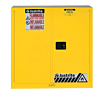
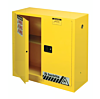
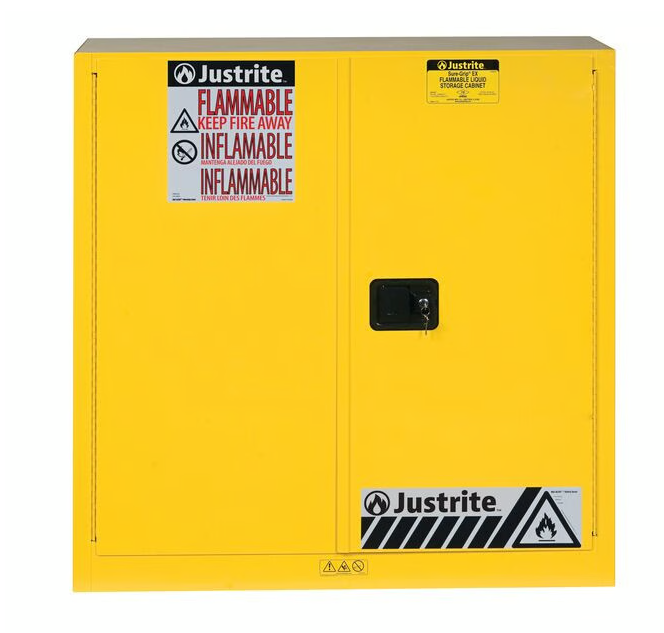
The Justrite Sure-Grip® EX Classic 89-CL Self-Close Flammable Safety Cabinet represents the gold standard in automatic-closing flammable storage. Combining all the renowned safety features of the Justrite Sure-Grip® EX range — FM Approval, 18-gauge double-wall welded steel construction, 38mm insulating air space, patented SpillSlope® shelves, U-Loc™ handle with cylinder lock, Haz-Alert™ reflective labels, three-point stainless steel bullet latching — with calibrated spring-operated self-closing doors that automatically ensure cabinet closure after every access, the self-close 89-CL eliminates the most common cause of cabinet performance failures: human inconsistency.
This comprehensive guide is written for the UK professional who recognises that workplace safety isn't just about specifying the right equipment, but about ensuring that equipment actually performs its intended safety function in real working conditions where workers are busy, distracted, time-pressured, and inevitably imperfect in following procedures. We'll explore why self-close cabinets have emerged as the preferred specification across multiple industries, the human factors that make automatic closure so valuable, the specific engineering of the Justrite self-close mechanism, the regulatory frameworks that increasingly favour self-close specifications, the operational scenarios where automatic closure provides the greatest value, and how to think about self-close cabinets as part of your broader workplace safety and compliance strategy.
The Fundamental Problem: Manual Close Doesn't Always Mean Closed
To understand why self-close cabinets matter, we need to start with an uncomfortable truth about workplace safety equipment: in real working environments, manual close cabinets are frequently left open, often unintentionally, sometimes for extended periods. This isn't because workers don't care about safety or because operations have poor safety cultures. It's because of the universal reality of human behaviour in busy working environments.
The Many Scenarios Where Cabinets Get Left Open
Consider how cabinet access actually works in real operations:
The Distraction Scenario: Worker approaches the cabinet to retrieve a specific solvent. Opens the cabinet, identifies the container, removes it for use. As they're about to close the cabinet, their phone rings, or a colleague asks a question, or they hear an alarm somewhere else, or they remember something urgent they need to do. They walk away from the cabinet to address the distraction. Twenty minutes later they're back at their workbench, doing something completely different, having forgotten the cabinet entirely. Cabinet remains open for hours.
The "Just One More Trip" Scenario: Worker needs three different chemicals for a process. Goes to the cabinet, gets the first chemical, returns to workbench. Plans to immediately return for the second chemical, so doesn't bother closing the cabinet. Gets briefly absorbed in setting up the work, then returns and gets the second chemical. Now needs the third, but realises they need to do a calculation first. Cabinet stays open during the calculation period. Returns for the third chemical. Now needs to do the actual work. Cabinet remains open throughout the entire process while the worker uses the chemicals on the workbench.
The Busy Period Scenario: During a particularly busy production run, workers are accessing the cabinet repeatedly throughout the day. Each access feels too brief to justify the formal closure procedure, and the cabinet is effectively in continuous use. Workers develop the habit of leaving it open during busy periods because closure feels inefficient. Over time, this becomes the normal mode of operation during busy periods.
The Interruption Scenario: Worker opens cabinet to retrieve substances. Gets called away to handle an emergency or urgent task. Returns to the cabinet to find it still open, having been left in that state during the interruption. May or may not remember to fully close it now, depending on circumstances.
The Full-Hands Scenario: Worker has retrieved substances and is carrying them carefully to the workbench. Hands are full with containers, possibly with PPE on, possibly carrying tools. Closing the cabinet would require setting items down, closing the door, latching it properly, then picking everything back up. In practice, this happens less reliably than it should.
The Habitual Carelessness Scenario: Over time, in operations where cabinet closure isn't consistently enforced, workers develop habits of inconsistent closure. The cabinet that "should" always be closed is regularly found open because the closure procedure has become inconsistent in the actual working culture.
The Inexperienced Worker Scenario: New employees, temporary workers, contractors, students, and other non-regular personnel may not have internalised the closure procedure. They access the cabinet appropriately for their immediate task but may not follow closure protocols consistently.
The Multi-User Scenario: Cabinets accessed by many different workers experience inconsistent closure because different workers have different habits, different training levels, and different attentiveness to procedures.
What Happens When Cabinets Are Left Open
Each of these scenarios represents a period when the cabinet's fundamental safety functions are compromised:
Vapour Containment Compromised: Open cabinets allow flammable vapours from stored substances to escape into the working environment. Even in well-ventilated areas, this increases vapour concentrations in the immediate vicinity. In poorly-ventilated areas, vapour concentrations can rise into the flammable range, creating explosion hazards.
Fire Isolation Compromised: A primary function of flammable safety cabinets is providing fire-rated isolation. If a fire occurs while the cabinet is open, this isolation is completely lost. External fires can directly engage the stored substances, and internal incidents can directly engage the surrounding environment.
Security Compromised: Open cabinets allow unauthorised access. Workers who shouldn't be handling certain substances, visitors, contractors, and others can access materials they shouldn't.
Spill Containment Compromised: While the bottom sump contains spills within the cabinet, an open cabinet allows spilled vapours and direct contact with the broader work environment.
Compliance Compromised: UK regulations including DSEAR specifically require appropriate storage of flammable substances. Cabinets left open compromise this compliance during the open periods.
Insurance Position Compromised: Insurance providers expect proper use of safety equipment. Cabinets routinely left open could affect coverage in incident investigations.
The Magnitude of the Problem
Studies of workplace safety equipment use consistently find that manual close cabinets are left open more frequently than safety procedures specify, often by significant margins. In busy operations, manual close cabinets may be open more often than they're closed. In some operations, manual close cabinets become effectively permanent storage shelves rather than functional safety equipment.
This isn't a theoretical concern. It's the documented reality of how manual close cabinets actually perform in real working environments. And it's why self-close cabinets have emerged as the preferred specification for operations serious about flammable storage safety.
The Self-Close Solution: Eliminating the Human Factor
The Justrite self-close door system addresses the fundamental problem of inconsistent cabinet closure by removing the human element entirely. Doors close themselves automatically after every access, regardless of:
- Whether the worker remembers to close them
- Whether the worker has time to close them
- Whether the worker finds it convenient to close them
- Whether the worker is distracted by other tasks
- Whether the worker is interrupted during the access
- Whether the worker has full hands or PPE complications
- Whether the worker is new or experienced
- Whether multiple workers are accessing the cabinet
- Whether the operation is busy or calm
The cabinet simply closes. Every time. Throughout decades of service. Without depending on human consistency.
How Self-Close Mechanisms Work
The Justrite self-close system uses calibrated spring mechanisms mounted at the door hinges that:
Apply Constant Closing Force: Springs provide consistent closing pressure throughout the door's full range of motion, ensuring doors close fully rather than partially.
Operate Smoothly: The mechanism is engineered for smooth operation rather than sudden slamming, protecting both the cabinet and any items being placed in/removed from it.
Engage Reliably: The closing force ensures the three-point latching system engages properly every time, achieving fire-rated sealing without depending on worker action.
Resist Wear: The spring mechanisms are engineered for decades of normal operation, with the same reliability as the cabinet itself.
Allow Manual Operation: Workers can hold doors open during access without fighting the mechanism, providing convenient operation during normal use.
Provide Failsafe Operation: The mechanism operates reliably across the full range of conditions encountered in working environments.
The User Experience
In practice, working with self-close cabinets is straightforward:
- Approach the cabinet to retrieve substances
- Unlock if necessary using the cylinder lock or padlock
- Open the door by pulling — the spring provides slight resistance
- Hold the door open or use it normally during access
- Retrieve the substances as needed
- Release the door when finished
- Self-close completes automatically — cabinet closes and latches
The total worker effort is identical to manual close cabinets EXCEPT for the closure step, which happens automatically. The cabinet returns to its protective state without requiring worker attention.
What This Means in Practice
For operations with self-close cabinets, the fundamental safety equation changes:
Manual Close Cabinet:
- Closed when workers remember to close it
- Open at unpredictable times based on human behaviour
- Compliance depends on consistent worker performance
- Performance varies across workers and conditions
- Audit risk during inspection due to potential open state
Self-Close Cabinet:
- Closed except during active substance retrieval
- Predictable closure regardless of workers or conditions
- Compliance built into the equipment itself
- Consistent performance across all users
- Audit confidence — cabinets are always found closed
The difference between these two states represents the difference between a cabinet that "should" provide safety functions and a cabinet that actually does, throughout its working life, in real working conditions.
When Self-Close Cabinets Are Specifically Required
Beyond the general benefits of automatic closure, self-close cabinets are specifically required or strongly preferred in many specific scenarios.
Regulatory Requirements
UK and international regulations increasingly specify or favour self-close cabinets:
DSEAR Workplace Organisation: UK DSEAR requires workplace organisation to minimise risks from dangerous substances. Where flammable substance storage is part of busy operations, self-close cabinets provide the reliable closure that DSEAR workplace organisation requirements support.
Industry-Specific Regulations: Various industries have specific regulatory requirements affecting flammable storage:
- Pharmaceutical manufacturing under MHRA guidance
- Aviation operations under CAA requirements
- Marine industry under MCA requirements
- Food processing with specific HACCP requirements
- Educational institutions with specific student safety requirements
Insurance Requirements: Insurance providers increasingly specify self-close cabinets as conditions of flammable storage coverage, particularly for:
- High-value substance storage
- High-risk operations
- Operations with prior incident history
- Properties with significant fire exposure
- Multi-occupancy buildings
Local Authority Requirements: Some local authorities and fire authorities specify self-close cabinets in licensing conditions for specific operations.
Standards-Based Requirements
Various standards organisations specify or favour self-close cabinets:
OSHA Standards: Several OSHA standards specifically reference self-closing flammable storage equipment.
NFPA Standards: NFPA 30 and related standards reference self-closing cabinets for various applications.
FM Global Property Loss Prevention Data Sheets: FM Global recommendations frequently specify self-close cabinets.
International Standards: Various international fire safety standards specify or recommend self-close storage.
Audit and Inspection Considerations
Operations subject to regular audit or inspection benefit significantly from self-close cabinets:
Regulatory Inspections: HSE, Environment Agency, and local authority inspectors finding cabinets open during inspections may raise concerns about consistent compliance. Self-close cabinets eliminate this audit risk.
Insurance Audits: Insurance inspectors examining facility safety practices favour seeing properly-closed cabinets. Self-close cabinets ensure this.
Customer Audits: Many customers audit their suppliers' safety practices. Self-close cabinets demonstrate genuine commitment to consistent safety.
Third-Party Certifications: Some certifications and standards favour self-close cabinets as evidence of robust safety culture.
High-Risk Substance Considerations
For the most hazardous flammable substances, self-close cabinets are particularly valued:
Highly Volatile Substances: Substances with high vapour pressures generate flammable atmospheres rapidly. Self-close cabinets minimise vapour escape time.
Low Flash Point Substances: Substances with very low flash points ignite at lower temperatures and require maximum containment assurance.
Toxic Flammable Substances: Substances with combined fire and toxic exposure hazards benefit from reliable containment.
Reactive Substances: Substances that react with air, moisture, or other contaminants benefit from minimised exposure to atmosphere.
High-Value Substances: Where substance value or theft risk is significant, self-close cabinets reduce unauthorised access opportunities.
The Engineering of Justrite Self-Close Doors
The Justrite self-close door system represents decades of engineering refinement specifically designed for industrial flammable storage applications.
Spring Mechanism Design
The closing mechanism uses calibrated torsion springs mounted at the door hinges:
Controlled Force: Springs provide consistent closing force throughout the door's full range of motion. Force is sufficient to ensure reliable closure but not so strong as to slam doors damagingly.
Smooth Operation: Engineering ensures smooth motion through the closing arc rather than jerky or uneven movement.
Long Service Life: Spring materials and design provide decades of normal operation without failure.
Temperature Stability: Springs maintain consistent performance across the temperature ranges typical of working environments.
Corrosion Resistance: Spring materials resist the chemical and environmental exposure typical of flammable storage applications.
Reliable Latch Engagement
The closing mechanism is calibrated to work with the three-point stainless steel bullet latching system:
Sufficient Force: Closing force ensures all three latches engage properly, achieving full fire-rated sealing.
Consistent Engagement: Every closure produces the same latch engagement, not occasional partial closure.
Audible Confirmation: Workers can hear the latches engaging properly, providing reassurance of complete closure.
Hold-Open Capability
While the mechanism automatically closes doors when released, workers retain control during active use:
Manual Hold: Workers can hold doors open during extended access without fighting the mechanism.
Brief Release: Quick releases allow brief access without complete closure.
Full Operation: When ready for closure, simply releasing the door completes the operation.
Compatibility with Cabinet Operations
The self-close mechanism is engineered to work seamlessly with all other cabinet functions:
Lock Operation: The cylinder lock and padlock provisions work normally with self-close doors.
Three-Point Latching: The latching system engages reliably with self-close operation.
Door Closure Verification: Visual and audible confirmation that doors have closed properly.
Maintenance Access: Standard cabinet maintenance procedures apply.
Long-Term Reliability
The Justrite self-close mechanism is engineered for the same long service life as the cabinet itself:
Quality Components: Springs, hinges, and related components are engineered for industrial use.
Decades of Service: Properly maintained mechanisms operate reliably for decades of normal use.
10-Year Warranty: Justrite's 10-year warranty covers the self-close mechanism alongside the rest of the cabinet.
Field-Proven Performance: The mechanism has been refined through years of real-world use across thousands of installations.
Comprehensive Safety Features
The 89-CL Self-Close combines self-closing operation with the complete Sure-Grip® EX Classic feature set.
FM-Approved Fire Resistance
FM Approval provides independently verified fire safety performance:
- Independent fire testing under simulated fire conditions
- Documented performance evidence
- Recognition by regulators and insurers worldwide
- Real fire scenario verification
The self-close mechanism doesn't compromise FM Approval — the cabinet meets the same rigorous certification as the manual close variant.
Robust Construction
18-gauge (1mm) double-wall welded steel construction with 38mm insulating air space provides genuine fire resistance:
- Two layers of cold-rolled steel for structural integrity
- Welded throughout for continuous structural strength
- 38mm air gap providing critical thermal insulation
- Substantially more robust than budget alternatives
Three-Point Stainless Steel Bullet Latching
The three-point latching system ensures reliable closure across the full door height:
- Top latch securing upper section
- Middle latch (handle area) securing centre
- Bottom latch securing lower section
- Even pressure distribution
- Stainless steel construction for corrosion resistance
- Consistent engagement through self-close operation
U-Loc™ Handle with Cylinder Lock
The U-Loc™ handle provides comprehensive security:
- Integrated cylinder lock with two keys included
- Padlock compatibility for higher security applications
- Ergonomic operation for daily use
- Security maintained through self-close mechanism
Haz-Alert™ Reflective Warning Labels
The reflective warning labels provide emergency safety enhancement:
- Standard daylight visibility for normal hazard communication
- Emergency visibility during fire conditions or power outages
- Flashlight illumination dramatically increases visibility through smoke
- Trilingual warnings for multi-language workforces
Patented SpillSlope® Galvanized Steel Shelves
The patented shelving system directs spills toward safety:
- Sloped design directing spills to back and bottom of cabinet
- Galvanized steel construction providing chemical resistance
- Adjustable on 76mm centres for versatile storage configuration
- Long service life through years of demanding use
51mm Leakproof Bottom Sump
The integrated bottom sump provides critical secondary containment:
- Welded construction to cabinet body (no gaskets to fail)
- Meaningful capacity for spill containment
- Spill direction from SpillSlope® shelves to sump
- Compliance support for secondary containment requirements
Dual Vents with Flame Arresters
The ventilation system provides controlled ventilation with maintained fire safety:
- Through-ventilation capability when connected to active systems
- Flame arresters preventing fire propagation through vents
- Capping capability when active ventilation isn't used
- Maintained fire-rated enclosure in all configurations
Additional Safety Features
The 89-CL Self-Close includes:
- Four adjustable self-levelling feet for stable installation
- Integrated grounding connector for static electricity dissipation
- Trilingual warning label for multi-language hazard communication
- Durable lead-free epoxy/polyester powder-coat finish for chemical and corrosion resistance
- High-visibility yellow as international standard for flammable storage (grey or red available on request)
- 10-year warranty backing the entire system
Real-World Applications Where Self-Close Excels
The 89-CL Self-Close suits operations where automatic closure provides specific operational, regulatory, or safety advantages.
Manufacturing Operations
UK manufacturing facilities benefit significantly from self-close cabinets:
Production Environments:
- Continuous chemical use during production runs
- Multiple workers accessing throughout shifts
- High-throughput requirements
- Process consistency requirements
- Audit-sensitive operations
Maintenance Functions:
- Regular access for cleaning solvents and lubricants
- Multi-user maintenance teams
- Various skill levels among maintenance workers
- Often-busy maintenance shops
Quality Control:
- Regular sample handling
- Multiple QC personnel
- Reagent storage requirements
- Documentation requirements
Laboratory Environments
Laboratories particularly benefit from self-close cabinets:
Research Laboratories:
- Multiple researchers accessing throughout days
- Various experience levels
- Distractions inherent to research work
- Audit and inspection sensitivity
- Often multi-substance retrievals
Educational Laboratories:
- Student access requiring consistent safety
- Varying student experience levels
- Teacher attention divided across multiple students
- High audit and inspection sensitivity
- Insurance requirements often specific
Quality Control Labs:
- Production support requiring efficiency
- Multiple analysts and shifts
- Continuous reagent use
- Regulatory compliance critical
Clinical and Medical Labs:
- Healthcare worker access
- Often busy operations
- High regulatory standards
- Patient safety considerations
Automotive and Vehicle Workshops
Vehicle workshops benefit from self-close cabinets:
Independent Garages:
- Multiple technicians accessing
- Busy operations with continuous work
- Various experience levels
- Customer-facing operations
- Insurance and audit considerations
HGV and Commercial Workshops:
- Multi-bay operations
- Multiple technicians
- Continuous fluid use
- Specific industry standards
Quick-Fit and Service Centres:
- High customer volume
- Multiple service bays
- Continuous chemical use
- Customer safety considerations
Dealership Service Centres:
- Brand standards
- Multiple technicians
- Various experience levels
- Audit-sensitive operations
Educational Institutions
Schools, colleges, and universities particularly benefit:
Science Departments:
- Student access requiring maximum safety assurance
- Multiple classes throughout days
- Teacher attention divided
- Audit and inspection requirements
- Insurance specifications
Vocational Training:
- Multiple students learning procedures
- Various skill levels
- Instructor oversight challenges
- Practical training environments
Research Facilities:
- Mixed researcher and student access
- Various experience levels
- Audit sensitivity
Healthcare and Pharmaceutical
Healthcare and pharmaceutical operations have specific requirements:
Hospital Pharmacies:
- High security requirements
- Audit sensitivity
- Multiple authorised users
- Compliance critical
Pharmaceutical Manufacturing:
- MHRA requirements
- Quality system requirements
- Audit-sensitive operations
- Multi-user environments
Medical Research:
- Various researcher access
- Regulatory requirements
- Insurance specifications
- Audit considerations
Specialty Operations
Various specialty operations benefit from self-close:
Printing and Graphic Arts:
- Solvent storage requirements
- Multi-user environments
- Continuous production
- Insurance considerations
Photography and Imaging:
- Chemical handling
- Multi-user labs
- Educational components
Beauty and Cosmetics:
- Chemical processing
- Multi-user salons or labs
- Customer safety considerations
Cleaning and Janitorial:
- Chemical storage requirements
- Multi-shift operations
- Various worker experience levels
Installation Best Practices for Self-Close Cabinets
Installation of the 89-CL Self-Close follows the same general procedures as manual close variants, with specific considerations for the self-close mechanism.
Location Selection
Standard Considerations:
- Distance from ignition sources per DSEAR requirements
- Distance from incompatible substances
- Distance from building exits and walkways
- Adequate ventilation in the area
- Floor loading capability
- Access for delivery and operation
Self-Close Specific Considerations:
- Adequate clearance for door operation (doors don't need extra space, but ensure they can swing freely)
- No obstructions that could interfere with closure
- Surface allows stable installation for proper door alignment
- Lighting allows workers to see door operation clearly
Installation Procedure
Standard Installation:
- Position cabinet at desired location
- Adjust self-levelling feet for stable, level installation
- Verify cabinet is level (important for proper self-close operation)
- Connect grounding cable
- Connect ventilation if used
- Verify exterior condition before commissioning
Self-Close System Verification:
- Open door fully and release — verify smooth automatic closure
- Test closure speed (should be controlled, not slamming)
- Verify three-point latching engages properly during automatic closure
- Listen for audible confirmation of latch engagement
- Repeat several times to verify consistent operation
- Test with door held at various open positions before release
Commissioning
Before bringing the cabinet into routine use:
- Document installation including location, date, and configuration
- Verify all features operate correctly
- Test lock and key operation
- Confirm Haz-Alert™ labels are properly affixed
- Check grounding continuity with ground tester
- Test ventilation system if connected
- Document commissioning for compliance records
- Train initial users on self-close operation
User Training
Even though self-close o