The Complete Guide to Justrite Sure-Grip® EX Flammable Safety Cabinets — Compliance, Protection & Best Practice for UK Operations
Introduction: Why Flammable Liquid Storage Demands the Right Equipment
In the broader landscape of workplace safety and regulatory compliance, few areas carry the immediate consequences of flammable liquid storage. Get the storage of cutting oils, parts cleaners, or coolants wrong, and you face cleanup costs and regulatory headaches. Get flammable liquid storage wrong, and you face fires, explosions, building destruction, worker injuries or fatalities, environmental catastrophe, business termination, and potentially criminal prosecution. The stakes simply aren't comparable to most other safety equipment categories — which is why flammable liquid storage cabinets exist as a specific, highly engineered product category rather than a general storage solution.
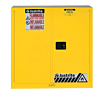
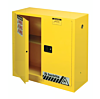
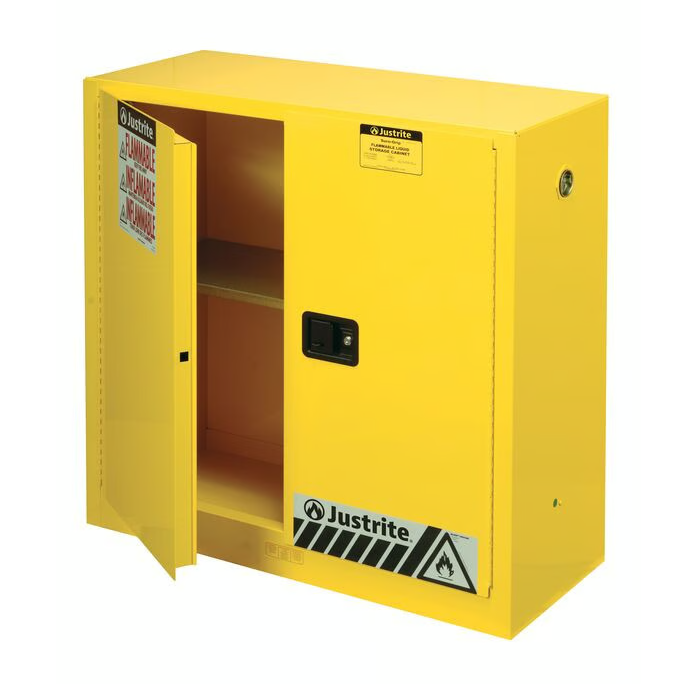
The Justrite Sure-Grip® EX Classic 89-CL Flammable Safety Cabinet represents the gold standard in this critical safety equipment category. Engineered to meet the rigorous requirements of OSHA, NFPA 30, and FM Approvals, constructed from 18-gauge double-wall welded steel with 38mm of insulating air space, featuring patented SpillSlope® shelves and Haz-Alert™ reflective labels, and backed by a 10-year warranty, the 89-CL provides the documented compliance and genuine fire protection that responsible operations require for their flammable liquid storage needs.
This comprehensive guide is written for the UK professional responsible for getting flammable liquid storage right — whether you're a health and safety manager specifying compliant equipment, a facilities manager evaluating storage options, a business owner addressing regulatory requirements, a procurement specialist managing capital purchases, or an operations manager balancing compliance with practical workplace needs. We'll explore why flammable liquid storage demands specialised equipment, the regulatory framework governing UK flammable storage, what genuinely distinguishes professional cabinets from inadequate alternatives, the specific features and engineering of the Justrite Sure-Grip® EX Classic 89-CL, installation and operational best practices, and how to think about flammable storage as part of your broader fire safety and compliance strategy.
The Unique Hazards of Flammable Liquid Storage
To understand why specialised flammable liquid storage cabinets exist as a distinct product category, we need to understand the unique hazards that flammable liquids present.
The Vapour-Air Mixture Problem
Unlike most workplace hazards that involve direct contact or exposure to harmful substances, flammable liquids primarily present hazards through their vapours. Flammable liquids continuously evaporate at varying rates depending on their volatility, vapour pressure, temperature, and exposure to air. These vapours, when mixed with air in the right proportions, create flammable atmospheres that can ignite from any spark or heat source.
Each flammable liquid has a specific flammable range — the concentration range of vapour in air at which ignition can occur:
- Lower Flammable Limit (LFL) — the minimum vapour concentration that supports combustion
- Upper Flammable Limit (UFL) — the maximum vapour concentration that supports combustion
- Flammable Range — the range between LFL and UFL where ignition can occur
For petrol, the flammable range is approximately 1.4% to 7.6% vapour in air. For acetone, approximately 2.5% to 12.8%. For ethanol, approximately 3.3% to 19%. These narrow ranges mean that even small spills or container leaks can create dangerous flammable atmospheres in the surrounding space, particularly in confined or poorly ventilated areas.
Ignition Sources Are Everywhere
The danger of flammable atmospheres is amplified by the universal presence of potential ignition sources in working environments:
Static Electricity: Generated by routine activities including pouring liquids, walking on certain floor surfaces, removing protective clothing, and operating equipment. Even small static discharges can ignite flammable vapours.
Electrical Equipment: Switches, motors, lighting, computers, and countless other electrical items create sparks during normal operation that can ignite vapours.
Hot Surfaces: Heaters, engines, lighting fixtures, machinery, and other hot surfaces can ignite vapours through direct contact.
Open Flames: Even brief exposure to flames from welding, smoking, or other activities can trigger major fires in vapour-laden atmospheres.
Mechanical Sparks: Tools, equipment, and machinery operations routinely generate sparks that can ignite vapours.
Hot Work: Welding, cutting, grinding, and similar activities generate enormous quantities of sparks and heat that can ignite vapours from significant distances.
Friction: Even simple friction from belts, bearings, or moving parts can generate heat sufficient to ignite vapours.
The Cascade to Catastrophe
The mechanism by which flammable liquid incidents escalate to catastrophic outcomes follows a predictable but devastating pattern:
Stage 1 - Spill or Vapour Release: A container fails, a transfer operation spills, or even normal evaporation creates flammable vapours in the storage area.
Stage 2 - Vapour Accumulation: Without adequate ventilation, vapours accumulate to concentrations within the flammable range, creating an explosive atmosphere.
Stage 3 - Ignition: Any ignition source — and these are abundant in working environments — ignites the vapour-air mixture.
Stage 4 - Initial Combustion: The initial ignition creates a fireball or flash fire affecting the immediate area of vapour accumulation.
Stage 5 - Container Involvement: The initial fire heats nearby flammable liquid containers, causing them to fail, releasing more flammable liquid and creating much larger fires.
Stage 6 - Cascading Failure: Without adequate fire-rated containment, containers fail in sequence, each adding fuel to the growing fire.
Stage 7 - Building Involvement: The expanding fire engages building materials, fixtures, and other combustibles, escalating to building-destroying fire.
This cascade can occur in minutes from initial spill to building-destroying fire. The role of flammable liquid storage cabinets is to interrupt this cascade at the earliest possible point — containing initial releases, preventing vapour accumulation, providing fire-rated protection if external fires occur, and maintaining container integrity during fire conditions to prevent the cascade from progressing.
The Real Costs of Inadequate Flammable Liquid Storage
The financial consequences of inadequate flammable liquid storage extend far beyond direct fire damage.
Catastrophic Fire Outcomes
When inadequate storage allows the cascade described above to occur, typical outcomes include:
Building Destruction: Major flammable liquid fires routinely destroy the buildings containing them, with reconstruction costs running to hundreds of thousands or millions of pounds.
Worker Injuries and Fatalities: Flammable liquid fires are among the most lethal industrial fires due to their rapid spread, intense heat, and toxic combustion products. Multiple deaths in single incidents are not uncommon.
Environmental Damage: Major fires release significant quantities of combustion products and unburned chemicals into the environment, often requiring substantial environmental remediation.
Insurance Implications: Major incidents trigger investigations that frequently identify inadequate storage as contributing factors, with significant consequences for coverage, claims, and ongoing insurability.
Regulatory Consequences: UK regulations including DSEAR specifically require appropriate flammable liquid storage. Failures resulting in serious incidents typically result in prosecution under multiple regulatory regimes.
Business Continuity: Many businesses don't survive major flammable liquid incidents. Direct losses, regulatory consequences, insurance disputes, and reputation damage frequently combine to make business continuation impossible.
Documented Industrial Incidents
UK industrial history is unfortunately rich with examples of flammable liquid storage failures that escalated to catastrophic outcomes:
- Workshop fires that destroyed buildings and businesses traced to inadequate storage of cleaning solvents
- Manufacturing facility explosions caused by accumulated vapours from inadequate ventilation of flammable storage
- Laboratory fires that closed research operations for years following storage cabinet failures
- Vehicle workshop fires that began with parts cleaning solvent storage failures
These aren't theoretical scenarios — they're documented incidents that occurred in operations not dissimilar to many UK businesses operating today.
The Investment Equation
Against these potential consequences, the cost of proper flammable liquid storage cabinets is trivial. A Justrite Sure-Grip® EX Classic 89-CL represents a small fraction of even the cheapest spill incident scenario — and is essentially negligible compared to catastrophic fire outcomes. The investment equation for proper flammable storage is one of the most compelling in workplace safety equipment: minimal capital cost against catastrophic potential consequences.
The UK Regulatory Framework for Flammable Liquid Storage
UK operations storing flammable liquids face a comprehensive regulatory framework that determines requirements, expectations, and consequences for non-compliance.
Dangerous Substances and Explosive Atmospheres Regulations (DSEAR)
DSEAR 2002 is the primary UK regulation specifically addressing flammable substance storage and handling. Its requirements include:
Hazardous Area Classification: Where flammable atmospheres may exist or be created, areas must be classified into Zone 0, Zone 1, or Zone 2 based on the frequency and duration of flammable atmospheres. Storage cabinets help control these classifications by limiting the extent of areas where flammable atmospheres can exist.
Risk Assessment: Comprehensive risk assessment of dangerous substance activities, including storage. The risk assessment must identify hazards, evaluate risks, and specify control measures.
Control Measures Hierarchy:
- Eliminate hazardous substances where possible
- Reduce quantities to minimum necessary
- Avoid or minimise ignition sources
- Mitigate detrimental effects
- Provide warnings and procedures
Proper flammable liquid storage cabinets directly support points 3 and 4 of this hierarchy by isolating flammable substances from ignition sources and mitigating the effects of any incidents.
Equipment Specifications: DSEAR requires that equipment used in flammable substance areas is appropriate to the hazardous area classification. While the cabinet itself is the control measure, equipment for handling stored substances must meet appropriate ATEX or equivalent specifications.
Workplace Organisation: DSEAR requires workplace organisation to minimise risks, including:
- Separating flammable storage from incompatible substances and ignition sources
- Maintaining appropriate distances from buildings, boundaries, and other features
- Providing adequate ventilation
- Establishing safe procedures for storage and handling
- Training workers in safe procedures
Emergency Procedures: Specific procedures for fire, explosion, and other emergency scenarios involving stored substances.
Control of Substances Hazardous to Health (COSHH)
The COSHH Regulations 2002 apply to flammable liquids alongside other hazardous substances, requiring:
- Comprehensive risk assessment for stored substances
- Hierarchy of control measures
- Specific control measures including containment
- Information, instruction, and training for workers
- Health surveillance where appropriate
- Emergency procedures
Justrite cabinets directly support COSHH compliance for flammable substances by providing the containment that controls vapour exposure risks.
Workplace (Health, Safety and Welfare) Regulations
These regulations require safe working environments, including:
- Workplace cleanliness
- Adequate ventilation
- Slip hazard control
- Emergency exit access maintained even with hazardous substance storage
- General safety of work areas
Regulatory Reform (Fire Safety) Order
The Regulatory Reform (Fire Safety) Order 2005 establishes the framework for workplace fire safety, including:
- Fire risk assessment requirements
- Fire prevention measures
- Detection and warning systems
- Fire fighting equipment
- Emergency procedures and exit routes
- Training requirements
Proper flammable liquid storage is a fundamental fire prevention measure that supports compliance with the Fire Safety Order.
Provision and Use of Work Equipment Regulations (PUWER)
PUWER requires that work equipment is suitable for use, properly maintained, and inspected. Flammable storage cabinets fall under PUWER, with requirements for:
- Selection appropriate to working conditions
- Adequate construction
- Suitable maintenance
- Inspection and examination
- Documentation
Insurance Requirements
Beyond regulatory requirements, insurance providers increasingly specify flammable liquid storage requirements as conditions of coverage. Inadequate storage can affect:
- Premium calculations
- Coverage scope and conditions
- Claims handling following incidents
- Continued availability of coverage
FM-approved cabinets are widely recognised by insurance providers, supporting better coverage terms.
What Distinguishes Professional Flammable Storage Cabinets
The flammable storage cabinet market includes products at vastly different quality levels and price points. Understanding what genuinely matters helps you avoid the false economy of inadequate alternatives.
Construction Material and Method
Material Specification:
Quality flammable storage cabinets use 18-gauge (1mm) cold-rolled steel — substantially thicker than the lower-grade steel found in cheaper alternatives. The thicker material provides:
- Better structural integrity
- Improved fire resistance
- Better impact resistance
- Longer service life
- More secure latch and lock mounting
Construction Method:
Double-wall welded construction is the standard for genuine fire-rated cabinets. This involves:
- Two layers of steel forming inner and outer walls
- Welded connections throughout (not bolted or riveted)
- Air space between walls providing insulation
Lower-cost alternatives often use:
- Single-wall construction (no fire-resistance air gap)
- Bolted construction (creates joint failure points)
- Thinner materials (compromised structural integrity)
The Justrite Sure-Grip® EX Classic 89-CL features genuine 18-gauge double-wall welded construction throughout.
Insulating Air Space
The 38mm insulating air space between the inner and outer walls is critical to fire resistance:
- Air is an excellent thermal insulator
- The space significantly reduces heat transfer from exterior to interior during fires
- Maintains interior temperature below the autoignition point of common flammable liquids
- Provides time for fire service response
Lower-cost cabinets often have minimal or no air space, fundamentally compromising fire protection.
Welding Quality
Quality of welding determines whether the cabinet actually performs as designed:
- Continuous welds versus intermittent welds make significant differences to structural integrity
- Quality control in welding affects long-term durability
- Professional welding standards ensure consistent performance
Justrite manufacturing uses professional welding standards with documented quality control.
Latching System
The door latching system is critical to cabinet performance:
Three-Point Latching: Provides even pressure distribution and consistent sealing. Single-point latching (often found in budget cabinets) creates uneven pressure and potential gaps.
Bullet Latches: Heavy-duty stainless steel bullet latches provide reliable operation and corrosion resistance. Lighter latches found in budget alternatives wear quickly and fail.
Fail-Safe Operation: Quality latches operate reliably even under fire conditions. Budget alternatives may fail when most needed.
Self-Latching: Doors that latch automatically when closed prevent the human-error scenarios where workers forget to engage latches.
The Justrite 89-CL features three-point stainless steel bullet latching with fail-safe self-latching operation.
Shelving Design
Cabinet shelving deserves more attention than typically given:
Material: Quality cabinets use galvanized steel shelves resistant to chemical attack. Budget alternatives may use coated steel that degrades with chemical exposure.
Spill Management: Justrite's patented SpillSlope® design actively directs spills toward the back and bottom of the cabinet, away from the front where they could escape if doors open. Flat shelves common in budget alternatives may allow spills to flow toward the front.
Adjustability: Quality cabinets offer flexible shelf positioning for varying container sizes. Fixed shelving limits storage flexibility.
Load Capacity: Quality shelving handles substantial container weights without bowing or failing.
Bottom Sump
The cabinet's leakproof bottom sump is critical secondary containment:
Depth: 51mm (2-inch) depth provides meaningful spill capacity. Budget alternatives may have shallower sumps with inadequate capacity.
Welded Construction: Quality sumps are welded to the cabinet body forming a single continuous leakproof structure. Budget alternatives may use gasketed or sealed joints that can fail.
Leakproof Verification: Quality cabinets are tested for leakproof performance. Budget alternatives may not be tested or may use less rigorous standards.
Ventilation
Cabinet ventilation must serve dual functions: allow controlled ventilation when needed AND prevent fire propagation:
Flame Arresters: Quality vents include flame arresters preventing flame propagation. Budget alternatives may have unprotected vents that compromise fire protection.
Caps for Sealed Operation: Vents should be sealable when active ventilation isn't required, maintaining the cabinet's fire-rated enclosure.
Dual Vents: Properly designed cabinets feature dual vents allowing through-ventilation when connected to ventilation systems.
The Justrite 89-CL features dual vents with flame arresters and capping capability.
Grounding
Static electricity is a major ignition source for flammable vapours. Proper grounding is essential:
Integrated Connector: Quality cabinets include integrated grounding connectors for connection to building ground. Budget alternatives may lack this provision.
Proper Material: Grounding connections must be made of appropriate materials providing reliable conductivity.
Finish Quality
Cabinet finish affects appearance, chemical resistance, and longevity:
Multi-Stage Powder Coating: Quality cabinets use multi-stage powder coating providing excellent chemical resistance, corrosion protection, and durability. The Justrite 89-CL features durable lead-free epoxy/polyester powder-coat finish.
Lead-Free Formulation: Modern environmental requirements demand lead-free formulations.
High-Visibility Colour: Yellow is the international standard for flammable storage, providing immediate visual identification.
Certification and Approval
The most important quality differentiator is independent certification:
FM Approval: Factory Mutual Approval represents the highest standard of independent fire safety certification. FM testing involves:
- Independent testing facilities
- Real fire conditions simulating actual scenarios
- Rigorous performance verification
- Documented results
OSHA Compliance: Compliance with US Occupational Safety and Health Administration requirements.
NFPA 30 Compliance: Compliance with the US National Fire Protection Association Standard for Flammable and Combustible Liquids.
These standards have international recognition because their rigour exceeds many national alternatives. UK compliance is fully supported by FM-approved, OSHA/NFPA 30 compliant equipment.
Warranty
Warranty length reflects manufacturer confidence in construction quality:
- Budget alternatives: 1-3 year warranties
- Mid-range cabinets: 3-5 year warranties
- Premium professional cabinets: 5-10 year warranties
The Justrite 89-CL's 10-year warranty is among the longest in the industry, reflecting genuine confidence in construction quality and expected service life.
The Justrite Sure-Grip® EX Classic 89-CL in Detail
The 89-CL combines every quality element discussed above into a cabinet engineered for professional flammable liquid storage.
Construction Specifications
Material: 18-gauge (1mm) cold-rolled steel throughout — providing genuine structural integrity, fire resistance, and durability.
Construction Method: Double-wall welded steel construction with 38mm insulating air space — the gold standard for fire-rated cabinets.
Welding Quality: Professional welding throughout with documented quality control supporting FM Approval requirements.
Finish: Durable lead-free epoxy/polyester powder-coat finish providing chemical resistance, corrosion protection, and long-term aesthetic durability.
Standard Colour: High-visibility yellow (international standard for flammable storage). Available in grey or red on request for specific applications.
Door System
Self-Latching Doors: Doors close easily and securely with the fail-safe closing mechanism ensuring the latching system engages reliably every time.
Three-Point Stainless Steel Bullet Latching: Three latches distribute closing pressure evenly:
- Top latch for upper door section
- Middle (handle position) latch for centre
- Bottom latch for lower section
This three-point system provides:
- Uniform sealing pressure
- Reliable fire-rated performance
- Consistent operation throughout service life
- Resistance to door warping that could compromise single-latch systems
Manual Close Operation: The 89-CL is manual close — workers consciously close the cabinet after access, reinforcing safety awareness. Self-close variants available where automatic closure is preferred or required.
U-Loc™ Handle System
The patented U-Loc™ handle provides comprehensive security:
Integrated Cylinder Lock: Built-in cylinder lock with two keys included provides immediate security without additional purchases. Lock and unlock with key operation.
Padlock Compatibility: Accepts optional padlock for higher security requirements. This dual-security capability allows scaling security based on substance hazards, facility requirements, or specific operational needs.
Ergonomic Operation: Comfortable handle design supports easy daily operation while maintaining security and latching functions.
Haz-Alert™ Reflective Warning Labels
The Haz-Alert™ system provides emergency safety enhancement beyond standard labelling:
Standard Visibility: Clearly visible under normal lighting like all flammable storage cabinet labelling.
Emergency Visibility: The critical feature — reflective performance under fire conditions or power outages when illuminated with flashlight. This means:
- Emergency responders' flashlights illuminate labels brightly through smoke
- Workers with torches during power outages immediately identify hazardous storage
- Night-time emergency response can locate cabinets quickly
- Smoke-filled conditions don't obscure hazard identification
Trilingual Warnings: Multi-language warnings ensure international workforces and visitors understand hazards regardless of primary language.
SpillSlope® Galvanized Steel Shelves
The patented SpillSlope® shelving system is one of the cabinet's most innovative features:
Sloped Design: Shelves are angled to direct spills toward the back and bottom of the cabinet rather than allowing spills to flow toward the front where they might escape if doors open.
Galvanized Steel: The galvanized steel construction provides:
- Excellent chemical resistance
- Long-term durability
- Easy cleaning if spills occur
- Wide chemical compatibility
Adjustable Positioning: Shelves adjust on 76mm (3-inch) centres for versatile configuration. This allows:
- Tall containers (gallons and large bottles)
- Standard containers (typical chemical bottles)
- Short containers (small bottles and cans)
- Mixed container heights through flexible configuration
Multiple Shelf Configuration: The cabinet accommodates multiple shelves at user-determined positions, optimising storage for specific container inventories.
51mm Leakproof Bottom Sump
The integrated bottom sump provides critical secondary containment:
51mm (2-inch) Depth: Meaningful capacity for spill containment proportionate to typical cabinet contents.
Welded Construction: Sump welded to cabinet body forming continuous leakproof structure — no gaskets or seals to fail.
Spill Direction: SpillSlope® shelves direct spills to the sump, ensuring spills are properly contained rather than escaping.
Compliance Support: Provides the secondary containment that regulations require for flammable liquid storage.
Ventilation System
Dual vents with flame arresters provide controlled ventilation with maintained fire safety:
Dual Vents: Two ventilation points allow through-ventilation when connected to active ventilation systems, supporting facilities requiring continuous flammable storage ventilation.
Flame Arresters: Integrated flame arresters in each vent prevent flame propagation:
- External fires cannot enter cabinet through vents
- Internal incidents cannot propagate outward through vents
- Maintained fire-rated enclosure integrity
Capability for Sealed Operation: When active ventilation isn't required, vents can remain capped maintaining fire-rated enclosure.
Structural Features
Adjustable Self-Levelling Feet: Four feet provide stable installation on uneven floors while distributing weight evenly to protect floor surfaces and prevent point loading.
Integrated Grounding Connector: Essential for static electricity dissipation, supporting both safety and DSEAR/NFPA 30 compliance.
Trilingual Warning Labels: Multi-language warning compliance for international workforces.
Certifications and Compliance
FM Approval: Independent fire testing certification — the gold standard for flammable storage cabinet verification.
OSHA Compliance: Meets US Occupational Safety and Health Administration requirements.
NFPA 30 Compliance: Meets US National Fire Protection Association Standard 30 requirements.
UK Regulatory Support: Construction and certification support compliance with UK DSEAR, COSHH, Fire Safety Order, and Workplace Regulations.
10-Year Warranty: Industry-leading durability guarantee reflecting genuine construction quality.
Installation Best Practices
Proper installation maximises the 89-CL's safety performance and service life.
Location Selection
Distance Requirements:
- From Ignition Sources: Maintain DSEAR-compliant distances from electrical equipment, hot surfaces, smoking areas, and hot work locations
- From Building Exits: Don't block emergency exit routes or impede evacuation
- From Incompatible Substances: Separate flammables from oxidisers, corrosives, and other incompatible materials per chemical compatibility guidance
- From Personnel Areas: Provide appropriate separation from regular work areas
Environmental Considerations:
- Ventilation: Adequate background ventilation in the storage area
- Temperature: Avoid extreme temperatures that could affect cabinet performance or stored substances
- Climate Control: Consider climate control for sensitive substances
- Lighting: Adequate lighting for inspection and operations
Operational Considerations:
- Access: Adequate space for workers to operate cabinet doors and access contents
- Material Handling: Routes for delivering and removing containers
- Inspection Access: Space around cabinet for visual inspection
- Emergency Access: Clear access for emergency response
Regulatory Considerations:
- Hazardous Area Classification: Cabinet location affects DSEAR area classification
- Building Codes: Local fire codes may specify cabinet location requirements
- Permit Conditions: Environmental permits may include cabinet location requirements
- Insurance Requirements: Insurance policies may specify storage requirements
Site Preparation
Before installation:
- Floor Loading: Verify floor can support cabinet weight plus stored contents
- Floor Surface: Confirm appropriate surface (level, firm, impermeable)
- Ventilation: Plan ventilation connections if active ventilation will be used
- Grounding: Plan grounding connection point and routing
- Electrical: Ensure no electrical work needed in cabinet vicinity
- Hazardous Area Classification: Update classifications as needed
Cabinet Setup
Levelling:
- Adjust self-levelling feet for stable, level installation
- Verify door operation is smooth and latching engages properly
- Check that cabinet doesn't rock or shift
Initial Inspection:
- Verify all features operate correctly
- Confirm Haz-Alert™ labels are properly affixed
- Check lock and key operation
- Test latching system
- Inspect interior for any transit damage
Grounding Connection:
- Connect grounding cable to integrated grounding connector
- Route to appropriate building ground
- Verify continuity with ground tester
- Document grounding for compliance records
Ventilation Connection (if used):
- Connect ventilation ducting to vents
- Ensure flame arresters remain in place
- Verify ventilation flow direction and rate
- Test ventilation system operation
Documentation
Maintain comprehensive installation documentation:
- Cabinet Specifications: Model, serial number, certifications
- Installation Location: Specific location within facility
- Installation Date: For warranty and maintenance tracking
- Configuration: Specific shelf positions, vent connections, etc.
- Compliance Documentation: Risk assessments, hazardous area classifications
- Initial Inspection Records: Confirming proper installation
Operational Best Practices
Day-to-day operation of the 89-CL should integrate with broader workplace safety practices.
Substance Loading and Storage
Compatibility Verification:
- Verify substances are appropriate for the cabinet (flammable liquids)
- Check chemical compatibility between substances being stored together
- Reference Safety Data Sheets for storage requirements
- Avoid storing incompatible chemicals together
Container Inspection: