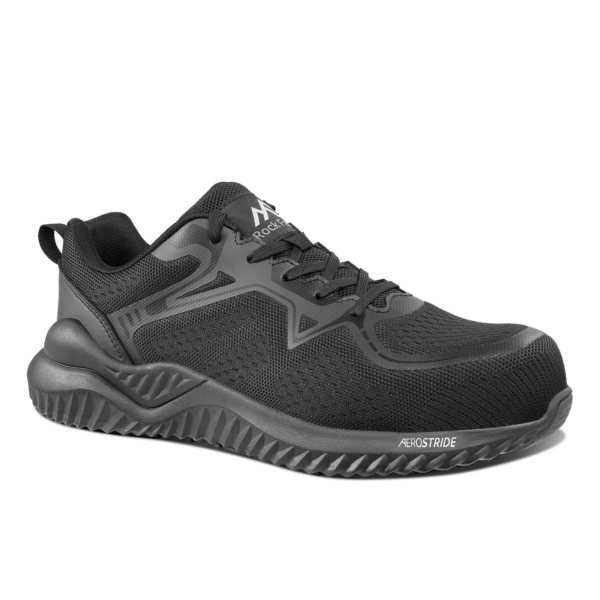
The Best Safety Trainers for All-Day Comfort in 2025: Why the Rock Fall RF410 Void Belongs on Your Feet
Focus Keyword: safety trainers for all-day comfort | Word Count: ~5,000 | Reading Time: ~18 min
There's a problem that almost every worker in a standing or walking role knows intimately but rarely talks about: foot pain. Not the dramatic, acute kind that sends you to A&E, but the slow, grinding fatigue that builds across a shift — the aching arches at hour six, the heavy legs at hour eight, the moment you finally sit down at the end of the day and feel the relief of your feet no longer having to support you. It's so common that many workers accept it as an unavoidable feature of the job.
It isn't. And the Rock Fall RF410 Void is one of the strongest pieces of evidence that it doesn't have to be.
The RF410 Void is a lightweight safety trainer built around a single organising principle: that all-day comfort and certified safety protection are not competing priorities, but complementary ones. Through the AEROSTRIDE sole system, Activ-Step® PU cushioned footbed, breathable mesh upper and a comprehensive suite of EN ISO 20345 safety certifications, the Void delivers a working day that's measurably less fatiguing — without asking you to accept any compromise on the protection your role demands.
In this guide, we'll examine the science of foot fatigue in the workplace, establish what genuinely makes safety footwear comfortable for extended wear, and make the case — component by component, feature by feature — for why the RF410 Void is among the best safety trainers available in 2025 for workers who spend their days on their feet.
Quick Answer: The Rock Fall RF410 Void (Product Code: RF410) is a lightweight safety trainer featuring the AEROSTRIDE cushioned sole system, Activ-Step® PU footbed, 200J fiberglass toecap, PS-rated penetration-resistant midsole, SR slip resistance, anti-static properties and a water-repellent breathable mesh upper — all built with recycled materials and fully sustainable packaging.
1. The Hidden Cost of Poor Safety Footwear: Understanding Workplace Foot Fatigue
Foot fatigue in the workplace is one of the most widely experienced yet least discussed occupational health issues in the UK. Surveys of workers in standing and walking roles consistently identify foot discomfort as a significant contributor to overall fatigue, reduced productivity and increased injury risk — yet it rarely receives the same attention as more dramatic occupational hazards.
The numbers are instructive. A warehouse operative or retail worker may take anywhere from 8,000 to 15,000 steps in a single shift, accumulating several kilometres of walking on hard, unforgiving surfaces. A manufacturing worker may spend six or more hours standing on concrete or resin-coated floors. Healthcare workers routinely log over 10,000 steps per shift. In every one of these scenarios, the cumulative mechanical load on the foot, ankle, knee and lower back is enormous — and the quality of the footwear supporting that load has a direct, measurable impact on how the worker feels at the end of the day.
The Physiology of Foot Fatigue
Understanding why feet get tired on hard floors helps explain why cushioning technology in safety footwear matters so much. The foot is a remarkably complex mechanical structure — 26 bones, 33 joints and over 100 muscles, tendons and ligaments — designed primarily for walking on soft, yielding natural terrain. Hard flooring, by contrast, provides no energy absorption: every unit of impact force generated by footstrike returns directly to the foot and lower limb, rather than being dissipated by the ground surface.
The muscles and connective tissues of the foot and lower leg compensate for this by absorbing the impact energy that the ground surface doesn't. Over thousands of repetitions in a single shift, this compensation work accumulates. The plantar fascia — the band of tissue connecting the heel to the toe — stretches and contracts with every step, and can become inflamed under sustained load, producing the heel pain known as plantar fasciitis that is disproportionately common among workers in standing roles. The calf muscles fatigue as they control the ankle through each footstrike and push-off cycle. The tibialis anterior — the muscle that controls the lowering of the foot after heel strike — accumulates the kind of fatigue that produces the familiar 'lead legs' feeling by the end of a long shift.
Good cushioning in safety footwear interrupts this cycle by absorbing and dissipating a portion of the impact energy before it reaches the foot. The better the cushioning system, the lower the repetitive load on the foot's own shock-absorbing structures, and the less fatigue accumulates over the course of a shift. This is not a marginal effect — research in occupational biomechanics has demonstrated that appropriate footwear cushioning can reduce lower-limb muscle fatigue by measurable percentages in extended-wear scenarios.
Beyond Cushioning: The Other Factors That Drive Comfort
Cushioning is the most important single factor in safety footwear comfort, but it's far from the only one. A truly comfortable safety trainer must also get right:
• Heavier footwear requires more muscular effort to lift and accelerate with every step. Across thousands of steps in a shift, even a modest weight reduction has a significant cumulative effect on fatigue: Weight
• A sole that resists the natural flex of the foot through the gait cycle forces compensatory movement in the ankle and lower leg, increasing fatigue and reducing the efficiency of walking: Flexibility
• A shoe that doesn't fit well creates pressure points, friction and instability — all of which contribute to discomfort and energy expenditure that goes beyond what the job itself demands: Fit
• A foot that overheats inside its shoe experiences swelling, increased friction against the upper, and the moist conditions that promote blister formation — all of which compound the fatigue and discomfort experienced over a long shift: Thermal management
• The distribution of flexibility and rigidity across the sole's length affects how naturally the foot can go through its normal gait cycle — heel strike, midstance, toe-off — and therefore how efficiently the walking movement is performed: Sole stiffness profile
The RF410 Void's design addresses every one of these factors in a coherent, integrated way. Let's look at how.
2. What to Look for When Buying Safety Trainers for All-Day Wear
The safety trainer market is large and varied, and navigating it successfully requires understanding which features genuinely matter for all-day comfort and which are marketing language without substance. Here's a framework for evaluating any safety trainer against the criteria that actually affect how your feet feel at the end of a shift.
Safety Certification: The Non-Negotiable Starting Point
Before anything else, any safety trainer must carry the appropriate EN ISO 20345 certification for the hazards present in your working environment. This standard governs all safety footwear sold in the UK and EU, setting minimum requirements for impact resistance at the toecap (200 joules for the highest class), compression resistance, and slip performance. Additional protection designations indicate specific properties:
• SB — The base standard: 200J toecap, the minimum for certified safety footwear
• S1 — SB plus anti-static, energy absorption in the heel, fuel oil resistance
• S1P — S1 plus penetration resistance (PS rated) in the midsole
• S3 — S1P plus water resistance and a cleated outsole
• SR — Slip resistance: tested on wet ceramic and steel with glycerol — the most relevant slip resistance rating for most UK workplaces
The RF410 Void's combination of fiberglass toecap (200J), penetration-resistant midsole (PS rated), anti-static properties and SR slip resistance covers the requirements of the vast majority of UK working environments where safety footwear is mandatory.
Midsole Technology: Where Comfort Is Made or Lost
The midsole is the most consequential component in a safety trainer's comfort system. Positioned between the outsole and the upper, it is responsible for absorbing and managing the impact energy of every footstrike — and the quality of the materials and design used in its construction determines whether your feet feel supported or beaten at the end of a shift. Key things to evaluate:
• EVA (ethylene-vinyl acetate) is widely used for its lightweight cushioning properties but can compress permanently over time; PU (polyurethane) is heavier but more durable under sustained load; proprietary compounds like Rock Fall's AEROSTRIDE blend optimise for the specific demands of all-day safety footwear wear: Material
• A midsole that is simply a block of foam will cushion adequately for short periods but provides no energy return; more sophisticated structures — like the AEROSTRIDE system — are designed to manage energy through the gait cycle more actively: Structure
• The midsole must flex through the forefoot during the push-off phase of walking; a stiff midsole forces a flat-footed gait that increases fatigue: Flexibility
• Where a penetration-resistant insert is incorporated into the midsole, its design must not compromise the midsole's flexibility — a common failure point in budget safety trainers: Penetration resistance integration
Toecap Material and Profile
As discussed in detail in the RF420 Noir article, the toecap material choice has significant implications for weight, non-metallic properties and toe-box comfort. For all-day comfort specifically, the profile of the toecap matters: an overly high or wide toecap creates pressure on the toes during the push-off phase of walking, adding to fatigue. The fiberglass toecap in the RF410 Void provides a slim, anatomically appropriate profile that protects without constraining.
Upper Breathability and Construction
Thermal comfort inside a closed safety shoe is a genuine performance dimension, not a luxury. An upper that traps heat and moisture creates the foot swelling, friction and blister conditions that are significant sources of discomfort and distraction in a working environment. Look for uppers that combine genuine breathability — mesh or perforated constructions — with structural durability sufficient for the demands of the working environment.
Outsole Grip and Durability
The outsole must provide reliable grip across the surfaces present in your working environment. SR certification covers the standard test surfaces (wet ceramic and oily steel), but the specific tread pattern and compound also affect grip on wet outdoor terrain, textured industrial flooring and other real-world surfaces. Durability of the tread pattern is also important: a grip pattern that wears quickly will lose its slip resistance properties well before the rest of the shoe reaches the end of its service life.
3. The Rock Fall RF410 Void: A Complete Technical Breakdown
With the evaluation framework in place, let's examine the RF410 Void feature by feature — understanding not just what each component does, but why Rock Fall has made the specific engineering choices they have, and what the practical implications are for the wearer.
The AEROSTRIDE Sole System: Rock Fall's All-Day Comfort Platform
The AEROSTRIDE sole system is the most significant piece of technology in the RF410 Void, and the feature that most directly delivers on the shoe's all-day comfort promise. Understanding what makes it distinctive requires a brief detour into the engineering of safety footwear soles — because not all cushioned soles are created equal.
Conventional safety trainer soles typically achieve cushioning through a simple midsole foam layer — a block of EVA or PU positioned between the outsole rubber and the upper. This approach works adequately for short-duration wear, but has several limitations for all-day performance. EVA, in particular, is susceptible to compression set — the gradual, permanent compression of the foam under sustained load — which means the cushioning properties of the shoe diminish over the course of a shift and progressively across the lifetime of the shoe. It also provides limited energy return: impact energy is absorbed and dissipated as heat, rather than being stored and returned to assist the next step.
The AEROSTRIDE system addresses both limitations through a more sophisticated midsole design. The platform is built for what Rock Fall describes as 'extreme impact reduction' — not merely adequate cushioning, but a performance-oriented response to the repetitive mechanical demands of all-day wear. The chunky sole profile provides substantial structural volume for cushioning without excessive weight, and the compound is selected for its resilience under sustained load — maintaining its cushioning performance across a full shift and across the working lifetime of the shoe rather than degrading from the first day of wear.
Critically, the AEROSTRIDE sole achieves its cushioning performance while remaining remarkably flexible. This is the technical challenge that most heavily cushioned safety soles fail to solve — they trade flexibility for protection, producing a rigid platform that interferes with the natural gait and accelerates fatigue in the process. The AEROSTRIDE system is designed to flex through the forefoot in alignment with the natural movement of the foot, maintaining the efficiency of the gait cycle even as it absorbs and manages impact forces.
The AEROSTRIDE sole is engineered to deliver extreme impact reduction through a chunky yet remarkably flexible platform — providing premium cushioning performance that maintains its properties across a full working shift, not just the first hour.
Activ-Step® PU Cushioned Footbed: The Second Layer of the Comfort System
The Activ-Step® PU cushioned footbed works in concert with the AEROSTRIDE midsole to create a layered cushioning system that is significantly more effective than either component would be alone. The footbed is the direct interface between foot and shoe — the component the foot is in contact with throughout the entire wearing period — and its quality has a disproportionate impact on perceived comfort.
Activ-Step® is a specialist footwear component manufacturer with a strong reputation for performance-oriented insole design. The PU (polyurethane) foam used in the footbed is specified for its combination of resilience, recovery speed and durability under the sustained compression of all-day wear. Unlike softer, lower-density foams that bottom out quickly under load, the Activ-Step® PU maintains its cushioning thickness and response across a full shift — providing consistent underfoot feel from the first step to the last.
The footbed also contributes to the microclimate management inside the shoe. Its surface material wicks moisture away from the foot, working in conjunction with the breathable mesh upper to maintain the dry, cool foot environment that is so important for long-term comfort and blister prevention. For workers who remove and inspect their footwear after a shift, a dry, well-maintained footbed interior is one of the clearest indicators that the shoe's thermal management system is working correctly.
The Activ-Step® footbed is also removable, allowing it to be taken out for airing between shifts and — importantly for workers who use custom orthotics — replaced with a prescribed insole that meets specific clinical needs. This flexibility in the footbed configuration means the RF410 Void can be adapted to individual foot health requirements without compromising the shoe's overall performance.
Fiberglass Toecap: 200J Protection in a Lightweight, Non-Metallic Package
The RF410 Void's fiberglass toecap provides the highest class of impact protection available under EN ISO 20345 — 200 joules — at significantly lower weight than a comparable steel toecap. This weight advantage directly contributes to the shoe's lightweight credentials: the toecap is the heaviest single protective component in most safety footwear, and choosing fiberglass over steel represents one of the most impactful weight-reduction decisions a safety trainer designer can make.
The 200-joule protection rating is worth contextualising. This represents serious industrial impact protection — equivalent to a 20-kilogram object falling from a metre above the foot, or a 10-kilogram object falling from two metres. For the vast majority of workplace impact incidents — dropped tools, falling stock, vehicle contact — this level of protection is comprehensive. The fact that the RF410 Void achieves it in a trainer-format shoe with a slim, non-bulky toe box profile is a genuine engineering achievement.
The non-metallic nature of the fiberglass toecap adds practical value beyond weight savings. The RF410 Void's 100% non-metallic construction means it will not trigger metal detection systems — making it appropriate for workers who pass through security screening as part of their role. Airports, government buildings, prisons, secure financial facilities: any environment with metal detectors is better served by non-metallic safety footwear, and the RF410 Void meets this requirement without any compromise to its 200J protection rating.
Additionally, non-metallic construction eliminates the temperature conduction that makes steel-toed footwear uncomfortable in extreme temperature environments. Steel toecaps conduct heat in hot environments and cold in winter outdoor settings — a comfort issue that compounds the physical demands of the role. The fiberglass toecap in the Void maintains a neutral temperature regardless of ambient conditions.
Penetration-Resistant Midsole: PS-Rated Protection With Full Flexibility
The penetration-resistant midsole insert provides PS-rated protection against sharp objects penetrating the sole from below — a hazard present in construction, manufacturing, waste management, recycling, utilities and many outdoor roles where sharp debris (nails, screws, glass, metal swarf, sharp stone) may be present on the ground surface.
The insert used in the RF410 Void is developed by Activ-Step Footwear Components — the same specialist manufacturer responsible for the premium footbed. This provenance matters: a penetration-resistant insert that is not carefully engineered can stiffen the sole to the point where it compromises the flexibility that makes the AEROSTRIDE system so effective for all-day wear. The Activ-Step insert is designed specifically to maintain the dynamic flexibility of the sole while providing the structural resistance needed to achieve PS certification.
The combination — a genuinely flexible, premium-cushioned sole with full PS-rated penetration resistance — is more difficult to achieve than it might appear, and it's one of the RF410 Void's strongest technical credentials. Workers who need both all-day comfort and penetration protection often find themselves choosing between shoes that do one well and compromise on the other. The Void resolves this tension.
SR-Rated Slip-Resistant Outsole
Slips, trips and falls are the leading cause of non-fatal workplace injuries in the UK, accounting for tens of thousands of reported incidents every year. Slip-resistant footwear is one of the most direct and cost-effective interventions available to reduce this risk, and the SR rating on the RF410 Void indicates tested performance on both standard test surfaces: wet ceramic tile with a soap solution and a flat steel surface with glycerol.
Achieving the SR rating requires the outsole to demonstrate adequate grip on both surfaces — one representing a floor type where water is the primary slip hazard (food production, healthcare, wet processing environments) and one representing a surface with an oil-based slip hazard (engineering, automotive, manufacturing). A shoe that passes only one test receives a partial rating; the full SR designation requires performance on both.
The high-performing slip resistance rubber outsole compound in the RF410 Void is also specified for durability — maintaining its grip properties across the service life of the shoe rather than degrading quickly under wear. This is important because a safety trainer that starts its life with excellent grip but loses its tread pattern within a few months provides only intermittent slip protection and should be considered unreliable for safety purposes.
Anti-Static Properties
Anti-static footwear dissipates electrostatic charge that accumulates on the body through normal movement and activity. In most working environments, this charge is simply a nuisance — the familiar static shock from touching a metal surface. But in certain environments, electrostatic discharge is a genuine safety hazard: electronics manufacturing, clean rooms, petrochemical handling, grain storage, explosives manufacturing and other settings where ESD can damage sensitive components or ignite flammable materials.
The RF410 Void's anti-static properties make it appropriate for specification in these environments, broadening its applicability beyond standard industrial and logistics settings. For health and safety managers responsible for sourcing footwear across diverse working environments, the anti-static credential of the Void is a practical advantage that reduces the need for multiple footwear specifications.
Water-Repellent Breathable Mesh Upper
The upper of the RF410 Void is constructed from a high-performance breathable mesh treated with a water-repellent finish. This combination — breathability plus water repellency — represents the optimal upper specification for the majority of UK working environments, where the primary moisture challenge is surface splashes, wet floors and light rain rather than full immersion.
The breathable mesh construction actively manages the heat and moisture that accumulate inside a closed shoe during extended wear. Air circulation through the mesh carries heat and moisture away from the foot surface, maintaining the cool, dry foot environment that is so important for comfort and blister prevention across a full shift. In warmer working environments, or for workers who generate significant foot perspiration, this thermal management function is as important as any other comfort property of the shoe.
The water-repellent treatment adds a degree of protection against surface moisture without sealing the mesh against air exchange. This is the correct balance for most applications: a fully waterproof membrane would prevent moisture ingress but would also trap heat and perspiration inside the shoe, negating the breathability advantage. For roles involving sustained exposure to water — food processing with hosing-down procedures, outdoor work in heavy rain — a fully waterproof safety boot with a Gore-Tex or equivalent membrane is the more appropriate specification. For the broad range of roles in dry-to-lightly-wet environments, the RF410 Void's water-repellent breathable upper is the better comfort choice.
4. Sustainability: The Rock Fall Better Materials Framework
The Rock Fall Better Materials Framework is the structured sustainability commitment that guides material selection across Rock Fall's product range. For the RF410 Void, it manifests in three specific ways that together represent a meaningful reduction in the shoe's environmental footprint relative to a conventionally manufactured safety trainer.
100% Recycled Polyester Sock Liner
The sock liner in the RF410 Void is manufactured entirely from recycled polyester — post-consumer plastic waste, primarily PET (polyethylene terephthalate) bottles and packaging, transformed into high-performance textile fibre. Virgin polyester production is energy-intensive and petroleum-derived; recycled polyester uses significantly less energy per kilogram of fibre produced and avoids the extraction of new fossil-derived raw materials.
For a safety footwear application, the performance properties of recycled polyester are equivalent to those of virgin polyester in the dimensions that matter: moisture management, dimensional stability, durability and comfort against the skin. Buyers who choose the RF410 Void on sustainability grounds make no performance compromise — the sock liner performs identically to a virgin polyester equivalent.
The scale of this commitment across Rock Fall's product range is meaningful. Each pair of shoes produced with a 100% recycled polyester sock liner represents a specific volume of plastic waste diverted from landfill or incineration and given a second productive life cycle. Multiplied across thousands of pairs, this is a genuine contribution to circular material flow in the UK manufacturing supply chain.
60% Recycled TPU Heel Counter
The heel counter — the stiffened internal component that gives the heel section its shape and contributes to heel stability — in the RF410 Void uses 60% recycled thermoplastic polyurethane in its composition. TPU is a high-performance engineering polymer used widely in safety footwear for its combination of durability, flexibility and resistance to abrasion. Recycling TPU to a specification suitable for structural footwear components requires more sophisticated processing than recycling polyester, making the 60% recycled content figure a meaningful technical achievement.
The heel counter's role in the shoe makes the sustainability of its material composition particularly significant: as a structural component, it is not visible or replaceable, meaning its material composition is set for the lifetime of the shoe. The 60% recycled TPU content in every RF410 Void sold represents a permanent reduction in the virgin material demand of that shoe relative to a conventionally specified heel counter.
Fully Sustainable Packaging
The environmental credentials of the RF410 Void extend to its packaging. Every pair ships in fully sustainable packaging — a commitment that ensures the shoe's sustainability story is complete and coherent from manufacturing to delivery. For corporate buyers incorporating life-cycle assessments into procurement decisions, the packaging specification is a relevant data point. For individual buyers, it's a signal that Rock Fall's environmental commitment is genuine and comprehensive rather than limited to headline-grabbing material swaps.
5. Industries and Roles Where the RF410 Void Excels
The RF410 Void's combination of premium all-day cushioning, comprehensive safety certification, lightweight construction and breathable upper makes it exceptionally well-suited to roles characterised by extended time on the feet, hard floor surfaces and mixed indoor/outdoor environments. Here is a detailed breakdown of the working contexts where the Void performs at its strongest.
Warehousing and Logistics
Warehousing and logistics roles are among the most physically demanding in terms of lower-limb load. Operatives in large distribution centres and warehouses typically walk distances of 10–20 kilometres per shift on hard concrete or resin-coated floors — cumulative loads that, in inadequate footwear, produce significant fatigue, discomfort and longer-term musculoskeletal complaints. The RF410 Void is specifically well-suited to this environment: the AEROSTRIDE cushioning system is designed for exactly this repetitive, sustained hard-floor walking scenario, and the SR-rated outsole provides confident grip on the range of surfaces typically found in warehouse environments.
For health and safety managers in logistics operations, the RF410 Void's comprehensive protection credentials — 200J toecap, penetration-resistant midsole, anti-static — cover the standard hazard profile of warehouse and distribution environments in a single specification. The lightweight construction and premium cushioning reduce the end-of-shift fatigue reported by operatives, which has measurable implications for productivity and injury risk towards the end of long shifts.
Manufacturing and Light Industry
Manufacturing environments present a combination of hazards — impact risk from falling components, penetration risk from sharp debris, slip risk from spillages, ESD risk in electronics manufacturing — that the RF410 Void addresses comprehensively. The anti-static specification is particularly relevant for electronics assembly, PCB manufacturing, pharmaceutical production and other clean-room adjacent environments where ESD is a material concern. The penetration-resistant midsole covers the sharp debris hazards common in metalworking, engineering and fabrication environments.
For workers on production lines who stand in relatively fixed positions for extended periods — a different biomechanical challenge from the high-step-count walking of warehouse roles — the Void's layered cushioning system provides excellent anti-fatigue performance. The combination of the AEROSTRIDE midsole and Activ-Step® footbed is specifically effective for static standing applications, where the cumulative compression load on the midsole is concentrated in a smaller area than during walking.
Construction and Site Management
For construction professionals in site management, surveying, project management and site engineering roles — individuals who move between site and office environments throughout the day and who need footwear that performs in both — the RF410 Void offers a compelling alternative to traditional safety boots. Its protection credentials are equivalent to a safety boot for most on-site hazard profiles: 200J toecap impact protection, penetration-resistant midsole for sharp debris, SR grip on wet outdoor surfaces. Its trainer-format construction is more comfortable and appropriate for the office environment.
The water-repellent upper provides reasonable protection against the light moisture common on construction sites — wet concrete, standing water, light rain — and the SR outsole performs well on outdoor terrain. For roles requiring sustained outdoor work in heavy rain or extreme terrain conditions, a waterproof safety boot remains the more appropriate specification.
Retail and Hospitality
The combination of extended standing and walking on hard retail and hospitality floors, customer-facing presentation requirements and the safety demands of back-of-house environments makes footwear specification in these sectors genuinely challenging. The RF410 Void addresses this challenge effectively: its AEROSTRIDE cushioning provides the long-shift comfort that retail and hospitality workers demand, its SR outsole covers the slip hazards common in food preparation and service environments, and its trainer aesthetic is smart enough for a customer-facing role.
For health and safety managers in retail and hospitality, the RF410 Void's comprehensive certification simplifies footwear policy: a single specification covers front-of-house presentation requirements and back-of-house safety requirements across most standard retail and hospitality risk assessments.
Healthcare and Social Care
Healthcare workers — nurses, care assistants, porters, healthcare support workers — face one of the most demanding footwear challenges of any occupational group: extremely high step counts, extended shifts on hard hospital and care home flooring, exposure to wet floor conditions from spills and cleaning, and the constant need to move quickly and respond rapidly to patient needs. The RF410 Void's AEROSTRIDE cushioning system and Activ-Step® footbed provide the all-day comfort properties needed for these demanding conditions, and its SR slip resistance covers the wet floor hazards common in healthcare environments.
The breathable mesh upper is particularly valuable in the warm, sometimes humid environments of hospitals and care homes, maintaining foot temperature and comfort through long shifts. The anti-static properties are relevant in clinical environments with sensitive electronic medical equipment.
Utilities, Highways and Outdoor Infrastructure
Workers in utilities, highways maintenance, telecoms and outdoor infrastructure roles face a broad range of surface conditions — tarmac, gravel, soil, wet grass, light mud — combined with the standard safety requirements of site and street work. The RF410 Void's SR outsole and penetration-resistant midsole cover the primary safety requirements for these environments, and its lightweight AEROSTRIDE construction provides superior comfort compared to traditional safety boots for the walking-intensive nature of outdoor infrastructure roles. For roles involving sustained exposure to deep mud or water, a waterproof boot with a higher-cleated outsole would be more appropriate.
6. How the RF410 Void Compares: An Honest Market Assessment
The safety trainer market in 2025 offers more genuine choice than at any previous point. Buyers have options across a wide price range, with varying levels of protection, comfort technology and design sophistication. Here is an honest assessment of where the RF410 Void sits in this landscape.
Vs Budget Safety Trainers (Under £30)
Budget safety trainers at this price point typically offer basic S1 or S1P certification with commodity EVA midsoles, unrated insoles and limited quality control in upper construction. The cushioning performance of these shoes diminishes quickly under sustained wear — often feeling markedly less cushioned after a few weeks of full-time use as the EVA compresses. The RF410 Void's AEROSTRIDE system and Activ-Step® footbed maintain their performance properties significantly longer, and the overall build quality reflects the more rigorous engineering investment that Rock Fall brings to its product development. For workers who will wear their safety trainers full-time, the quality gap between the RF410 Void and budget alternatives is substantial and directly affects both comfort outcomes and the frequency with which footwear needs to be replaced.
Vs Mid-Market Safety Trainers (£35–£55)
The RF410 Void sits in the mid-market bracket where competition is strongest and differentiation matters most. At this price point, most offerings are competently made with adequate cushioning, standard certifications and reasonable durability. The RF410 Void differentiates itself within this bracket through the specific performance of the AEROSTRIDE sole system — which represents more sophisticated engineering than typical mid-market midsole designs — the premium Activ-Step® footbed, and the sustainability credentials from the Better Materials Framework. For buyers evaluating options at this price point, the Void's combination of genuine all-day comfort focus and comprehensive protection credentials represents strong value.
Vs Premium Safety Trainers (£70+)
Premium safety trainers at higher price points typically offer additional features such as full waterproofing via a Gore-Tex or equivalent membrane, more extensive recycled material content, or niche certifications for specialist environments. The RF410 Void doesn't compete with waterproof premium boots for sustained outdoor wet-weather use, but for the broad range of indoor and mixed environments that constitute most UK safety footwear applications, it offers comparable comfort and protection performance at a more accessible price point.
The Rock Fall Range: Choosing Between the Void, Noir and Nimbus
Buyers evaluating Rock Fall's current safety trainer range will encounter three products with distinct profiles: the RF410 Void, the RF420 Noir and the RF650 Nimbus. Understanding the differences helps ensure the right specification for each buyer's needs.
The RF420 Noir is Rock Fall's design-forward, high-fashion-influenced trainer — characterised by its translucent bubble sole and KPU cage upper. It's the choice for buyers who prioritise distinctive aesthetics alongside performance, and its bubble sole provides a uniquely energy-returning cushioning character. The RF410 Void, by contrast, leads with performance — the AEROSTRIDE system is optimised specifically for extended all-day wear rather than for visual impact, making the Void the stronger choice for high-intensity, high-step-count roles where sustained cushioning performance is the primary requirement.
The RF650 Nimbus is the women's-specific trainer in the range, built on a dedicated women's last with a narrower heel profile that accommodates the anatomical differences of the female foot. For women seeking all-day comfort with a proper women's fit, the Nimbus is the appropriate specification. Male buyers and organisations sourcing unisex footwear should look to the Void or Noir based on the performance and aesthetic priorities outlined above.
7. Buying, Fitting and Caring for Your RF410 Void
Getting the Right Size
The RF410 Void follows standard UK footwear sizing conventions. As with all safety trainers, there are a few sizing considerations specific to work footwear:
• Measure your foot length in the afternoon or evening, when feet are at their largest after a day on your feet
• Measure both feet — most people have one foot slightly larger, and you should size for the larger foot
• Allow approximately a thumbnail's width of space between your longest toe and the end of the shoe — enough room to prevent toe contact with the fiberglass toecap during walking
• Wear work-grade socks when sizing — they are typically thicker than everyday socks and affect the fit
• If you use custom orthotics, remove the supplied Activ-Step® footbed and check that your orthotic fits correctly in the shoe before confirming your size
• The AEROSTRIDE sole provides a slightly elevated heel compared to flat-soled safety shoes; if you're transitioning from zero-drop footwear, allow a brief adaptation period
Breaking In the RF410 Void
The RF410 Void's premium cushioning system means break-in time is typically minimal compared to traditional leather safety boots. However, as with any new footwear, it's beneficial to introduce the shoes gradually if your work schedule permits — wearing them for a few hours at a time in the first few days to allow your foot to adapt to the new cushioning profile and fit. The KPU components in other Rock Fall trainers have a longer break-in requirement; the mesh upper of the Void adapts quickly to the foot's shape.
Maintenance and Care
Proper care of the RF410 Void extends its service life and maintains its safety and comfort performance over time:
• After each shift, brush loose debris from the outsole tread to prevent clogging of the grip pattern
• Wipe the mesh upper with a damp cloth and mild soap solution to remove surface contamination; avoid harsh solvents that could damage the mesh or water-repellent treatment
• Remove the Activ-Step® footbed after each shift and allow both the footbed and the shoe interior to air dry; this is the single most effective maintenance step for extending footbed life and preventing odour
• Do not machine wash — the mechanical and thermal stress of a washing machine cycle can compromise the adhesive bonds in the sole assembly
• Allow to air dry naturally away from direct heat sources; radiators and tumble dryers can warp the sole and degrade adhesive bonds
• Apply a mesh-safe water-repellent spray every few weeks to refresh the water-repellent properties of the upper, particularly after wet weather use
• Store in a cool, dry location away from direct sunlight when not in use
Knowing When to Replace
Safety footwear must be replaced when its protective properties are no longer reliable. For the RF410 Void, the key replacement indicators are:
• Visible deformation or cracking around the toecap area — indicating a potential impact has compromised the fiberglass structure
• Significant outsole wear, particularly in the