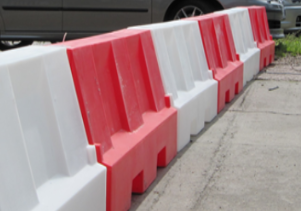
Your Complete Resource for EVO 1, EVO 1.5 and EVO 80 Barrier Solutions
Introduction: Why Traffic Management Barriers Matter More Than Ever
In an increasingly safety-conscious world, the demand for reliable, robust, and adaptable traffic management solutions has never been greater. Whether you are coordinating a major road construction project, managing crowd flow at a large-scale public event, securing a perimeter around critical infrastructure, or safeguarding pedestrians from live traffic, the quality of your safety barrier system can make the difference between a controlled, professional operation and a dangerous, liability-laden incident.
This is precisely where the EVO Barrier system stands apart from the competition. Designed and manufactured to the highest professional standards, the EVO Barrier range represents the gold standard in water-filled, interlocking traffic management barriers. Combining exceptional structural integrity with outstanding ease of use, the EVO range is trusted by highways contractors, event organisers, civil engineering firms, local authorities, and safety professionals across the United Kingdom and beyond.
In this comprehensive guide, we explore everything you need to know about the EVO Barrier system — its design, specifications, applications, performance credentials, and the many reasons why it continues to be the preferred choice for professionals who refuse to compromise on safety.
What Is the EVO Barrier? An Overview of the Range
The EVO Barrier is a professional-grade, water-filled or sand-filled traffic management and safety barrier system designed for a wide range of temporary and semi-permanent applications. Manufactured from prime UV-stabilised polyethylene, the EVO range is built to deliver lasting, reliable service even in the most demanding outdoor environments.
The range consists of three core design sizes, each engineered to meet different operational requirements while maintaining full compatibility with one another:
EVO 1
The EVO 1 is the foundational product in the range, offering a versatile and cost-effective solution for standard traffic management and pedestrian safety applications. With its robust construction and full interlocking capability, the EVO 1 is ideal for road works, event perimeters, construction site boundaries, and general crowd management.
EVO 1.5
The EVO 1.5 provides an intermediate size option for projects where a taller barrier profile is required but full-scale industrial barriers would be impractical. This size is particularly popular in urban environments and mixed-use sites where space is at a premium and flexibility is essential.
EVO 80
The EVO 80 is designed for situations where maximum visibility and a lower profile are advantageous. It is frequently deployed in car parks, pedestrian zones, retail environments, and areas where a less imposing physical barrier is desirable while still providing effective delineation and protection.
All three sizes within the EVO range are fully interlocking and versatile, meaning they can be used together on the same project to create tailored, site-specific barrier solutions that precisely meet the demands of any given application.
Key Features and Technical Specifications of the EVO Barrier
Interlocking Design for a Continuous, Gap-Free Wall
One of the most significant engineering advantages of the EVO Barrier system is its fully interlocking design. When assembled, EVO barriers link together to create a solid, continuous wall with no gaps between units. This is critically important in traffic management scenarios where even small openings can represent a significant safety hazard — allowing vehicles, equipment, or unauthorised individuals to breach the barrier line.
The precision-engineered interlocking mechanism ensures that barriers remain firmly connected even under lateral pressure, vibration from passing traffic, or the dynamic forces generated by crowds. This means that once your EVO barrier wall is assembled, it behaves as a single cohesive structure rather than a series of individual units — delivering far superior containment performance.
Water or Sand Filling for Superior Stability
The EVO Barrier is designed to be filled with water or sand to dramatically increase its mass and stability in use. This water-filling capability is one of the defining features of the EVO system, providing several important operational advantages:
• Significantly increased weight provides greater resistance to accidental displacement by vehicles or crowd pressure
• Water filling can be carried out on-site using standard hoses and equipment, eliminating the need to transport heavy ballast
• Barriers can be emptied quickly and easily for transportation and storage, dramatically reducing logistics costs and effort
• Sand filling is available as an alternative where a more permanent ballast solution is required
The ability to deploy barriers in a lightweight state and fill them on-site is a major practical advantage over solid concrete or steel alternatives, which require specialist lifting equipment and generate significant transport costs.
Wind Resistance: Tested to 55 mph
One of the most impressive performance credentials of the EVO Barrier system is its independently verified wind resistance. In rigorous testing conditions, a configuration of three EVO 1 barriers (filled to the fill line with water) fitted with mini mesh panels withstood wind speeds of up to 55 mph — and crucially, no barrier failed at this speed.
This performance data is not merely theoretical; it represents real-world validation of the EVO Barrier's ability to remain stable and secure in the challenging weather conditions regularly encountered on UK construction sites, road works, and outdoor events. Wind-induced barrier collapse is a serious safety risk that has resulted in injuries and fatalities in the UK — the EVO Barrier's proven wind resistance is therefore not just a selling point but a genuine life-safety credential.
UV-Stabilised Polyethylene Construction
The EVO Barrier range is manufactured from prime UV-stabilised polyethylene — a material specifically chosen for its outstanding combination of properties in outdoor applications:
• UV stabilisation prevents the degradation, brittleness, and colour fading that can occur when standard polyethylene is exposed to prolonged sunlight
• High-density polyethylene offers excellent impact resistance, maintaining its structural integrity even when struck by vehicles or equipment
• The material is inherently weather-resistant, unaffected by rain, frost, and temperature extremes typical of UK climates
• Polyethylene does not rust, corrode, or rot, ensuring a long service life with minimal maintenance requirements
• The smooth surface is easy to clean and can be readily branded with company logos or safety markings
This choice of material ensures that EVO barriers will continue to perform reliably over many years of intensive use, representing exceptional value for money compared to cheaper alternatives that quickly deteriorate in outdoor conditions.
Fully Stackable for Storage and Transportation
The EVO Barrier range has been designed from the outset with logistics in mind. All barriers in the range are fully stackable, meaning they can be neatly stacked on top of one another for storage and transportation. This stackability delivers several important practical benefits:
• Dramatically reduces the storage footprint compared to non-stackable alternatives
• Allows large quantities of barriers to be transported efficiently on standard flatbed vehicles
• Simplifies yard management and inventory control
• Reduces the risk of damage during storage and transit
For hire companies, contractors, and event organisers who routinely deploy and recover large numbers of barriers, the stackable design of the EVO range can deliver significant cost savings in transport and storage over the lifetime of the product.
Applications: Where the EVO Barrier System Excels
Highway and Road Works
The most common application for the EVO Barrier system is in highways and road works environments, where temporary traffic management (TTM) barriers are required to protect workers and redirect traffic safely around construction zones, utility works, and road maintenance operations.
The EVO Barrier is ideally suited to this demanding application. Its water-filled weight provides excellent resistance to displacement by passing vehicles, while the interlocking system creates a continuous barrier line that clearly defines the working zone. The UV-stabilised construction ensures the barriers maintain their high-visibility appearance throughout extended deployments in all weather conditions.
EVO barriers are compliant with the requirements of Chapter 8 of the Traffic Signs Manual, which sets out the standards for temporary traffic management on highways in the UK. Their robust construction and proven wind resistance make them a trusted choice for highways contractors and local authorities managing works on busy road networks.
Event Safety and Crowd Management
Large-scale public events — from music festivals and sporting occasions to street markets and public demonstrations — present complex crowd management challenges that require reliable, flexible barrier solutions. The EVO Barrier system is extensively used in the events industry for a wide range of applications:
• Creating secure perimeters around event sites
• Separating pedestrian flow from vehicle access routes
• Defining queuing areas and entrance channels
• Establishing safety exclusion zones around stages, arenas, and performance areas
• Providing vehicle-rated protection at event entrances and exits
The EVO Barrier's combination of robustness, flexibility, and ease of deployment makes it an excellent choice for event safety professionals. Barriers can be rapidly configured and reconfigured as event requirements change, and their stackable design simplifies the logistical challenges of transporting large quantities of barriers to and from event sites.
Construction Site Safety
Construction sites are inherently hazardous environments, and the proper delineation of working zones, pedestrian routes, and vehicle access areas is fundamental to maintaining safety on site. The EVO Barrier system is widely used by construction companies and principal contractors to:
• Segregate pedestrians from plant and vehicle movements
• Protect workers in excavation and utility works zones
• Create secure site perimeters to control access and prevent unauthorised entry
• Define safe walking routes through active construction areas
• Provide impact protection for site welfare facilities and temporary structures
Retail, Commercial, and Public Space Management
Beyond the traditional construction and events sectors, the EVO Barrier system — and particularly the lower-profile EVO 80 — is increasingly deployed in retail, commercial, and public space management applications. These include:
• Car park management and vehicle flow control
• Pedestrian zone delineation in town centres and shopping areas
• Temporary access control for markets, fairs, and public gatherings
• Protection of outdoor dining areas and hospitality spaces
• Security cordons around critical infrastructure and public buildings
Emergency and Incident Management
In emergency and incident management scenarios — from flood response operations to major accident and infrastructure failure management — the ability to rapidly deploy a reliable, robust barrier system is of paramount importance. The EVO Barrier's combination of rapid deployment capability, structural integrity, and proven wind resistance makes it a valuable asset in emergency management contexts where speed and reliability are non-negotiable.
The EVO Barrier vs Competing Safety Barrier Systems
EVO Barrier vs Concrete Barriers
Concrete barriers — commonly known as Jersey barriers or New Jersey barriers — have long been used as permanent or semi-permanent traffic management solutions. However, they present significant disadvantages compared to the EVO Barrier system in the majority of temporary applications:
• Concrete barriers require specialist lifting equipment for deployment and recovery, generating significant additional costs
• Transportation costs are high due to the weight of concrete units
• Concrete barriers cannot be easily reconfigured once deployed
• They present a significant dust and damage risk during handling
• Storage requires substantial yard space and cannot be stacked
The EVO Barrier system offers comparable structural performance in temporary applications at a fraction of the logistics cost, with dramatically greater flexibility and ease of use.
EVO Barrier vs Standard Plastic Water Barriers
Not all water-filled plastic barriers are created equal. Many cheaper alternatives lack the engineering quality, material specification, and performance validation of the EVO Barrier system. Common shortcomings of inferior products include:
• Poor interlocking systems that leave gaps in the barrier line
• Inadequate UV stabilisation leading to premature deterioration
• Insufficient wall thickness and structural rigidity
• Lack of independently tested wind resistance data
• Poor stackability leading to storage and transport challenges
The EVO Barrier range addresses all of these shortcomings through superior design, premium materials, and rigorous testing — providing professionals with the confidence that their barrier system will perform reliably when it matters most.
EVO Barrier vs Steel Crowd Control Barriers
Steel crowd control barriers — commonly known as Heras fencing or steel barriers — are widely used in event management contexts. However, their application is more limited than the EVO system:
• Steel barriers provide no vehicle impact protection
• They are susceptible to corrosion without proper maintenance
• Installation and configuration are more complex and time-consuming
• Steel barriers do not provide the water-filled mass needed for high-wind environments
The EVO Barrier system provides superior performance in mixed pedestrian and vehicle environments and in exposed outdoor locations where wind resistance is a critical safety requirement.
Installation Guide: Deploying Your EVO Barrier System
Site Assessment and Planning
Before deploying any traffic management barrier system, a thorough site assessment should be carried out to determine the number, configuration, and type of barriers required. This assessment should consider:
• The specific hazards to be managed and the level of protection required
• Traffic volumes, speeds, and vehicle types in the vicinity of the barrier line
• Pedestrian volumes and movement patterns
• Prevailing weather conditions, including wind exposure
• Surface conditions and ground stability
• Access requirements for emergency vehicles and authorised personnel
Barrier Assembly and Linking
One of the most valued features of the EVO Barrier system is its ease of assembly. The interlocking design allows barriers to be connected quickly and securely without the need for tools or specialist skills. The process is straightforward:
• Position the first barrier in the desired location, ensuring it is stable on the surface
• Bring the next barrier into position and engage the interlocking connectors
• Continue the process along the desired barrier line
• Check that all connections are secure and the barrier wall is continuous with no gaps
The resulting barrier wall creates a solid, gap-free structure that provides effective delineation and containment along its entire length.
Filling Procedures
Once barriers are in position and linked, they should be filled with water or sand to achieve their operational weight. When filling with water:
• Connect a standard hose to the filling inlet
• Fill to the indicated fill line — do not overfill, as this can affect stability
• Ensure filling caps are securely replaced after filling is complete
• Check barriers for any signs of leakage before commencing operations
Accessory Integration
The EVO Barrier system is compatible with a range of accessories designed to enhance its functionality and safety performance. Mini mesh panels — as used in the independent wind resistance testing — can be integrated into the barrier configuration to provide additional wind resistance and visual delineation. Other accessories may include:
• Warning lights and reflective panels for enhanced visibility in low-light conditions
• Cable management clips and conduit guides for sites with temporary electrical installations
• Barrier end caps and corner units for specific geometric configurations
• Branding panels for sponsor or safety messaging display
Compliance, Standards, and Safety Certifications
UK Highway Traffic Management Standards
Traffic management on UK highways is governed by a comprehensive regulatory framework including Chapter 8 of the Traffic Signs Manual, the Traffic Management Act 2004, and associated Code of Practice. EVO barriers used in highway applications must be deployed in accordance with these standards, and appropriate Traffic Management Plans (TMPs) must be prepared and implemented by qualified operatives.
Health and Safety Legislation
The deployment and use of traffic management barriers in the United Kingdom is subject to the requirements of the Health and Safety at Work etc. Act 1974, the Construction (Design and Management) Regulations 2015, and the Management of Health and Safety at Work Regulations 1999. The EVO Barrier system supports compliance with these requirements by providing a reliable, tested barrier solution with documented performance characteristics.
Wind Resistance Testing
The independently verified wind resistance performance of the EVO Barrier — tested to 55 mph with water-filled barriers and mini mesh panels, with no barrier failure recorded — provides specifiers and safety professionals with confidence in the system's real-world performance in exposed conditions. This test data is an important differentiator for the EVO system in markets where wind resistance is a contractual or regulatory requirement.
Purchasing, Hire, and Maintenance Considerations
Buying vs Hiring EVO Barriers
The decision to purchase or hire EVO barriers will depend on the nature, frequency, and duration of your operations:
• Organisations that deploy barriers on a regular basis — such as highways contractors, event management companies, and facilities management firms — will typically benefit from purchasing their own EVO barrier stock, providing complete operational flexibility and long-term cost efficiency
• For occasional or one-off deployments, hiring from a specialist safety equipment supplier may be more cost-effective, avoiding the capital expenditure of purchase and the ongoing costs of storage
The EVO Barrier's stackable, easy-transport design makes it particularly attractive for organisations that purchase their own stock, as storage and logistics costs are minimised.
Maintenance and Care
One of the significant advantages of the EVO Barrier system's UV-stabilised polyethylene construction is its low maintenance requirements. To maximise the service life of your EVO barriers:
• Inspect barriers regularly for cracks, damage, or leakage
• Empty and clean barriers before storage to prevent algae growth and odour
• Store barriers stacked in a stable, level configuration away from sharp objects that could cause surface damage
• Replace any barrier that has sustained significant structural damage
• Ensure filling caps and connectors are replaced promptly if lost or damaged
Lifespan and Return on Investment
Thanks to the quality of their UV-stabilised polyethylene construction, EVO barriers have an exceptional service life when properly maintained. Unlike concrete barriers, which can crack and deteriorate, or steel alternatives, which are susceptible to rust and corrosion, properly maintained EVO barriers can deliver many years of reliable service — providing an outstanding return on investment over the lifetime of the product.
Environmental Considerations
Environmental responsibility is an increasingly important consideration for organisations procuring traffic management equipment. The EVO Barrier system offers several environmental advantages compared to alternative solutions:
• Water filling on-site eliminates the need to transport heavy ballast, significantly reducing the carbon footprint of barrier deployment and recovery operations
• The long service life of the UV-stabilised polyethylene construction minimises waste and replacement requirements
• Polyethylene is a recyclable material, and end-of-life EVO barriers can be processed through appropriate plastics recycling streams
• The stackable design reduces the number of transport movements required for delivery and collection, further reducing emissions
For organisations with sustainability commitments and environmental management systems, the EVO Barrier system's environmental credentials are a genuine advantage over heavier, less logistically efficient alternatives.
Why Choose the EVO Barrier System: A Summary of Key Benefits
For professionals evaluating water-filled traffic management barriers, the EVO system offers a compelling combination of performance, practicality, and value. In summary, the key reasons to choose EVO Barriers include:
• Three compatible sizes (EVO 1, EVO 1.5, EVO 80) for maximum versatility across all applications
• Fully interlocking design creates a solid, gap-free barrier wall
• Water or sand filling capability for outstanding on-site stability
• Independently tested wind resistance to 55 mph with no barrier failure
• Prime UV-stabilised polyethylene construction for lasting, reliable service
• Fully stackable for efficient storage and transportation
• Compatible with a range of accessories including mini mesh panels
• Simple, tool-free assembly for rapid deployment
• Low maintenance requirements and exceptional service life
• Environmentally responsible design with reduced transport weight and recyclable materials
Whether you are managing traffic on a major road scheme, ensuring safety at a high-profile public event, or securing a construction site perimeter, the EVO Barrier system provides the performance, reliability, and ease of use that modern safety professionals demand.
Frequently Asked Questions About EVO Barriers
What sizes are available in the EVO Barrier range?
The EVO Barrier range currently consists of three sizes: the EVO 1, the EVO 1.5, and the EVO 80. All three sizes are fully compatible and can be used together on the same project.
What is the EVO Barrier filled with?
EVO barriers can be filled with water or sand. Water filling is the most common choice due to the ease of filling and emptying on-site. Sand filling is available where a more permanent ballast solution is required.
How much wind can EVO barriers withstand?
In independent testing, three EVO 1 barriers filled to the fill line with water, fitted with mini mesh panels, withstood wind speeds of up to 55 mph with no barrier failure recorded. This is a significant performance credential for use in exposed outdoor environments.
Can EVO barriers be stacked for storage?
Yes. The entire EVO Barrier range is designed to be fully stackable, making storage and transportation straightforward and cost-efficient.
Are EVO barriers UV resistant?
Yes. EVO barriers are manufactured from prime UV-stabilised polyethylene, which prevents the degradation and colour fading that can occur when standard polyethylene is exposed to prolonged sunlight. This ensures lasting performance and appearance in outdoor applications.
Do EVO barriers interlock without gaps?
Yes. When assembled, EVO barriers link together to create a solid wall with no gaps between units. This continuous barrier line is essential for effective traffic management and safety applications.
What accessories are available for EVO barriers?
EVO barriers are compatible with mini mesh panels (as used in wind resistance testing), warning lights, reflective panels, and various other accessories designed to enhance their functionality and safety performance. Consult your supplier for the full range of available accessories.
Are EVO barriers suitable for highway use?
Yes. EVO barriers are suitable for use in highway traffic management applications and can be deployed in accordance with Chapter 8 of the Traffic Signs Manual and associated UK highway management standards when deployed by appropriately qualified operatives.
Conclusion: The EVO Barrier — Setting the Standard in Water-Filled Traffic Management
The EVO Barrier system represents the very best in water-filled traffic management and safety barrier technology. From its precisely engineered interlocking design and premium UV-stabilised polyethylene construction to its proven 55 mph wind resistance and fully stackable form factor, every aspect of the EVO range has been designed to deliver outstanding performance in real-world professional applications.
Whether you are a highways contractor, event safety professional, construction site manager, or facilities manager, the EVO Barrier system provides the reliability, versatility, and ease of use that your operations demand. With three complementary sizes — the EVO 1, EVO 1.5, and EVO 80 — you have the flexibility to tailor your barrier configuration precisely to the needs of any project, large or small.
In a safety-critical environment where the performance of your barrier system can have profound consequences for the wellbeing of workers, the public, and your organisation's reputation, choosing the EVO Barrier is choosing confidence. It is choosing a system that has been engineered to the highest standards, manufactured from the finest materials, and validated through rigorous independent testing.
Discover the full EVO Barrier range today and experience the difference that professional-grade traffic management barriers can make to your operations. Contact your nearest authorised EVO Barrier supplier for pricing, availability, and technical guidance tailored to your specific requirements.