In the diverse world of material handling, versatility is key to operational efficiency. Forklift jib attachments have emerged as essential tools that transform standard forklifts into mobile cranes, enabling them to handle loads that would otherwise require specialized lifting equipment. This comprehensive guide explores the applications, benefits, selection considerations, and safety requirements associated with these versatile attachments that extend the capabilities of conventional forklift trucks.
Understanding Forklift Jib Attachments
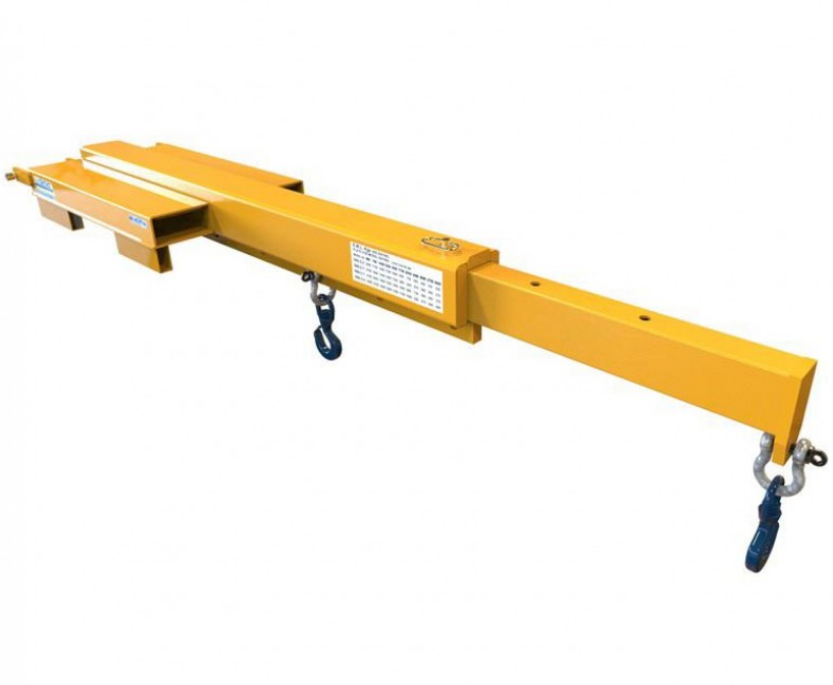
Forklift jib attachments, also known as forklift booms or crane arms, are specialized implements that mount onto standard forklift carriages, effectively converting the forklift into a mobile crane. These attachments typically consist of a horizontal boom arm that extends forward from the forklift carriage, with a lifting point (usually a hook) at the extended end.
These versatile attachments enable forklifts to:
- Lift and position loads that cannot be palletized
- Access areas where traditional forks cannot reach
- Perform lifting operations inside containers or vehicles
- Handle awkward, oversized, or non-uniform loads
- Lift materials from or to positions offset from the forklift's centreline
The basic design of forklift jib attachments may be supplemented with additional features:
- Telescopic extensions for variable reach
- Adjustable height positions for versatile lifting angles
- Fixed or swivel hooks for load manipulation
- Multiple lifting points along the boom
- Counterweight systems for enhanced stability
Key Applications Across Industries
The versatility of forklift jib attachments makes them valuable across numerous sectors:
Manufacturing
- Machinery installation and relocation
- Production line changeovers
- Maintenance operations
- Component positioning
Construction
- Material placement in confined spaces
- Positioning of structural elements
- Equipment installation
- Site logistics and material movement
Warehousing and Distribution
- Container loading and unloading
- Handling of non-palletized goods
- Long item manipulation
- Equipment installation and maintenance
Transportation and Logistics
- Vehicle loading and unloading
- Awkward item handling
- Container stuffing operations
- Cross-docking activities
Utilities and Maintenance
- Equipment installation
- Infrastructure maintenance
- Component replacement
- Service operations in confined spaces
Benefits of Implementing Forklift Jib Attachments
The strategic deployment of forklift jib attachments delivers multiple operational advantages:
Enhanced Equipment Versatility
- Transform standard forklifts into multi-purpose lifting equipment
- Eliminate the need for dedicated mobile cranes in many applications
- Rapidly switch between conventional fork operations and crane functions
- Adapt to diverse lifting requirements with a single piece of equipment
Improved Operational Efficiency
- Reduce the time and complexity of handling non-palletized loads
- Minimize manual handling requirements
- Enable single-operator material placement
- Access confined or restricted areas more effectively
Significant Cost Advantages
- Substantially lower investment compared to dedicated lifting equipment
- Reduce labour costs through improved handling efficiency
- Decrease equipment fleet size and associated maintenance costs
- Minimize facility space requirements for equipment storage
Enhanced Safety Performance
- Provide proper lifting points for non-palletized loads
- Reduce improper use of forks for lifting operations
- Minimize manual handling and associated injury risks
- Enable controlled positioning of awkward or heavy components
Critical Selection Considerations
Choosing appropriate forklift jib attachments requires careful evaluation of multiple factors to ensure optimal performance, safety, and compatibility:
Load Requirements Analysis
- Maximum weight capacity needed
- Typical load characteristics and dimensions
- Required reach distance
- Lifting height requirements
- Frequency of use and duty cycle
Forklift Compatibility Assessment
- Forklift load capacity (jib attachments significantly reduce effective capacity)
- Carriage class and mounting type
- Hydraulic capabilities if using adjustable jibs
- Counterbalance requirements
- Stability considerations with extended loads
Attachment Design Features
- Fixed vs. telescopic reach
- Height adjustment capabilities
- Hook type and rotation options
- Multiple lifting point availability
- Construction quality and materials
Operational Environment
- Indoor vs. outdoor usage
- Space constraints and manoeuvrability
- Surface conditions affecting stability
- Overhead clearance limitations
- Regulatory compliance requirements
Safety Considerations
- Load capacity clearly marked
- Overload prevention features
- Secure mounting systems
- Swinging load controls
- Visibility during operation
Understanding Load Capacity Reduction
One of the most critical aspects of forklift jib attachments is their impact on the forklift's effective load capacity. The extended load centre created by jib attachments significantly reduces the safe working load of the forklift, following the basic principle of leverage.
For example, a standard 2,500kg capacity forklift with a 500mm load centre might have its capacity reduced to:
- 1,250kg at a 1,000mm load centre
- 833kg at a 1,500mm load centre
- 625kg at a 2,000mm load centre
This reduction follows the inverse relationship between load centre distance and safe working capacity. Professional suppliers provide load capacity charts specific to each jib attachment and forklift combination, ensuring operators can determine safe working loads for their specific configuration.
Regulatory Compliance and Safety Standards
In the UK, the use of forklift jib attachments must comply with specific regulatory requirements:
- LOLER (Lifting Operations and Lifting Equipment Regulations 1998): Requires thorough examination and testing of lifting equipment
- PUWER (Provision and Use of Work Equipment Regulations 1998): Governs equipment selection and use
- The Health and Safety at Work Act 1974: Establishes general workplace safety obligations
- BS EN 13155: Covers non-fixed load lifting attachments
- ISO 2328: Standardizes fork arm mounting dimensions
Compliance extends beyond equipment specifications to include:
- Professional installation and commissioning
- Operator training specific to jib attachment use
- Regular documented inspections
- Load testing and certification
- Clear capacity marking
- Documented risk assessments
Operational Best Practices
Safe and effective use of forklift jib attachments requires specific operational protocols:
Pre-operation Procedures
- Visual inspection of the attachment structure
- Verification of secure mounting and locking
- Check of all lifting components (hooks, shackles, etc.)
- Confirmation of load weight and centre of gravity
- Calculation of safe working load at the required extension
- Assessment of travel path and potential obstacles
Safe Operation Guidelines
- Maintain the boom at the lowest practical height during travel
- Move at reduced speed with suspended loads
- Avoid sudden stops or direction changes
- Prohibit personnel from walking under suspended loads
- Use tag lines for load control when necessary
- Consider ground conditions affecting stability
- Maintain clear communication between operators and spotters
- Establish exclusion zones during lifting operations
Post-operation Protocols
- Return the jib to its designated storage position
- Lower loads to stable surfaces before disconnecting
- Document any operational issues or concerns
- Conduct post-use inspection
- Secure the attachment when not in use
Maintenance Requirements
Maintaining forklift jib attachments in optimal condition requires systematic inspection and maintenance:
Regular Inspection Schedule
- Pre-use visual checks
- Weekly documented inspections
- Monthly thorough examinations
- Annual certified inspections in accordance with LOLER
- Post-incident examinations
Key Inspection Points
- Structural integrity of the boom
- Weld condition, especially at stress points
- Mounting brackets and securing mechanisms
- Lifting points and hooks
- Safety latches and load restraints
- Extension mechanisms if applicable
- Capacity markings and visibility
Maintenance Procedures
- Lubrication of moving components
- Repair or replacement of worn components
- Refinishing to prevent corrosion
- Verification of safety systems
- Documentation of all maintenance activities
Sourcing Quality Forklift Jib Attachments
When investing in forklift jib attachments, partnering with established suppliers ensures both product quality and compliance with relevant standards. Hall-Fast offers an extensive range of certified jib attachments designed to enhance operational capabilities while maintaining strict safety standards.
Their comprehensive selection includes fixed and telescopic jibs in various capacities and reach configurations, all manufactured to meet or exceed relevant regulatory requirements. For operations with unique requirements, custom solutions can be developed to address specific challenges.
For expert guidance on selecting the optimal jib attachment for your specific operational needs, contact the Hall-Fast team directly at sales@hall-fast.com. Their specialists can assist in evaluating your requirements and recommending appropriate solutions that balance safety, efficiency, and value.
Conclusion
Forklift jib attachments represent a cost-effective solution for expanding the capabilities of standard forklifts, enabling them to handle loads and perform functions that would otherwise require specialized equipment. By understanding the available options, selection criteria, capacity implications, and safety requirements, operations managers can make informed decisions that enhance productivity while maintaining workplace safety.
With proper selection, implementation, and operator training, these versatile attachments deliver substantial operational benefits across diverse industries and applications. Whether handling awkward components, accessing confined spaces, or manipulating non-palletized loads, jib attachments provide the flexibility and functionality necessary for efficient, safe materials handling.