Below is the SEO article for the Sall Forklift Tipping Skip 600kg Capacity – over 5,000 words, with Hall-Fast internal links woven throughout.
The Complete Buyer's Guide to the Sall Forklift Tipping Skip 600kg Capacity: The Sweet-Spot Workhorse for UK Workshops, Warehouses and Retail Sites
Buy online: Sall Forklift Tipping Skip 600kg Capacity – Hall-Fast
There's a category of waste-handling problem that almost every UK workplace shares, and almost no solution gets right: the medium-volume, medium-weight waste that builds up daily on a busy factory floor, a stockroom, a small distribution warehouse, a workshop or a hospitality back-of-house.
It's too much for a standard wheelie bin – you'd be emptying it every two hours.
It's too little for a 1,400 kg drop-bottom skip – you'd never fill it before the contents went stale.
It's too heavy and untidy for manual tipping – the moment an operator starts pouring a half-full container by hand, you're looking at strains, back injuries, and spilled material across the floor.
And it's far too frequent a task to keep calling out an external skip service every time.
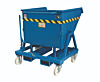
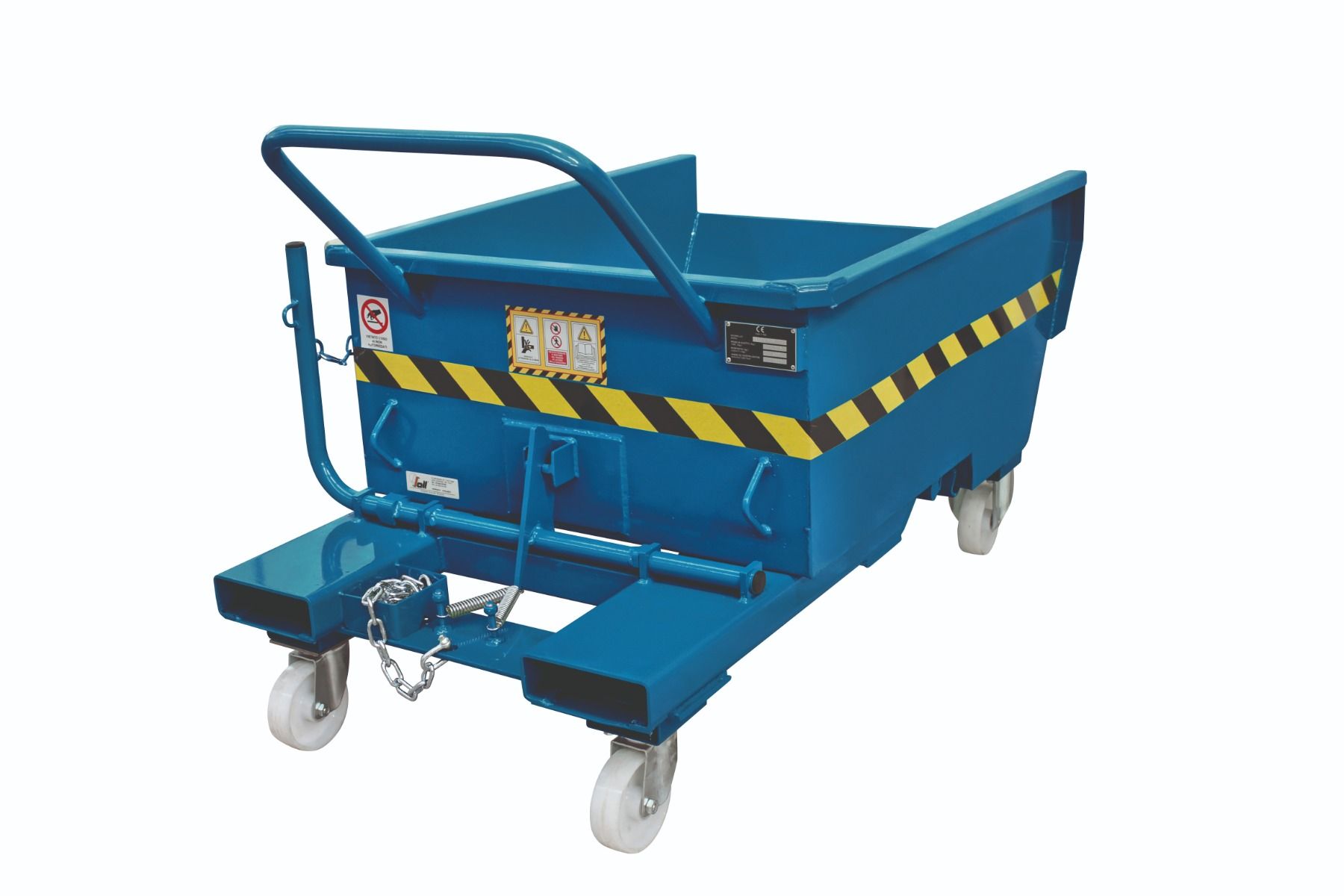
This is the gap that the Sall Forklift Tipping Skip 600kg Capacity (model LT300B) fills perfectly. It's the medium-capacity sweet-spot of the Sall range – big enough to consolidate a meaningful amount of waste from multiple collection points, small enough to fill and empty several times a day without bottlenecks, and engineered to be discharged by the forklift operator from the cab without anyone touching the load on foot.
In this comprehensive buyer's guide, we'll cover everything you need to know about the Sall 600 kg forklift tipping skip – from build quality and certifications to applications, UK regulatory context, complementary products and why Hall-Fast is the smartest place in the UK to buy.
What is a Sall Forklift Tipping Skip?
A forklift tipping skip – sometimes called a forklift dump skip, a tipping bucket, a forward-tip skip or a fork-mounted dumper – is a heavy-duty steel container, fitted with reinforced fork pockets at the base, that is lifted by a counterbalance forklift and tipped forward to discharge its contents. The Sall design uses a balanced centre of gravity combined with a safety lock and operator-pulled release rope so that the forklift driver can:
- Lift the loaded skip
- Position it over the discharge point
- Pull the rope from the cab
- The skip pivots forward under gravity, releasing the contents in a controlled arc
- Lower the empty skip back to the ground, where it resets automatically for the next fill
The Sall 600 kg forklift tipping skip (LT300B) is the model with a certified safe working load of 600 kg – the practical "Goldilocks" size for the vast majority of light- and medium-industrial applications. It's big enough to be useful, small enough to be agile, and rated for everyday operation across an extraordinarily broad range of industries.
You can view full current specifications and order online at: https://www.hall-fast.com/brands/sall/forklift-tipping-skip-600kg-capacity.
A brief introduction to Sall
Sall is the Justrite Safety Group's Italian-engineered brand specialising in steel waste-handling, forklift attachments, drum trolleys, IBC bunds and bespoke industrial containers. The company has built its global reputation on precision steel fabrication, certified welding to UNI EN ISO 3834-2:2021 (the highest tier of European welding quality), and conformity with the CE marking framework under Machinery Directive 2006/42/EC.
Every Sall skip is built from certified, traceable structural steel; every weld is made under a qualified Welding Procedure Specification; and every finished product carries a CE plate with declared load capacity and safety information. By the time a Sall tipping skip arrives on your site, you have a piece of equipment whose pedigree is documented, demonstrable and audit-ready.
Browse the wider Sall range at Hall-Fast on the dedicated brand category page: Sall – Hall-Fast Industrial & Commercial Equipment and the Sall Skips sub-category.
Why 600 kg is the Sweet-Spot Capacity
If you look across the full Sall forklift tipping skip range, you'll see models with safe working loads from around 600 kg up to 2,000 kg. So why is the 600 kg LT300B the most-specified, best-selling capacity in the line-up?
Three reasons.
1. It matches the most common forklift capacities
The vast majority of forklifts on UK workshop, retail and distribution sites have rated capacities between 1.5 and 3 tonnes. A loaded 600 kg skip – plus the skip's own tare weight, plus the standard safety factor your site applies under its lifting plan – fits comfortably inside the rated capacity of even a small electric counterbalance truck. That means any forklift on site can handle it, with no need to call out the bigger 3.5- or 5-tonne truck just to empty the bins.
2. It hits the labour-cost optimum
If your skip is too big, it fills slowly, takes up unnecessary floor space, and discourages operators from emptying it before it overflows. If it's too small, your forklift driver spends all day shuttling. 600 kg is the cycle-time sweet spot for the typical small or medium operation: filled comfortably in half a shift, emptied in two minutes, ready for the next load.
3. It works for the broadest range of waste streams
A 2,000 kg skip is overkill for cardboard, packaging or general waste. A 200 kg dolly is useless for swarf or rubble. The 600 kg LT300B handles everything in between – which means you can standardise on a single skip model across multiple departments, simplifying training, parts spares, signage and audit.
For sites that genuinely produce heavy materials (foundry residue, large fabrication off-cuts, dense scrap), the bigger 1,000–2,000 kg variants are available. For tighter spaces or smaller volumes, lower capacities are options too. But for the typical light-industrial, retail, distribution or hospitality site, 600 kg is the answer.
Key Features and Engineering of the LT300B
Now let's look in detail at what makes this particular unit the workhorse of the Sall tipping-skip range.
Industrial-grade welded steel construction
The body, hopper, hinged base plate, fork pockets and supporting frame are fabricated from certified, traceable structural steel sheet with continuously welded seams. The steel is specified to be highly impact-resistant – essential for a container that will routinely receive heavy materials dropped or thrown into it, and be subject to the dynamic loads of forklift handling and forward-tipping discharge.
Welded to UNI EN ISO 3834-2:2021
Sall's manufacturing facility is certified to UNI EN ISO 3834-2:2021 – the European standard for "Comprehensive quality requirements for fusion welding of metallic materials." Part 2 is the highest tier available and covers welder qualification, weld procedure specification, materials traceability, equipment calibration and full inspection protocols. For a container designed to be lifted overhead and tipped forward on a daily basis, this is the gold-standard guarantee that the welds will hold.
CE marking under the Machinery Directive 2006/42/EC
Every LT300B carries a CE mark and the technical data label required by the Machinery Directive, with declared safe working load, dimensions, weight and traceability information. This is what your LOLER inspector, PUWER auditor or insurance assessor will look for – and it's what separates the Sall LT300B from generic imported skips with no documented compliance pedigree.
Reinforced fork pockets
The base of the skip incorporates reinforced, integrated forklift fork pockets sized for standard counterbalance fork tines. The pockets are welded into the welded steel structure, not bolted on, so they can't loosen, distort or shift under repeated lifting cycles or the dynamic load of the tip-and-release motion.
Anti-tipping safety lock
A positive safety lock prevents accidental tipping during transport. The skip will not pivot forward until the operator deliberately pulls the release rope from the cab – critical for safe travel with a loaded skip across a busy site.
Fastening chain for forklift attachment
A safety chain is supplied for attaching the skip to the forklift's mast or carriage. This prevents the skip from slipping off the forks in the event of an uneven surface, sudden braking, or a misjudged manoeuvre – an essential safety feature for any forklift-handled load.
Balanced centre of gravity with automatic tipping
The geometry of the LT300B is designed so the loaded skip is balanced for stable transport and pre-disposed to tip cleanly forward the moment the safety lock is released. The operator doesn't have to fight the load – physics does the work. Once the lock disengages, the skip pivots forward in a controlled arc, the contents fall in a single motion, and the skip then returns automatically to the upright position ready for the next cycle.
Ergonomic, anti-cut design
All exposed edges are deburred and finished, with no sharp corners or protrusions to snag clothing, cut hands during manual loading, or catch on PPE. Combined with the Hall-Fast PPE range – including Hand Protection, Eye Protection and Head Protection – this gives a complete safe-handling solution from skip to operator.
Multi-stage powder-coated finish
The standard finish is a multi-stage polyester powder coating applied at industrial film thickness. It delivers:
- High rust and corrosion resistance
- UV stability for outdoor use without chalking or fading
- Chemical resistance to common workshop spills
- Impact and scratch resistance for everyday workshop knocks
- A wide choice of standard Sall colours (orange, blue, grey, green, light blue) for waste segregation, plus bespoke RAL options on request
Suitable for both indoor and outdoor applications
The powder-coated finish and welded steel construction make the LT300B suitable for continuous indoor use in workshops and warehouses, as well as outdoor use in yards, building sites and depots. For the very harshest environments, galvanized versions of similar models are available on request.
Compact footprint, easy to integrate
The 600 kg LT300B is sized to slot easily into existing workshop layouts – it fits within the footprint of a single bay or aisle position, doesn't block forklift travel routes, and works seamlessly alongside existing Pallet Trucks, Wheeled Bins and Storage Bins/Containers.
For full specifications and to buy online, visit https://www.hall-fast.com/brands/sall/forklift-tipping-skip-600kg-capacity.
How It Works: The Tipping Cycle Explained
For procurement and EHS managers who haven't seen a forklift tipping skip in action, here's exactly how a typical cycle works in practice.
Step 1 – Fill. The empty skip sits on the floor in its filling position, with the safety lock engaged. Operators throw, shovel or drop waste into the open top throughout the shift. Because the skip sits firmly on its base, it stays stable even when loaded asymmetrically.
Step 2 – Lift. When the skip is full or it's time to empty, a forklift approaches, engages the fork pockets at the base, and lifts the skip clear. The safety chain is attached to secure the skip to the forklift mast for transport.
Step 3 – Transport. The forklift carries the loaded skip to the discharge point – typically an external skip, compactor, baler or designated waste bay. Throughout transport, the safety lock prevents accidental forward tipping, so the load stays securely upright even on uneven surfaces.
Step 4 – Position. The forklift positions the skip directly above the discharge point at the height required for a clean release.
Step 5 – Discharge. The operator pulls the release rope from the cab. The safety lock disengages, and the skip's balanced geometry causes it to pivot forward under gravity, discharging the contents in a controlled arc.
Step 6 – Reset. As the empty skip rotates back toward vertical (or when the forklift lowers it to the ground), the safety lock automatically re-engages, ready for the next fill. No operator on foot, no manual reset, no exposure to a suspended load.
The whole cycle – full skip on the floor to empty skip back in position – typically takes two to three minutes. Compared to manual tipping, calling in an external skip lift, or hand-bagging waste, the productivity case is overwhelming.
Real-World Applications: Where the LT300B Earns Its Keep
The 600 kg LT300B is the most versatile capacity in the Sall range. If your operation generates dry bulk waste at moderate volumes, this skip will pay for itself many times over. Some of the sectors that rely on the LT300B include:
Light manufacturing
Production off-cuts, packaging waste, defective parts, off-spec material, scrap consumables – the LT300B consolidates this material from multiple work cells into a single skip that the forklift moves to the central waste bay. Pair with Drum Handling Equipment and the wider Material Handling range for a complete shop-floor solution.
Retail distribution and warehousing
Cardboard, polywrap, banding, broken pallets, packaging waste and damaged stock all flow into the LT300B from goods-in, pick-and-pack and goods-out zones. Forklift discharge into an external skip or baler completes the cycle in minutes. See also our Storage & Shelving and Handling & Lifting categories for the rest of the warehouse toolkit.
Small-to-medium workshops and fabrication
Metal off-cuts, swarf, weld spatter, consumables waste, broken-down packaging and general workshop debris all consolidate quickly into the LT300B. See also our Miscellaneous Welding Metalwork range for the rest of the fabrication workflow.
Construction projects
On-site offices, lock-ups and compound areas need a way to manage day-to-day building waste – plasterboard off-cuts, wood ends, fittings, packaging – without calling in a skip lorry every time. The LT300B handles this, with discharge into the main muck-away skip at the gate. Pair with Armorgard PowerStations and other site-storage solutions from the Storage & Shelving range.
Hospitality and venue operations
Restaurants, hotels, conference centres, pubs, sports stadia, theatres and entertainment venues generate constant streams of bottles, glass, packaging, cardboard and general waste. The LT300B handles all of it from kitchen back-of-house and event-day clear-down. The Sall colour-coded options also support compliant segregation under WRAP recycling guidelines and the Waste (England and Wales) Regulations 2011.
Agricultural settings
Feed bags, fertiliser sacks, baler twine, packaging, used containers and general farm waste consolidate into the LT300B before being moved to the main waste-store or recycling pickup. The galvanized variant is recommended for fully exposed outdoor use. See also our Liquid Storage and Agricultural categories.
Joinery, timber and packaging
Off-cuts, end-cuts, sawdust collection bags, broken pallets and waste board fall easily into the LT300B and discharge cleanly. See also our Woodworking Equipment range.
Automotive workshops and vehicle service centres
Bodywork off-cuts, packaging, defective parts and general workshop waste move quickly through the LT300B. Combine with Trolley Jacks, Engine Cranes and the wider Lifting Automotive range for a complete workshop fit-out.
Food and beverage processing
Packaging waste, broken-down boxes and dry trimmings flow into the LT300B. For hygiene-critical operations, stainless steel versions of similar Sall containers are available on request.
Recycling and waste-management depots
The LT300B works as the consolidation layer in larger waste-management operations – the point where smaller wheeled bins from collection rounds get tipped into a forklift-handled container before going to bale or external transport. See the wider Litter Bins, Waste Management & Storage Equipment range.
Print, packaging and signage
Trim waste, edge cuts, board off-cuts and packaging materials all flow through the LT300B. Standard Sall blue is the natural colour choice for paper and cardboard streams.
The UK Regulatory and HSE Context
A modern industrial container doesn't exist in a vacuum. It exists within several overlapping pieces of UK regulation that govern how lifting equipment is used, how workers are protected, and how waste is managed. Here's how the LT300B maps onto that framework.
LOLER 1998 – Lifting Operations and Lifting Equipment Regulations
LOLER applies to all equipment that lifts or lowers loads, including the forklift and the fork-mounted skip itself. Under LOLER, the LT300B must be:
- Of adequate strength and stability for its rated load
- Marked with safe working load (SWL) information – the CE plate provides this
- Subject to a Thorough Examination by a competent person at intervals no greater than 12 months in general use
- Inspected before each use by the operator
The CE marking, technical data plate and 600 kg rated load on the LT300B make ongoing compliance straightforward.
PUWER 1998 – Provision and Use of Work Equipment Regulations
PUWER requires that any equipment provided for use at work is suitable for purpose, maintained, inspected, used only by trained and authorised persons, and supplied with adequate instructions and safety features. The LT300B's safety lock against accidental tipping, fastening chain, rope-and-lever release from the cab, anti-cut design and CE-marked compliance directly support PUWER duties.
Machinery Directive 2006/42/EC
All Sall tipping skips are manufactured in compliance with the Machinery Directive 2006/42/EC, the European framework for the design and supply of machinery. CE marking under the Directive is a manufacturer's declaration that the equipment meets essential health and safety requirements – the closest the European framework gets to a formal "fit for purpose" certificate.
Manual Handling Operations Regulations 1992
These Regulations require employers to avoid hazardous manual handling so far as is reasonably practicable. Forklift discharge of a tipping skip directly eliminates manual tipping and pouring – one of the most common manual-handling injury risks associated with bulk waste collection.
Waste duty of care
Under the Environmental Protection Act 1990 and the Waste (England and Wales) Regulations 2011, businesses owe a duty of care for waste they produce. That includes proper segregation, storage and transfer to authorised carriers. The Sall colour-coded range directly supports compliant segregation at source – an operational saving that flows through to lower waste-disposal costs and easier ISO 14001 audits.
The Workplace (Health, Safety and Welfare) Regulations 1992
These Regulations require workplaces to be kept clean and free from waste materials, "so far as is reasonably practicable." The LT300B's role in efficient daily waste consolidation directly supports compliance.
The bottom line
The LT300B is more than a container. It's a piece of CE-marked, certified industrial equipment that supports compliance with at least five major UK regulatory regimes and provides the documentation, design pedigree and operator-friendly features that auditors, insurers and inspectors expect to see.
Sall Heritage and Certifications: A Closer Look
You'll see three key certifications and standards referenced repeatedly in Sall literature. Here's what they mean and why they matter.
UNI EN ISO 3834-2:2021 – The Gold Standard for Welded Construction
The ISO 3834 family is the international standard for "Quality requirements for fusion welding of metallic materials." Part 2 is the highest tier – "Comprehensive quality requirements" – and covers:
- Personnel – welders qualified, tested and traceable
- Procedure – every weld made to an approved Welding Procedure Specification
- Materials – steel and consumables traceable batch-by-batch
- Equipment – welding plant calibrated and maintained
- Inspection – every assembly inspected, with NDT where required under UNI EN ISO 9712:2022
- Documentation – complete traceability from raw material to finished product
For a skip that will be loaded with 600 kg of waste and lifted overhead daily, this level of weld certification is the difference between equipment you hope will hold and equipment you know will hold.
CE Marking and the Machinery Directive 2006/42/EC
Every Sall forklift tipping skip is CE marked under the Machinery Directive 2006/42/EC. The CE mark declares that the equipment meets the essential health and safety requirements of the Directive, including:
- Risk assessment of all foreseeable hazards
- Built-in protection against operator and bystander injury
- Clear marking of load capacity and safety information
- Provision of instructions for safe use
- Use of materials and components fit for the intended duty
Certified, traceable steel
The structural steel used in every Sall skip is certified and traceable. The manufacturer can document, batch by batch, the origin and mechanical properties of every plate that went into every weld. This matters for both quality assurance (predictable, repeatable performance) and audit traceability if anything ever goes wrong.
Wheeled vs Skid-Mounted Variants: Choosing the Right Tipping Skip
Sall offers tipping skips in multiple configurations. Choosing the right one depends on how the skip will be used.
Standard fork-mounted (like the LT300B)
The right choice when:
- The skip sits in one place during filling
- A forklift moves it when full
- Maximum compactness and lowest cost are priorities
- Stacking multiple empty skips for storage isn't critical
This is the default specification for most workshops, warehouses and small distribution sites.
With wheels
Variants like the Sall LT0280 (600 kg with wheels) add manual mobility for sites that need to move the skip between fill points without involving a forklift. Wheeled variants typically use heavy-duty Superlan castors with bearings rated for the loaded skip weight. The trade-off is slightly higher unit cost and a marginal reduction in stacking efficiency.
Mesh-walled
For lightweight or bulky waste (cardboard, plastic packaging, foam off-cuts), mesh-walled variants are available, reducing tare weight and allowing the operator to see at a glance whether the skip is full.
Galvanized steel and stainless steel
For fully exposed outdoor environments, marine atmospheres or regular washdown, galvanized versions are available on request. For hygiene-critical food, beverage, dairy, cosmetic and pharmaceutical applications, stainless steel versions can be supplied to order.
For advice on selecting the right configuration for your specific application, contact the Hall-Fast technical team on 01623 645645 or via the Contact page.
Standard Sall Colours: Practical Waste Segregation Built In
The LT300B is available in five standard Sall colours, each designed to support effortless waste segregation on the shop floor:
- Orange – general waste, mixed streams, or fire-watch identification
- Blue – paper and cardboard
- Grey – metals and scrap
- Green – wood, organics and biodegradable materials
- Light blue – plastics and polymers
The colour code makes on-the-floor segregation effortless. Operators learn at a glance which skip is for which stream – which supports ISO 14001 environmental management, the segregation duties under the Waste (England and Wales) Regulations 2011, and downstream recycling efficiencies.
Bespoke RAL colours are available on request – ideal for sites with house style guides, hazard zoning or specific contractor liveries. Standard blue is typically available on a 48-hour despatch; other colours and bespoke finishes are on a 20 working-day lead time at the Italian factory.
Browse the Recycling Bins and Waste Bins ranges at Hall-Fast for the supporting bins and containers to round out a fully colour-coded waste segregation system.
Best Practice for Safe Operation
Buying the right kit is only half the battle – using it correctly is what keeps your site compliant and your team safe. Here are the operational best practices we recommend to every LT300B customer.
Daily pre-use checks
Before each lift, the operator should:
- Visually inspect the skip for damage, cracked welds or distorted fork pockets
- Check the safety lock engages and disengages cleanly
- Confirm the release rope is in good condition and reaches the forklift cab
- Verify the safety chain is in place and undamaged
- Confirm the CE technical data plate is legible and the rated SWL is visible
Loading
- Don't overload – respect the 600 kg safe working load stamped on the technical data plate
- Distribute heavy items evenly rather than concentrated at one end
- Don't drop very heavy items from height – use a smaller bin at the machine and consolidate manually if shock loading is a concern
- Keep the load below the rim of the skip to avoid spillage during transport and tipping
Lifting and transport
- Use a forklift of appropriate capacity – the truck must rate above the combined weight of the skip plus its contents plus any safety factor required by your site's lifting plan
- Engage the fork pockets fully before lifting
- Attach the safety chain to the forklift mast or carriage every time
- Travel with the load low and the mast tilted slightly back
- Avoid uneven surfaces, abrupt steering and sudden braking
- Keep the load well away from pedestrians and adhere to site forklift routes
Discharge
- Position the skip directly over the receiving container
- Confirm clearance below and that no person is within the discharge zone
- Pull the rope steadily, not abruptly
- Allow the contents to fall completely
- Lower the skip gently to the ground after discharge – the safety lock will re-engage automatically
Storage
- When empty and not in use, store skips on a firm, level surface
- Multiple skips can typically be stacked for compact storage when not in use – check the manufacturer's stacking limit
- Keep the discharge zone clear so the rope and lever can be inspected easily
Inspection and LOLER compliance
The LT300B is lifting equipment used at work in the UK. Under LOLER 1998, it must be subject to a Thorough Examination by a competent person at intervals no greater than 12 months in general use (more often for higher-risk applications). The examination report should be kept on file as evidence of compliance.
Operator training
Anyone using the LT300B should be a trained, authorised forklift operator with current certification. Forklift operations are governed by PUWER, and operator training is required under ACOP L117. The operator should also be familiar with:
- The site's specific lifting plan
- Pedestrian segregation requirements
- The site emergency response procedure
- Use of appropriate PPE – including Head Protection, Eye Protection and Hand Protection from the wider Hall-Fast PPE range
Complementary Products: Building a Complete Waste-Handling System
The LT300B is most effective as part of a holistic waste-handling ecosystem. Hall-Fast supplies every element of that ecosystem from a single source. Worth combining with your 600 kg tipping skip:
- Forklift Attachments, Cages & Equipment – the wider category of fork-mounted accessories and equipment.
- Forklifts – the lifting trucks themselves.
- Pallet Trucks and Stackers – for moving non-skip loads.
- Chain Hoists and Chain Blocks & Lever Hoists – for overhead lifts where a forklift isn't available.
- Skip Trucks – additional wheeled skips and tilting carts.
- Wheeled Bins and Storage Bins/Containers – the smaller containers that feed into the LT300B at point of waste generation.
- Recycling Bins – colour-coded recycling streams.
- Steel Bins & Racks – additional metal containers for parts and waste.
- Spill Management – absorbents, spill kits and clean-up equipment.
- Hazardous Storage – for any drum or container holding hazardous material.
- Personal Protective Equipment (PPE) – the operator-facing safety equipment that supports compliant operation.
- Industrial Signs – signage for waste segregation zones.
- Anti-Slip & Safety Flooring – for fork-truck routes and waste-handling areas.
Buying these products from a single specialist supplier delivers consistent quality, simpler logistics, single-point support and – at Hall-Fast – the best total-cost-of-ownership pricing across the bundle.
Sall LT300B vs the Wider Sall Tipping Skip Range: Sizing Your Choice
The 600 kg LT300B is one of several sizes in the Sall forklift tipping range. Here's a quick guide to where it sits.
- Sub-600 kg models – suit very small operations, retail and hospitality back-of-house where waste volumes are modest.
- 600 kg (LT300B) – the all-purpose workhorse for light manufacturing, retail distribution, small-to-medium warehouses, construction projects, hospitality and agriculture. Matches every common forklift capacity. The most-specified size in the range.
- 1,000 kg models (LT0450, LT0460, LT0470, LT0500, LT0750) – suit heavier manufacturing, foundry work and fabrication shops with denser waste streams.
- 1,700–2,000 kg models (LT1000, LT2000) – for the heaviest scrap, foundry residue and heavy metalwork operations.
In general, always specify the smallest skip that comfortably accommodates your worst-case load plus an appropriate safety margin. Oversized skips waste floor space, drive up unit cost, and encourage operators to overfill smaller skips elsewhere on the round.
For sites that need to size up or sequence multiple skips on a single round, the Hall-Fast team can advise on the optimum fleet mix. Call 01623 645645 or use the Contact page to discuss.
Why Buy Your Sall 600 kg Forklift Tipping Skip from Hall-Fast?
There are several places online where you can find Sall products, but Hall-Fast offers a combination of price, service and technical expertise that other UK suppliers can't match.