The Complete Guide to Stubbs Turntable Trucks: British-Made Quality for Heavy-Duty Material Handling
Everything You Need to Know About Choosing, Using, and Maintaining Stubbs Turntable Trucks
When it comes to heavy-duty material handling equipment that combines traditional British craftsmanship with modern engineering excellence, Stubbs turntable trucks stand in a class of their own. For nearly two centuries, the Stubbs England name has been synonymous with quality, durability, and reliability in equestrian, agricultural, and industrial equipment. Their range of turntable trucks continues this proud tradition, offering professional-grade material handling solutions that outlast and outperform budget alternatives.
This comprehensive guide explores everything you need to know about Stubbs turntable trucks, from understanding what makes them unique to selecting the right model for your specific needs, proper maintenance practices, and where to find the best deals from reputable suppliers like Hall-Fast Industrial Supplies.
What Are Turntable Trucks and Why Choose Stubbs?
Understanding Turntable Truck Design
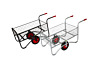
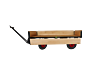
A turntable truck, also known as a turntable trolley, platform truck, or tow trailer, is a four-wheeled material handling device designed for transporting heavy loads across warehouses, yards, construction sites, and outdoor environments. Unlike standard platform trucks with fixed front wheels, turntable trucks feature a rotating front axle assembly that allows the front two wheels to pivot 360 degrees around a central bearing mechanism.
This innovative design provides several critical advantages over conventional fixed-wheel trolleys. The turntable mechanism enables operators to steer and manoeuvre heavy loads with minimal physical effort, making tight turns in confined spaces, navigating around obstacles, and changing direction smoothly even when carrying maximum capacity loads. The operator walks behind the truck, using a large handle connected to the turntable assembly to control the direction of travel.
The typical turntable truck consists of several key components working together: a robust steel frame that provides structural integrity and load support, a platform deck (usually timber, plywood, or steel) that carries the load, four large-diameter wheels mounted on heavy-duty bearings, a ball bearing race turntable mechanism that allows smooth rotation of the front axle, and an ergonomic handle for operator control.
The Stubbs Difference: British Manufacturing Excellence Since 1836
Stubbs England has been manufacturing quality equipment for agricultural, equestrian, and industrial applications since 1836. With over 185 years of continuous operation, the company has refined its manufacturing processes and design principles through generations of craftspeople, creating products that set the standard for durability and performance.
What distinguishes Stubbs turntable trucks from the flood of imported alternatives saturating the market? The answer lies in their unwavering commitment to British manufacturing standards, quality materials, and traditional craftsmanship enhanced by modern engineering techniques.
Every Stubbs turntable truck is designed and manufactured in the United Kingdom using premium-grade materials. The angle steel frames are constructed from high-quality British steel, properly heat-treated and finished with durable enamel coatings that protect against corrosion in outdoor environments. The timber decks are crafted from carefully selected softwood that provides the perfect balance of strength, flexibility, and longevity. The wheel assemblies feature industrial-grade roller bearings that ensure smooth operation even under maximum loads.
Perhaps most importantly, Stubbs products are made to order rather than mass-produced. This approach ensures that each turntable truck receives proper quality control attention, with skilled craftspeople overseeing every stage of construction. This level of care and attention to detail is simply impossible to achieve in high-volume overseas manufacturing facilities focused on minimizing costs rather than maximizing quality.
The result is material handling equipment that doesn't just meet specifications on paper but delivers reliable performance day after day, year after year, often outlasting multiple generations of cheaper alternatives. Many operations report Stubbs turntable trucks remaining in active service for 15, 20, even 25+ years with proper maintenance – a testament to the quality of materials and construction methods employed.
The Economic Case for Quality: Total Cost of Ownership
While Stubbs turntable trucks command a premium price compared to imported budget alternatives, a proper total cost of ownership analysis reveals them to be the economically superior choice for professional operations.
Consider a typical scenario: A budget imported turntable truck might cost £200-300, while a comparable Stubbs model costs £450-650. On the surface, the imported option appears to offer significant savings. However, the imported truck typically lasts 2-5 years before frame failure, wheel bearing seizure, or deck deterioration requires replacement. The Stubbs truck, meanwhile, continues operating reliably for 15-25 years.
Over a 20-year period, an operation might purchase 4-8 imported trucks at a total cost of £800-2,400, dealing with downtime and replacement logistics multiple times. The single Stubbs truck purchased at the beginning remains operational throughout, with a total cost of £450-650 plus minimal maintenance expenses. The Stubbs option saves £150-1,750 while eliminating the productivity losses and inconvenience of multiple replacements.
Beyond direct costs, consider the value of reliability. When a turntable truck fails during a critical operation – a construction deadline, harvest season, or urgent delivery – the costs extend far beyond the replacement price. Labour sits idle, projects delay, and customers become frustrated. Stubbs trucks minimize these risks through robust construction and consistent performance.
The Complete Stubbs Turntable Truck Range
Stubbs manufactures turntable trucks in multiple sizes and configurations to suit different operational requirements. Understanding the range helps ensure you select the model that best matches your specific needs.
Light Duty Turntable Truck (150kg Capacity)
Platform Dimensions: 1067mm x 610mm
Load Capacity: 150kg
Wheel Size: 200mm diameter
Best For: Light commercial use, tack rooms, small workshops, retail environments
The light duty model represents the most compact and economical option in the Stubbs range. Despite its relatively modest capacity, this truck is built to the same quality standards as its larger siblings, featuring tubular steel construction with enamel finish and mounted on four 200mm cushioned tyres.
This model excels in environments where loads are typically lighter but quality and manoeuvrability remain important. Equestrian facilities use these trucks to transport tack, grooming supplies, and feed buckets between stables. Retail operations employ them for restocking shelves and moving inventory from stockrooms to sales floors. Small workshops and garages find them invaluable for moving tools, parts, and equipment around tight spaces.
The 15cm high sides available on some variants provide additional versatility, securing smaller items and preventing materials from sliding off during transport. The compact dimensions allow operation in confined spaces where larger trucks cannot manoeuvre effectively.
While this model won't replace heavier-duty trucks for demanding industrial applications, it represents an excellent investment for operations where a dedicated light-duty material handling solution improves efficiency without the expense of larger equipment.
Industrial Turntable Truck (400kg Capacity)
Platform Dimensions: 1067mm x 610mm
Load Capacity: 400kg
Wheel Size: Typically 300mm+ diameter
Best For: Medium-duty warehouse operations, maintenance facilities, educational institutions
The 400kg capacity model bridges the gap between light-duty and heavy-duty applications, offering substantial load capacity in a relatively compact footprint. This makes it ideal for operations requiring versatility – handling both lighter loads requiring manoeuvrability and heavier materials demanding greater capacity.
Construction features include robust angle steel frame with dark green enamel finish, light green timber deck providing slip-resistant load surface, U-shaped folding handle for ergonomic operation and compact storage, and choice of pneumatic or cushioned rubber wheels for different operating environments.
This mid-range model proves particularly popular with educational institutions, where it handles everything from classroom furniture to sports equipment to maintenance supplies. Smaller manufacturing facilities appreciate the balance between capacity and manoeuvrability for moving components, tools, and finished products. Maintenance departments in large facilities deploy these trucks for transporting tools, equipment, and materials to job sites throughout buildings and grounds.
The folding handle design allows easy storage in spaces where larger trucks might prove cumbersome, while the substantial 400kg capacity handles the vast majority of everyday material handling tasks encountered in professional environments.
Heavy Duty Turntable Truck (500kg Capacity)
Platform Dimensions: 1524mm x 711mm
Overall Dimensions: 1600mm L x 711mm W x 1130mm H
Load Capacity: 500kg
Wheel Size: 400mm diameter (pneumatic or cushioned)
Best For: General industrial use, stable yards, agricultural operations, construction sites
The 500kg capacity model represents the workhorse of the Stubbs turntable truck range. This is the model most commonly deployed across diverse industries, offering the ideal combination of capacity, platform size, and manoeuvrability for demanding professional applications.
The substantial 1524mm x 711mm platform provides 1.08 square metres of load-carrying surface, accommodating hay bales, feed sacks, building materials, equipment, and countless other loads encountered in industrial, agricultural, and equestrian environments. The robust angle steel frame construction ensures structural integrity under maximum loads, while the generous timber deck distributes weight effectively and provides secure footing for varied cargo.
Large 400mm diameter wheels represent a key feature of this model. These oversized wheels provide several critical advantages: they roll easily over rough terrain, uneven surfaces, and obstacles that would stop smaller wheels; they distribute load weight effectively, reducing ground pressure and preventing damage to softer surfaces; they provide excellent shock absorption, protecting delicate loads from vibration and impact; and they minimize rolling resistance, making the truck easier to push and pull despite heavy loads.
The choice between pneumatic and cushioned rubber wheels allows operators to optimize performance for their specific environment. Pneumatic tyres deliver the smoothest ride and best performance on rough outdoor terrain, ideal for construction sites, farms, and stable yards. Cushioned rubber wheels eliminate puncture concerns and maintenance requirements, perfect for warehouse environments and applications where downtime must be minimized.
The U-shaped handle folds out of the way when not in use, facilitating compact storage and providing clear access to the platform for loading and unloading operations. The ball bearing race turntable mechanism ensures smooth steering throughout the life of the truck, with minimal maintenance requirements.
This model serves as the default choice for most professional operations, providing ample capacity for typical industrial loads while remaining manageable for single-operator use and capable of navigating through standard doorways and confined spaces.
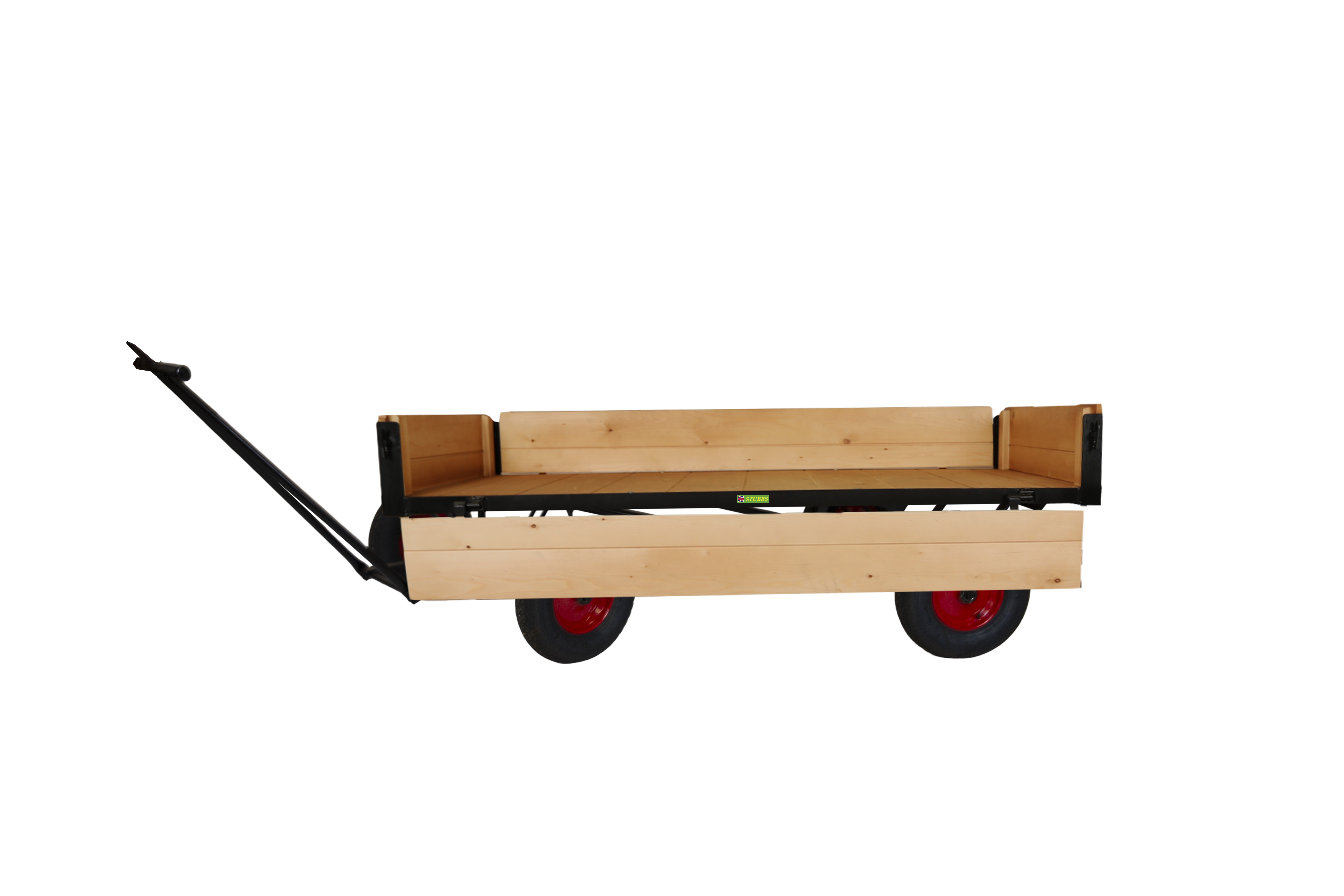
Heavy Duty Turntable Truck with Removable Sides (500kg Capacity)
Platform Dimensions: 1524mm x 711mm
Load Capacity: 500kg
Features: Fixed timber ends, removable timber side panels
This variant of the 500kg model adds containment capability through removable side panels, making it ideal for transporting loose materials, multiple small items, or loads requiring lateral support during transport.
The fixed timber end panels provide permanent containment at the front and rear of the platform, while removable side panels attach securely but detach quickly when full platform access is required. This design offers maximum versatility – use it as a sided truck for transporting sacks, boxes, tools, or loose materials, then remove the sides when loading pallets, machinery, or oversized items that require full platform width.
Landscaping operations particularly appreciate this configuration, using it to transport plants, soil bags, paving materials, and equipment. The sides contain loose materials during transport but remove quickly when loading bulk items or operating machinery onto the platform.
Schools, colleges, and local authorities deploy these trucks extensively for grounds maintenance, moving everything from sporting equipment to maintenance supplies to event setup materials. The removable sides accommodate the diverse range of materials these organizations handle daily.
Extra-Large Heavy Duty Turntable Truck (1000kg Capacity)
Platform Dimensions: 2000mm x 1000mm
Load Capacity: 1000kg (1 tonne)
Wheel Size: 400mm diameter
Best For: Maximum capacity industrial applications, heavy construction, large-scale operations
The flagship model in the Stubbs range, this extra-large turntable truck doubles both the platform area and load capacity of the standard heavy-duty model. With a full 2.0 square metres of platform space and 1000kg capacity, it handles the heaviest and most demanding material handling tasks.
The 2000mm length accommodates long materials that extend beyond smaller trucks – timber lengths, steel sections, piping, panels, and other building materials transport easily. The 1000mm width provides stable support for wide loads and allows multiple items to be carried side-by-side, reducing the number of trips required for multi-item transport tasks.
This model targets heavy industrial operations where maximum capacity justifies the premium investment. Manufacturing facilities use these trucks to move machinery, large components, and bulk materials. Construction sites deploy them for transporting building supplies, tools, and equipment across rough terrain. Agricultural operations employ them for large-scale feed distribution, equipment movement, and bulk material handling.
Despite its size and capacity, the ball bearing turntable steering and large 400mm wheels ensure the truck remains manageable for single-operator use. The robust construction provides stability even under maximum loads, while the low platform height (approximately 500mm) facilitates loading with standard equipment.
Key Features and Engineering Advantages
Angle Steel Frame Construction
The foundation of every Stubbs turntable truck is its angle steel frame. Angle steel (L-shaped steel sections) provides exceptional strength-to-weight ratio, offering robust load support while maintaining reasonable overall weight for operator manoeuvrability.
The frames are fully welded rather than bolted, creating a unitary structure that distributes loads effectively and eliminates the weak points inherent in bolted assemblies. Over time, bolted frames develop play as fasteners loosen, leading to frame flex, reduced load capacity, and eventual structural failure. Welded frames maintain their integrity throughout their service life.
Quality heat treatment relieves internal stresses created during welding and forming, preventing warping and ensuring dimensional stability. The dark green enamel finish provides multi-layer protection against corrosion, crucial for equipment used in outdoor environments exposed to rain, humidity, and aggressive agricultural or industrial atmospheres.
Timber Deck Platform
While some turntable trucks use steel or plywood decks, Stubbs predominantly employs solid timber boarding, specifically light green painted softwood. This choice reflects deep understanding of material handling requirements across diverse applications.
Timber provides natural slip resistance, crucial for securing loads during transport. Materials placed on timber decks stay in position better than on smooth steel surfaces, reducing the need for additional securing measures. The natural texture and slight flexibility of wood creates friction that helps hold loads steady.
Timber absorbs impacts and vibrations that steel transmits directly to loads. When transporting delicate equipment, finished products, or fragile materials, the shock-absorbing properties of timber reduce damage risk. This proves particularly valuable in equestrian applications, where tack and equipment benefit from cushioned transport.
Individual deck boards can be replaced if damaged, extending the truck's service life. A damaged steel deck requires complete platform replacement, while timber boards can be swapped individually as needed. This modularity reduces long-term maintenance costs and downtime.
The softwood used in Stubbs decks is carefully selected for durability and weather resistance. Properly maintained timber decks last decades in outdoor service, developing a protective patina that enhances longevity. The light green paint finish provides additional weather protection while making the platform easy to clean.
Ball Bearing Race Turntable Mechanism
The heart of any turntable truck is its steering mechanism, and Stubbs employs precision ball bearing race assemblies that deliver smooth, effortless operation throughout the equipment's service life.
Ball bearing races consist of hardened steel races (circular tracks) containing precision ball bearings that allow rotation with minimal friction. This design provides several crucial advantages over simpler pivot mechanisms used in budget trucks.
The ball bearing design requires minimal force to initiate rotation, allowing operators to steer easily even when the truck carries maximum loads. This reduces operator fatigue during extended use and improves control when navigating tight spaces or making frequent direction changes.
Quality ball bearings are engineered for decades of service under heavy loads. Unlike simple pivot pins or bushings that wear quickly and develop play, properly maintained ball bearing assemblies maintain smooth operation throughout the truck's life. The sealed or shielded bearing designs used by Stubbs exclude contaminants while retaining lubrication, minimizing maintenance requirements.
The wide diameter of the turntable assembly distributes forces effectively, reducing stress concentrations that lead to premature failure in smaller-diameter designs. This robust engineering ensures the turntable mechanism matches the longevity of the frame and other components.
Large Diameter Wheel Assemblies
Stubbs turntable trucks employ significantly larger wheels than many competing products – typically 400mm (16 inches) diameter on heavy-duty models compared to 200-300mm on budget alternatives. This substantial size difference translates directly into performance advantages.
Large wheels roll over obstacles that stop smaller wheels. Rough terrain, debris, expansion joints, loading dock lips, and other irregularities that impede small-wheeled trucks are easily traversed by large-diameter wheels. This capability is essential for outdoor use and construction site applications.
Rolling resistance decreases as wheel diameter increases. A 400mm wheel requires less force to push across any surface than a 200mm wheel carrying the same load, reducing operator effort and improving productivity during transport-intensive operations.
Larger wheels distribute load weight over a greater contact area, reducing ground pressure and preventing damage to softer surfaces. They also provide enhanced stability, particularly important when transporting tall or top-heavy loads that might become unstable on smaller-wheeled trucks.
The longer radius of large wheels provides superior shock absorption, cushioning loads from bumps and irregularities in the travel surface. Combined with pneumatic tyres, this delivers the smoothest possible ride for delicate or sensitive cargo.
Pneumatic vs. Cushioned Rubber Wheels
Most Stubbs turntable trucks are available with either pneumatic (air-filled) or cushioned solid rubber wheels, each offering distinct advantages for different operating environments.
Pneumatic Tyres provide the ultimate in ride quality and shock absorption. The air cushion absorbs impacts, vibrations, and irregularities that would otherwise transmit to the load. For outdoor use on rough terrain, pneumatic tyres deliver unmatched performance, making them the preferred choice for construction sites, agricultural operations, and stable yards.
Pneumatic tyres provide better traction on loose surfaces like gravel, grass, or mud, where solid wheels might slip. They also operate more quietly than solid wheels, relevant in noise-sensitive environments. The cushioned ride protects fragile loads from vibration damage during transport across uneven surfaces.
The primary consideration with pneumatic tyres is puncture vulnerability and the need for periodic pressure maintenance. Operations with sharp debris, thorns, or materials that might puncture tyres should evaluate whether the superior performance justifies the maintenance requirements. Most professional operations find that the benefits far outweigh the minimal maintenance demands.
Cushioned Solid Rubber Wheels eliminate puncture concerns entirely while maintaining good performance on hard surfaces. These tyres feature solid rubber construction, sometimes with internal cushioning compounds that provide some shock absorption while remaining completely puncture-proof.
For warehouse operations on concrete floors, facilities with debris that might puncture pneumatic tyres, or 24/7 operations where any downtime is unacceptable, cushioned wheels provide peace of mind. They require zero maintenance, no pressure monitoring, and deliver consistent performance in all conditions.
While not quite matching pneumatic tyres for shock absorption and rough terrain performance, modern cushioned wheels perform surprisingly well, particularly on hard surfaces where their solid construction provides excellent durability and predictable handling characteristics.
Folding Handle Design
The U-shaped handle used on Stubbs turntable trucks provides ergonomic operation while folding flat against the platform when not in use. This simple but effective design delivers multiple benefits often overlooked in equipment evaluation.
The wide U-shape provides multiple grip positions, allowing operators to use the most comfortable hand placement for their height and arm length. The tubular steel construction offers comfortable diameter for firm, fatigue-free grip during extended use.
When the handle folds down, it lies flat against the platform deck, eliminating protrusion that might interfere with storage, create hazards in tight spaces, or suffer damage when trucks are stacked or stored closely together. The folded position also provides unobstructed access to the full platform for loading and unloading operations.
The hinge mechanism is engineered for longevity, maintaining secure positioning in both the upright operating position and folded storage position throughout the truck's service life. Simple pin or friction mechanisms ensure the handle stays where positioned without complex latches or locks that might fail.
Applications Across Industries
Equestrian and Stable Yard Applications
Stubbs's heritage in equestrian equipment makes their turntable trucks particularly well-suited to stable and yard applications. The 500kg capacity models excel at transporting hay bales, straw bales, and bedding materials from storage areas to individual stables, reducing the physical demands of daily stable management.
Feed sacks, supplement containers, and bulk feed deliveries move efficiently on these trucks, with the timber deck providing secure footing for stacked bags. The large wheels handle outdoor terrain between buildings, across gravel paths, and through gateway thresholds that challenge smaller-wheeled equipment.
Equipment transport represents another key application – jump poles, standards, arena equipment, and maintenance tools all move easily. The platform size accommodates awkward or long items that prove difficult with standard wheelbarrows.
Muck and waste management benefits significantly from appropriate turntable trucks. While dedicated muck barrows handle direct stable cleaning, turntable trucks efficiently transport filled muck sacks to disposal areas, move cleaning equipment and supplies, and handle yard waste during seasonal clean-up operations.
Livery yards and riding schools with multiple buildings spread across larger properties particularly benefit from turntable truck efficiency. Moving supplies, equipment, and materials around extensive grounds becomes significantly less labour-intensive with proper material handling equipment.
Agricultural and Farming Operations
Modern farming operations demand efficient logistics across often-challenging terrain. Stubbs turntable trucks deliver the durability and capacity required for agricultural material handling while maintaining the manoeuvrability needed around farm buildings, yards, and facilities.
Feed distribution represents a primary application. Whether delivering bagged feed to livestock facilities, moving bulk feed from storage to feeding stations, or transporting feed preparation equipment, turntable trucks reduce the time and physical effort required for daily feeding operations.
Equipment transport around farms – tools, maintenance equipment, portable fencing, water containers, and countless other items – becomes more efficient with dedicated material handling equipment. The trucks navigate rough ground between buildings, handle muddy conditions with appropriate tyres, and provide stable transport for valuable equipment.
Harvest operations benefit from turntable truck support, transporting equipment, supplies, and produce containers between field and storage facilities. Small-scale market garden operations use them extensively for moving produce containers, planting materials, and harvesting equipment.
General farm maintenance and construction projects utilize turntable trucks for building material transport, tool delivery to work sites, and equipment movement. The combination of load capacity and rough terrain capability makes them invaluable for farm improvement projects.
Construction and Building Sites
Construction sites present some of the most demanding conditions for material handling equipment – rough terrain, heavy loads, outdoor exposure, and rigorous use cycles. Stubbs turntable trucks engineered for these conditions deliver reliable service where lighter equipment fails.
Building material transport – timber, blocks, panels, fittings, tools, and equipment – represents the core application. The large platforms accommodate long timber lengths, the 500-1000kg capacity handles substantial material quantities, and the rugged construction withstands the harsh treatment typical of busy construction sites.
Tool and equipment distribution across multi-level or extensive sites becomes more efficient when supervisors can load a turntable truck with needed materials and tools for specific tasks, reducing worker time spent retrieving items from central storage areas.
Concrete finishing operations, plastering, and other trades requiring frequent material replenishment use turntable trucks to keep supplies flowing to work areas without workers leaving tasks to fetch materials.
Site cleanup and waste management employs these trucks for transporting debris, packaging materials, and waste to designated collection points or skips, maintaining organized work areas that improve safety and productivity.
Landscaping and Grounds Maintenance
Professional landscapers and grounds maintenance teams rely on Stubbs turntable trucks for diverse material handling tasks across varied terrain. Plant material transport – containerized trees, shrubs, bedding plants, and supplies – requires equipment that protects delicate stock while navigating lawns, paths, and garden areas without causing damage.
Soil, mulch, aggregate, and other bulk materials move efficiently from storage or delivery points to installation locations. While not replacing dedicated wheelbarrows for loose material transport, turntable trucks excel with bagged materials, keeping them clean and organized during transport.
Paving operations use these trucks to move blocks, slabs, edge materials, and tools around job sites. The flat platform keeps materials clean and organized while the large wheels traverse unfinished surfaces and rough ground.
Maintenance operations on estates, golf courses, parks, and institutional grounds employ turntable trucks for equipment transport, supply distribution, and waste collection across extensive properties. The combination of capacity and manoeuvrability proves ideal for these applications.
Seasonal operations – spring planting, autumn cleanup, winter preparation – all benefit from efficient material handling. The trucks adapt to varying seasonal demands, handling everything from planting materials to collected leaves to winter protection supplies.
Industrial and Warehouse Operations
Manufacturing facilities use turntable trucks for work-in-progress transport, moving components between production stations, delivering materials to assembly areas, and transporting finished products to packaging or storage. The precise manoeuvrability around machinery and in confined production areas provides advantages over larger powered equipment.
Warehouse operations employ them for order picking support, transporting picked items to packing stations, moving stock between storage locations, and general material handling tasks where full-size forklifts or pallet jacks prove excessive for the task.
Maintenance departments across large facilities deploy turntable trucks for tool and equipment transport to job sites throughout buildings and grounds, reducing time spent carrying equipment and enabling maintenance technicians to bring everything needed for complex tasks in a single trip.
Quality control operations use them to transport samples, test equipment, and inspection tools between production areas and quality labs, maintaining organized workflows and protecting delicate testing equipment during transport.
Waste management and recycling operations employ turntable trucks for collecting recyclables, transporting waste to collection points, and general cleanup tasks, keeping facilities organized and maintaining safety standards.
Educational Institutions
Schools, colleges, and universities deploy Stubbs turntable trucks extensively across their campuses for diverse material handling requirements. Maintenance departments use them for supplies, tools, and equipment transport around often-extensive grounds and between multiple buildings.
Facilities management employs them for furniture moving, event setup and breakdown, seasonal decoration installation and removal, and general logistics. The ability to navigate corridors, doorways, and pedestrian-heavy areas safely makes them ideal for educational environment operations.
Sports departments utilize turntable trucks for equipment transport to and from playing fields, setting up training equipment, moving supplies between storage and activity areas, and managing the complex logistics of multi-sport programs.
Grounds maintenance teams rely on them for landscaping supplies, waste collection, outdoor equipment transport, and general campus upkeep tasks across often-sprawling institutional properties.
Catering and hospitality operations on larger campuses use turntable trucks for supply delivery, waste removal, equipment transport, and general back-of-house logistics supporting food service operations.
Events and Temporary Installations
Event organizers and production companies value Stubbs turntable trucks for their ability to move equipment, supplies, and materials across temporary event sites often lacking infrastructure. Festival setup operations use them to transport staging equipment, sound and lighting gear, power distribution equipment, and countless other items required for temporary venue construction.
Vendor support operations employ them for supply delivery to stalls and concessions, waste collection, and general logistics across event grounds. The large wheels navigate grass, gravel, and unfinished surfaces typical of temporary event venues.
Exhibition and trade show installers use turntable trucks for booth materials, display equipment, and supply transport across exhibition halls and convention centers. The manoeuvrability in crowded installation environments and ability to transport substantial loads improves setup efficiency.
Breakdown and cleanup operations after events rely on efficient material handling to meet tight deadlines and venue restoration requirements. Turntable trucks accelerate waste collection, equipment removal, and site restoration processes.
Outdoor wedding and celebration planners employ these trucks for setup equipment, table and seating transport, decoration materials, and general logistics supporting events in parks, estates, and outdoor venues lacking permanent infrastructure.
Buying Guide: Selecting the Right Stubbs Turntable Truck
Assessing Your Capacity Requirements
The fundamental decision in selecting a turntable truck is capacity. Stubbs offers models from 150kg to 1000kg, and choosing appropriately ensures optimal performance and value.
Begin by identifying your heaviest regular loads. If you typically move hay bales, weigh a bale to determine actual load weight rather than estimating. Do the same for feed sacks, equipment, building materials, or other regular cargo. Remember that loads often accumulate – while individual items might be modest, transporting multiple items simultaneously increases total weight.
Consider growth and versatility. If current operations require 300kg capacity but expansion plans or seasonal peaks might demand more, investing in the 500kg model provides headroom. The capacity difference between models often represents modest cost increases that deliver significant operational flexibility.
Account for safety margins. Operating equipment at maximum capacity constantly accelerates wear and reduces service life. Selecting a model with capacity 20-30% above your typical maximum loads ensures comfortable operation within safe limits while extending equipment longevity.
Balance capacity against manoeuvrability. While maximum capacity might seem attractive, larger trucks require more effort to operate, take up more storage space, and navigate tight areas less effectively. The 500kg model serves most operations ideally, with the 1000kg variant reserved for applications genuinely requiring maximum capacity.
Platform Size Considerations
Platform dimensions directly impact what loads you can transport effectively. The physical dimensions of your typical cargo should inform this decision.
Measure your longest regular items. If you transport 1.8-meter timber lengths, the 2000mm platform handles them comfortably while the 1524mm model requires overhang. Hay bales, feed sacks, equipment, and other regular cargo should fit within the platform perimeter for optimal stability and safety.
Consider load configurations. Do you transport single large items or multiple smaller items simultaneously? Multiple item transport benefits from wider platforms that allow side-by-side placement. The 2000 x 1000mm platform accommodates significantly more multi-item loads than the 1524 x 711mm variant.
Account for access restrictions. While larger platforms offer advantages, they must navigate your facilities. Measure doorways, corridors, and tight turning areas where the truck will operate. The truck must fit through your narrowest access point with adequate clearance for safe operation.
Think about storage space. When not in use, the truck must store somewhere. Larger platforms require more floor space, potentially displacing other equipment or creating congestion in storage areas. The folding handle helps, but platform dimensions remain a factor.
Wheel Type Selection
The pneumatic versus cushioned rubber decision significantly impacts performance in your specific operating environment.
Choose pneumatic wheels if you primarily operate outdoors on rough terrain, gravel, grass, or uneven surfaces. If you transport delicate or fragile loads requiring maximum shock absorption, work in environments with minimal puncture risks (clean stable yards, managed grounds, light construction sites), or prioritize ride comfort and smooth operation over maintenance elimination.
Select cushioned rubber wheels for warehouse and factory operations on smooth concrete, environments with sharp debris, thorns, or materials likely to puncture pneumatic tyres, 24/7 operations where any downtime is unacceptable, or if eliminating all maintenance requirements is a priority.
Many operations benefit from both types, deploying pneumatic-wheeled trucks for outdoor rough terrain use and cushioned-wheeled trucks for indoor or smooth surface applications. This provides optimized performance across varied tasks while matching equipment specifications to specific applications.
Optional Features and Configurations
Removable sides add versatility if you transport both contained loads (loose materials, multiple small items, loads requiring lateral support) and open platform loads (pallets, machinery, oversized items requiring full platform width). The ability to attach sides when needed and remove them for open platform use provides maximum flexibility for varied operations.
Some applications benefit from parking brakes or wheel chocks if you frequently load or unload on slopes or inclines, work in environments where trucks might roll when unattended, or regulations require positive wheel securing for stationary equipment. While not standard on all models, these features can often be added.
Custom deck materials might suit specific applications. While standard timber works excellently for general use, phenolic board provides enhanced slip resistance for specialized applications, steel decks offer maximum durability for extreme-duty use, or rubber mat overlays protect very delicate loads during transport.
Handle variations exist across models. Ensure the handle height, grip diameter, and folding mechanism suit your operators and operating environment. The standard U-shaped folding handle works excellently for most applications, but specialized environments might benefit from alternative configurations.
Evaluating Suppliers and Pricing
Quality equipment deserves quality suppliers. When purchasing Stubbs turntable trucks, supplier selection matters as much as model choice.
Hall-Fast Industrial Supplies represents an excellent source for Stubbs equipment, offering several advantages: extensive inventory of 200,000+ product lines providing access to the full Stubbs range and complementary equipment, competitive pricing on quality branded products ensuring value without compromising on specifications, expert staff who understand industrial and agricultural applications and can provide informed advice, reliable delivery throughout the UK and internationally to 100+ countries, and established reputation built since 2006 with award-winning customer service.
When comparing suppliers, look beyond headline prices. Consider delivery costs and timelines (free delivery thresholds, lead times for made-to-order items, international shipping capabilities), warranty coverage and support (manufacturer warranty terms, supplier support for warranty claims, availability of replacement parts), technical support (staff knowledge for application advice, assistance with specification selection, custom configuration options), and overall service quality (communication responsiveness, order accuracy, problem resolution, customer reviews).
Be wary of excessive discounting on Stubbs products. As quality British-made equipment with established manufacturing costs, substantial discounts below market rates might indicate unauthorized grey market products, counterfeit items, or suppliers operating on unsustainable margins who may not provide adequate support.
Request quotations from multiple reputable suppliers to understand market pricing while evaluating the complete value proposition each offers. The lowest price rarely represents the best value when you factor in service, support, delivery, and warranty considerations.
Budget Planning and ROI Calculation
Properly evaluating turntable truck investments requires looking beyond initial purchase price to total cost of ownership and productivity improvements.
Calculate your current material handling costs. How many labour hours per week go to transporting materials, equipment, and supplies? At your average labour rate, what does this represent annually? If a turntable truck reduces these hours by even 10%, what's the annual savings?
Consider indirect costs of current methods. Operator fatigue from manual carrying increases errors, reduces productivity in other tasks, and contributes to workplace injuries. Ergonomic equipment reduces these hidden costs significantly.
Factor in longevity. A Stubbs turntable truck with 20-year service life costs perhaps £30-40 annually when amortized across its lifetime. Budget alternatives requiring replacement every 3-5 years might seem cheaper initially but cost significantly more over equivalent periods.
Account for productivity improvements beyond direct time savings. Having the right equipment encourages better organization, reduces damage to transported goods, improves workplace safety, and enables operations that weren't practical with inferior equipment.
Many operations find that proper material handling equipment pays for itself within 6-12 months through productivity improvements and labour cost reductions, then continues delivering value for decades.
Maintenance and Care for Maximum Longevity
Daily and Pre-Use Checks
Establishing a routine inspection protocol catches problems early and maintains optimal performance. Before each day's use or at the start of shifts for continuously operated equipment, conduct visual inspections of the frame for cracks, damage, or signs of stress, the deck for damaged boards, excessive wear, or protruding fasteners, wheels for damage, excessive wear, or foreign objects embedded in tyres, the turntable mechanism for smooth rotation without binding or excessive play, and the handle for secure attachment and proper folding action.
Check tyre pressure if using pneumatic wheels. Maintain manufacturer-recommended pressure (typically embossed on the tyre sidewall) for optimal performance and longevity. Under-inflated tyres increase rolling resistance, reduce load capacity, and wear prematurely. Over-inflation reduces shock absorption and increases puncture risk.
Remove debris from the deck and wheel assemblies. Materials accumulated on the platform create slip hazards and might damage future loads. Debris wedged in wheel assemblies can jam rotation or damage bearings.
Verify smooth turntable operation by rotating the front wheels through their full range while the truck is unloaded. The movement should be smooth and effortless. Resistance, grinding sounds, or stiff spots indicate lubrication needs or potential bearing issues requiring attention.
Test handle security and folding mechanism function. The handle should lock securely in both the upright operating position and folded storage position without excessive play or difficulty engaging the locking mechanism.
Weekly Maintenance Tasks
More thorough inspections and basic maintenance on weekly cycles prevent minor issues from developing into serious problems.
Clean the entire truck thoroughly, removing accumulated dirt, debris, and materials from all surfaces. Use appropriate cleaning methods for different components – water and mild detergent for the frame and deck, avoiding high-pressure washing directly on bearings, and ensuring the truck dries completely to prevent corrosion.
Inspect the enamel finish for chips, scratches, or areas where the protective coating has been damaged. Touch up minor damage promptly with matching enamel paint to prevent rust development. Small chips ignored can lead to extensive rust damage over months of outdoor exposure.
Check all fasteners for tightness. Vibration and use cycles can gradually loosen bolts and screws. Tighten any loose fasteners to manufacturer specifications, taking care not to over-torque which can strip threads or damage components.
Lubricate moving parts according to manufacturer recommendations. The turntable bearing race typically requires light lubrication to maintain smooth operation. Use appropriate lubricants designed for bearing applications rather than general-purpose oils that might attract debris.
Examine wheel bearings by lifting each wheel off the ground and spinning it freely. Smooth, quiet rotation indicates healthy bearings. Grinding, resistance, or wobble suggests bearing wear requiring attention. Early detection prevents bearing failure that could damage other components.
Inspect the timber deck more closely for signs of rot, splitting, or excessive wear. Individual boards showing significant deterioration can be replaced before failure, preventing load damage or safety hazards.
Monthly and Seasonal Maintenance
Comprehensive maintenance quarterly or seasonally ensures long-term reliability and catches developing issues before they cause failures.
Deep clean all components, disassembling removable parts for thorough cleaning. This provides opportunity to inspect hidden areas, clean accumulated debris from bearing housings, and restore the truck to like-new condition.
Lubricate all bearings thoroughly. Remove old lubricant, clean bearing surfaces, and apply fresh grease to wheel bearings and the turntable bearing race. This prevents wear, reduces friction, and protects against corrosion.
Inspect the structural integrity of welded joints. Look for cracks, stress indicators, or signs that welds are beginning to fail. Caught early, weld repairs are simple and inexpensive. Undetected weld failures can lead to catastrophic frame damage.
Check for frame alignment and trueness. Place the truck on level ground and verify all four wheels contact simultaneously without rocking. Significant misalignment indicates frame damage or wheel assembly problems requiring professional attention.
Apply protective treatments to the timber deck. While the factory finish provides good protection, periodic application of timber preservative or exterior wood finish extends deck life significantly, particularly for trucks in constant outdoor use.
Evaluate overall condition and performance. Consider whether the truck still meets operational needs or if changing requirements suggest differe