The Definitive UK Buyer’s Guide to High-Reach, Emission-Free Material Handling with Three-Stage Mast Technology
Introduction: The 1500kg Electric Forklift Truck with 4.5m Triplex Mast – Reach Higher, Work Smarter
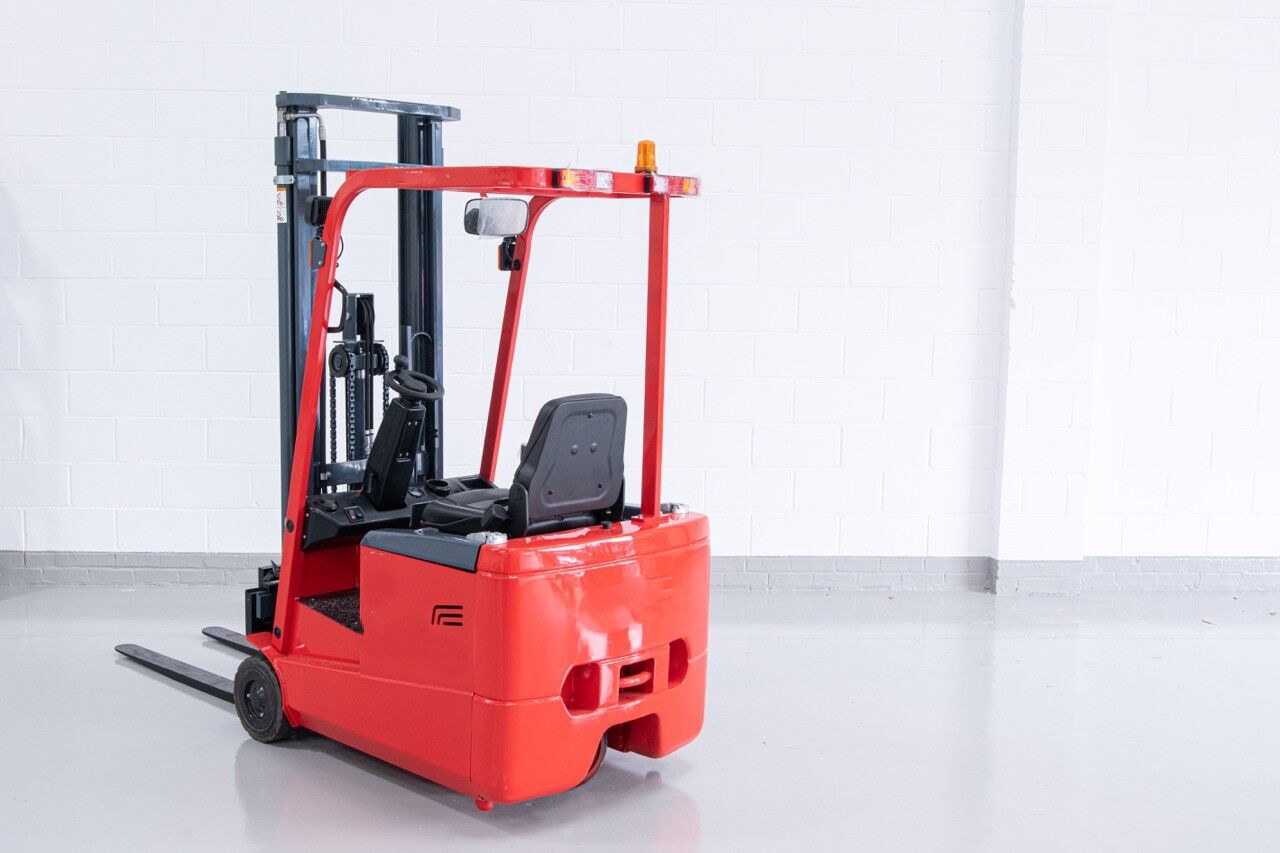
The 1500kg electric forklift truck with 4.5m triplex mast represents one of the most versatile and sought-after configurations in modern material handling. It combines the widely adopted 1,500kg load capacity—the sweet spot for the majority of UK warehousing, manufacturing, and distribution operations—with a three-stage telescopic mast capable of reaching 4,500mm. This pairing of capacity and reach makes it an exceptionally capable machine, equally at home stacking pallets to upper racking tiers, loading shipping containers, and navigating the compact aisles of busy fulfilment centres.
What makes the triplex mast configuration particularly valuable is its ability to achieve high lift heights while maintaining a remarkably low collapsed profile. A standard duplex mast designed to reach 4.5 metres would stand significantly taller when lowered, restricting the forklift’s ability to pass under doorways, mezzanine floors, and into shipping containers. The triplex design solves this problem by distributing the extension across three nested mast stages, keeping the overall lowered height compact and ensuring maximum operational flexibility across a wide range of environments.
In this comprehensive guide, we examine every aspect of the 1500kg electric forklift truck with 4.5m triplex mast in detail. From the engineering principles behind triple telescopic mast technology and complete technical specifications through to UK regulatory compliance, battery technology, operator training, maintenance strategies, and total cost of ownership, this article provides everything you need to make a confident purchasing decision. Whether you are upgrading an existing fleet or specifying your first high-reach electric forklift, this guide will equip you with the knowledge to choose the right machine for your operation.
What Is a 1500kg Electric Forklift Truck with 4.5m Triplex Mast?
Understanding the 1500kg Capacity Class
A 1500kg electric forklift truck is a battery-powered counterbalance forklift engineered to lift, transport, and stack loads weighing up to 1,500 kilograms. The rated capacity is measured at a standard load centre distance of 500mm from the vertical face of the forks to the centre of gravity of the load. This capacity class is widely regarded as the industry workhorse, handling the majority of standard palletised goods encountered in warehousing, distribution, manufacturing, and retail operations throughout the United Kingdom.
A standard Euro pallet fully loaded with consumer goods, packaged food products, automotive components, or building materials typically weighs between 500kg and 1,200kg, placing it comfortably within the 1,500kg rated capacity. This generous margin of safety means operators rarely encounter loads that approach the machine’s limits during normal operations, reducing the risk of overloading and extending the working life of the forklift’s structural and hydraulic components.
The Triplex Mast Explained: Three-Stage Telescopic Lifting Technology
The term “triplex mast” refers to a three-stage telescopic mast assembly that provides high lift heights while maintaining a compact collapsed profile. Unlike a simplex single-stage mast, where the forks and carriage rise simultaneously with the mast, or a duplex two-stage mast with two nested channels, the triplex mast incorporates three nested mast channels and a free-lift cylinder. This three-stage design gives the 1500kg electric forklift truck with 4.5m triplex mast its defining advantage: the ability to reach 4,500mm while collapsing to a lowered height that permits passage through standard doorways, under mezzanine floors, and into shipping containers.
The free-lift function is a critical feature of the triplex mast design. Free lift allows the forks to be raised to a significant height—typically 1,500mm to 1,600mm—before any of the outer mast stages begin to extend. This means the operator can lift and position pallets at heights equivalent to the interior of a standard shipping container or the first tier of racking without the mast top rising above its collapsed height. For operations that involve container loading and unloading, this feature is indispensable, enabling the forklift to work inside containers with restricted headroom while still providing ample fork elevation to stack and retrieve pallets.
As the forks continue to rise beyond the free-lift height, the second and third mast stages extend in sequence, smoothly telescoping to the full 4,500mm maximum lift height. The hydraulic system delivers consistent, controlled lift speed throughout the full range of mast extension, ensuring precise positioning of loads at every level. Lowering is equally smooth, with proportional hydraulic control allowing the operator to descend gradually and place loads with accuracy on racking beams or vehicle decks.
How the Triplex Mast Compares to Simplex and Duplex Alternatives
Understanding the differences between mast types is essential for making an informed purchasing decision. A simplex mast is the simplest configuration, consisting of a single mast channel with no free lift. The forks and mast rise together, meaning the overall height of the forklift increases as soon as the forks begin to lift. This limits the simplex mast to applications where overhead clearance is not a concern and maximum lift heights are modest, typically below 3,000mm.
A duplex mast introduces a second, inner mast channel and a free-lift cylinder. The free-lift stage allows the forks to rise to a certain height before the outer mast begins to extend, providing some overhead clearance advantage. However, for high-reach applications of 4,500mm, the duplex mast’s collapsed height remains substantial—typically 2,800mm to 3,200mm—which restricts access to containers and many standard-height buildings.
The triplex mast adds a third telescopic stage, dramatically reducing the collapsed height while maintaining the same maximum reach. For the 1500kg electric forklift truck with 4.5m triplex mast, this means a collapsed height of just 2,080mm to 2,200mm—low enough to enter standard shipping containers, pass under typical doorways, and operate beneath mezzanine floors. The additional engineering complexity of the third stage is more than justified by the operational flexibility it provides, making the triplex configuration the clear choice for any operation requiring both high-level stacking and access to height-restricted areas.
Why 4.5 Metres Is the Ideal High-Reach Specification
The 4.5-metre maximum lift height aligns with the racking configurations found in the majority of UK warehouses and distribution centres. Standard adjustable pallet racking in small to medium-sized facilities typically accommodates three to four pallet levels, with the uppermost beam set at approximately 4,000mm to 4,200mm above floor level. A 4.5m triplex mast provides comfortable clearance above the highest beam, allowing the operator to stack and retrieve pallets on the top tier without working at the absolute limit of the mast’s extension.
This lift height also corresponds well with the internal dimensions of standard high-cube shipping containers, which have an internal height of approximately 2,695mm. The free-lift capability of the triplex mast enables the forklift to operate within these containers, while the full 4.5m extension provides the reach needed for multi-tier racking immediately outside the container door. In this way, the 1500kg electric forklift truck with 4.5m triplex mast serves as a genuinely versatile machine, transitioning seamlessly between container work and racking operations without the need for separate equipment.
Detailed Technical Specifications
Core Performance Data
|
Specification |
Typical Value / Range |
|
Rated Load Capacity |
1,500 kg at 500mm load centre |
|
Mast Type |
Triplex (3-stage telescopic) with free lift |
|
Maximum Lift Height |
4,500 mm |
|
Free Lift Height |
1,500 mm – 1,600 mm (approx.) |
|
Collapsed Mast Height |
2,080 mm – 2,200 mm |
|
Max Travel Speed (Unladen) |
14 – 16 km/h |
|
Max Travel Speed (Laden) |
12 – 14 km/h |
|
Turning Radius |
1,800 mm – 2,100 mm |
|
Maximum Gradeability |
15% – 17% |
|
Battery Options |
Lead-acid or Lithium-ion (48V – 80V) |
|
Overall Width |
1,050 mm – 1,150 mm |
|
Overall Length (incl. forks) |
2,800 mm – 3,200 mm |
|
Service Weight (incl. battery) |
2,800 kg – 3,500 kg |
|
Fork Dimensions (L x W x T) |
1,070 – 1,150 mm x 100 – 125 mm x 35 – 50 mm |
|
Tyre Options |
Solid rubber, cushion, pneumatic, non-marking |
|
Drive Motor |
AC motor (typically 4 – 7 kW) |
|
Lift Motor |
AC motor (typically 11 – 15 kW) |
The Importance of Collapsed Mast Height
One of the most significant advantages of specifying a triplex mast on the 1500kg electric forklift truck is the dramatically reduced collapsed height compared to a duplex mast of equivalent reach. A duplex mast designed to achieve 4,500mm lift height would typically have a collapsed height of 2,800mm to 3,200mm, restricting access to buildings with standard doorway clearances of 2,400mm to 2,600mm. The triplex mast achieves the same lift height with a collapsed height of approximately 2,080mm to 2,200mm—a reduction of 600mm to 1,000mm that makes the difference between a forklift that can access every area of your facility and one that is restricted to open warehouse bays.
This compact collapsed profile is particularly critical for operations involving shipping containers. The internal height of a standard dry shipping container is approximately 2,393mm, while a high-cube container offers approximately 2,695mm. A 1500kg electric forklift truck with 4.5m triplex mast can enter both container types comfortably, with sufficient clearance for the operator and overhead guard, and still utilise the free-lift capability to raise and position pallets within the container’s interior.
Capacity at Height: Understanding Load Derating
While the 1500kg electric forklift truck with 4.5m triplex mast is rated to lift 1,500kg at a 500mm load centre at ground level, the effective capacity reduces as the forks are raised. This is a fundamental principle of forklift engineering: as the load is elevated, the centre of gravity rises, reducing the stability margin. At maximum mast extension of 4,500mm, the residual capacity may be in the range of 1,000kg to 1,300kg, depending on the model, load centre distance, and tilt angle. Operators must consult the manufacturer’s load capacity chart before any high-level lifting operation.
Battery Technology: Powering the 4.5m Lift
The 4.5m triplex mast demands a robust battery system capable of delivering sustained power to both the drive motors and the lift motor. Lead-acid batteries in the 48V to 80V range with capacities of 400Ah to 600Ah provide adequate energy for single-shift operations, but their weight, maintenance requirements, and extended charging times are increasingly seen as limitations.
Lithium-ion battery technology has emerged as the preferred power source for high-reach electric forklifts. A typical lithium-ion battery pack operates at 80V with capacities of 105Ah to 230Ah, delivering consistent voltage throughout the discharge cycle. This means lift speed and travel performance remain stable as the battery depletes, unlike lead-acid systems where performance gradually diminishes. Lithium-ion batteries also support opportunity charging during breaks, can be recharged in one to three hours, and require no electrolyte maintenance—advantages that translate directly into higher productivity and lower total cost of ownership.
Ergonomics and Operator Comfort
Operating a forklift with frequent high-level stacking cycles places sustained physical demands on the operator. Modern 1500kg electric forklifts with 4.5m triplex mast are designed with ergonomic features that reduce fatigue and support productive, comfortable operation throughout a full shift. Adjustable suspension seats absorb vibration and accommodate operators of different sizes. Tilt-adjustable steering columns allow the operator to find the most comfortable driving position. Low-effort hydraulic control levers and fingertip-operated mini-levers reduce hand and wrist strain during repetitive lifting operations.
The dashboard typically features a clear digital display providing real-time information on battery charge level, operating hours, fault codes, and travel speed. Many models include programmable performance settings, allowing supervisors to configure maximum speeds, acceleration rates, and lift speeds according to operator experience and the requirements of the working environment. These configurable parameters help optimise the balance between productivity and safety, particularly when new or less experienced operators are behind the controls.
Visibility is a critical ergonomic consideration, especially during high-level stacking. The triplex mast design incorporates slim mast profiles and wide-view channels that minimise obstruction of the operator’s forward sightline. Overhead guards with thin profile bars maintain structural protection while maximising upward visibility when positioning loads on upper racking tiers. Combined with LED work lights, blue spot safety lights, and optional reversing cameras, these design features ensure operators can work safely and confidently at every height.
Key Advantages of the 1500kg Electric Forklift Truck with 4.5m Triplex Mast
Maximum Vertical Reach with Minimum Overall Height
The defining advantage of the 4.5m triplex mast is its ability to deliver high-level stacking capability without the height penalty associated with duplex or simplex masts. This engineering achievement enables a single forklift to serve multiple operational zones within the same facility: stacking to upper racking tiers in the main warehouse, working inside shipping containers at the loading dock, and passing through standard-height doorways to access offices, stockrooms, and production areas. This versatility eliminates the need for separate machines, reducing capital expenditure, fleet management complexity, and floor space requirements.
Zero Emissions for Indoor and Enclosed Operations
The electric powertrain produces zero direct exhaust emissions, making the 1500kg electric forklift truck with 4.5m triplex mast the only viable option for sustained indoor operation. In enclosed environments such as warehouses, food storage facilities, pharmaceutical operations, and retail stockrooms, the elimination of carbon monoxide, nitrogen oxides, and particulate matter protects employee health and ensures compliance with workplace exposure limits. Unlike diesel or LPG forklifts, which require expensive ventilation systems, the electric forklift operates cleanly and silently without supplementary infrastructure.
Dramatically Lower Operating Costs
The 1500kg electric forklift truck with 4.5m triplex mast delivers substantially lower operating costs than comparable internal combustion forklifts. Electricity costs are typically 50 to 80 percent lower than diesel fuel expenditure for equivalent work output. Maintenance costs are similarly reduced: the electric drivetrain has no engine oil, fuel filters, exhaust system, clutch, or transmission requiring regular servicing. Regenerative braking recovers kinetic energy during deceleration, extending battery range while reducing mechanical brake wear.
Over a typical five-year operating cycle at 1,500 to 2,000 hours per year, the cumulative savings on energy and maintenance can amount to twenty thousand to thirty-five thousand pounds compared to a diesel forklift of equivalent capacity and reach. These savings often recover any premium paid for electric specification within the first two to three years.
The cost advantage extends beyond direct energy and maintenance savings. Electric forklifts eliminate the need for on-site fuel storage infrastructure such as bunded diesel tanks or LPG cylinder cages, which occupy valuable floor space and require their own regulatory compliance. Insurance premiums may also be lower for electric fleets, as the elimination of flammable fuel and exhaust-related fire risks reduces the insurer’s exposure. When these indirect savings are factored in alongside the direct operating cost reductions, the total financial case for the 1500kg electric forklift truck with 4.5m triplex mast becomes even more persuasive.
Quiet Operation for Extended Working Hours
The 1500kg electric forklift truck with 4.5m triplex mast operates at noise levels typically below 75 decibels, compared to 85 to 100 decibels for a diesel equivalent. This reduction allows operation during early morning, late evening, and overnight shifts without disturbance to neighbouring businesses or residential properties. In shared commercial buildings, office-adjacent warehouses, and noise-sensitive environments, quiet operation is a genuine commercial enabler.
Precision and Control at Every Height
AC motor drive systems and proportional hydraulic controls deliver exceptionally smooth and precise operation. This precision is particularly valuable when working at the upper reaches of the 4.5m triplex mast, where small adjustments in fork position can determine whether a pallet is placed accurately or contacts racking structure. Smooth electric drive provides predictable acceleration without the surging associated with combustion engines, reducing load damage and operator fatigue during intensive stacking operations.
Sustainability and ESG Compliance
Deploying zero-emission electric forklifts contributes measurably to sustainability objectives. The 1500kg electric forklift truck with 4.5m triplex mast eliminates scope 1 carbon emissions from material handling and, when charged from renewable energy, can reduce scope 2 emissions to near zero. For businesses pursuing ISO 14001 certification, Net Zero targets, or ESG reporting, electric material handling equipment provides tangible, auditable environmental progress.
Ideal Applications and Industries
Warehousing and Distribution
The 1500kg electric forklift truck with 4.5m triplex mast is ideal for warehouses and distribution centres operating three to four-tier pallet racking systems. The 4.5m reach enables access to the highest beams in standard racking configurations, while the compact collapsed mast height allows seamless transition between racking aisles, loading docks, and container areas. For distribution operations handling both inbound container unloading and outbound pallet dispatch, this single machine performs both tasks efficiently.
In medium-sized warehouses where aisle widths are constrained by the need to maximise storage density, the compact turning radius of the 1500kg electric forklift truck with 4.5m triplex mast is a decisive advantage. Three-wheel models can execute right-angle stacking in aisles as narrow as 3,200mm to 3,500mm with a standard Euro pallet, allowing warehouse designers to reduce aisle widths and install additional racking runs. Over the footprint of a typical warehouse, this space optimisation can yield a significant increase in pallet positions, directly reducing per-pallet storage costs.
Container Loading and Unloading
The triplex mast’s free-lift capability makes this forklift exceptionally well-suited to shipping container operations. The collapsed mast height allows entry into standard and high-cube containers, while the free-lift function raises the forks high enough for double-stacking pallets inside the container without the mast extending above the ceiling. This combination reduces container loading times and eliminates the need for separate reach equipment.
Container operations present unique challenges that the 1500kg electric forklift truck with 4.5m triplex mast is specifically designed to address. The confined interior of a shipping container leaves minimal clearance on either side of the forklift, demanding precise steering and compact dimensions. The absence of natural light inside the container makes the forklift’s LED work lights essential for safe operation. The zero-emission electric powertrain is particularly valuable in this context, as diesel exhaust fumes accumulate rapidly inside the enclosed space of a container, creating hazardous conditions for the operator within minutes. With the electric forklift, operators can work safely inside containers for extended periods without air quality concerns.
Manufacturing and Production
Manufacturing environments benefit from the versatility of this forklift in handling raw materials from goods-in areas, transferring work-in-progress between production cells, and dispatching finished goods to high-level storage racking. The zero-emission operation protects clean manufacturing environments, while compact dimensions enable navigation through congested production facility layouts.
In automotive, aerospace, and precision engineering facilities, the smooth electric drive and proportional hydraulic controls of the 1500kg electric forklift truck with 4.5m triplex mast allow careful handling of high-value components and assemblies. The absence of exhaust contamination is critical in paint shops, clean rooms, and quality inspection areas where airborne particles can compromise product quality. The 4.5m triplex mast provides the reach needed to store heavy tooling, dies, and fixtures on upper racking tiers, keeping the production floor clear and organised.
Retail and E-Commerce Fulfilment
Large retail operations and e-commerce fulfilment centres increasingly utilise multi-tier racking to maximise storage density. The 1500kg electric forklift truck with 4.5m triplex mast provides the reach needed for upper racking tiers while maintaining the manoeuvrability required for narrow aisles. Quiet, emission-free operation supports round-the-clock fulfilment schedules without noise or air quality concerns.
Cold Storage and Temperature-Controlled Environments
Cold storage facilities utilise multi-tier racking to maximise cubic storage capacity within expensive refrigerated buildings, making the 4.5m reach essential. Cold-specification packages include heated operator cabins, condensation-resistant electronics, anti-fog lighting, and sub-zero rated lubricants. The absence of exhaust emissions is particularly important in sealed cold storage environments where ventilation is deliberately restricted for temperature control.
Third-Party Logistics and Contract Warehousing
Third-party logistics providers handle an ever-changing mix of products, pallet sizes, and racking configurations for multiple clients. The 1500kg electric forklift truck with 4.5m triplex mast provides the flexibility to adapt to varying storage layouts and load profiles. Its ability to stack to four tiers while also working inside containers and transitioning through standard doorways makes it one of the most versatile machines in the 3PL fleet.
UK Regulations and Legal Requirements
Health and Safety at Work Act 1974
The Health and Safety at Work Act 1974 places a general duty on employers to ensure the health, safety, and welfare of their employees. This duty covers all aspects of forklift operation, including equipment selection, maintenance, operator training, and workplace risk management. Employers must conduct risk assessments addressing the specific hazards of operating a 1500kg electric forklift truck with 4.5m triplex mast, including load falls from height, mast tip-over risks, and collisions in racking aisles.
LOLER: Lifting Operations and Lifting Equipment Regulations 1998
LOLER requires thorough examination by a competent person at intervals not exceeding 12 months, or 6 months if the forklift is used to lift personnel. The examination assesses all structural components, the complete triplex mast assembly including all three telescopic stages, hydraulic cylinders, chains, and safety devices. Any defects must be reported and rectified before the forklift returns to service.
PUWER: Provision and Use of Work Equipment Regulations 1998
PUWER requires that the 1500kg electric forklift truck with 4.5m triplex mast is suitable for its intended use, maintained in a safe condition, and operated only by trained persons. Employers must keep documented records of all maintenance, inspections, and repairs, and ensure appropriate safety measures including guards, warning devices, and emergency stop controls are in place.
Operator Training and Certification
All operators must hold a valid accredited counterbalance forklift training certificate. Novice training typically requires three to five days; conversion training for experienced operators takes one to two days. Given the additional complexity of high-level stacking to 4,500mm, training should specifically cover hazards of working at height, capacity derating, mast tip-over risks, and correct procedures for approaching upper racking tiers. There is no formal government-issued forklift licence in the UK; operators receive a certificate from an accredited provider.
Employers should schedule refresher training at intervals of three to five years to maintain competency. Penalties for permitting untrained operators can include fines of up to twenty thousand pounds, prosecution under health and safety legislation, and significant reputational damage.
Battery Safety and Charging Compliance
Forklift battery charging must take place in a designated area complying with HSE guidance. Lead-acid charging areas require adequate ventilation to disperse hydrogen gas, plus fire extinguishing equipment, eye wash facilities, and spill containment. Lithium-ion batteries require less stringent environmental controls but must be charged using manufacturer-specified chargers and documented procedures.
Choosing the Right 1500kg Electric Forklift Truck with 4.5m Triplex Mast
Assessing Your Facility and Operations
Before selecting a model, conduct a thorough facility assessment. Measure your highest racking beam height, doorway and overhead clearances, aisle widths, floor conditions, and typical load weights and dimensions. Confirm the specific model’s collapsed mast height, overall width, and turning radius are compatible with your facility layout.
It is advisable to map every route the forklift will travel, noting every doorway, overhead obstruction, ramp, threshold, and tight corner. Even a single pinch point that is too narrow or too low can restrict the forklift’s access to a critical area of your operation. Pay particular attention to the height of fire doors, roller shutter doors, and any overhead services such as pipework, cable trays, or suspended lighting. The collapsed mast height of the 1500kg electric forklift truck with 4.5m triplex mast is typically 2,080mm to 2,200mm, but the overall height including the seated operator and overhead guard may add an additional 100mm to 200mm. Document these measurements carefully and compare them against the manufacturer’s specifications before making your selection.
Three-Wheel vs Four-Wheel Configuration
Three-wheel models offer the tightest turning radius for indoor operations on smooth floors. The single rear steer wheel enables pivoting in narrow aisles. Four-wheel models provide superior lateral stability for mixed indoor-outdoor applications, loading dock ramps, and uneven surfaces. Select based on your primary operating environment.
Tyre Selection
Solid rubber tyres provide maximum durability and puncture resistance for indoor concrete floors. Cushion tyres offer a lower ride height for restricted overhead clearances. Pneumatic tyres deliver the best ride quality on rough or outdoor surfaces. Non-marking compounds are available for food processing, pharmaceutical, and clean room environments.
Battery Specification: Lead-Acid vs Lithium-Ion
Lead-acid batteries are the lowest-cost option at purchase and suit single-shift operations with predictable duty cycles. Lithium-ion batteries deliver superior performance for multi-shift operations and high-intensity use through faster charging, opportunity charging capability, maintenance-free operation, and longer cycle life. Despite higher initial investment, lithium-ion typically delivers lower total cost of ownership.
Essential Optional Equipment
Side shift carriages are strongly recommended for accurate pallet placement on narrow racking beams at 4.5 metres. Fork positioners provide hydraulic adjustment of fork spacing for different pallet sizes. Blue spot safety lights, LED work lights, reversing cameras, and audible alarms enhance safety during high-level stacking operations where the operator’s attention is focused upwards.
Maintenance and Long-Term Reliability
Daily Pre-Operational Checks
Every shift should begin with structured checks covering forks, the complete triplex mast assembly (all three stages for smooth operation, chain tension, visible damage), hydraulic system, brakes, steering, tyres, lights, horn, reversing alarm, and battery charge level. The 4.5m triplex mast demands particular attention to mast chains, rollers, and hydraulic cylinders, as any defect creates risk of load falls from height. Defects must be reported immediately and the forklift withdrawn from service until rectified.
Scheduled Preventive Maintenance
Service intervals typically fall at every 250 to 500 operating hours. Maintenance should include thorough inspection and lubrication of the triplex mast assembly including all chain runs, guide rollers, and telescopic channels; inspection and testing of hydraulic cylinders, valves, hoses, and fluid; calibration of lift speed limiter and overload protection; inspection of braking and steering systems; testing of electrical connections; and functional testing of all safety systems.
The triplex mast requires specific attention: the three-stage design incorporates additional chain runs, guide rollers, and hydraulic connections compared to simpler masts, and each component must be inspected and adjusted according to manufacturer specifications. Neglecting mast maintenance can lead to uneven lifting, excessive chain wear, and safety-critical failures.
LOLER Thorough Examinations
The mandatory thorough examination must be conducted by a competent person at least every 12 months. For this forklift, examination includes detailed assessment of the entire mast structure, all three telescopic stages, every lift chain and anchor point, all hydraulic cylinders and mountings, the carriage and fork assembly, counterweight, overhead guard, and all safety devices. Reports must be retained and defects rectified within specified timeframes.
Total Cost of Ownership: The Financial Case
Running Cost Comparison: Electric vs Diesel
|
Cost Factor |
Electric (Li-ion) |
Diesel |
|
Energy/Fuel Cost per Hour |
£0.80 – £1.50 |
£3.50 – £5.00 |
|
Annual Energy/Fuel (2,000 hrs) |
£1,600 – £3,000 |
£7,000 – £10,000 |
|
Annual Maintenance |
£800 – £1,800 |
£2,000 – £4,000 |
|
Estimated 5-Year Running Cost |
£12,000 – £24,000 |
£45,000 – £70,000 |
These illustrative estimates demonstrate the scale of the financial advantage that electric power delivers over a five-year operating cycle. Savings of twenty thousand to forty-six thousand pounds on running costs alone typically more than compensate for any premium paid for lithium-ion battery technology. When improved residual value, reduced downtime, and lower environmental compliance costs are included, the total cost of ownership case is compelling.
Residual Value
Quality electric forklifts with triplex masts retain their value well in the used equipment market. The combination of zero-emission operation, low drivetrain wear, and the versatility of the 4.5m triplex mast makes these machines highly attractive to second-hand buyers. Lithium-ion equipped models command particularly strong residual values.
The growing regulatory and commercial pressure to adopt zero-emission equipment means that demand for used electric forklifts is increasing year on year, supporting residual values that compare favourably with diesel equivalents. For businesses that typically replace forklifts on a five to seven-year cycle, the combination of lower running costs during the ownership period and a strong resale price at disposal creates a total cost of ownership advantage that is difficult to replicate with any internal combustion alternative.
Financing and Acquisition Options
The 1500kg electric forklift truck with 4.5m triplex mast can be acquired through several financing structures, each with different implications for cash flow, tax treatment, and balance sheet presentation. Outright purchase provides full ownership from day one and avoids ongoing finance costs, but requires significant upfront capital. Hire purchase agreements spread the cost over a fixed term while transferring ownership at the end of the agreement. Finance leases offer fixed monthly payments with the option to purchase or return the asset at the end of the term. Operating leases and contract hire agreements bundle the equipment cost with maintenance and servicing, providing a predictable monthly expenditure that includes all running costs.
Each option has advantages depending on the financial circumstances and strategic priorities of the business. Hall-Fast can advise on the financing structures available and help you identify the arrangement that best supports your operational and financial objectives.
Safety Best Practices for High-Level Operations
Operating at Height: Additional Precautions
Stacking and retrieving loads at heights approaching 4,500mm introduces specific safety considerations. Operators must ensure the forklift is positioned squarely in front of the racking bay before raising the mast, that the load is stable and correctly positioned on the forks, and that the mast is raised smoothly to the required height before tilting forward to deposit the load. Raising loads while travelling, or stacking on the move at height, must be strictly prohibited through training, supervision, and workplace rules.
Operators should also be trained to recognise the environmental conditions that affect stability at height. Wind, even light gusts in open-sided warehouses or on loading docks, can exert significant lateral force on a load raised to 4,500mm. Uneven floor surfaces, including expansion joints, drainage channels, and surface damage, can tilt the forklift sufficiently to compromise stability when the mast is fully extended. Before commencing any high-level lift, the operator should assess the immediate environment, ensure the floor beneath the forklift is level and sound, and confirm that no overhead obstructions, such as lighting, sprinkler systems, or structural members, will interfere with the mast’s upward travel.
Load Stability and Weight Verification
Before lifting any load to the upper reaches of the 4.5m triplex mast, operators should verify the load weight against the capacity chart for the specific lift height. Loads should be evenly distributed, shrink-wrapped or secured to prevent shifting during elevation, and inspected for pallet damage that could lead to structural failure at height. The consequences of a load falling from 4,500mm are severe, making rigorous verification essential.
Racking Inspection and Integrity
The safety of high-level stacking depends on racking structural integrity as much as on the forklift. Employers should implement regular racking inspections checking for damaged uprights, displaced beams, overloaded bays, and missing safety clips. Damage should be reported immediately, the affected bay taken out of use, and repairs carried out by a qualified racking engineer before operations resume. The Storage Equipment Manufacturers Association recommends formal racking inspections at least annually by a competent person, supplemented by more frequent visual checks by trained staff. Maintaining the integrity of the racking system is not only a safety imperative but a legal obligation under PUWER and the general duty of care established by the Health and Safety at Work Act.
Pedestrian Management
High-level mast movements create particular risks for pedestrians. Best practice calls for physical exclusion of pedestrians from active high-level stacking areas. Where complete separation is impractical, blue spot safety lights, floor markings, barriers, warning signs, and audible alarms should be deployed. Operators should always sound the horn when approaching areas where pedestrians may be present.
Why Buy from Hall-Fast
Hall-Fast is a well-established and trusted supplier of industrial and commercial equipment across the United Kingdom. With decades of experience in the material handling sector, Hall-Fast offers expert knowledge, competitive pricing, and reliable nationwide delivery that businesses depend on when investing in essential equipment such as the 1500kg electric forklift truck with 4.5m triplex mast.
Hall-Fast’s team understands the specific requirements of high-reach forklift operations. Whether you need advice on matching the triplex mast specification to your racking layout, selecting optimal battery technology, choosing between three-wheel and four-wheel configurations, or specifying optional equipment, Hall-Fast’s specialists provide knowledgeable, impartial guidance.
Hall-Fast’s comprehensive product range includes pallet trucks, stackers, platform trucks, forklift attachments, safety cages, and warehouse safety products. Source your complete material handling solution from a single trusted supplier, simplifying procurement and ensuring compatibility across your operation.
Purchasing a high-reach electric forklift is a significant investment, and Hall-Fast understands that the buying process extends well beyond the initial transaction. From pre-sale consultancy and specification advice through to delivery, commissioning, and ongoing support, Hall-Fast provides a complete partnership approach that ensures you extract maximum value from your 1500kg electric forklift truck with 4.5m triplex mast throughout its entire working life. With competitive pricing, flexible delivery options, and the reassurance of dealing with a long-established UK supplier with an outstanding reputation for service, Hall-Fast is the natural choice for your next forklift investment.
Frequently Asked Questions
What advantage does a triplex mast have over a duplex mast?
A triplex mast achieves the same maximum lift height with a significantly lower collapsed height. For a 4.5m specification, a triplex mast collapses to approximately 2,080mm to 2,200mm, compared to 2,800mm to 3,200mm for a duplex mast. This enables passage through standard doorways and entry into shipping containers.
Can this forklift work inside shipping containers?
Yes. The collapsed mast height allows entry into standard and high-cube containers. The free-lift function raises forks to approximately 1,500mm to 1,600mm inside the container without the mast extending above the ceiling, enabling double-stacking of pallets.
What is the rated capacity at maximum lift height?
At 4,500mm, the effective capacity is typically between 1,000kg and 1,300kg, depending on the model and load centre distance. Always consult the manufacturer’s load capacity chart before lifting to height.
How long does the battery last per shift?
A well-specified lithium-ion battery typically powers the forklift through a full eight-hour shift including frequent high-level stacking. Lead-acid batteries offer similar runtime but require six to eight hours for recharging. Lithium-ion supports opportunity charging during breaks.
What operator training is required?
All operators need a valid accredited counterbalance forklift training certificate. Novice training takes three to five days; conversion training one to two days. Training should specifically cover high-level stacking hazards. Refresher training every three to five years is strongly recommended.
Is it suitable for outdoor use?
Yes, with appropriate tyres. Pneumatic or solid pneumatic tyres provide the traction needed for outdoor yards and loading areas. A four-wheel configuration offers the best stability for mixed indoor-outdoor operations.
What financing options are available?
Options typically include hire purchase, finance lease, operating lease, and contract hire. Contact Hall-Fast to discuss the financing arrangements best suited to your business.
Conclusion: Unmatched Versatility for High-Reach Operations
The 1500kg electric forklift truck with 4.5m triplex mast stands as one of the most capable and versatile material handling machines available to UK businesses. It brings together the widely adopted 1,500kg capacity class with three-stage telescopic mast technology, delivering a forklift that can reach upper racking tiers, work inside shipping containers, pass through standard doorways, and navigate compact aisles—all without producing a single gram of exhaust emissions.
The financial case is equally compelling. With operating costs 50 to 8