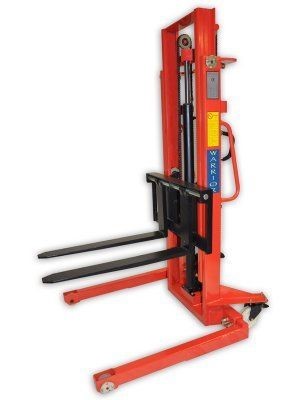
Maximizing Cubic Storage Capacity in Modern Warehousing
In today's competitive business environment, warehouse space represents a significant operational cost that directly impacts profitability. With real estate prices continuing to rise and e-commerce driving expanded inventory requirements, optimizing storage density has become a critical priority for operations of all sizes. Warehouse stacking equipment provides the essential capability to utilize vertical space effectively, transforming storage strategies from two-dimensional floor plans to three-dimensional cubic volume optimization.
Unlike simple horizontal transport tools like pallet jacks, stacking equipment enables safe, efficient vertical placement and retrieval of materials at multiple levels. This fundamental capability unlocks the substantial unused space between floor and ceiling, effectively multiplying usable storage capacity without expanding facility footprint. From basic manual units to sophisticated powered systems, the right stacking equipment selection can dramatically enhance storage density while maintaining operational efficiency.
Types of Warehouse Stacking Equipment
The market offers several distinct categories of stacking solutions:
Manual Stackers
Human-powered units provide economical vertical access:
- Hand hydraulic stackers: Pump-action lifting with manual horizontal movement
- Winch-operated stackers: Mechanical advantage through cranking mechanisms
- Manual push stackers: Basic units with hand propulsion and hydraulic lifting
- Combination pallet-jack/stackers: Dual-function units with both transport and lifting
- Manual counterbalance stackers: No forward legs, allowing direct rack access
- Manual straddle stackers: Outrigger legs straddling pallets or skids
- Adjustable-fork models: Manually adjustable fork width for variable loads
These economical options provide excellent solutions for lighter-duty or intermittent use applications.
Powered Stackers
Electric-powered units offer enhanced capability:
- Electric walkie stackers: Walk-behind units with powered lift functions
- Powered straddle stackers: Electric units with load-straddling outrigger legs
- Platform stackers: Including operator platforms for stand-up operation
- Counterbalance stackers: No forward legs, allowing closer rack approach
- Reach stackers: Extending forks for deeper rack access
- Semi-electric stackers: Powered lift with manual propulsion
- Fully-powered stackers: Electric lifting and movement capabilities
These powered options dramatically increase productivity for frequent or heavy-duty applications.
Specialized Stacking Equipment
Purpose-built units address specific warehouse challenges:
- Narrow aisle stackers: Designed for compressed aisle configurations
- High-lift stackers: Extended reach for maximum vertical utilization
- Order picker units: Elevating both operator and forks for piece picking
- Rough terrain stackers: Enhanced mobility for uneven surfaces
- Cold storage stackers: Designed for refrigerated or freezer environments
- Explosion-proof models: For hazardous or volatile material areas
- Custom-height units: Engineered for specific vertical clearance requirements
These specialized options address particular operational requirements beyond standard applications.
Stacker Accessories and Attachments
Additional tools enhance stacking functionality:
- Fork extensions: Increasing length for oversized loads
- Drum handling attachments: Specialized gripping for cylindrical containers
- Reel and coil handlers: Managing rolled materials
- Boom attachments: Converting forks to crane-like function
- Work positioning platforms: Elevating materials to ergonomic heights
- Load stabilizers: Securing unstable or top-heavy items
- Scale integration: Adding weighing capability during vertical movement
These supplementary tools extend equipment versatility across diverse material handling requirements.
Key Factors in Stacking Equipment Selection
Several considerations should guide equipment choice:
Load Characteristics Assessment
Understanding material requirements:
- Weight ranges: Maximum and typical load weights
- Dimensional variations: Sizes, shapes, and uniformity of loads
- Stability factors: Load balance and shifting potential
- Stacking compatibility: Whether items can be safely stacked
- Packaging integrity: Strength and durability of containers
- Special handling needs: Fragility, orientation, or temperature requirements
- Load frequency: How often specific items are accessed
These load factors fundamentally influence appropriate equipment specifications.
Facility Configuration Analysis
Physical space dictates equipment options:
- Aisle width: Available space between storage rows
- Ceiling height: Maximum potential vertical storage
- Floor conditions: Surface quality, transitions, and slope
- Doorway dimensions: Equipment access between areas
- Column spacing: Structural elements affecting layout
- Loading dock configuration: Equipment interface with shipping/receiving
- Obstructions: Lighting, sprinklers, HVAC, and other ceiling-mounted systems
- Traffic patterns: Personnel and equipment movement flows
These physical constraints significantly impact equipment selection and configuration.
Operational Requirements Evaluation
Usage patterns influence optimal solutions:
- Lifting frequency: Number of stacking operations per shift
- Throughput demands: Required movement volume and pace
- Operator availability: Staffing levels and skill sets
- Shift duration: Hours of continuous operation
- Access patterns: Whether FIFO, LIFO, or random access
- Inventory rotation: Stock turnover frequency
- Peak period requirements: Maximum demand scenarios
- Growth projections: Anticipated future capacity needs
These operational factors help determine whether manual, semi-powered, or fully-powered equipment delivers optimal results.
Budget and Economic Considerations
Financial realities guide investment decisions:
- Capital equipment budget: Available investment resources
- Operating cost constraints: Ongoing expense limitations
- Labor cost factors: Workforce expense relative to equipment
- ROI expectations: Required payback period for investment
- Lease vs. purchase options: Financial structure preferences
- Maintenance budget: Available resources for ongoing care
- Energy cost considerations: Power consumption impact
- Equipment lifecycle expectations: Anticipated service duration
These economic factors ensure equipment selection delivers appropriate financial returns.
Manual vs. Powered Stacking Equipment: Making the Right Choice
Understanding the key differences helps determine optimal equipment type:
Advantages of Manual Stacking Systems
Human-powered options offer several benefits:
- Lower initial investment: Typically 75-80% less expensive than powered equivalents
- Simpler maintenance: Fewer components requiring service
- No charging infrastructure: Operating without power requirements
- Longer service life: Often 8-10+ years with proper care
- Lower training requirements: Simpler operation with less extensive certification
- Reduced compliance burden: Fewer regulatory requirements
- Space efficiency: Generally smaller footprint than powered units
These advantages make manual systems ideal for lighter-duty or budget-constrained operations.
Benefits of Powered Stacking Equipment
Electric-powered units deliver enhanced capability:
- Higher productivity: Completing more operations per hour
- Reduced operator fatigue: Less physical exertion required
- Greater lifting capacity: Typically handling heavier loads
- Increased lift height: Generally reaching higher elevations
- Faster operation: Reducing time per lifting cycle
- More precise positioning: Enhanced control systems
- Extended operation: Maintaining performance throughout shifts
These productivity enhancements often justify the higher investment for frequent-use applications.
Hybrid Approach Considerations
Many operations benefit from equipment combinations:
- Activity-based allocation: Powered units for high-frequency items, manual for occasional access
- Zone-specific deployment: Different equipment types for various warehouse areas
- Seasonal flexibility: Core fleet supplemented during peak periods
- Growth transition strategy: Starting with manual and adding powered as volumes increase
- Application-specific selection: Choosing equipment based on particular handling requirements
- Backup capability maintenance: Manual units supporting primary powered equipment
- Budget-aligned implementation: Phased investment matching financial resources
This balanced approach often delivers optimal operational and financial results.
Implementation Best Practices for Warehouse Stacking Systems
Maximize effectiveness with these proven approaches:
Warehouse Layout Optimization
Strategic design enhances stacking efficiency:
- Vertical zoning: Organizing storage by access frequency and item characteristics
- Aisle configuration: Balancing storage density with accessibility
- Traffic flow planning: Minimizing congestion and travel distance
- Cross-aisle placement: Positioning for efficient movement between rows
- Staging area design: Creating appropriate transfer spaces
- Equipment manoeuvring space: Allowing turning and positioning room
- Growth accommodation: Planning for future expansion or reconfiguration
- Safety zone designation: Marking pedestrian areas and intersection points
These layout considerations significantly impact equipment effectiveness and efficiency.
Training and Operator Development
Comprehensive preparation ensures success:
- Equipment-specific instruction: Training on particular models in use
- Safe operation emphasis: Proper techniques preventing accidents
- Load assessment skills: Evaluating weight, balance, and stability
- Environmental awareness: Maintaining situational vigilance during operation
- Maintenance responsibilities: Operator-level care and inspection
- Problem recognition: Identifying issues requiring attention
- Documentation requirements: Proper records and reporting
- Certification validation: Ensuring compliance with regulatory standards
Well-trained operators maximize equipment performance while minimizing incidents.
Maintenance and Care Programs
Proactive service extends equipment life:
- Preventive maintenance scheduling: Regular service based on usage
- Daily inspection protocols: Operator-level checks before use
- Cleaning and housekeeping standards: Keeping equipment in optimal condition
- Prompt repair policies: Addressing issues before escalation
- Spare parts inventory: Maintaining critical components
- Service documentation: Tracking all maintenance activities
- Performance monitoring: Identifying declining function before failure
- Lifecycle management: Planning replacement before critical failure
These maintenance practices maximize uptime and extend equipment service life.
Specialized Applications for Warehouse Stacking Equipment
Several operational scenarios present unique stacking requirements:
E-Commerce Fulfilment Operations
Online retail creates distinct challenges:
- High-SKU environments: Managing thousands of different items
- Piece-picking emphasis: Individual item selection rather than full pallets
- Rapid throughput requirements: Meeting same-day shipping expectations
- Seasonal fluctuation: Handling holiday and promotional volume spikes
- Returns processing: Managing reverse logistics efficiently
- Order consolidation: Bringing together multi-item orders
- Space utilization pressure: Maximizing inventory in limited facilities
- Last-mile preparation: Organizing shipments for delivery routing
These e-commerce factors often favour versatile stacking equipment with piece-picking capabilities.
Cold Storage Warehousing
Refrigerated and frozen storage presents unique challenges:
- Temperature extremes: Operating in environments from -20°F to 35°F (-29°C to 2°C)
- Condensation issues: Managing moisture during temperature transitions
- Reduced battery performance: Battery efficiency decreases in cold
- Operator comfort considerations: Limited exposure time in extreme cold
- High-value product handling: Perishable item management
- Energy conservation pressure: Minimizing door opening frequency and duration
- Specialized lubrication requirements: Cold-appropriate hydraulic fluids
- Corrosion resistance needs: Combating moisture-related deterioration
These factors require cold-specific equipment adaptations or selection.
Manufacturing Support Operations
Production environments have specialized needs:
- Just-in-time supply: Precisely timed component delivery to production lines
- Work-in-process movement: Handling partially completed assemblies
- Raw material management: Organizing input materials efficiently
- Production waste handling: Managing byproducts and recyclables
- Tool and fixture positioning: Supporting manufacturing operations
- Finished goods organization: Arranging completed products for shipping
- Cross-functional flexibility: Serving various production departments
- Space constraints: Operating in limited factory floor space
Manufacturing applications typically benefit from versatile equipment supporting diverse handling needs.
Retail Distribution Centres
Retail supply chain operations require:
- Case picking efficiency: Selecting specific quantities for store replenishment
- Store-friendly organization: Arranging shipments by department or aisle
- High throughput capacity: Moving substantial volume to multiple locations
- Seasonal merchandise management: Handling holiday and promotional goods
- Mixed pallet creation: Building store-specific load combinations
- Cross-docking capability: Moving goods from receiving directly to shipping
- Varying package dimensions: Handling inconsistent case sizes
- Scanning and verification integration: Supporting inventory tracking systems
These retail distribution requirements often favour equipment balancing speed and versatility.
Emerging Trends in Warehouse Stacking Technology
Several innovations are reshaping stacking capabilities:
Alternative Power Systems
Evolving energy options enhance performance:
- Lithium-ion batteries: Longer runtime with opportunity charging
- Hydrogen fuel cells: Extended operation without lengthy recharging
- Solar supplementation: Renewable charging for certain applications
- Fast-charging systems: Minimizing downtime during power replenishment
- Battery monitoring technology: Predictive maintenance reducing failures
- Hybrid power systems: Combining energy technologies for optimal performance
- Energy recovery systems: Capturing braking and lowering energy
These power innovations extend runtime while reducing operational interruptions.
Smart Stacking Equipment
Technology integration enhances capability:
- Telematics integration: Remote monitoring of equipment usage and condition
- Position tracking systems: Real-time location awareness within facilities
- Collision avoidance technology: Sensors preventing accidents
- Load weight monitoring: Automated verification of safe lifting parameters
- Maintenance alert systems: Proactive notification of service needs
- Usage analytics: Data-driven insights optimizing equipment deployment
- Operator performance metrics: Measuring and improving handling efficiency
These intelligent features enhance both safety and operational efficiency.
Automation and Semi-Autonomous Operation
Advancing technology reduces operator dependency:
- Guided operation systems: Defining efficient travel paths
- Auto-height selection: Automatically stopping at programmed elevations
- Semi-autonomous navigation: Following predefined routes with minimal input
- Remote operation capabilities: Controlling equipment from distance
- Pedestrian detection systems: Enhanced safety through sensing technology
- Vision guidance systems: Camera-based positioning assistance
- Integration with warehouse management systems: Coordinated task assignment
These automation elements enhance precision while reducing operator requirements.
Case Studies: Successful Stacking Equipment Implementation
Real-world examples demonstrate effective application:
Mid-Sized Distribution Operation
A consumer products distributor optimized their operation:
- Challenge: Limited warehouse space with growing SKU count
- Solution: Combination of powered reach stackers and manual units for different zones
- Implementation: Activity-based equipment allocation matching usage frequency
- Result: 42% increase in storage capacity without facility expansion
- Additional benefit: 28% reduction in picking time through improved organization
- ROI achievement: Equipment investment recovered in 11 months
- Unexpected advantage: Reduced product damage through proper handling
This balanced approach delivered optimal results by matching equipment to specific needs.
E-Commerce Fulfilment Centre
An online retailer enhanced their fulfilment capabilities:
- Challenge: Rapid growth requiring increased storage density and picking speed
- Solution: High-reach order picker units combined with narrow aisle configuration
- Implementation: Complete warehouse redesign maximizing vertical space
- Result: Storage capacity increased by 65% within existing building
- Throughput improvement: Order processing speed increased by 37%
- Space utilization: Aisle width reduced from 12 feet to 6 feet (3.7m to 1.8m)
- Cost impact: Avoided facility expansion saving $1.2 million
This vertical optimization approach dramatically enhanced capacity and performance.
Cold Storage Warehouse
A frozen food distributor improved their operation:
- Challenge: Extreme temperature environment with high-value perishable inventory
- Solution: Specialized cold-environment stackers with enclosed operator cabins
- Implementation: Zone-specific equipment with temperature transition protocols
- Result: 23% increase in picks per hour through proper equipment selection
- Energy savings: Reduced door opening time decreasing refrigeration costs
- Safety improvement: 78% reduction in temperature-related incidents
- Product protection: Decreased damage rates through proper handling
This specialized solution addressed the unique challenges of cold storage operations.
Expert Support for Your Warehouse Stacking Equipment Needs
Selecting the right warehouse stacking equipment requires balancing storage requirements, operational patterns, facility constraints, and budget considerations. At Hall-Fast, we understand these complex factors and offer comprehensive support in identifying the optimal stacking solutions for your specific applications.
Our extensive selection includes various stacking equipment options from leading manufacturers, with different configurations, capacities, and specialized features. Our experienced team can help you analyse your warehouse operation and recommend the most appropriate stacking equipment to maximize both storage density and operational efficiency.
Explore our full range of material handling solutions at Hall-Fast Industrial and Commercial Equipment or contact our experts directly at sales@hall-fast.com for personalized assistance in developing your optimal warehouse stacking strategy.
With the right stacking equipment matched to your specific requirements, you'll maximize storage capacity, improve operational efficiency, and optimize your warehouse investment for years to come.