Why the Rock Fall RF650 Nimbus Sets the New Standard
Focus Keyword: women's safety trainers | Word Count: ~5,000 | Reading Time: ~18 min
Finding the right pair of women's safety trainers is harder than it should be. For years, the market has been dominated by unisex designs that treat women's feet as simply 'smaller versions' of men's — producing footwear that fits poorly, causes discomfort, and ultimately becomes a safety risk in itself. Shoes that slip at the heel. Boots that create pressure points where they shouldn't. Trainers that feel more like a compromise than a proper work shoe.
That's changing. And nowhere is that change more visible than in the Rock Fall RF650 Nimbus — a women's safety trainer engineered from the ground up for the female foot, combining certified protection, exceptional comfort and a genuinely sporty aesthetic that doesn't scream 'workwear'.
In this guide, we'll walk through everything you need to know about choosing the best women's safety trainers in 2025, what to look for in safety footwear designed specifically for women, and why the RF650 Nimbus is emerging as the standout choice for women working across manufacturing, logistics, retail, healthcare, construction and more.
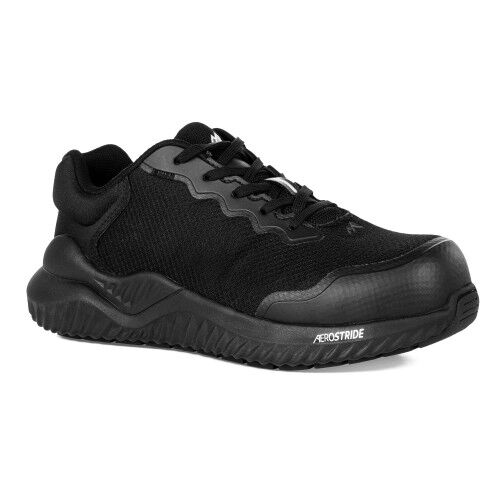
Quick Answer: The Rock Fall RF650 Nimbus (Product Code: RF650) is a women's-specific safety trainer featuring a 200J fiberglass toecap, AEROSTRIDE cushioned sole, penetration-resistant midsole and a breathable mesh upper — all built on a women's last for a proper anatomical fit. Available in smaller sizes with recycled material components throughout.
1. Why Women's Safety Footwear Is Finally Getting the Attention It Deserves
The conversation around women in the workplace has rightly expanded over the past decade to include the tools and equipment that workers use every day — and safety footwear is no exception. Historically, personal protective equipment (PPE) was designed with male bodies as the default template, with women expected to make do with scaled-down versions of men's products. The problems with this approach are well-documented: ill-fitting PPE reduces comfort, impairs performance and, critically, can actually compromise safety.
Safety footwear is among the most impactful categories when it comes to fit and performance. A shoe that doesn't sit correctly on the foot increases the risk of trips and falls, accelerates fatigue, and can cause repetitive strain issues over time. For women, the key anatomical considerations that unisex footwear routinely ignores include:
• A narrower heel relative to forefoot width
• A different arch profile and foot curvature
• Generally smaller overall dimensions that don't simply scale linearly from men's lasts
• Different pressure distribution across the sole during walking and standing
The result of ignoring these differences is footwear that may pass a safety certification test in a lab but fails the real-world test of being comfortable, secure and supportive enough for an eight, ten or twelve-hour shift.
Manufacturers that take women's safety footwear seriously — as Rock Fall does with the Nimbus — invest in developing dedicated lasts, testing fit across a range of women's foot shapes, and refining cushioning systems to account for the biomechanics of the female gait. This isn't a marketing exercise; it's a genuine engineering commitment that has a measurable impact on comfort, performance and wellbeing at work.
The Wider Market Shift Towards Women-Specific Safety Trainers
Demand for women's safety trainers specifically — rather than generic work boots — has grown substantially in recent years. This reflects a number of converging trends. The rise of the trainer aesthetic in everyday footwear has crossed into workwear, with employees increasingly favouring safety trainers over traditional steel-toecap boots for roles that don't require full ankle protection. At the same time, a greater proportion of the workforce in industries from logistics to food production to healthcare is female, creating a larger and more vocal market for properly fitted women's safety footwear.
The global women's safety footwear market is projected to grow significantly through the mid-2020s, driven by increased female workforce participation in traditionally male-dominated industries and a growing awareness of the health and safety implications of poorly fitted PPE. Brands that respond to this demand with genuinely differentiated women's product lines — rather than a pink colourway on a unisex trainer — are winning both commercial traction and genuine customer loyalty.
2. What to Look for When Buying Women's Safety Trainers
Before exploring the RF650 Nimbus in detail, it's worth establishing the criteria against which any women's safety trainer should be evaluated. Whether you're a health and safety manager sourcing footwear for a team, or an individual buying your own work shoes, these are the factors that matter most.
Safety Certifications and Ratings
In the UK and EU, safety footwear is governed by EN ISO 20345, the international standard that sets minimum requirements for protective footwear. Any shoe carrying the 'S' designation meets the basic standard, while additional letters indicate further protective properties. The key ratings to understand are:
• S1 — Basic protection: closed heel, antistatic, energy absorption at the heel, fuel resistance
• S1P — S1 plus penetration resistance (PR) underfoot
• S3 — S1P plus water resistance and a cleated outsole
• SB — The base standard without additional features
• SR — Slip resistance (tested on both ceramic tile with soap solution and steel with glycerol)
Beyond the S rating, look for specific hazard protections relevant to your work environment. Anti-static properties matter for electronics manufacturing and environments with flammable materials. Penetration resistance is essential for construction and outdoor work where sharp objects may be underfoot. Non-metallic construction is a legal or practical requirement for security-sensitive environments.
The Toecap: Steel vs Composite vs Fiberglass
The toecap is the most visible safety feature of any work shoe, but the material it's made from matters significantly for comfort and practicality. Traditional steel toecaps offer excellent protection but add weight, conduct cold and heat, and trigger metal detectors. Composite toecaps — typically made from carbon fibre, kevlar or other polymeric materials — offer lighter protection but can be slightly bulkier. Fiberglass toecaps, as used in the RF650 Nimbus, represent a particularly attractive middle ground: lighter than steel, non-metallic, and capable of achieving equivalent impact protection ratings (200 joules) in a slimmer profile.
For women's safety trainers specifically, toecap bulk is a particularly relevant consideration. A women's foot typically has less volume in the toe box area, and an oversized toecap creates an awkward, uncomfortable fit. The slim fiberglass toecap in the Nimbus is designed to protect without creating unwanted bulk or pressure on the toes.
Sole Technology and Cushioning
The sole system of a safety trainer is arguably more important than any other component for all-day comfort. It's where the physics of walking — impact force, energy return, shock absorption — are either managed well or managed badly. Key things to look for include:
• Material and construction determine how much impact is absorbed before it reaches your foot and leg: Midsole cushioning
• Slip resistance ratings (SR) indicate tested performance on wet and oily surfaces: Outsole grip
• A sole that flexes naturally with the foot reduces fatigue over a long shift: Flexibility
• A midsole insert (usually steel or non-metallic) prevents sharp objects from piercing through from below: Penetration resistance
The distinction between a sole that's cushioned and one that's both cushioned and flexible is important. Many heavily cushioned safety boots sacrifice flexibility for impact protection, creating a 'slab' effect that forces the wearer to adapt their gait. The best women's safety trainers manage to combine both — as the RF650 Nimbus does with its AEROSTRIDE sole system.
Upper Materials: Breathability vs Protection
The upper of a safety trainer determines how comfortable your foot environment is throughout a shift. Key considerations include breathability (how well the shoe manages heat and moisture), water resistance (especially relevant for outdoor and wet environments), and durability (how well the material stands up to repeated wear).
Mesh uppers excel at breathability but offer less water resistance than leather or synthetic alternatives. Many premium women's safety trainers — including the Nimbus — address this by combining a breathable mesh construction with a water-repellent treatment, giving the best of both worlds for most working environments. Full waterproofing (often via a membrane such as Gore-Tex) is available in heavier-duty models where the environment demands it.
Women's-Specific Fit: The Non-Negotiable Criterion
For women specifically, the most important purchasing criterion of all is whether the shoe is genuinely designed for a female foot. Look for brands that specify a 'women's last' rather than a 'unisex' or simply 'available in women's sizes' design. A women's last accounts for heel width, arch profile and the width-to-length ratio of the female foot. Without this, even a well-cushioned, well-protected shoe will fit poorly and create the fatigue and discomfort issues that undermine the entire purpose of the footwear.
3. Introducing the Rock Fall RF650 Nimbus: A New Era of Women's Safety Trainers
The Rock Fall RF650 Nimbus represents one of the most thoroughly engineered responses to the demand for genuine women's safety footwear currently available in the UK market. It's a shoe designed not to tick boxes, but to actually solve the problems that women working in safety-critical environments face every day. Let's look at what makes it stand apart.
The Women's Last: Engineering That Actually Fits
The foundation of the Nimbus is its women's-specific last — the foot-shaped mould over which the shoe is constructed. Unlike unisex designs, which produce footwear that fits poorly at both the heel and forefoot for many women, the Nimbus last is engineered to the anatomical profile of a female foot. The heel is proportionally narrower, reducing the heel slip that causes blisters and fatigue in standard designs. The overall fit provides the kind of secure, locked-in feeling that makes for confident movement — exactly what you need when working in a demanding environment.
The Nimbus is also available in smaller sizes, ensuring that women with narrower feet aren't forced into the nearest available size-up. This might seem like a small detail, but for the substantial proportion of women who find standard 'women's' safety footwear still runs too wide, proper size availability is the difference between a shoe that works and one that doesn't.
"Unlike unisex designs, our trainers are built on a last that accommodates the anatomical differences of a woman's foot, which is typically narrower in the heel. This targeted design ensures a secure and supportive fit, preventing common issues like slippage and discomfort." — Rock Fall Product Team
AEROSTRIDE Sole System: Where Comfort Meets Performance
The AEROSTRIDE sole system is the performance centrepiece of the RF650 Nimbus, and it's immediately obvious why Rock Fall is proud of it. The design achieves something that's genuinely difficult in safety footwear: a sole that is simultaneously chunky and visually substantial — signalling the kind of protection you'd expect from a serious work shoe — and remarkably flexible in practice.
The chunky outsole profile provides the height and structure needed for effective shock absorption across a wide range of surfaces, from concrete factory floors to outdoor terrain. The high-grip slip-resistant rubber compound meets SR (Slip Resistant) ratings for tested performance on both wet ceramic surfaces and oily steel — the two standard test surfaces used in EN ISO 20345 certification. This dual performance is important: many outsoles that pass one test struggle with the other, but SR-certified outsoles must demonstrate genuine grip versatility.
Beneath the outsole, the AEROSTRIDE midsole is where the real cushioning magic happens. Constructed to deliver extreme impact reduction, it absorbs the repetitive shock forces that accumulate over a long shift on hard floors and translates them into something the body can tolerate. For women — who statistically spend longer periods on their feet during a working shift than their male counterparts in many retail, healthcare and hospitality roles — this level of cushioning isn't a luxury; it's a genuine occupational health consideration.
Activ-Step® PU Footbed: A Second Layer of Comfort
Working in concert with the AEROSTRIDE midsole is the Activ-Step® PU cushioned footbed. The footbed — or insole — is the direct interface between foot and shoe, and its quality has a disproportionate impact on perceived comfort. A premium PU footbed provides additional impact absorption beyond the midsole, conforms to the shape of the foot over time, and contributes to the energy-return properties that reduce fatigue during extended wear.
The Activ-Step® brand is specifically associated with high-quality footwear component engineering, and its inclusion in the Nimbus signals Rock Fall's commitment to sourcing best-in-class components rather than defaulting to commodity insoles. The combination of the AEROSTRIDE midsole and Activ-Step® footbed creates a layered cushioning system that consistently delivers across different floor types and shift lengths.
Fiberglass Toecap: Maximum Protection, Minimum Weight
The RF650 Nimbus is equipped with a fiberglass toecap rated to 200 joules — the maximum impact protection class under EN ISO 20345. For context, 200 joules is roughly equivalent to a 20kg object falling from a metre high — serious industrial impact protection. Achieving this rating with a fiberglass toecap rather than a steel one is a meaningful engineering achievement, because fiberglass is inherently lighter and slimmer than steel.
The weight advantage of fiberglass over steel may not sound significant — we're talking grams, not kilograms — but the cumulative effect over a full working day of walking and standing is substantial. Lighter footwear reduces lower-limb fatigue, and for women who are already wearing footwear that wasn't designed with their physiology in mind, every gram of unnecessary weight removed is a tangible comfort benefit.
The fiberglass toecap also means the RF650 Nimbus is 100% non-metallic — an important feature for a growing proportion of workplace environments. Security-sensitive locations such as airports, government buildings and secure facilities routinely require footwear that won't trigger metal detectors. Similarly, environments involving live electrical equipment may specify non-metallic footwear for additional protection against electrical hazard. The Nimbus meets both requirements without any compromise to its protective rating.
Penetration-Resistant Midsole: Protection Underfoot
While the toecap protects against impact from above, the penetration-resistant midsole protects against hazards from below — nails, screws, glass, sharp debris and other objects that could otherwise pierce through the outsole. The RF650 Nimbus features an exclusively crafted penetration-resistant protective midsole developed by Activ-Step Footwear Components, rated PS (penetration resistant) to the standard required by EN ISO 20345.
The key challenge with penetration-resistant midsoles is preventing them from stiffening the shoe to the point where flexibility is compromised. Many older-generation midsoles used rigid steel plates that effectively transformed the shoe into a flat, inflexible platform — comfortable for standing, but tiring and unnatural for walking. The Activ-Step midsole in the Nimbus is engineered specifically to maintain flexibility alongside protection, working with the AEROSTRIDE sole rather than against it to preserve the natural flex of the shoe through the stride cycle.
Breathable Mesh Upper: Temperature Regulation That Works
The upper of the RF650 Nimbus is constructed from a high-performance breathable mesh engineered to actively manage heat and moisture. This matters more than it might initially seem. Foot temperature regulation is directly connected to overall comfort and fatigue levels — feet that overheat become swollen, increase pressure against the shoe, and create the warm, moist conditions that lead to blisters and skin irritation. In environments where the footwear is worn for eight hours or more, a shoe that can't manage heat and moisture becomes increasingly uncomfortable as the day progresses.
The mesh upper of the Nimbus is treated with a water-repellent finish that provides a degree of protection against light moisture — wet floors, splashes, light rain — without sacrificing the breathability properties of the mesh construction. This is a practical balance for the majority of working environments; for roles involving sustained exposure to water, a fully waterproof construction with a membrane would be the appropriate specification.
4. Sustainability in Safety Footwear: The Rock Fall Better Materials Framework
The conversation around sustainability in workwear is maturing rapidly. A growing proportion of both individual buyers and corporate procurement teams are evaluating the environmental credentials of the products they purchase, and safety footwear is no exception. For many companies committed to reducing their Scope 3 supply chain emissions, the PPE and workwear category represents a meaningful opportunity to make better choices.
Rock Fall has addressed this with a clear commitment: the Better Materials Framework, which guides material selection across their product range. For the RF650 Nimbus, this framework has two primary expressions:
100% Recycled Polyester Sock Liner
The sock liner — the removable insole component that lines the inside of the shoe — is made entirely from recycled polyester. Polyester is typically derived from petroleum, a non-renewable resource, and represents one of the most commonly used materials in footwear construction. By specifying 100% recycled polyester for the sock liner, Rock Fall diverts post-consumer plastic waste from landfill and reduces the demand for virgin petroleum-derived materials without compromising the performance properties of the component.
Recycled polyester (rPET) in footwear applications is now a well-established material technology, with performance characteristics that match or exceed those of virgin polyester in most applications. Consumers can be confident that specifying the Nimbus on sustainability grounds does not involve any compromise in comfort or durability.
60% Recycled TPU Heel Counter
The heel counter — the stiffened component inside the shoe that maintains the shape of the heel section and contributes to the secure fit of the shoe — uses 60% recycled thermoplastic polyurethane (TPU) in its construction. TPU is a high-performance polymer widely used in footwear for its durability, flexibility and resistance to abrasion. Using recycled TPU in the heel counter reduces the volume of new TPU that needs to be manufactured from raw materials and gives useful life to waste material that would otherwise end up in landfill.
Fully Sustainable Packaging
The sustainability credentials of the RF650 Nimbus extend to its packaging, which is fully sustainable in design and materials. This is increasingly a table-stakes requirement for environmentally conscious buyers, but it's worth noting that Rock Fall has committed to this across the product range rather than treating it as an optional extra. From the shoe to the box it arrives in, the Nimbus is designed with environmental impact in mind.
It's worth being clear-eyed about the limits of what 'sustainable' means in the context of a manufactured safety shoe: no product in this category has zero environmental impact. But Rock Fall's Better Materials Framework represents a genuine and transparent commitment to making measurably better choices — using recycled content where possible, extending material life cycles, and minimising packaging waste — and the Nimbus is a strong embodiment of that commitment.
5. Who Is the RF650 Nimbus For? Industries and Roles Where It Excels
The RF650 Nimbus is a versatile safety trainer capable of meeting the requirements of a wide range of industries and job roles. Its combination of certified protection, all-day comfort and women's-specific fit makes it particularly well-suited to roles characterised by extended periods on the feet, mixed indoor and outdoor environments, and the need for non-metallic footwear. Here's a breakdown of where the Nimbus is likely to perform at its best.
Manufacturing and Light Industry
Manufacturing environments — from food production to electronics assembly to pharmaceuticals — often require footwear with impact protection, anti-static properties and slip resistance. The RF650 Nimbus meets all three requirements, and its non-metallic construction makes it suitable for clean-room adjacent environments where metal contamination must be avoided. For women working long shifts on hard factory floors, the AEROSTRIDE cushioning system is a particular advantage.
Logistics, Warehousing and Distribution
Logistics and warehouse roles are among the most physically demanding in terms of foot and lower-limb load, combining extended walking with periods of standing, lifting and loading on typically hard concrete or resin-coated floors. The RF650 Nimbus's impact protection, slip resistance and superior cushioning make it an excellent fit for these environments, and the women's-specific design addresses the fit issues that lead to higher rates of footwear-related complaints in female warehouse operatives.
Retail and Customer-Facing Environments
Retail environments have specific requirements: footwear must be comfortable for extended standing and walking, presentable enough for a customer-facing role, and sufficiently protective for the back-of-house hazards common in retail settings. The RF650 Nimbus's trainer aesthetic and sporty design make it one of the most visually appropriate safety shoes for retail environments, while its protection credentials ensure it meets the safety requirements of most retail risk assessments.
Healthcare and Social Care
Healthcare environments prioritise slip resistance, comfort for extended wear and — in some settings — anti-static properties. The Nimbus meets all three. Its breathable upper is particularly valuable in the warm, high-humidity environments common in hospitals, care homes and clinical settings. Note that for some healthcare roles, specific infection control requirements may apply regarding footwear materials and cleaning procedures; the Nimbus's mesh upper may be less appropriate for roles with heavy exposure to bodily fluids compared to a full leather or synthetic alternative.
Construction and Outdoor Work
For lighter construction and outdoor roles — site management, garden centres, highway inspection, utilities — the RF650 Nimbus offers the impact and penetration protection needed for outdoor hazards in a package that's more comfortable for extended walking than a traditional safety boot. Its SR-rated outsole performs well on wet outdoor surfaces, and the water-repellent upper provides reasonable protection against light rain and surface moisture.
Airport, Security and Government Environments
The 100% non-metallic construction of the RF650 Nimbus makes it one of the few safety trainers appropriate for roles that routinely involve security screening. For women working in airports, secure government facilities, prisons or other metal-detector environments, the choice of non-metallic safety footwear is often a practical necessity rather than a preference. The Nimbus offers certified 200J impact protection with no metallic components whatsoever — a rare combination.
6. Comparing the RF650 Nimbus: How Does It Stack Up Against the Competition?
No product review is complete without an honest assessment of where a product sits relative to its competition. The women's safety trainer market has grown considerably, and the RF650 Nimbus faces genuine competition from other quality manufacturers. Here's how it compares across the criteria that matter most.
Women's-Specific Design
This is where the RF650 Nimbus most clearly differentiates itself. Many 'women's' safety trainers on the market are unisex designs offered in smaller sizes and women's colourways, without any fundamental change to the last or construction. The Nimbus is built on a dedicated women's last with a narrower heel — a genuine anatomical accommodation that makes a tangible difference to fit and comfort. In this respect, it leads its category.
Protection vs Weight
Achieving 200J impact protection with a fiberglass toecap in a lightweight trainer format is a genuine engineering challenge. Some competitors achieve similar protection ratings with heavier materials or bulkier designs; others use lighter materials but at lower protection ratings. The RF650 Nimbus's combination of fiberglass toecap plus non-metallic penetration-resistant midsole at a genuinely lightweight overall package is a strong differentiator.
Sole Performance
The AEROSTRIDE sole system is competitive with the best midsole technologies in the safety trainer category. The combination of extreme impact reduction, genuine flexibility and SR-rated slip resistance puts the Nimbus's sole performance in the top tier of the market, particularly for all-day comfort applications.
Sustainability Credentials
Rock Fall's use of recycled polyester in the sock liner and recycled TPU in the heel counter, combined with sustainable packaging, places the Nimbus ahead of many competitors in the sustainability stakes. While some higher-end brands offer more extensive use of recycled or bio-based materials, the Nimbus's credentials are meaningful and verified rather than superficial greenwashing.
Value
Women's safety trainers with comparable protection ratings, women's-specific lasts and genuine cushioning technology typically sit in the mid-to-premium price bracket. The RF650 Nimbus offers strong value within this segment, with a feature set that justifies its positioning relative to both budget and premium alternatives.
7. A Practical Guide to Buying and Caring for Women's Safety Trainers
Getting the Right Fit First Time
Even a shoe built on a women's last will only deliver its full benefits if it's correctly sized. Here are some practical tips for ensuring you get the right fit when ordering online or trying on in store:
• Measure your feet in the afternoon or evening, when feet are at their largest after a day of activity
• Measure both feet — most people have one foot slightly larger than the other, and you should size for the larger foot
• Allow for toe room: your longest toe should have approximately a thumbnail's width of space between it and the end of the shoe
• Check heel fit first: the heel should feel secure without any slippage when walking; if the heel lifts, try a smaller size or use the lacing system to lock the heel more securely
• Wear the same type of socks you'd wear at work when trying on or sizing — work socks are typically thicker than everyday socks and will affect fit
• Walk around on hard flooring, not just carpet, to properly assess comfort and stability
Breaking In Your Safety Trainers
Like any new footwear, safety trainers benefit from a brief break-in period, particularly if you're moving from a different sole profile or heel height. For the first few days of wear, try to introduce the new shoes gradually — a few hours at a time if possible — to allow your foot to adapt to the new shape and cushioning. The RF650 Nimbus's generous cushioning system means break-in time is typically minimal, but giving your feet time to adjust will always produce better long-term results.
Caring for Your Nimbus Trainers to Maximise Lifespan
Proper maintenance will extend the life of your RF650 Nimbus trainers significantly. The breathable mesh upper is relatively straightforward to care for, but requires more attention than a leather upper:
• Clean regularly with a soft brush or damp cloth to remove surface dirt; allow to air dry naturally away from direct heat
• Do not machine wash — the heat and mechanical action of a washing machine can damage the adhesive bonds in safety footwear construction
• Remove the insole after each shift and allow both the insole and shoe interior to air dry before next use; this significantly reduces odour and extends insole life
• Apply a mesh-safe water-repellent spray periodically to maintain the water-repellent properties of the upper
• Replace the footbed when it begins to feel compressed or unsupportive — typically every six to twelve months depending on wear frequency
• Inspect the outsole regularly for wear; safety footwear should be replaced when the outsole has worn to the point where slip resistance may be compromised
When to Replace Safety Footwear
Safety footwear is a safety-critical item, and it should be replaced when its protective properties are no longer reliable — not simply when it looks worn. Key indicators that it's time to replace your RF650 Nimbus trainers include visible damage to the toecap area, significant outsole wear particularly in the heel and forefoot strike zones, degradation of the midsole cushioning (the shoe feels 'flat' or provides noticeably less cushioning than when new), and any damage to the upper that compromises its integrity. For most wearers in full-time roles, safety trainers should be assessed every twelve months and replaced every one to two years.
8. Frequently Asked Questions About Women's Safety Trainers and the RF650 Nimbus
Do I legally need to wear safety footwear at work?
In the UK, the Personal Protective Equipment at Work Regulations 1992 (and the 2022 amendment) require employers to provide appropriate PPE — including safety footwear — where a risk assessment identifies a hazard to the feet. The specific requirement for safety footwear, and the appropriate protection standard, depends on the nature of the hazard and the working environment. Your employer is responsible for conducting this assessment and specifying appropriate footwear, but many workers in roles ranging from warehousing to construction to manufacturing will be required to wear certified safety footwear.
What is the difference between safety trainers and safety boots?
Safety trainers are low-cut safety footwear designed in a trainer or athletic shoe aesthetic, prioritising comfort, breathability and flexibility for roles where ankle protection is not required. Safety boots extend above the ankle, providing additional protection and support for outdoor terrain, construction environments and roles where ankle stability under load is a concern. For most indoor industrial, logistics and retail environments, safety trainers like the RF650 Nimbus are entirely appropriate; for construction, forestry, utilities and outdoor terrain work, a safety boot may be more appropriate.
Are women's safety trainers allowed in all safety-critical environments?
The appropriateness of any safety footwear for a specific environment is determined by the risk assessment for that environment. Safety trainers meet the same EN ISO 20345 standard as safety boots, and a safety trainer with the appropriate protection ratings (toecap, penetration resistance, slip resistance, etc.) is legally equivalent to a safety boot with the same ratings. Some environments may specify safety boots for ankle protection or water resistance reasons; in these cases, a trainer-style shoe may not be appropriate regardless of its protection ratings. Always consult your employer's PPE specification or conduct a risk assessment if in doubt.
Can I wear the Rock Fall RF650 Nimbus for outdoor work?
Yes. The RF650 Nimbus is designed for use on both hard indoor surfaces and outdoor terrain. Its SR-rated outsole provides tested slip resistance on wet surfaces, and the water-repellent mesh upper provides protection against light moisture. For sustained outdoor work in wet conditions, or environments with significant mud or water ingress, a waterproof safety boot with a membrane would be a more appropriate specification. For lighter outdoor roles — site management, surveying, garden centre work, outdoor retail — the Nimbus is a strong performer.
How does the AEROSTRIDE sole differ from standard safety trainer soles?
Standard safety trainer soles typically prioritise protection over comfort, resulting in soles that are rigid, heavy or poorly optimised for extended wear. The AEROSTRIDE system is specifically engineered for the combination of extreme impact absorption and genuine flexibility — a combination that's technically challenging to achieve. The result is a sole that manages the physics of walking and standing more effectively than commodity safety sole designs, delivering measurably better comfort outcomes for wearers across a full working shift.
Are the RF650 Nimbus trainers machine washable?
No — as with all safety footwear, machine washing is not recommended for the RF650 Nimbus. Machine washing can damage the adhesive bonds used in the shoe construction, potentially compromising the structural integrity of the toecap and sole unit. Clean with a damp cloth and soft brush, allow to air dry naturally, and remove the insole to dry separately after each shift.
What sizes does the RF650 Nimbus come in?
The RF650 Nimbus is available in a women's-specific size range designed to accommodate smaller foot sizes that are frequently underserved by standard safety footwear ranges. Contact your retailer or Rock Fall directly for specific size availability in your region.
9. The Rock Fall Brand: A Track Record in Safety Footwear
Rock Fall is a UK-based safety footwear manufacturer with an established track record in developing performance-oriented safety shoes and boots for demanding work environments. The brand has invested consistently in material innovation, women's-specific design and sustainability credentials, and the RF650 Nimbus represents the current expression of those priorities in the lightweight trainer category.
Rock Fall's approach to product development combines in-house design expertise with partnerships with specialist component manufacturers — Activ-Step Footwear Components being the most significant in the case of the Nimbus — to deliver footwear that draws on the best available materials science and manufacturing technology. The Better Materials Framework signals a brand that is thinking about its environmental responsibilities seriously, rather than treating sustainability as a box-ticking exercise.
For buyers — whether individual or corporate — choosing Rock Fall means choosing a brand that has demonstrated willingness to invest in genuinely differentiated product development rather than simply iterating on commodity designs. The RF650 Nimbus is the clearest current expression of that investment.
10. Conclusion: Is the Rock Fall RF650 Nimbus the Best Women's Safety Trainer in 2025?
After examining the RF650 Nimbus across every relevant dimension — fit, protection, comfort, sustainability and value — the verdict is clear: for the majority of women working in environments where safety footwear is required, the Nimbus is an exceptional choice and one of the strongest propositions currently available in the women's safety trainer category.
What elevates it above much of the competition isn't any single feature — it's the coherence of the design as a whole. A genuine women's last that actually fits the female foot. An AEROSTRIDE sole system that delivers on its cushioning promise. A fiberglass toecap that provides maximum-class impact protection without weight or bulk. A penetration-resistant midsole that maintains flexibility. And a commitment to sustainable materials that reflects how the best manufacturers in any category are thinking about their responsibilities.
No safety trainer is perfect for every role and every environment. Women who work in sustained wet outdoor conditions will want to consider a waterproof boot alternative. Those requiring full ankle protection will need a boot rather than a trainer. And as with all footwear, individual foot shape and personal preference will play a role in how the Nimbus feels on any given wearer.
But for the broad swathe of women who spend their working days on factory floors, in warehouses, on retail floors, in healthcare settings or on light construction sites — and who have been tolerating ill-fitting, poorly cushioned, unisex-designed footwear for too long — the RF650 Nimbus offers something genuinely better. A safety trainer built specifically for them. And that makes all the difference.
Shop the Rock Fall RF650 Nimbus Women's Safety Trainer (Product Code: RF650) — available now. Free UK delivery available on qualifying orders.