In today's competitive business environment, warehouse efficiency is a critical factor in operational success. At the heart of this efficiency lies the warehouse shelving system—a fundamental yet sophisticated component that can dramatically impact storage capacity, order fulfilment speed, stock accessibility, and overall warehouse productivity.
For UK warehouse managers, logistics directors, and business owners, selecting the right shelving system requires careful consideration of numerous factors, including product characteristics, operational workflows, space constraints, budget limitations, and future growth plans. This comprehensive guide explores the essential considerations for UK businesses when selecting warehouse shelving systems to optimize their storage operations.
Understanding the Strategic Impact of Warehouse Shelving Systems
Before examining specific shelving options, it's important to recognize the multifaceted impact proper shelving provides:
Storage Density Optimization
Appropriate shelving directly impacts facility capacity:
- Maximum utilization of available cubic space
- Efficient use of vertical height often overlooked
- Appropriate slot sizes minimizing wasted space
- Optimized aisle width balancing access and density
Operational Efficiency Enhancement
Well-designed shelving improves workflow:
- Reduced picking time through logical organization
- Improved inventory rotation and stock control
- Enhanced stock visibility reducing search time
- Appropriate access for handling equipment
Inventory Protection and Management
Quality shelving safeguards valuable stock:
- Prevention of product damage from improper storage
- Protection from environmental factors (dust, moisture)
- Clear organization reducing misplacement
- Appropriate weight distribution preventing collapse
Adaptability for Business Evolution
Future-proof shelving accommodates growth:
- Reconfigurable systems adapting to changing needs
- Modular expansion capabilities as business grows
- Compatibility with evolving handling equipment
- Adjustability for changing product ranges
"Warehouse shelving is far more than simple storage—it's a strategic investment that directly impacts operational performance," explains Malcolm Hall, Managing Director at Hall-Fast. "The right shelving system becomes a competitive advantage through improved space utilization, faster order processing, and reduced product handling damage."
Key Categories of Warehouse Shelving Systems
The diverse storage challenges in warehouse environments require specialized shelving types:
Light to Medium Duty Shelving
These versatile systems handle most general storage:
Boltless Shelving
- Quick assembly without specialized tools
- Typically handles loads from 200-300kg per shelf
- Highly adjustable shelf heights in small increments
- Available in various depths and widths for versatility
Steel Shelving Systems
- More robust construction than boltless alternatives
- Often featuring reinforced shelves for heavier loads
- Available with solid or mesh shelves for different needs
- Can include specialized accessories (dividers, drawers, bins)
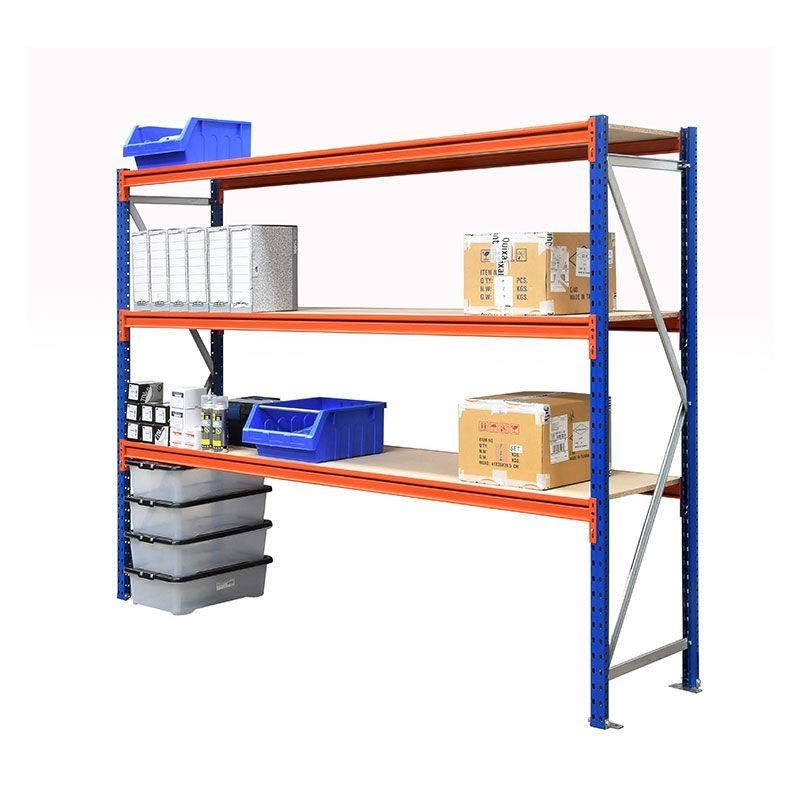
Longspan Shelving
- Wider spans between uprights for bulkier items
- Load capacities typically from 300-800kg per shelf
- Usually depth-adjustable for stock flexibility
- Often combined with decking for non-standard items
Archive and Office Shelving
- Designed for document storage and lighter goods
- Often includes specialized file hanging features
- Available with dust-proof options for sensitive items
- Sometimes incorporating sliding or mobile systems
Heavy-Duty Industrial Shelving
These robust systems address substantial weight requirements:
Pallet Racking
- The standard for pallet storage in UK warehouses
- Typically accommodates standard UK (1000x1200mm) pallets
- Available in various configurations (selective, double-deep, drive-in)
- Load capacities ranging from 1-3 tonnes per pallet position
Cantilever Racking
- Ideal for long, awkward items (timber, piping, profiles)
- Features arms extending from central columns
- Available in light, medium, and heavy-duty versions
- Offers unobstructed access from loading side
Mezzanine Floor Systems
- Creates additional floor space within existing building
- Often combined with shelving or racking systems
- Substantially increases storage capacity in high-ceiling facilities
- Can incorporate offices, packing areas, or additional storage
Heavy-Duty Shelving
- Higher capacity than standard steel shelving (800kg+ per shelf)
- Reinforced construction for industrial environments
- Often configured for bulk storage of heavy components
- Typically features easy beam height adjustment
Specialized Storage Solutions
Various unique storage challenges require purpose-designed systems:
Mobile Shelving
- Mounted on tracks to eliminate multiple fixed aisles
- Significantly increases storage density (typically 40-60%)
- Available in manual or powered operation
- Ideal for archive, parts storage, and slow-moving inventory
Flow Systems
- Gravity-fed shelving ensuring FIFO stock rotation
- Available in carton flow and pallet flow configurations
- Reduces picking time and improves stock rotation
- Ideal for date-sensitive and perishable goods
Multi-Tier Shelving
- Utilizes full height of warehouse with walkways
- Creates multiple picking levels within single footprint
- Often incorporates staircases and safety railings
- Can double or triple storage capacity in same footprint
Automated Storage Systems
- Vertical lift modules and carousels for dense storage
- Computer-controlled retrieval for accuracy and speed
- Significantly reduces floor space requirements
- Often integrated with warehouse management systems
"The wide range of shelving options reflects the diversity of storage challenges businesses face," notes Hall. "The key is matching the right solution to your specific inventory profile, handling methods, and operational workflows."
Critical Factors in Warehouse Shelving Selection
Several key considerations should guide shelving system selection:
Inventory and Product Analysis
Understanding stock characteristics is essential:
Product Dimensions and Weight
- Physical size range of stored items
- Weight variation across inventory
- Special handling requirements
- Standard packaging and bundling methods
Storage Duration and Turnover
- Length of time items typically remain in storage
- Turnover frequency by product category
- Seasonal variations in stock levels
- Fast vs. slow-moving item requirements
Access Requirements
- Frequency of access to different stock items
- Required pick speed for different categories
- Full pallet vs. case vs. item picking needs
- Special handling equipment requirements
Storage Environment
- Temperature and humidity conditions
- Exposure to dust, sunlight, or contaminants
- Cleanliness requirements for specific industries
- Special regulatory considerations (food, pharmaceutical)
Operational Workflow Considerations
The handling process significantly impacts shelving needs:
Picking Methodologies
- Person-to-goods vs. goods-to-person systems
- Zone picking vs. wave picking approaches
- Batch picking requirements
- Order consolidation processes
Material Handling Equipment
- Types of forklift trucks utilized
- Reach capabilities of handling equipment
- Aisle width requirements
- Height limitations of equipment
Throughput Requirements
- Volume of orders processed daily
- Peak period handling requirements
- Typical order profiles and sizes
- Service level agreements to be met
Inventory Management Systems
- WMS integration requirements
- Barcode or RFID implementation
- Location labelling and addressing needs
- Stock control methodologies
Facility Constraints and Considerations
Physical buildings impose practical limitations:
Space Dimensions
- Available floor space dimensions
- Clear height to obstructions
- Column spacing and positioning
- Door and access point locations
Floor Loading Capacity
- Maximum allowable floor loading
- Concentrated load limitations
- Potential need for floor reinforcement
- Point load distribution requirements
Building Services Integration
- Sprinkler system clearance requirements
- Lighting positioning and coverage
- HVAC system considerations
- Electrical service accessibility
Expansion Possibilities
- Future growth projections
- Building extension possibilities
- Phased implementation approaches
- Reconfiguration flexibility needs
Regulatory and Safety Requirements
Various regulations govern warehouse storage:
Fire Regulations
- Flue space requirements between racks
- Sprinkler system integration requirements
- Fire exit access and clearance
- Hazardous material storage regulations
Health and Safety Requirements
- Safe access to stored goods
- Load notices and capacity signage
- Protective barriers and end guards
- Regular inspection requirements
Industry-Specific Regulations
- Food storage and handling requirements
- Pharmaceutical and medical storage regulations
- Hazardous material storage requirements
- Retail and e-commerce specific regulations
Insurance Requirements
- Insurer-specific storage guidelines
- Risk assessment documentation
- Capacity compliance verification
- Damage protection requirements
Industry-Specific Shelving Applications
Different sectors present unique storage challenges:
E-commerce and Order Fulfilment
These fast-paced operations typically require:
- High-density small item storage
- Rapid access for quick picking
- Multiple product categorization
- Flexible configuration for changing product ranges
Common solutions include:
- Small parts shelving with bins and dividers
- Carton flow systems for efficient picking
- Multi-tier picking levels for space optimization
- Integration with conveyor and sortation systems
Manufacturing and Production Support
These operations need:
- Component and parts organization
- Production line supply integration
- Often heavy component storage
- Frequently accessed maintenance parts
Typical systems include:
- Small parts storage for components
- Heavy-duty shelving for tooling and equipment
- Mobile shelving for maintenance parts
- Kanban and visual management integration
Retail Storage and Distribution
These volume-focused operations require:
- Efficient case and pallet storage
- Season-flexible capacity
- Rapid stock rotation
- High throughput capabilities
Standard solutions include:
- Selective pallet racking for stock variety
- Longspan shelving for bulky goods
- Carton flow for efficient case picking
- High-density solutions for bulk seasonal stock
Archiving and Document Storage
These specialized environments need:
- High-density file storage
- Dust protection and environmental control
- Security features for sensitive documents
- Often long-term accessibility requirements
Common implementations include:
- Mobile shelving for density maximization
- Specialized file storage shelving with hanging provisions
- Multi-tier systems for capacity enhancement
- Climate-controlled solutions for sensitive materials
Emerging Trends in Warehouse Shelving
The storage industry continues to evolve with several notable developments:
Integration with Automation
Technology enhancement includes:
- Shelving designed for robotic retrieval
- Auto-replenishment systems integration
- Compatibility with AGVs (Automated Guided Vehicles)
- Pick-to-light and put-to-light system integration
Sustainable and Eco-Friendly Options
Environmental considerations include:
- Energy-efficient configurations reducing building footprint
- Recyclable and recycled content in manufacturing
- Designs facilitating reduced energy use in operations
- Longer lifecycle solutions reducing replacement frequency
Flexible and Reconfigurable Systems
Adaptability focus includes:
- Rapidly adjustable components for changing needs
- Modular additions allowing phased investment
- Multi-purpose solutions for varied storage types
- Lease and rental options for temporary requirements
Enhanced Safety and Compliance Features
Safety improvements include:
- Integrated rack protection systems
- Advanced load monitoring and warning systems
- Seismic-rated designs for stability
- Improved visibility and accessibility features
Implementation Best Practices
Beyond selection, successful shelving implementation requires systematic approaches:
Comprehensive Planning Process
Effective implementation starts with:
- Detailed inventory analysis and categorization
- Slotting optimization for efficient placement
- 3D modelling and space planning
- Phased implementation to minimize disruption
Professional Installation Standards
Quality installation ensures performance:
- Compliance with manufacturer specifications
- Proper levelling and alignment
- Appropriate anchoring to floor
- Correct load rating labelling
Staff Training and Familiarization
User education includes:
- Proper loading practices and weight limitations
- Safe access and retrieval methods
- Reporting procedures for damage
- Correct use of handling equipment with shelving
Ongoing Maintenance Program
Performance sustainability requires:
- Regular inspection schedules and documentation
- Immediate repair of damaged components
- Periodic review of loading compliance
- Cleaning and environmental management
Cost Considerations Beyond Purchase Price
When evaluating warehouse shelving, total cost of ownership extends beyond initial investment:
Space Efficiency Value
Density benefits create financial returns:
- Reduced building footprint requirements
- Lower rent, rates, heating, and lighting costs
- Postponement of facility expansion needs
- Improved operational capacity in existing space
Operational Efficiency Impact
Workflow improvements include:
- Reduced picking time through optimized layout
- Lower labour costs through improved productivity
- Decreased product damage and write-offs
- Enhanced inventory accuracy reducing stock holdings
Adaptability Benefits
Flexibility advantages include:
- Reduced reconfiguration costs as business evolves
- Simplified expansion without complete replacement
- Extended useful life through adaptability
- Improved resale or residual value
Quality and Durability Factors
Longevity considerations include:
- Longer replacement cycles for quality systems
- Reduced repair and maintenance costs
- Lower business interruption from failures
- Consistent performance throughout service life
Getting Expert Assistance with Warehouse Shelving Selection
Given the complexity of warehouse storage requirements and the significant impact on operations, many UK businesses benefit from expert guidance. Working with knowledgeable suppliers can help navigate the often confusing array of options to find solutions that balance capacity, accessibility, safety, and cost-effectiveness.
Hall-Fast offers comprehensive solutions for warehouse shelving, including selection guidance, layout planning, and implementation support. Their team understands the unique challenges faced by UK businesses and can help develop storage strategies tailored to specific operational requirements.
For additional assistance in selecting the right warehouse shelving system for your specific needs, contact a specialist at Hall-Fast via sales@hall-fast.com or visit their industrial commercial equipment page for more information on available products and solutions.
With the right approach to warehouse shelving selection and implementation, UK businesses can achieve significant improvements in storage capacity, operational efficiency, and inventory management while creating the flexibility needed for future growth and adaptation.