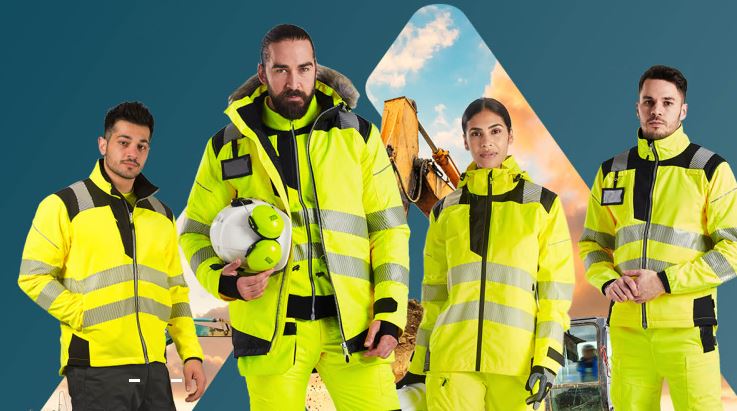
Introduction: Pioneering the Next Generation of High-Visibility Safety Solutions
The landscape of high-visibility workwear is experiencing unprecedented transformation as technological advances revolutionize traditional approaches to worker protection. From smart textiles incorporating LED systems to artificial intelligence-powered safety monitoring, the future of high-visibility workwear promises to deliver enhanced protection while improving comfort, functionality, and operational efficiency across all industries.
Hall-Fast's commitment to innovation began with Malcolm Hall MBE's entrepreneurial vision in August 2006, when he founded the company from his family home's back bedroom with a determination to serve customers' evolving needs. Nearly 20 years later, Hall-Fast continues to lead industry advancement through their partnership with Portwest, consistently introducing cutting-edge high-visibility workwear solutions that anticipate and address emerging workplace challenges. With approximately 200,000 standard items available, Hall-Fast remains at the forefront of safety innovation, ensuring customers have access to the most advanced protection technologies available.
The collaboration between Hall-Fast and Portwest represents a perfect fusion of industry expertise and technological innovation, consistently delivering high-visibility workwear solutions that exceed current standards while preparing for future safety requirements. Available through Hall-Fast's comprehensive distribution network at https://www.hall-fast.com/safety-at-work/workwear/portwest-workwear/portwest-hi-visibility, these advanced solutions demonstrate how traditional safety concepts can be enhanced through innovative technology without compromising fundamental protection principles.
Smart Textile Integration: The Foundation of Intelligent Safety Systems
Smart textiles represent the most significant advancement in high-visibility workwear technology, incorporating electronic components directly into fabric structures to create garments that actively enhance worker safety beyond passive protection methods. These intelligent fabrics maintain the essential characteristics of traditional high-visibility workwear while adding sophisticated monitoring and communication capabilities.
LED integration systems embedded within fabric structures provide active illumination that supplements traditional retroreflective materials, creating garments that generate their own light rather than simply reflecting existing light sources. These systems offer particular advantages during extremely low-light conditions or in environments where traditional lighting may be inadequate or unreliable.
Fiber-optic integration technology enables the creation of high-visibility garments with illuminated striping patterns that provide enhanced visibility while maintaining the flexibility and comfort of traditional fabrics. These systems can be programmed to display different colours or flashing patterns to communicate specific information about worker roles or hazard levels.
Conductive thread integration allows for the incorporation of electronic systems without adding bulk or reducing comfort. These advanced threading techniques enable power distribution, signal transmission, and sensor integration while maintaining the durability and washability required for industrial workwear applications.
Energy harvesting systems incorporated into smart textiles can power electronic components through movement, solar energy, or body heat, eliminating the need for external power sources while ensuring continuous operation throughout work shifts. These self-sustaining systems provide reliable power for safety features without creating maintenance burdens for users.
Environmental Monitoring and Hazard Detection
Advanced high-visibility workwear is beginning to incorporate environmental monitoring capabilities that provide real-time assessment of workplace hazards, enabling proactive safety management rather than reactive incident response. These systems transform high-visibility clothing from passive protection to active safety management tools.
Gas detection sensors integrated into high-visibility workwear can monitor for toxic gases, oxygen deficiency, or explosive vapours, providing immediate alerts when dangerous conditions develop. These systems enable workers to respond to hazards before they reach dangerous levels while maintaining communication with safety supervisors.
Temperature monitoring systems track both environmental temperature and worker body temperature, providing alerts for heat stress or hypothermia risks. These systems are particularly valuable for workers in extreme temperature environments or those wearing heavy protective equipment that may mask temperature-related health risks.
Noise level monitoring integrated into high-visibility workwear provides continuous assessment of acoustic environments, ensuring that workers receive appropriate hearing protection warnings when noise levels exceed safe limits. These systems can also monitor cumulative noise exposure to prevent long-term hearing damage.
Air quality sensors incorporated into advanced high-visibility garments monitor particulate levels, humidity, and other environmental factors that may affect worker health or safety. This real-time monitoring enables proactive adjustments to work procedures or protective equipment before hazardous conditions develop.
Communication and Connectivity Enhancements
Modern high-visibility workwear is evolving beyond simple visibility protection to incorporate sophisticated communication systems that enhance coordination and safety monitoring across work teams. These connected systems enable real-time information sharing and emergency response coordination.
Integrated communication systems built into high-visibility workwear enable hands-free communication between team members and supervisors, improving coordination while maintaining safety protection. These systems eliminate the need for separate communication devices while ensuring consistent availability and reliability.
GPS tracking integration provides real-time location monitoring for workers in high-risk environments, enabling rapid emergency response and improved workforce management. These systems are particularly valuable for lone workers or those operating in remote or hazardous locations.
Emergency alert systems incorporated into high-visibility workwear can automatically detect falls, impacts, or other emergency situations, immediately notifying supervisors and emergency responders. These systems provide critical safety nets for workers operating in dangerous environments or working alone.
Proximity warning systems integrated into high-visibility clothing can alert workers when they approach dangerous equipment, hazardous areas, or other workers, helping prevent accidents through proactive warning systems. These technologies are particularly valuable in complex industrial environments with multiple hazards.
Artificial Intelligence and Predictive Safety
Artificial intelligence integration represents the next frontier in high-visibility workwear technology, enabling predictive safety systems that anticipate and prevent accidents before they occur. These intelligent systems learn from worker behaviour patterns and environmental conditions to provide proactive safety guidance.
Behaviour analysis systems monitor worker movement patterns and activities to identify potential safety risks or deviations from safe procedures. These systems can provide real-time coaching and alerts to help workers maintain safe practices throughout their shifts.
Predictive maintenance alerts integrated into high-visibility workwear can monitor equipment health and usage patterns, providing advance warning of potential equipment failures that could create safety hazards. This proactive approach prevents accidents while optimizing equipment reliability.
Risk assessment algorithms analyse multiple data sources including environmental conditions, worker behaviour, and historical incident data to provide real-time risk assessments and safety recommendations. These systems enable dynamic safety management that adapts to changing conditions throughout work shifts.
Machine learning capabilities enable high-visibility workwear systems to continuously improve their safety recommendations based on accumulated data and outcomes. These self-improving systems become more effective over time while adapting to specific workplace conditions and requirements.
Advanced Materials and Sustainable Technologies
The future of high-visibility workwear includes revolutionary material developments that enhance protection while addressing environmental concerns and sustainability requirements. These advanced materials maintain superior safety characteristics while reducing environmental impact throughout product lifecycles.
Nano-technology applications in high-visibility workwear include self-cleaning fabrics that maintain visibility characteristics longer while reducing maintenance requirements. These advanced materials resist contamination while maintaining breathability and comfort for extended wear periods.
Bio-based materials derived from renewable sources offer sustainable alternatives to traditional synthetic fabrics while maintaining or exceeding performance characteristics. These materials address environmental concerns while providing superior protection and comfort for workers.
Recycled material integration enables the creation of high-visibility workwear from post-consumer waste streams, reducing environmental impact while maintaining performance standards. These circular economy approaches demonstrate how sustainability and safety can be successfully combined.
Phase-change materials incorporated into high-visibility workwear provide automatic temperature regulation that maintains worker comfort across varying environmental conditions. These materials absorb and release heat to maintain optimal body temperature while preserving visibility characteristics.
Customization and Personalization Technologies
Advanced manufacturing technologies enable unprecedented customization of high-visibility workwear to meet specific worker needs and preferences while maintaining standardized safety characteristics. These personalization capabilities improve comfort and compliance while ensuring consistent protection.
3D body scanning technologies enable precise fit customization that optimizes comfort and protection effectiveness for individual workers. Perfect fit reduces fatigue and improves compliance while ensuring that safety features remain properly positioned throughout work activities.
Modular design systems allow workers to customize their high-visibility protection by adding or removing components based on specific task requirements. These flexible systems provide optimal protection for varying work conditions while maintaining cost-effectiveness.
Adaptive sizing technologies enable high-visibility garments to automatically adjust to accommodate different body positions and clothing layers. These systems maintain proper fit and protection effectiveness regardless of working positions or environmental requirements.
Personalized safety feature integration allows individual workers to customize monitoring and alert systems based on their specific roles and health requirements. These systems provide optimal safety support while avoiding information overload or irrelevant alerts.
Integration with Industrial Internet of Things (IIoT)
High-visibility workwear is becoming an integral component of Industrial Internet of Things systems that connect all aspects of workplace safety and operations. These connected systems enable comprehensive safety management and operational optimization through integrated data collection and analysis.
Real-time data integration enables high-visibility workwear to share information with other workplace systems including equipment monitoring, environmental controls, and safety management platforms. This integration provides comprehensive situational awareness and coordinated safety response.
Predictive analytics systems utilize data from high-visibility workwear sensors along with other workplace information to identify trends and predict potential safety issues before they develop into incidents. These systems enable proactive safety management and continuous improvement.
Automated compliance monitoring through connected high-visibility workwear ensures that safety requirements are consistently met while reducing administrative overhead. These systems provide continuous documentation and verification of safety compliance.
Fleet management integration enables comprehensive monitoring and management of high-visibility workwear across entire organizations, ensuring consistent protection standards while optimizing inventory and replacement schedules.
Regulatory Evolution and Standards Development
The advancement of high-visibility workwear technology is driving evolution in safety standards and regulatory frameworks that govern personal protective equipment. Understanding these developments helps organizations prepare for future compliance requirements while leveraging advanced technologies.
Dynamic standards development addresses the challenges of regulating rapidly evolving technologies while maintaining essential safety requirements. Regulatory bodies are developing frameworks that encourage innovation while ensuring worker protection.
International harmonization efforts aim to create consistent standards for advanced high-visibility workwear technologies across different countries and regions. These harmonized standards facilitate global operations while maintaining safety effectiveness.
Performance-based regulations focus on outcome requirements rather than prescriptive specifications, enabling innovative technologies to meet safety objectives through alternative approaches. These flexible frameworks encourage continued innovation while maintaining protection standards.
Certification processes for advanced high-visibility workwear technologies are evolving to address the complexity of smart systems while ensuring reliability and safety effectiveness. These certification frameworks provide confidence in advanced technologies while supporting continued innovation.
Hall-Fast's Innovation Leadership
Hall-Fast's position as an innovation leader in high-visibility workwear stems from their commitment to anticipating and addressing customer needs through advanced technology solutions. Nearly 20 years of industry experience has positioned them to guide customers through the transition to next-generation safety technologies.
Technology evaluation services help customers assess emerging high-visibility workwear technologies and determine appropriate adoption strategies for their specific operational requirements. Hall-Fast's expertise ensures that customers invest in technologies that provide optimal value and protection.
Implementation support services address the challenges of integrating advanced high-visibility workwear technologies with existing safety programmes and operational procedures. This support ensures successful technology adoption while maintaining safety effectiveness.
Training and education programmes help customers understand and effectively utilize advanced high-visibility workwear technologies. These programmes ensure that technological investments provide maximum value while maintaining user acceptance and compliance.
The company's award-winning track record, documented at https://www.hall-fast.com/awards, demonstrates their commitment to excellence and innovation in serving diverse industries. These recognitions validate their approach to technology leadership and customer service.
Cost-Benefit Analysis of Advanced Technologies
Investment in advanced high-visibility workwear technologies requires careful analysis of costs and benefits to ensure optimal return on investment while maintaining essential safety protection. Understanding these factors helps organizations make informed decisions about technology adoption.
Productivity improvements from advanced high-visibility workwear include reduced training time, improved efficiency, and enhanced coordination that often offset technology costs while providing superior safety protection. These productivity gains demonstrate the business value of advanced safety technologies.
Risk reduction benefits include lower accident rates, reduced insurance costs, and avoided regulatory penalties that result from enhanced safety monitoring and protection. The cost of accidents often far exceeds the investment in advanced protective technologies.
Operational efficiency gains from integrated monitoring and communication systems reduce administrative overhead while improving safety management effectiveness. These efficiency improvements provide ongoing value that justifies initial technology investments.
Long-term value benefits include extended equipment life, reduced replacement costs, and improved data for safety programme optimization. Advanced technologies often provide better total cost of ownership compared to traditional alternatives.
Future Workforce Considerations
The evolution of high-visibility workwear technology must address changing workforce demographics and expectations while maintaining effective safety protection. Understanding these trends helps organizations prepare for future workforce needs and technology adoption.
Digital native workforce expectations include sophisticated technology integration and intuitive user interfaces that align with personal technology experiences. High-visibility workwear must evolve to meet these expectations while maintaining safety effectiveness.
Aging workforce considerations require technology solutions that address physical limitations while enhancing safety protection for older workers. Advanced high-visibility workwear can provide additional support and monitoring to enable continued safe employment.
Skills evolution requirements include training programmes that prepare workers to effectively utilize advanced high-visibility workwear technologies while maintaining traditional safety practices. This education ensures successful technology adoption across all workforce segments.
Cultural adaptation strategies address varying acceptance levels for advanced technologies while ensuring consistent safety protection. Successful implementation requires understanding and addressing diverse workforce perspectives on technology adoption.
Conclusion: Embracing the Future of Worker Protection
The future of high-visibility workwear technology promises unprecedented improvements in worker safety, operational efficiency, and regulatory compliance through innovative solutions that transform traditional protection concepts. These advances represent natural evolution from passive protection to active safety management that anticipates and prevents incidents.
Hall-Fast's partnership with Portwest positions customers at the forefront of safety innovation, providing access to advanced technologies while maintaining the reliability and service excellence that has defined their relationship for nearly 20 years. Malcolm Hall MBE's vision of serving customer needs continues to drive their commitment to innovation leadership.
The integration of advanced technologies with proven safety principles creates opportunities for enhanced protection that addresses emerging workplace challenges while maintaining the fundamental effectiveness of high-visibility workwear. These developments promise safer, more productive, and more efficient workplace operations.
For organizations seeking to prepare for the future of high-visibility workwear technology, Hall-Fast offers unmatched expertise and access to cutting-edge solutions. Their systematic approach to technology evaluation and implementation ensures that customers benefit from innovation while maintaining proven safety effectiveness.
To explore Hall-Fast's complete range of advanced high-visibility workwear solutions and emerging technologies, visit https://www.hall-fast.com/safety-at-work/workwear/portwest-workwear/portwest-hi-visibility. Contact their innovation specialists at https://www.hall-fast.com/contact to discuss how advanced technologies can enhance your workplace safety programmes.
For information about Hall-Fast's comprehensive approach to safety innovation and their complete brand portfolio, visit https://www.hall-fast.com/brands. Their commitment to excellence and community involvement at https://www.hall-fast.com/community demonstrates their dedication to advancing worker protection through innovative solutions.
Hall-Fast - Whatever Your Industry Needs Worldwide!