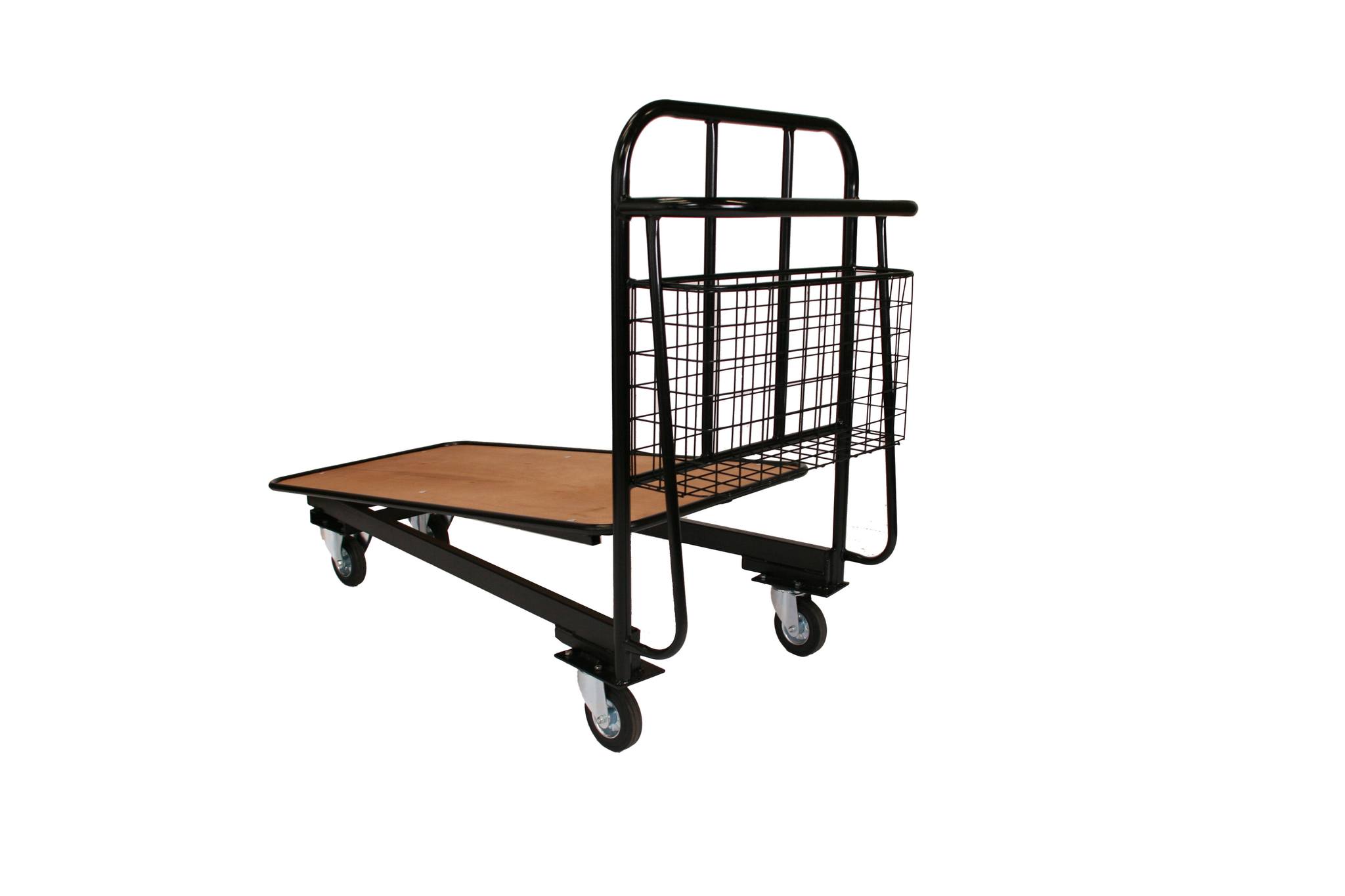
Everything you need to know about the UK's most trusted cash and carry trolleys — features, specifications, nestable design, applications, and how to choose the right model for your business.
Introduction: The Backbone of Wholesale and Retail Operations
Walk into any cash and carry warehouse, wholesale outlet, or large-format retail store in the UK and you will see them everywhere — flat-platform trolleys loaded with bulk goods, weaving through aisles, queuing at checkouts, and being wheeled out to car parks by customers carrying a week's worth of stock for their business. These trolleys are so fundamental to the way wholesale and retail operations work that they are easy to take for granted. But the quality of your trolley fleet has a direct impact on customer experience, staff productivity, operational efficiency, and workplace safety.
That is why so many UK businesses rely on Stubbs Cash & Carry Trolleys. Manufactured in the United Kingdom by a brand with roots stretching back to 1836, Stubbs trolleys combine heavy-duty steel construction with practical features like nestable platforms, solid rubber wheels, and integrated storage baskets. They are built to handle loads of up to 500kg, withstand the rigours of daily commercial use, and nest compactly together when not in use to save valuable floor space.
This guide covers everything you need to know before purchasing. We will walk through the key features and specifications, explain how the nestable design works and why it matters, explore applications across different industries, compare different trolley types, and offer practical advice on choosing the right model for your specific operation. Whether you are fitting out a new store, replacing ageing equipment, or expanding your fleet to meet growing demand, this article will give you the information you need to make a confident decision.
What Is a Cash & Carry Trolley?
A cash and carry trolley — also commonly known as a U-boat trolley, warehouse trolley, stock trolley, or platform trolley — is a wheeled, flat-platform cart designed for transporting large, heavy, and bulky goods in commercial environments. The name comes from the cash and carry wholesale model, where trade customers select goods from warehouse-style shelving and transport them to the checkout themselves, rather than having goods picked and delivered by staff.
The typical cash and carry trolley features a flat load platform at a low height (usually between 280mm and 480mm from the ground), tubular steel guard rails or handles at one or both ends, and four wheels — usually two fixed and two swivel — for smooth, stable movement. Many models also include an integrated rear basket for carrying smaller items.
What distinguishes a quality cash and carry trolley from a basic platform truck is the nestable design. When the trolley is empty, the platform tilts or drops, allowing multiple trolleys to be pushed together and stacked nose-to-tail. This dramatically reduces the storage footprint, which is critical in environments where dozens or even hundreds of trolleys need to be available for customers without consuming valuable retail or warehouse floor space.
Cash and carry trolleys are not limited to wholesale stores. They are widely used in warehouses, distribution centres, retail stockrooms, DIY stores, garden centres, pet stores, catering operations, schools, and any commercial environment where large or heavy goods need to be moved efficiently by hand.
Stubbs: Nearly Two Centuries of British Manufacturing
The Stubbs brand is one of the most established names in UK material handling and industrial equipment. Founded in 1836, the company has been manufacturing robust, practical products for British businesses for nearly 190 years. Originally established in the agricultural and equestrian sectors, Stubbs expanded over the decades into industrial handling equipment, building a reputation for quality, durability, and dependable performance.
Every Stubbs Cash & Carry Trolley is designed and manufactured in the United Kingdom. This is not a brand that outsources production overseas to cut corners. It is a manufacturer that uses UK-sourced materials, UK-based engineering expertise, and UK quality standards to produce equipment that meets the specific demands of British commercial environments.
For buyers, this matters in several practical ways. UK manufacturing means consistent quality control, shorter lead times compared to imported products, and a product that has been engineered with UK workplace regulations and conditions in mind. The Stubbs name on a piece of equipment is a mark of reliability that procurement managers, facilities teams, and business owners across the country have trusted for generations.
Key Features and Specifications
Understanding the features and specifications of Stubbs Cash & Carry Trolleys in detail will help you assess whether they are the right fit for your operation.
Heavy-Duty Steel Frame
The trolley chassis is constructed from a combination of rectangular and tubular steel sections, providing a strong, rigid framework that resists bending, twisting, and impact damage. This combined frame design is a hallmark of quality cash and carry trolleys — the rectangular sections provide structural rigidity, while the tubular elements add strength at the handle and guard rail areas where forces are concentrated during pushing, pulling, and loading.
The steel frame is finished with a durable coating — either enamel paint or a bright zinc-plated finish — to protect against corrosion, scratches, and the general wear that comes with daily commercial use. Zinc plating is particularly effective in environments where trolleys may be exposed to moisture, cleaning chemicals, or outdoor conditions.
Load Platform
The flat load platform is the working surface of the trolley, and on Stubbs models it is constructed from hardwearing plywood or timber. The platform is designed to support loads of up to 500kg, distributing weight evenly across the frame to prevent localised stress points.
Depending on the model, the platform may feature a lacquered or phenol-coated finish for additional protection against moisture, spillages, and surface wear. The natural grip of the timber surface helps prevent goods from sliding during transport, reducing the risk of load shift and damage.
Self-Tilting Nestable Platform
The nestable design is one of the most important features of a cash and carry trolley. On Stubbs models, the platform is mounted on a self-tilting mechanism — when the trolley is empty, the platform lifts or tilts as the trolley is pushed into the one in front, allowing multiple trolleys to slide together into a compact, space-saving stack.
When a trolley is pulled free from the stack, the platform drops back into its flat, load-bearing position automatically. This mechanism requires no manual adjustment, no tools, and no training. It is fast, intuitive, and reliable — exactly what you need in a high-traffic environment where trolleys are being taken from and returned to the stack hundreds of times per day.
Solid Rubber Wheels
Stubbs cash and carry trolleys are fitted with solid rubber wheels, typically 125mm to 200mm in diameter. The standard configuration uses two fixed wheels and two swivel castors — a proven arrangement that provides stability during straight-line travel and responsive steering when navigating around corners, through aisles, and between obstacles.
Solid rubber wheels offer several advantages for commercial environments. They cannot puncture, require no inflation, and need virtually no maintenance. They provide smooth, quiet rolling on hard indoor surfaces such as polished concrete, resin floors, tiles, and tarmac. For businesses that operate on surfaces where noise is a concern — such as retail environments or hospitality venues — the quiet operation of solid rubber wheels is a significant benefit.
Integrated Rear Basket
Selected Stubbs cash and carry trolley models include a rear basket, mounted at the handle end of the trolley. This basket provides a convenient, accessible space for smaller items that need to travel with the main load but could easily get lost or buried on the flat platform.
In a wholesale store, customers use the basket for personal items, receipts, scanning devices, or smaller purchases. In a warehouse picking operation, the basket can hold paperwork, labels, packing materials, or handheld devices. It is a simple feature, but one that adds meaningful practical value in day-to-day use.
Load Capacity
Stubbs cash and carry trolleys are rated for loads of up to 500kg. This capacity is more than sufficient for the vast majority of manual material handling tasks in wholesale, retail, and warehouse environments. It accommodates everything from stacked boxes of grocery products and bulk beverages to building materials, garden supplies, and catering equipment.
The generous load capacity also provides a practical safety margin. In normal use, trolleys are rarely loaded to their absolute maximum, which means the frame, wheels, and platform are operating within a comfortable range — extending the working life of the equipment and reducing the risk of overload-related damage.
How the Nestable Design Works — And Why It Matters
The nestable design is the single most important feature that separates a proper cash and carry trolley from a standard platform truck. It is worth understanding how it works and why it delivers such significant operational benefits.
The Mechanism
When a Stubbs cash and carry trolley is loaded, the platform sits flat and level, supported by the frame, providing a stable surface for goods. When the trolley is empty and pushed towards another trolley (or a row of nested trolleys), the platform tilts upward on a hinge or spring mechanism. This allows the body of the trolley to slide underneath the handle area of the trolley in front, so the two trolleys overlap. The process repeats with each additional trolley, creating a compact row where each unit takes up a fraction of the floor space it would occupy individually.
When a customer or staff member pulls a trolley from the front of the row, the platform drops back into its flat position under its own weight, and the trolley is immediately ready for use.
Space Savings in Practice
The space savings from nestable trolleys are substantial. A fleet of 20 standard, non-nestable platform trucks might require a storage area of 30 square metres or more. The same number of nestable cash and carry trolleys can be stored in a fraction of that space — often as little as 5 to 8 square metres, depending on the model.
For a busy cash and carry store that needs 50, 100, or even 200 trolleys available for customers, the difference is enormous. Without nestable trolleys, storing that fleet would consume a significant portion of the retail floor or require a dedicated storage area. With nestable trolleys, the entire fleet can be parked in a compact row near the entrance, ready for customers to grab and go.
Operational Benefits
Beyond raw space savings, the nestable design delivers several operational advantages. Trolley collection and return is faster and easier, because trolleys naturally form neat, organised rows rather than scattering across the car park or store. Staff spend less time rounding up and repositioning trolleys. The store looks tidier and more professional. And customers benefit from a smoother, more intuitive experience — they can see the trolley stack, pull one free, and start shopping without confusion or delay.
Industry Applications: Where Stubbs Cash & Carry Trolleys Excel
One of the great strengths of the Stubbs cash and carry trolley is its versatility. While the name suggests a single application, these trolleys are used across a surprisingly wide range of industries and environments.
Wholesale and Cash & Carry Stores
This is the environment these trolleys were designed for. Wholesale stores like Costco, Booker, and independent cash and carry outlets rely on large fleets of nestable trolleys to enable their self-service model. Customers — typically trade buyers stocking up for their own businesses — need trolleys that can carry heavy, bulk-sized products across large store floors and out to their vehicles.
Stubbs trolleys meet these demands with a 500kg capacity, smooth-rolling wheels, and a durable platform that withstands the daily impact of heavy boxes, catering packs, and bulk containers being loaded and unloaded. The nestable design keeps the entrance area tidy and ensures trolleys are always available, even during peak trading periods.
Warehouses and Distribution Centres
In warehouse environments, cash and carry trolleys serve as versatile internal transport vehicles. They are used for order picking (loading goods from racking onto the trolley as orders are assembled), stock replenishment (moving goods from bulk storage to forward pick locations), and general internal transport of materials, tools, and equipment.
The flat platform accommodates a wide range of load types and sizes, from uniform cardboard boxes to irregular, awkward items. The swivel castors provide the manoeuvrability needed to navigate between racking rows, through doorways, and around busy loading bays. For warehouses that operate multiple shifts, the robust construction of Stubbs trolleys ensures reliable performance day in, day out.
DIY Stores and Garden Centres
Large-format DIY retailers and garden centres present unique material handling challenges. Customers purchase heavy, bulky items — bags of cement, paving slabs, lengths of timber, pots of paint, bags of compost, large plants — that are difficult or impossible to carry by hand. Cash and carry trolleys provide a practical solution, allowing customers to load up their purchases and transport them through the store and out to the car park.
For garden centres in particular, where routes may cross outdoor areas with rougher surfaces, models with larger diameter wheels provide better performance over gravel, paving, and compacted earth.
Retail Stockrooms and Back-of-House Operations
Behind the scenes of every retail store is a logistics operation that depends on efficient material handling. Deliveries arrive at the loading bay and need to be moved to the stockroom, sorted, and then transported to the shop floor for merchandising. Cash and carry trolleys are ideal for this work — they carry heavy loads, navigate narrow stockroom corridors, and operate quietly enough for use in customer-facing areas.
The nestable design is particularly valuable in retail stockrooms, where space is almost always tight. When the trolleys are not in use, they can be nested together and pushed into a corner, freeing up floor space for stock, packing, and other activities.
Catering and Hospitality
Hotels, conference centres, event venues, and catering operations all need to move large quantities of food, beverages, and equipment between storage areas, kitchens, and service points. Cash and carry trolleys provide a stable, high-capacity platform for transporting cases of beverages, bulk food deliveries, tableware, and catering equipment.
The solid rubber wheels operate quietly on hard floors, which is important in hospitality environments where noise can disrupt guests. The rear basket is useful for carrying smaller items like cutlery sets, condiments, or service equipment alongside the main load.
Schools, Colleges, and Public Sector
Educational establishments and public sector organisations use cash and carry trolleys for a wide range of tasks — from moving exam desks and chairs to transporting IT equipment, library books, catering supplies, and maintenance materials. The trolleys are easy enough for any member of staff to operate, and the nestable design means they can be stored compactly in equipment cupboards or corridors between uses.
For local authorities, NHS trusts, and other public sector bodies managing large estates, Stubbs trolleys offer a cost-effective, durable solution for the diverse material handling tasks that arise across multiple buildings and sites.
Manufacturing and Production
Factory environments use cash and carry trolleys for moving work-in-progress materials between production stations, transporting packaging and finished goods to dispatch areas, and general internal logistics. The 500kg load capacity handles most manual handling tasks in a manufacturing setting, and the robust construction withstands the knocks and bumps of a busy factory floor.
Choosing the Right Cash & Carry Trolley: A Practical Buying Guide
Selecting the right specification ensures you get the best performance and value from your investment. Here are the key factors to consider.
Assess Your Load Requirements
Start by understanding what your trolleys will actually carry. Consider both the weight and physical characteristics of your typical loads. Heavy, compact items like cases of beverages or tinned goods create concentrated loads. Large, lightweight items like bulk packs of crisps or toilet rolls fill the platform area quickly without approaching the weight limit. Irregular items like furniture, timber, or garden equipment may overhang the platform edges.
The 500kg capacity of Stubbs trolleys provides generous headroom for most applications, but it is good practice to confirm that your heaviest regular loads fall comfortably within the rated limit.
Evaluate Your Operating Environment
The surfaces your trolleys will operate on are the most important factor in determining which wheel specification you need. Smooth, hard indoor floors — polished concrete, resin, tiles — are ideal for standard solid rubber wheels. If your trolleys need to cross outdoor areas, navigate uneven surfaces, or handle transitions between different floor types, consider models with larger diameter wheels or pneumatic options for better shock absorption and traction.
Walk the routes your trolleys will actually travel. Note any thresholds, ramps, transitions between surfaces, or areas where floor condition is poor. A trolley that rolls beautifully on a smooth warehouse floor can become frustrating and difficult to manage on cracked, uneven, or debris-covered surfaces.
Consider Your Fleet Size and Storage Space
How many trolleys do you need, and where will you store them? For a busy cash and carry store, you might need 50 to 200 trolleys to serve customers during peak periods. For a warehouse operation, a fleet of 10 to 30 may be sufficient. For a school or small retail stockroom, two or three might be all you need.
The nestable design of Stubbs trolleys means storage space requirements are modest even for large fleets, but you still need to plan where the nested rows will sit. Ideally, trolleys should be stored near the point of use — at the store entrance for customer-facing environments, or near the loading bay or picking area in a warehouse.
Think About Basket Requirements
Do you need models with an integrated rear basket? For customer-facing environments where shoppers carry personal items, smaller purchases, or scanning equipment, the basket is a valuable addition. For internal warehouse use where the trolley is loaded entirely with picked goods, a basket may be less important — and basket-free models may nest more compactly.
Factor in Total Cost of Ownership
The purchase price is only one element of the total cost of owning and operating a fleet of trolleys. Consider also maintenance costs (solid rubber wheels on Stubbs trolleys need virtually no maintenance), replacement cycles (Stubbs trolleys are built to last for many years of heavy use), and the indirect costs of using cheaper alternatives — more frequent replacements, more breakdowns, poorer customer experience, and increased injury risk from inferior equipment.
A well-built Stubbs trolley that lasts eight to ten years costs significantly less per year of service than a budget alternative that needs replacing every two to three years — and delivers a better experience for customers and staff throughout its working life.
Maintenance and Care
Stubbs cash and carry trolleys are designed for low maintenance, but a small amount of regular attention will maximise their performance and lifespan.
Routine Inspections
Establish a simple inspection routine. On a weekly or monthly basis (depending on usage intensity), check each trolley for obvious damage to the frame, platform, wheels, and handle. Look for loose bolts, cracked or splintered platform boards, damaged wheel bearings, and any issues with the nesting mechanism.
In customer-facing environments, a quick visual check at the start of each trading day helps ensure that every trolley available to customers is safe and in good working order.
Wheel Care
Solid rubber wheels require minimal maintenance. Periodically check that wheels are securely mounted and that the rubber is not excessively worn, cracked, or caked with debris. Swivel castors should rotate freely — if they become stiff or resistant, clean the swivel housing and apply a suitable lubricant.
Replace any wheels that show signs of significant wear, flat spots, or bearing failure. A trolley with a damaged wheel is difficult to steer, noisy, and potentially unsafe — and replacing a single wheel is far cheaper than replacing the entire trolley.
Platform Care
Inspect the timber or plywood platform for cracks, delamination, excessive wear, or water damage. In environments where spillages are common, wipe down the platform regularly to prevent moisture from penetrating the wood. If the protective coating (lacquer or phenol film) becomes worn through, consider refinishing or replacing the platform to maintain its load-bearing integrity and resistance to moisture.
Frame and Finish
Check the steel frame for dents, cracks, and corrosion. If the paint or zinc plating becomes damaged, touch up the affected area to prevent rust from developing. This is particularly important for trolleys that are used outdoors or in damp environments.
Nesting Mechanism
The self-tilting platform mechanism should operate smoothly and freely. If it becomes stiff or fails to drop correctly when the trolley is pulled from the stack, check for debris or obstructions around the hinge points and clean as necessary. A small amount of lubrication on the pivot points can restore smooth operation.
Cash & Carry Trolleys vs Other Material Handling Options
If you are deciding between cash and carry trolleys and other types of handling equipment, this comparison will help clarify which option best suits your needs.
Cash & Carry Trolleys vs Standard Platform Trucks
Standard platform trucks offer a flat, stable platform for transporting goods, but they do not nest. If you only need a small number of trolleys (one to five) and storage space is not a concern, a standard platform truck may be perfectly adequate. However, if you need a larger fleet, or if trolleys need to be available for customers in a self-service environment, the nestable design of cash and carry trolleys is essential for practical space management.
Cash and carry trolleys also tend to have a lower platform height than standard platform trucks, making it easier to load and unload heavy items without excessive bending or lifting.
Cash & Carry Trolleys vs Roll Cages
Roll cages (also known as roll containers or roll pallets) are enclosed, wheeled cages used extensively in logistics and distribution. They are ideal for pre-loaded delivery consignments that travel between a distribution centre and a store, but they are not well suited to customer-facing retail environments or manual picking operations. Cash and carry trolleys offer an open, accessible platform that is easier to load and unload by hand, and their nestable design makes them far more practical for environments where dozens or hundreds of units need to be stored.
Cash & Carry Trolleys vs Sack Trucks
Sack trucks are designed for moving tall, narrow loads — such as stacked boxes, cylinders, or appliances — vertically. They are not suitable for large, flat, or multiple-item loads. If your primary need is to move varied bulk goods across a store or warehouse floor, a cash and carry trolley is far more versatile and efficient.
Cash & Carry Trolleys vs Shopping Trolleys
Traditional supermarket-style shopping trolleys have a basket design that works well for individual consumer groceries but is poorly suited to bulky, heavy, or irregularly shaped wholesale goods. Cash and carry trolleys offer a flat, open platform with a much higher load capacity, making them the right choice for trade customers purchasing in bulk.
Manual Handling Regulations and Compliance
UK employers have a legal obligation under the Manual Handling Operations Regulations 1992 to reduce the risk of injury from manual handling activities. The Health and Safety Executive identifies manual handling as one of the leading causes of workplace injury in the UK, with musculoskeletal disorders — back injuries, shoulder strain, repetitive strain — accounting for a significant proportion of working days lost each year.
Providing appropriate handling equipment is one of the most effective ways to comply with these regulations and protect your workforce. Stubbs cash and carry trolleys directly reduce manual handling risks by eliminating the need for staff and customers to carry heavy goods by hand, minimising push and pull forces through quality wheel bearings and smooth-rolling castors, keeping the load platform at a height that reduces excessive bending and lifting, and providing a stable, controlled means of transporting goods that reduces the risk of dropped loads, trips, and falls.
For employers conducting manual handling risk assessments, specifying quality handling equipment like Stubbs trolleys demonstrates a proactive approach to risk reduction and provides clear evidence of compliance with regulatory requirements.
Sustainability and Environmental Responsibility
For businesses that report on environmental performance or are working towards sustainability targets, the choice of handling equipment matters more than you might think.
Stubbs trolleys are manufactured in the UK, which means shorter supply chains and significantly lower transport emissions compared to imported alternatives shipped from overseas factories. There are no container ships, no lengthy road haulage journeys from distant ports, and no complex international logistics adding unnecessary carbon to your procurement footprint.
Beyond sourcing, the durability of Stubbs trolleys is itself a sustainability advantage. The single most environmentally responsible piece of equipment is one that does not need to be replaced. A Stubbs trolley that lasts a decade or more consumes far fewer resources per year of service than a budget alternative that needs replacing every two to three years. Less waste, less manufacturing energy, less packaging, and less transport — all because the product was built to last in the first place.
When a Stubbs trolley does eventually reach the end of its long working life, its materials — steel, timber, rubber — are all widely recyclable through established UK recycling pathways. And because the trolleys are designed with repairability in mind, individual components like wheels, platforms, and castors can be replaced without scrapping the entire unit, extending the working life of the frame and further reducing waste.
The Return on Investment
Investing in quality cash and carry trolleys delivers returns that extend well beyond the purchase price.
Customer Experience
In a customer-facing wholesale or retail environment, the quality of your trolley fleet directly affects how customers perceive your business. Smooth-rolling, well-maintained trolleys make shopping easier and more enjoyable. Rattling, stiff, damaged trolleys frustrate customers and create a poor impression. Stubbs trolleys, with their robust construction and smooth operation, help you maintain the standard of experience that keeps customers coming back.
Staff Productivity
For warehouse and logistics operations, the right trolleys help staff work faster and with less effort. A trolley that rolls smoothly, steers responsively, and carries a full load without difficulty allows operators to complete more trips per shift with less physical strain. Over the course of a year, this translates into measurable productivity gains and reduced fatigue-related performance decline.
Reduced Injury Costs
Manual handling injuries carry significant direct costs (sick pay, temporary cover, medical expenses) and indirect costs (lost productivity, investigation time, potential HSE enforcement action). Equipment that reduces injury risk delivers a financial return that typically outweighs its purchase price many times over.
Equipment Longevity
Stubbs trolleys are built to last. While budget alternatives may need replacing every two to three years, a well-maintained Stubbs trolley can provide reliable service for a decade or more. Over its working life, the Stubbs trolley delivers a lower cost per year of service while providing a consistently better experience for users.
Frequently Asked Questions
What is a cash and carry trolley used for?
A cash and carry trolley is used for transporting large, heavy, and bulky goods in commercial environments. Common uses include customer self-service in wholesale stores, order picking in warehouses, stock movement in retail operations, and internal goods transport in schools, factories, and public sector facilities.
How much weight can a Stubbs cash and carry trolley carry?
Stubbs cash and carry trolleys are rated for loads of up to 500kg, which is sufficient for the vast majority of manual material handling tasks in commercial and industrial environments.
What does nestable mean?
Nestable means the trolleys can be pushed together and stacked compactly when not in use. The self-tilting platform lifts as the trolley is pushed into the one in front, allowing multiple trolleys to overlap and occupy a fraction of the floor space they would require individually.
Are Stubbs cash and carry trolleys made in the UK?
Yes. All Stubbs products are designed and manufactured in the United Kingdom. Stubbs has been producing quality equipment in Britain since 1836.
What wheel types are available?
Stubbs cash and carry trolleys are typically fitted with solid rubber wheels in a two-fixed, two-swivel configuration. Wheel diameters range from 125mm to 200mm depending on the model. Solid rubber wheels are puncture-proof, maintenance-free, and provide smooth, quiet operation on hard indoor surfaces.
Can the trolleys be used outdoors?
While primarily designed for indoor use, models with larger diameter solid rubber or pneumatic wheels can handle outdoor environments such as garden centres, builder's yards, and loading areas. For regular outdoor use on rough surfaces, discuss your requirements with the Hall-Fast sales team to ensure the right wheel specification.
Do the trolleys require assembly?
Some models are supplied in component form for straightforward self-assembly. Others arrive fully assembled and ready to use. Check the specific product listing or contact Hall-Fast for details on individual models.
How many trolleys can be nested together?
There is no fixed limit to the number of trolleys that can be nested in a row. In practice, rows of 10 to 20 trolleys are common and manageable. Very long rows become heavy to push, so most operators work with rows of a practical length.
What maintenance do the trolleys need?
Maintenance requirements are minimal. Regular visual inspections, periodic checking of wheels and castors, basic care of the platform surface, and occasional lubrication of the nesting mechanism are all that is typically needed.
Where can I buy Stubbs cash and carry trolleys?
Stubbs Cash & Carry Trolleys are available from Hall-Fast, one of the UK's leading industrial and commercial equipment suppliers. You can order online, call the sales team on 01623 645645, or email sales@hall-fast.com for expert advice and competitive pricing.
Order Your Stubbs Cash & Carry Trolleys Today
Ready to equip your store, warehouse, or commercial operation with reliable, UK-manufactured handling equipment? Browse the full range of Stubbs® Cash & Carry Trolleys at Hall-Fast and choose the right specification for your needs.
For expert advice on model selection, fleet sizing, wheel options, and quantity pricing, contact the Hall-Fast team:
Phone: 01623 645645 Email: sales@hall-fast.com Website: www.hall-fast.com
With competitive pricing, fast UK delivery, ISO 9001:2015 certified quality management, and decades of expertise in industrial and commercial equipment, Hall-Fast is your trusted partner for Stubbs trolleys and the complete range of handling equipment your business needs.