The automotive industry has experienced a fundamental transformation in materials, design approaches, and manufacturing techniques—driving the need for more sophisticated joining methods beyond traditional mechanical fasteners. Structural bonding fasteners represent a significant advancement in automotive assembly technology, combining the mechanical reliability of conventional fasteners with the distributed load advantages of adhesive bonding. For UK automotive manufacturers, tier suppliers, and specialty vehicle producers, these innovative fastening solutions enable lighter, stronger, more durable vehicles while simplifying production processes. This comprehensive guide explores the applications, advantages, and implementation of structural bonding fasteners in automotive manufacturing, available through trusted industrial suppliers like Hall-Fast.
Automotive Manufacturing Challenges Driving Fastening Innovation
Modern vehicle design and production face multiple challenges that traditional fastening methods struggle to address effectively:
Material Evolution Challenges
- Increased Use of Composites: Carbon fibre and fiberglass components resist traditional fastening
- Ultra-High-Strength Steels: More difficult to drill and weld than conventional steels
- Aluminum Adoption: Creates galvanic corrosion risks with dissimilar metal fasteners
- Mixed-Material Structures: Requiring joining methods compatible with different substrates
- Thin-Wall Designs: Providing insufficient material for secure threaded fastener engagement
Performance Requirement Intensification
- Weight Reduction Imperatives: Driving the need for lighter joining methods
- NVH (Noise, Vibration, Harshness) Standards: Requiring improved vibration damping
- Corrosion Resistance Expectations: Demanding elimination of galvanic couples
- Crash Performance Requirements: Requiring optimized load paths and energy absorption
- Durability Standards: Expecting longer service life under more demanding conditions
Manufacturing Process Evolution
- Increased Automation: Requiring fastening methods compatible with robotic installation
- Reduced Assembly Time: Demanding faster, more efficient joining methods
- Quality Verification Needs: Requiring inspectable, consistent joint creation
- Rework Reduction Goals: Necessitating right-first-time assembly approaches
- Flexible Manufacturing Requirements: Supporting multiple vehicle variants on single lines
These converging challenges have created the perfect environment for structural bonding fasteners to demonstrate their significant advantages in automotive applications.
BigHead Structural Bonding Fasteners: Engineered Automotive Solutions
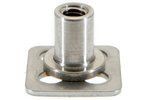
In the spectrum of automotive fastening technologies, BigHead Bonding Fasteners represent an exceptional engineering achievement specifically addressing vehicle manufacturing requirements. Available through Hall-Fast to automotive manufacturers across the UK, these specialized fastening components deliver several distinct advantages:
- Automotive-Specific Design Features
BigHead structural bonding fasteners incorporate multiple design elements developed specifically for vehicle applications:
- Optimized Head Geometry: Distributing loads to prevent damage to composite panels
- Weight-Minimized Profiles: Reducing mass while maintaining structural integrity
- Vibration-Damping Characteristics: Reducing transmitted NVH through structures
- Corrosion-Resistant Materials: Offering extended durability in harsh environments
- Low-Profile Options: Minimizing intrusion into interior spaces
These design elements ensure secure attachment without compromising vehicle performance, weight targets, or manufacturing efficiency.
- Automotive Material Compatibility
A critical advantage of BigHead structural bonding fasteners is their exceptional compatibility with the diverse materials found in modern vehicles:
- Carbon Fiber Composite Integration: Creating secure attachments without fibre damage
- Aluminum Structure Compatibility: Preventing galvanic corrosion issues
- Ultra-High-Strength Steel Applications: Eliminating heat-affected zones from welding
- Thermoplastic Component Mounting: Providing secure attachment to polymer parts
- Mixed-Material Junction Optimization: Creating transition points between dissimilar materials
This material versatility makes BigHead fasteners essential for UK automotive manufacturers implementing advanced lightweight materials where conventional fastening methods prove inadequate or damaging.
- Manufacturing Process Advantages
Beyond performance benefits, BigHead structural bonding fasteners deliver significant production advantages:
- Single-Side Access Installation: Eliminating need for rear access during assembly
- Pre-Placement Capability: Installing fasteners before body assembly or painting
- Automation Compatibility: Supporting robotic application and verification
- Process Chain Simplification: Eliminating drilling, punching, and welding operations
- Quality Verification Features: Enabling visual or automated inspection of proper installation
These manufacturing benefits directly contribute to production efficiency, quality improvement, and cost reduction in automotive assembly operations.
Automotive Applications Across Vehicle Production
Structural bonding fasteners from Hall-Fast serve diverse applications across UK automotive manufacturing operations:
Body Structure and Exterior
Modern vehicle body construction utilizes structural bonding fasteners for numerous advantages:
- Composite Panel Attachment: Securing carbon fibre or fiberglass components
- Aluminum-to-Steel Connections: Creating galvanically isolated joining points
- Roof Rail Mounting: Providing secure attachment without roof penetration
- Body Side Reinforcement: Creating load paths for improved crash performance
- Exterior Trim Attachment: Providing invisible mounting for aesthetic components
The combination of weight reduction, corrosion prevention, and thermal isolation makes these fasteners increasingly common in UK automotive body applications.
Interior Systems
Vehicle interior manufacturing benefits from structural bonding fasteners in multiple applications:
- Instrument Panel Structure: Creating secure mounting with hidden fastening points
- Seat and Restraint Anchoring: Providing critical safety component attachment
- Overhead Console Mounting: Securing components to roof structures
- Door Panel Assembly: Creating serviceable attachment points without visible fasteners
- Acoustic Treatment Installation: Mounting sound dampening materials effectively
The ability to create clean visual appearances while maintaining structural integrity makes BigHead fasteners particularly valuable in premium vehicle interiors.
Powertrain and Chassis
Even in traditional mechanical systems, structural bonding fasteners provide unique advantages:
- Splash Shield Mounting: Creating secure yet removable protection components
- Heat Shield Installation: Providing thermal isolation for temperature-sensitive components
- Wire Harness Routing: Creating secure attachment points for electrical distribution
- Fluid Reservoir Mounting: Securing components to diverse substrate materials
- Sensor and Control Module Attachment: Providing vibration-isolated mounting
These applications demonstrate the versatility of structural bonding fasteners even in conventional vehicle systems.
Electric Vehicle Specific Applications
The growing UK electric vehicle sector presents unique fastening challenges ideally addressed by structural bonding solutions:
- Battery Module Mounting: Creating secure, electrically-isolated attachment points
- Power Electronics Installation: Providing thermally-managed component mounting
- Charging Interface Integration: Securing critical power connection components
- High-Voltage Shielding: Mounting protective covers and barriers
- Lightweight Structure Assembly: Supporting the critical mass reduction requirements of EVs
The electrical isolation properties and weight advantages make structural bonding fasteners particularly valuable in electric vehicle applications.
Performance Advantages in Automotive Applications
- Structural Integrity Enhancement
The engineering behind BigHead structural bonding fasteners delivers measurable advantages:
- Improved Crash Energy Management: Distributing impact forces more effectively
- Enhanced Fatigue Resistance: Maintaining joint integrity under cyclic loading
- Reduced Stress Concentration: Preventing initiation of material failure
- Improved Durability in Extreme Environments: Resisting temperature and moisture effects
- Better Load Path Engineering: Creating more efficient force transmission through structures
These structural benefits directly contribute to vehicle safety, durability, and performance under diverse operating conditions.
- NVH Performance Improvement
One of the most significant advantages of structural bonding fasteners in automotive applications is their impact on noise, vibration, and harshness:
- Vibration Damping Between Components: Reducing transmitted road and powertrain vibration
- Structure-Borne Noise Reduction: Preventing noise path creation through rigid connections
- Resonance Prevention: Damping natural frequency vibrations in panels and structures
- Impact Harshness Reduction: Absorbing and distributing sudden force inputs
- Squeak and Rattle Prevention: Creating stable connections that resist movement
These NVH benefits directly enhance perceived vehicle quality and driving experience—critical factors in competitive market positioning.
- Weight Reduction Contribution
Structural bonding fasteners play a significant role in automotive lightweighting strategies:
- Direct Fastener Weight Reduction: Using less metal than conventional fastening systems
- Enabling Thinner Material Sections: Supporting the use of lighter panels and structures
- Facilitating Material Substitution: Enabling the use of lighter alternative materials
- Eliminating Reinforcement Requirements: Removing the need for additional support structure
- Consolidated Component Design: Reducing overall part count and assembly mass
In an industry where each kilogram of weight reduction is valuable, these advantages contribute meaningfully to vehicle efficiency goals.
Implementation Strategies for UK Automotive Manufacturers
To maximize the benefits of structural bonding fasteners, automotive manufacturers should consider several implementation factors:
- Early Design Integration
Incorporating bonding fasteners during initial vehicle design yields the greatest benefits:
- Load Path Optimization: Strategic fastener placement for maximum structural efficiency
- Material Selection Coordination: Ensuring compatibility between fasteners and substrates
- Assembly Sequence Planning: Determining optimal installation timing in production flow
- Serviceability Consideration: Planning for maintenance and repair requirements
- Testing and Validation Integration: Developing appropriate performance verification protocols
This early integration ensures designs take full advantage of bonding fastener capabilities while addressing practical production and service requirements.
- Manufacturing Process Development
Successful implementation requires tailored production processes:
- Surface Preparation Standards: Establishing appropriate cleaning and treatment protocols
- Environmental Control Parameters: Managing temperature, humidity, and contamination
- Cure Management Strategies: Developing appropriate processing conditions
- Quality Verification Methods: Implementing effective inspection techniques
- Process Documentation: Creating clear work instructions and standards
Following established best practices ensures reliable, consistent performance in high-volume automotive production environments.
- Supplier Collaboration Approach
Partnering with experienced fastening suppliers accelerates successful implementation:
- Joint Application Development: Collaborating on custom solutions for specific challenges
- Technology Transfer Programs: Gaining expertise through structured knowledge sharing
- Prototype and Testing Support: Validating performance before production commitment
- Supply Chain Integration: Developing reliable, efficient component delivery systems
- Continuous Improvement Programs: Evolving solutions based on production experience
This collaborative approach leverages supplier expertise to minimize implementation challenges and accelerate benefits realization.
Hall-Fast: Supporting UK Automotive Manufacturers
Hall-Fast has established itself as a trusted supplier of BigHead structural bonding fasteners to UK automotive manufacturers. The company offers several distinct advantages to vehicle producers and tier suppliers:
- Automotive Industry Expertise: Understanding the unique requirements of vehicle production
- Comprehensive Product Range: Offering variants optimized for specific automotive applications
- Quality System Compatibility: Meeting automotive quality requirements and certifications
- Responsive Service: Supporting tight production schedules with reliable delivery
- Technical Support Capability: Providing application guidance and problem-solving assistance
For more information about BigHead structural bonding fasteners for your specific automotive applications, contact Hall-Fast to discuss your requirements with their knowledgeable team. Their extensive range of high-quality fastening solutions ensures you'll find the right structural bonding fasteners for your vehicle manufacturing challenges.
Case Study: UK Specialty Vehicle Manufacturer
A British manufacturer of low-volume specialty vehicles faced significant challenges with their composite body panel attachment approach:
Challenges:
- Carbon fibre panels required secure attachment to aluminum structure
- Traditional fasteners created visible blemishes on exterior surfaces
- Manufacturing process required excessive labour for drilling and fastener installation
- Weight targets were difficult to achieve with conventional joining methods
- Galvanic corrosion between carbon fibre and aluminum presented durability concerns
Solution: The company implemented BigHead structural bonding fasteners from Hall-Fast, strategically positioned along panel edges and at key load points.
Results:
- Achieved premium exterior finish with no visible fasteners
- Reduced assembly time by over 40% compared to mechanical fastening
- Decreased body structure weight by 9.5kg per vehicle
- Eliminated galvanic corrosion concerns through isolated attachment points
- Improved structural performance in both static and dynamic testing
This real-world example demonstrates the transformative potential of structural bonding fasteners in automotive applications.
Future Trends in Automotive Fastening Technology
The evolution of automotive fastening continues to advance, with several emerging developments:
- Multi-Material Optimization: Developing fasteners specifically for particular material combinations
- Integrated Sensor Capabilities: Incorporating monitoring technology into fastening systems
- Accelerated Cure Technologies: Reducing processing time requirements in production
- End-of-Life Disassembly Solutions: Creating separable bonds for recycling and reuse
- Smart Factory Integration: Connecting fastening processes to manufacturing execution systems
Forward-thinking UK automotive manufacturers who embrace these advanced joining technologies position themselves advantageously for future vehicle development challenges.
Conclusion: Advancing UK Automotive Manufacturing Through Superior Fastening Technology
As the automotive industry continues to evolve toward lighter, stronger, more efficient vehicles, structural bonding fasteners will play an increasingly important role in vehicle assembly. BigHead bonding fasteners, available through Hall-Fast, represent the current state-of-the-art in this technology, offering unique capabilities that traditional fastening methods simply cannot match.
For innovative UK automotive manufacturers seeking to enhance vehicle performance, improve manufacturing efficiency, reduce weight, or enable advanced material usage, these specialized fastening systems offer compelling advantages. By understanding and implementing this advanced fastening technology, vehicle producers can achieve both immediate production benefits and long-term competitive advantages.
Whether for body structures, interior systems, conventional powertrains, or electric vehicle applications, BigHead structural bonding fasteners deliver the performance, versatility, and reliability that modern automotive manufacturing demands.
Hall-Fast - Your Trusted UK Supplier for BigHead Automotive Bonding Fasteners