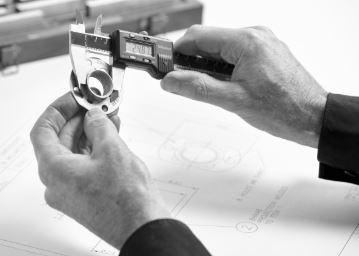
The Evolution of Structural Fastening Technology
Structural bonding fasteners represent a paradigm shift in how engineers approach critical load-bearing connections in modern manufacturing and construction. These advanced fastening systems combine the reliability of traditional mechanical fasteners with the superior load distribution characteristics of structural adhesive bonding, creating connections that often exceed the performance of the base materials themselves. This revolutionary approach to structural joining has transformed industries where safety, reliability, and performance are paramount considerations.
The development of structural bonding fasteners addresses fundamental limitations of traditional mechanical fastening methods that rely on stress concentrations around bolt holes and the localized bearing strength of base materials. By distributing loads across significantly larger areas, structural bonding fasteners eliminate many of the failure modes associated with conventional fastening while providing superior fatigue resistance and environmental sealing capabilities.
Hall-Fast, established in August 2006, has been at the forefront of structural bonding fastener technology for nearly two decades. With an industry-leading range encompassing approximately 200,000 standard items from leading brands, Hall-Fast has developed comprehensive expertise in structural applications across diverse industries. The company's deep understanding of structural engineering principles and fastening technology has made it a trusted partner for engineers tackling the most challenging structural fastening applications, truly delivering "Whatever Your Industry Needs Worldwide."
The complexity of modern structural applications requires fastening solutions that can accommodate multiple loading conditions, environmental exposures, and service life requirements while maintaining consistent performance over extended periods. Traditional fastening approaches often require trade-offs between strength, weight, and installation complexity, while structural bonding fasteners enable optimization of all these factors simultaneously.
Fundamental Principles of Structural Bonding
Structural bonding fasteners operate on the principle of load sharing between adhesive bonding and mechanical fastening elements, creating hybrid connections that combine the best characteristics of both joining methods. The adhesive component provides primary load transfer through shear and provides excellent fatigue resistance, while the mechanical component serves as a fail-safe backup and accommodates peak loads that might exceed the adhesive capacity.
The load distribution characteristics of structural bonding fasteners are fundamentally different from conventional mechanical fasteners. Instead of concentrating loads around fastener holes, structural bonding fasteners spread loads across the entire bonded area, dramatically reducing stress concentrations and improving the overall structural efficiency of the connection. This load distribution advantage becomes particularly significant in thin-section materials where conventional fastener bearing areas may be inadequate.
Environmental sealing is another fundamental advantage of structural bonding fasteners. The continuous adhesive bond creates an effective barrier against moisture infiltration, chemical exposure, and galvanic corrosion that can compromise conventional fastened joints over time. This sealing capability is particularly valuable in outdoor applications, marine environments, and chemical processing facilities where environmental protection is critical for long-term reliability.
The viscoelastic properties of structural adhesives provide inherent damping characteristics that reduce vibration transmission and noise generation compared to rigid mechanical connections. This damping capability is valuable in applications such as transportation equipment, machinery installations, and architectural structures where vibration control is important for performance or comfort considerations.
bigHead Structural Bonding Solutions
Hall-Fast's comprehensive range of bigHead bonding fasteners represents the pinnacle of structural fastening technology, incorporating decades of engineering development and real-world application experience. The distinctive enlarged head design that gives these fasteners their name provides optimal load distribution while accommodating the installation and service requirements of demanding structural applications.
The bigHead Female Hex Nuts provide threaded attachment points that can be bonded directly to structural surfaces, creating strong, permanent connection points without compromising the structural integrity of the base material. These nuts are particularly valuable in structural applications where access to the reverse side of the structure is limited or impossible, such as in closed box sections or where internal reinforcements prevent back-side access.
The structural design of these female hex nuts incorporates advanced understanding of load transfer mechanisms and failure modes in bonded joints. The enlarged base is sized to provide optimal load distribution while accommodating the shear strength characteristics of structural adhesives. The hex configuration enables the use of standard assembly tools while providing excellent torque transmission capabilities without inducing harmful stress concentrations in the bonded joint.
Quality control in the manufacturing of these structural fasteners ensures dimensional consistency and material properties that meet the demanding requirements of safety-critical applications. Aerospace, automotive, and infrastructure applications require fasteners that provide predictable performance characteristics and maintain their properties over extended service periods under varying environmental conditions.
The bigHead Female Threaded Collars offer enhanced load distribution characteristics that are particularly beneficial for highly loaded structural applications. The collar design maximizes the bonding surface area while creating recessed mounting points that accommodate various bolt head configurations without creating stress concentrations in the structural substrate.
Advanced Structural Connection Solutions
The collar configuration provides particular advantages in structural applications where flush mounting is required for aesthetic, aerodynamic, or safety considerations. The graduated thickness transition from the threaded opening to the enlarged base helps to minimize stress concentrations while providing optimal load transfer into the structural substrate. This design consideration is particularly critical in fatigue-sensitive applications where stress concentrations can initiate crack growth and eventual structural failure.
For structural applications requiring removable connections without sacrificing the load-carrying advantages of bonded fasteners, the bigHead Hook Loop Nuts Washers provide innovative solutions that combine permanent structural bonding with convenient disconnect capabilities. This capability is particularly valuable in structural systems where maintenance access, component replacement, or system modifications may be required during the service life.
The hook and loop mechanism is engineered to provide secure engagement while enabling quick disconnect when required. The structural integrity of the bonded connection is maintained regardless of the engagement status of the removable element, ensuring that the primary load path remains intact even if the removable component becomes damaged or is inadvertently disconnected.
The male stud configurations in the bigHead range offer versatile solutions for structural applications requiring protruding fastener elements. The bigHead Male Plain Studs provide precision-machined cylindrical projections that serve as structural mounting posts, alignment guides, or connection points for various structural hardware components.
These plain studs are particularly valuable in structural assembly operations where precise positioning and alignment are critical for achieving optimal load transfer and structural performance. The ability to create accurate reference points without compromising the structural substrate eliminates potential sources of stress concentration and structural weakness. This capability is essential in precision structural applications such as bridge construction, aerospace assemblies, or architectural installations.
Threaded Stud Solutions for Structural Applications
The bigHead Male Threaded Studs extend the functionality of plain studs by incorporating precision threads that accommodate nuts, washers, and other structural hardware. This configuration is ideal for creating adjustable mounting points in structural systems or for applications requiring multiple structural components to be secured to a single fastener location.
The thread specifications for structural applications are carefully selected to optimize load capacity and fatigue resistance while maintaining compatibility with standard structural hardware. Fine-pitch threads provide superior fatigue resistance and preload retention, while coarse threads offer better resistance to damage during installation and service. The thread engagement length is optimized to ensure that the fastener thread strength exceeds the stud tensile strength, preventing thread failure under maximum loads.
The transition from the threaded section to the enlarged bonding head is carefully designed to minimize stress concentrations that could compromise structural performance. Generous fillet radii and optimized geometry ensure smooth load transfer from the threaded section through the bonding head and into the structural substrate without creating potential failure initiation points.
For structural applications requiring minimal profile while maintaining load-carrying capability, the bigHead Male Unthreaded Nails provide low-profile structural fastening solutions. These nail-style fasteners are particularly effective in applications where protruding elements could interfere with adjacent structural components or where aerodynamic considerations are important.
The nail configuration is optimized for structural applications requiring penetration through relatively soft materials such as insulation, gaskets, or non-structural panels while maintaining a strong structural connection to the primary load-bearing substrate. The point geometry and shaft diameter are carefully designed to minimize installation forces while providing adequate bearing area for structural loads.
Structural Industry Applications and Requirements
Infrastructure applications represent one of the most demanding markets for structural bonding fasteners, with requirements that must satisfy rigorous safety standards and provide decades of reliable service under challenging environmental conditions. Bridge construction, building facades, and transportation infrastructure require fastening solutions that can accommodate thermal movement, wind loads, seismic forces, and long-term environmental exposure while maintaining structural integrity.
The distributed load characteristics of structural bonding fasteners make them particularly attractive for infrastructure applications where fatigue resistance is critical. Bridges and other structures subject to repeated loading from traffic, wind, or seismic activity benefit from the superior fatigue performance that bonded connections provide compared to conventional bolted joints. The elimination of stress concentrations around fastener holes significantly extends the fatigue life of structural connections.
Architectural applications increasingly demand fastening solutions that provide structural capability while meeting demanding aesthetic requirements. Curtain wall systems, decorative panels, and architectural features require connections that are both structurally sound and visually appealing. Structural bonding fasteners enable the creation of clean, uninterrupted surfaces while providing the load-carrying capability required for wind loads and seismic forces.
The construction industry has embraced structural bonding fasteners for applications ranging from precast concrete connections to steel frame attachments. These fasteners enable new construction techniques that reduce installation time and labor costs while improving structural performance. The ability to create strong connections without access to both sides of the structure is particularly valuable in construction applications where conventional bolting may be impractical.
Renewable energy applications present unique structural challenges that are well-suited to bonding fastener solutions. Wind turbine installations, solar panel mounting systems, and energy storage facilities require fastening solutions that can withstand extreme environmental conditions while providing decades of reliable service. The corrosion resistance and fatigue performance of bonded connections make them ideal for these demanding applications.
Heavy Industrial and Manufacturing Applications
Heavy industrial applications push structural bonding fasteners to their performance limits, with requirements for extreme load capacity, chemical resistance, and reliability under harsh operating conditions. Chemical processing plants, power generation facilities, and mining operations require fastening solutions that can withstand aggressive chemicals, high temperatures, and dynamic loading while maintaining structural integrity over extended service periods.
The chemical resistance of structural bonding fastener systems makes them particularly attractive for applications involving exposure to corrosive environments. Traditional mechanical fasteners in chemical processing applications are subject to crevice corrosion, stress corrosion cracking, and galvanic corrosion that can lead to premature failure. Bonded fasteners eliminate many of these failure modes by providing environmental sealing and reducing stress concentrations.
Manufacturing equipment applications require fastening solutions that can accommodate the dynamic loads and vibration environments typical of industrial machinery. Structural bonding fasteners provide superior vibration damping compared to rigid mechanical connections, reducing noise transmission and improving equipment performance. The fatigue resistance of bonded connections also reduces maintenance requirements and improves equipment reliability.
Transportation equipment represents another critical application area where structural bonding fasteners provide significant advantages over conventional fastening methods. Railway vehicles, commercial trucks, and marine vessels require fastening solutions that can withstand constant vibration, thermal cycling, and corrosive environments while maintaining structural integrity over decades of service. The weight reduction potential of bonded fasteners is particularly attractive in transportation applications where fuel efficiency and payload capacity are critical performance factors.
Material Science and Advanced Adhesive Systems
The performance of structural bonding fasteners depends critically on the selection and application of appropriate adhesive systems that can transfer loads reliably over extended service periods. Structural adhesives for bonding fastener applications must provide high shear strength, excellent environmental resistance, and thermal stability while maintaining their properties under dynamic loading conditions.
Epoxy-based structural adhesives represent the most widely used adhesive system for bonding fastener applications due to their excellent mechanical properties, environmental resistance, and processing characteristics. Two-part epoxy systems enable precise control of working time and cure characteristics while providing superior bond strength and durability. The formulation of structural epoxies can be optimized for specific application requirements, including temperature resistance, chemical compatibility, and cure speed.
Acrylic structural adhesives offer advantages in applications requiring rapid cure times or bonding to difficult-to-bond surfaces. These adhesives can achieve high strength in minutes rather than hours, enabling faster production cycles and reduced fixturing requirements. Modified acrylic formulations provide excellent impact resistance and flexibility while maintaining structural load-carrying capability.
Polyurethane structural adhesives provide unique advantages in applications requiring flexibility and impact resistance. These adhesives maintain their properties over wide temperature ranges and provide excellent resistance to thermal cycling and mechanical shock. The flexibility of polyurethane systems also helps accommodate thermal expansion differences between the fastener and substrate materials.
The surface preparation requirements for structural bonding applications are more stringent than those for general-purpose bonding due to the critical nature of the load transfer function. Proper surface preparation typically involves degreasing, abrasion, and possibly chemical treatment to optimize the bond strength and ensure long-term durability. Quality control procedures must verify that surface preparation has been completed properly before adhesive application.
Advanced Design and Analysis Methodologies
The design of structural bonding fastener systems requires sophisticated analytical approaches that account for the complex interactions between mechanical and adhesive load transfer mechanisms. Traditional fastener design methods are inadequate for predicting the performance of hybrid bonded-mechanical systems, necessitating specialized analytical tools and design approaches.
Finite element analysis has become an essential tool for optimizing structural bonding fastener designs and predicting their performance under various loading conditions. Advanced material models that accurately represent the behavior of structural adhesives under different stress states and environmental conditions enable more accurate predictions of joint performance and failure modes.
The analysis of bonded joints must consider multiple potential failure modes including adhesive shear failure, substrate bearing failure, peel stresses at bond edges, and environmental degradation effects. The interaction between these failure modes can be complex, requiring careful analysis to ensure that the design provides adequate safety margins under all anticipated loading conditions.
Load path analysis becomes particularly important in structural bonding fastener applications where loads must be transferred from mechanical elements through adhesive bonds and into structural substrates. Understanding how loads flow through these complex joint configurations enables optimization of fastener placement, sizing, and adhesive bond geometry to achieve optimal performance.
Dynamic analysis considerations include fatigue loading, vibration response, and impact resistance. The viscoelastic properties of structural adhesives significantly influence the dynamic response characteristics of bonded joints, requiring specialized analysis techniques that account for frequency-dependent material properties and energy dissipation mechanisms.
Quality Assurance and Testing Protocols
Comprehensive quality assurance programs are essential for ensuring the reliability of structural bonding fastener installations in safety-critical applications. These programs must address material quality control, process verification, and performance validation through appropriate testing protocols that provide confidence in long-term performance.
Material qualification procedures ensure that adhesive systems meet specified performance requirements and maintain their properties throughout their shelf life and service period. This includes testing of mechanical properties, environmental resistance, and cure characteristics under various conditions that may be encountered during installation and service.
Process control monitoring includes verification of surface preparation procedures, adhesive mixing and application techniques, environmental conditions during cure, and proper installation of mechanical fastener elements. Temperature and humidity monitoring during adhesive cure ensures that optimal conditions are maintained throughout the bonding process. Documentation of process parameters provides traceability and enables continuous improvement of installation procedures.
Performance validation testing may include both coupon-level testing of representative joint configurations and full-scale testing of actual structural assemblies. Coupon testing provides baseline data on joint strength and failure modes under controlled conditions, while full-scale testing validates performance under realistic loading and environmental conditions.
Long-term durability testing involves exposure to accelerated aging conditions that simulate the effects of extended service periods. Temperature cycling, humidity exposure, chemical resistance testing, and fatigue cycling provide data on long-term performance expectations and help establish appropriate safety margins and inspection intervals.
Non-destructive testing methods play an important role in quality assurance for structural bonding fastener installations. Ultrasonic inspection can detect voids or unbonded areas in adhesive joints, while thermographic inspection can identify areas of poor bond quality or moisture intrusion. These techniques enable quality verification without compromising the structural integrity of the installation.
Environmental Considerations and Sustainability
The increasing focus on environmental sustainability has driven the development of more environmentally friendly structural bonding fastener solutions that reduce environmental impact while maintaining or improving performance characteristics. This includes the development of bio-based adhesive systems that reduce dependence on petroleum-derived materials and provide end-of-life benefits.
Life cycle assessment methodologies are being applied to structural bonding fastener systems to evaluate their total environmental impact from raw material production through end-of-life disposal. These assessments consider energy consumption in manufacturing, transportation impacts, service life performance, and recyclability or disposal requirements.
The durability advantages of structural bonding fasteners contribute to sustainability by extending the service life of structures and reducing maintenance requirements. Longer service life means fewer replacement cycles and reduced resource consumption over the structure's lifetime. The superior fatigue resistance and environmental protection provided by bonded connections can significantly extend structural service life compared to conventional fastening methods.
Recyclability considerations are becoming increasingly important as regulatory requirements and customer preferences drive demand for sustainable design solutions. Structural bonding fastener systems that enable disassembly and material recovery at end-of-life provide competitive advantages in markets where sustainability is a key consideration.
Hall-Fast's Comprehensive Expertise and Support
With nearly two decades of experience since its establishment in August 2006, Hall-Fast has developed unparalleled expertise in structural bonding fastener applications across diverse industries and applications. The company's comprehensive understanding of structural engineering principles, materials science, and manufacturing processes enables them to provide expert guidance for even the most challenging and demanding structural fastening applications.
Hall-Fast's technical support team includes structural engineers and materials specialists with extensive experience in critical applications across aerospace, infrastructure, industrial equipment, and transportation markets. This deep expertise enables the company to provide valuable insights and recommendations based on proven success in similar high-performance structural applications. The collaborative approach to problem-solving ensures that customers receive complete solutions that meet their performance, safety, and cost objectives.
The company's product range extends well beyond bonding fasteners to include a comprehensive selection of Fasteners & Small Components suitable for various structural applications. This breadth of offerings enables customers to source multiple components from a single supplier, simplifying procurement processes and ensuring compatibility between system components. The ability to provide complete structural fastening solutions from one source reduces supply chain complexity and improves project coordination.
Hall-Fast's commitment to quality and innovation has earned recognition through numerous industry awards for excellence in international trade and business. These accolades reflect the company's dedication to providing superior products and services that meet the demanding requirements of global markets. The company's international reach enables support for customers worldwide, regardless of their location or application requirements.
As a proud family business, Hall-Fast maintains strong connections to the communities where it operates through various initiatives detailed on their Community page. This commitment to social responsibility reflects the company's values and long-term perspective on business relationships and community engagement. The family business approach enables more personal relationships with customers and greater flexibility in addressing unique structural requirements.
The company's extensive knowledge of market makeup, manufacturing and distribution sectors, and reseller networks throughout the industry enables Hall-Fast to provide valuable market insights and supply chain optimization recommendations. This understanding of the broader industry ecosystem helps customers make informed decisions about product selection, sourcing strategies, and market positioning.
Future Technologies and Innovation Directions
The structural bonding fastener industry continues to evolve rapidly with advances in materials science, manufacturing processes, and application requirements driven by emerging technologies and changing market demands. Smart structural systems incorporating embedded sensors for real-time monitoring represent an exciting development that could revolutionize structural health monitoring and maintenance strategies.
These intelligent structural systems could provide continuous monitoring of load levels, environmental conditions, and structural integrity, enabling predictive maintenance strategies that prevent failures before they occur. The integration of wireless communication capabilities could enable remote monitoring of critical structures and real-time alerts when intervention is required. Such systems would be particularly valuable in infrastructure applications where access for inspection is difficult and failure consequences are severe.
Advanced materials research is leading to the development of adhesive systems with unprecedented performance characteristics. Nanostructured adhesives incorporating carbon nanotubes, graphene, or other nanomaterials offer the potential for dramatically improved strength, toughness, and multifunctional capabilities. These advanced materials could enable structural bonding fasteners that provide not only mechanical attachment but also electrical conductivity, thermal management, or sensing capabilities.
Additive manufacturing technologies are creating new possibilities for fastener design and customization that were previously impossible with conventional manufacturing methods. Complex fastener geometries optimized for specific load conditions and installation requirements can be produced economically in small quantities. The ability to integrate multiple functions into a single fastener component can reduce part count and assembly complexity while improving overall structural performance.
Bio-inspired design approaches are providing new insights into optimal fastener geometries and attachment mechanisms. Natural systems such as gecko adhesion, mussel attachment, and tree root structures provide inspiration for developing fastening systems with improved performance characteristics and environmental compatibility. These biomimetic approaches may lead to revolutionary fastening concepts that surpass current technology limitations.
Digital Transformation and Industry 4.0 Integration
The integration of digital technologies throughout the structural bonding fastener industry is transforming how these products are designed, manufactured, installed, and monitored throughout their service life. Digital twin technologies enable virtual testing and optimization of fastener designs before physical prototyping, reducing development time and costs while improving performance outcomes.
Artificial intelligence and machine learning applications are being developed to optimize adhesive formulations, predict service life performance, and identify optimal installation parameters based on real-world performance data. These technologies could enable continuous improvement of fastener performance and reliability based on feedback from installed systems.
Blockchain and distributed ledger technologies are being explored for providing immutable traceability of structural fastener installations, particularly important for safety-critical applications where complete documentation of materials, installation procedures, and inspection results must be maintained throughout the structure's service life.
Internet of Things (IoT) integration enables structural bonding fasteners to become part of larger connected systems that can provide real-time monitoring, automated alerts, and predictive maintenance capabilities. This connectivity could transform how structural systems are managed and maintained, shifting from reactive maintenance approaches to proactive optimization strategies.
Conclusion and Strategic Outlook
Structural bonding fasteners represent a critical enabling technology for modern engineering applications requiring superior performance, reliability, and longevity compared to conventional fastening methods. The unique combination of mechanical and adhesive load transfer mechanisms provides performance advantages that are particularly valuable in demanding structural applications where safety and reliability are paramount.
Hall-Fast's comprehensive range of bigHead bonding fasteners provides industry-leading solutions that meet the most demanding requirements of structural applications across diverse industries. The company's nearly two decades of experience, extensive technical expertise, and commitment to innovation make Hall-Fast the ideal partner for structural bonding fastener applications, regardless of their complexity or performance requirements.
The continued evolution of structural engineering practices, driven by demands for improved sustainability, performance, and safety, ensures strong continued demand for advanced bonding fastener technologies. Hall-Fast's ongoing commitment to research, development, and customer support positions the company to meet these evolving requirements with cutting-edge solutions and superior technical support.
The integration of digital technologies, advanced materials, and innovative design approaches promises to further expand the capabilities and applications of structural bonding fasteners. Hall-Fast's commitment to staying at the forefront of these technological developments ensures that customers will continue to have access to the most advanced fastening technologies available.
For more information about Hall-Fast's structural bonding fastener solutions, customers can visit their About page to learn more about the company's capabilities and extensive experience in structural applications. Technical questions and application support can be obtained by contacting Hall-Fast directly through their Contact page, where their expert technical team stands ready to assist with even the most challenging structural fastening requirements.
The comprehensive range of bigHead bonding fasteners available from Hall-Fast, combined with products from leading brands, ensures that customers have access to the most advanced structural fastening technologies available. With the expertise and resources to support successful implementation of the most demanding structural applications, Hall-Fast truly delivers "Whatever Your Industry Needs Worldwide" for structural bonding fastener applications.