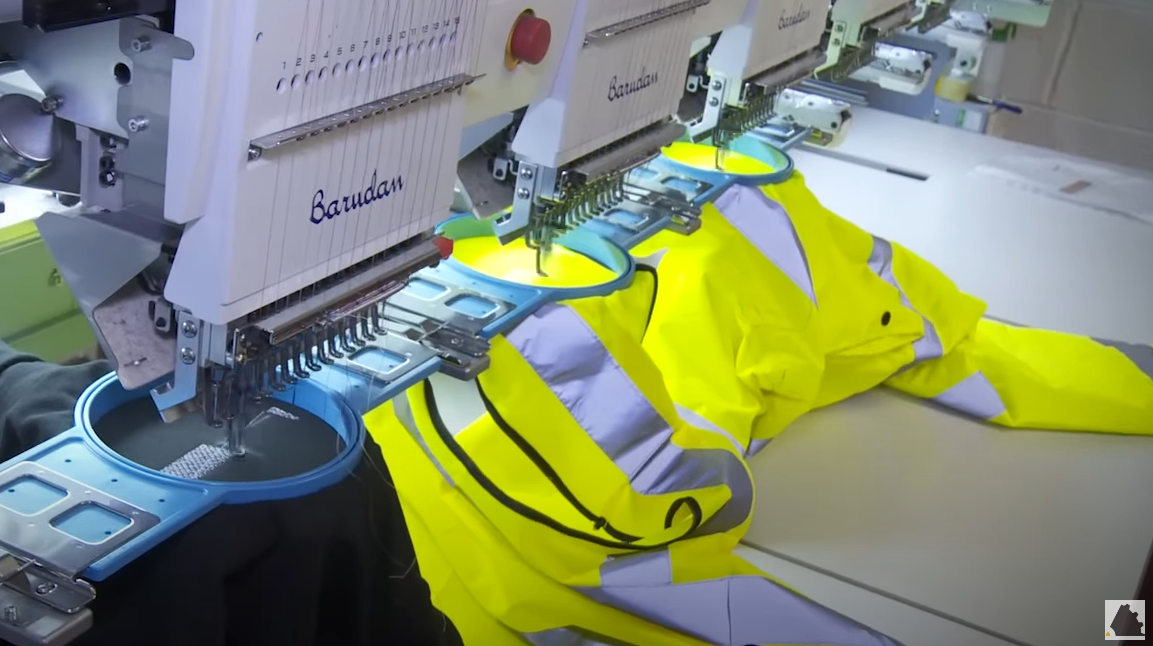
Printed and embroidered work clothes and uniforms are popular for businesses looking to create a professional image, boost team identity, and increase brand visibility. These custom garments are used in a variety of industries, including offices, factories, construction sites, hospitality, and retail. Here’s a breakdown of options, materials, and customization techniques:
Take a look at Hall-Fast’s printing & embroidery video https://www.youtube.com/watch?v=1z9sIgNWD88 contact us to discuss your specific requirements sales@hall-fast.com
Types of Work Clothes and Uniforms
- T-Shirts and Polo Shirts: Common in casual or semi-casual environments like retail, warehouses, or service industries. They are easy to customize with both embroidery and printing.
- Button-Down Shirts: Ideal for offices, corporate settings, and customer-facing roles. These provide a formal and professional look, often embroidered with a company logo.
- Coveralls and Overalls: Used in factories, construction, or automotive industries. These garments provide full-body protection and can be embroidered with logos or worker names.
- Hi-Vis and Safety Gear: Worn in construction or outdoor settings, these reflective uniforms enhance safety and can be printed with company logos.
- Scrubs and Medical Uniforms: Popular in healthcare, hospitals, and clinics. Customization typically includes embroidered logos or staff names.
- Chef Jackets and Aprons: Used in kitchens and restaurants, these items are frequently embroidered for a personalized touch.
- Jackets and Coats: For outdoor workers or colder environments, jackets can be printed or embroidered with logos, especially for delivery personnel or construction workers.
Customization Techniques
Embroidery:
- Durability: Embroidered designs last longer and withstand frequent washing, making them ideal for uniforms that undergo heavy use.
- Professional Look: Embroidery gives a premium and polished appearance, especially on thicker materials like polos, jackets, and hats.
- Customization Options: Company logos, names, job titles, or departments can be embroidered in a variety of thread colours and styles.
Screen Printing:
- Cost-Effective for Large Orders: Screen printing is ideal for large-volume orders and works well on t-shirts and other light fabrics.
- Vibrant Colours: Printing allows for more colourful and intricate designs, including large logos and artwork.
- Fast Production: Screen printing is efficient for quick turnaround times on bulk orders.
Heat Transfer Printing:
- Precision: This method provides detailed images or complex designs that may be hard to embroider.
- Versatile: It can be used on a range of fabrics, making it good for both casual and formal uniforms.
Fabrics and Materials
- Cotton: Comfortable, breathable, and commonly used for t-shirts, polos, and casual wear. Cotton is suitable for both embroidery and printing.
- Polyester: Durable and moisture-wicking, often used in activewear, sports uniforms, or work environments requiring stain resistance.
- Blends (e.g., Cotton-Poly): Combining the softness of cotton with the durability of polyester, these blends are ideal for uniforms that need to be both comfortable and long-lasting.
- Ripstop or Canvas: Heavy-duty fabrics for workwear like coveralls, overalls, or jackets. Embroidery is preferred on these sturdy materials due to its durability.
- Hi-Vis Fabric: Safety uniforms made from reflective materials, typically printed with logos or company names for easy visibility.
Benefits of Custom Work Clothes
- Branding: Custom uniforms help promote your business by increasing brand visibility, especially with logos prominently placed on the chest, back, or sleeves.
- Professionalism: Uniforms give employees a cohesive and polished appearance, creating trust and recognition among clients or customers.
- Team Identity: Work uniforms can foster a sense of unity and teamwork among employees.
- Safety: Hi-vis uniforms or work-specific gear ensure that employees are visible and meet safety standards while maintaining brand identity.
Best Practices for Ordering Custom Work Clothes
- Consider Job Function: Match the uniform type and fabric to the work environment (e.g., moisture-wicking for active jobs, durable fabrics for construction).
- Choose Appropriate Customization: Embroidery works well for premium looks or durable use, while printing is better for vibrant, larger designs on light fabrics.
- Sizing and Fit: Ensure that uniforms come in a variety of sizes and offer comfortable, tailored fits for different body types.
- Care and Maintenance: Opt for materials and customization techniques that withstand frequent washing and harsh conditions, especially for outdoor or industrial workwear.
Custom printed and embroidered uniforms are an essential part of business branding and employee functionality, helping businesses present a professional image while also ensuring comfort and practicality.