Advanced Flood Protection for UK Properties
Supplied by Hall-Fast Industrial Supplies – Your Trusted South West Partner
Introduction
The South West of England encompasses a diverse landscape stretching from Cornwall and Devon through Somerset and Dorset to parts of Hampshire and Wiltshire, all facing significant flood challenges from multiple sources. Covering over 21,000 square kilometres, the South West River Basin District includes communities at risk from rivers, coastal flooding, and surface water. From the steep, fast-responding river catchments of Devon and Cornwall to the low-lying Somerset Levels and Moors, property owners across the region must be prepared for flood events that can strike with little warning.
The South West's exposed position facing the Atlantic Ocean makes it particularly vulnerable to storm systems that bring heavy rainfall and coastal flooding. The region's tourism-dependent economy and extensive coastline create unique flood risk challenges, with many properties and businesses located in vulnerable coastal and riverside locations. Climate change is intensifying these challenges, with rising sea levels and more frequent extreme weather events.
As flooding events become more frequent and severe across the South West, property owners increasingly recognise the need for reliable, rapidly-deployable flood protection. Osmo Flood Barriers represent a revolutionary approach to property protection, offering UK-manufactured super-absorbent barriers that activate on contact with water and provide superior flood defence compared to traditional sandbags.
Understanding Flood Risk in the South West
The South West presents uniquely varied flood risks reflecting the region's diverse geography. Devon, Cornwall, and West Dorset have smaller, steep catchments with fast-flowing rivers that respond rapidly to rainfall. River levels can rise very quickly during intense rainfall, such as that seen at Boscastle in 2004 when flash floods devastated the village. In contrast, the Somerset Levels and Moors lie at or near sea level, at risk of tidal flooding and river tide locking, depending on raised defences and artificial drainage systems.
Atlantic storms coinciding with high tides associated with significant wave action and tidal surge have resulted in devastating flood events along the Devon and Cornwall coastline. Notable events include the February 2014 storms when approximately 100 properties experienced tidal flooding in Devon and approximately 200 properties flooded in Cornwall, with extensive damage to coastal defences.
The River Avon, River Axe, River Brit, River Dart, and numerous other watercourses create flood risk for communities throughout the region. The Rivers Avon Hampshire catchment receives large flows from chalk aquifers, reacting relatively slowly to rainfall but experiencing prolonged flooding after long periods of wet weather. Surface water flooding presents additional challenges, particularly on rural lanes and poorly drained roads across the region.
Groundwater flooding has affected communities in Dorset and Wiltshire, with over 500 properties affected between 2012 and 2014. Somerset has experienced significant surface water and river flooding affecting towns including Williton, where 50 properties were flooded.
The South West's coastal communities face combined risks from coastal flooding, river flooding, and surface water flooding, creating complex protection challenges.
Recent Flood Events and Their Impact
The South West regularly experiences significant flood events, with Storm Bram in December 2025 providing a dramatic demonstration of the region's vulnerability. The storm brought amber and yellow weather warnings with heavy rain and strong winds impacting Devon, Cornwall, Plymouth, Somerset, and Dorset. Dartmoor received nearly 90mm of rain within 24 hours, with flooding reported in Ashburton, Lostwithiel, and Plymouth.
Flood warnings were issued for several areas including Plymouth Sound, River Dart, and the south Cornwall coast. The Met Office issued a danger to life warning highlighting risks from strong winds, heavy rain, and potential flash floods. Devon and Cornwall Police warned against poor driving standards, urging drivers to exercise extreme caution on flooded and slippery roads.
Previous significant events have included floods in May 2023 when residents in North Cadbury, Somerset were forced to evacuate after 18 homes were flooded. The River Cam reached 2.85 metres at Weston Bampfylde, far exceeding the 0.60 metre threshold for property flooding. The River Otter at Dotton also rose significantly during the same event.
The Somerset Levels experienced prolonged flooding in winter 2013-14, with water remaining on farmland and affecting communities for several weeks. This event highlighted the vulnerability of low-lying areas that depend on pumping stations and artificial drainage for protection.
The Boscastle flood of 2004 remains one of the most dramatic flood events in South West history, demonstrating how quickly flooding can develop in the region's steep valleys. Over 100mm of rain fell in two hours, creating a wall of water that devastated the village.
Local Areas at Risk
Devon faces flood risk from numerous rivers including the River Dart from Dartmeet through Buckfastleigh to Totnes, the River Avon at South Brent, Avonwick, and Aveton Gifford, and the River Axe from Winsham to Axmouth. Mid Devon rivers, South Devon rivers, and South Devon estuaries all present flood hazards. Plymouth Sound and Wembury Bay face tidal flooding risks.
Cornwall's steep valleys and coastal location create significant flood risk. The south Cornwall coast from Lizard Point to Gribbin Head is subject to flood alerts, while the Tidal Fal Estuary, St Austell and Par Rivers, and the Upper River Tamar all affect communities. The Isles of Scilly face additional exposure to Atlantic storms.
Somerset presents diverse flood risks with the Somerset Levels and Moors representing some of the most flood-prone areas in England. West Somerset Streams affect coastal communities, while South Somerset Rivers affect inland areas. The Somerset coast at Dunster Beaches, Blue Anchor, Steart, Stolford, and Brean faces tidal flooding, as do communities at Minehead, Bridgwater, Burnham-on-Sea, and Uphill to Kingston Seymour.
Dorset faces flooding from the Upper Frome at Maiden Newton, River Brit at Newtown and Beaminster, and West Dorset Rivers and Streams. The west coast of Dorset is subject to coastal flooding, while groundwater flooding affects inland areas.
Wiltshire and Hampshire portions of the South West face groundwater and river flooding, particularly from chalk streams that respond to prolonged wet periods.
Environment Agency and Local Authority Support
The Environment Agency's South West region works with Local Lead Flood Authorities and partners to manage flood risk through a combination of defences, warnings, and property-level protection. The South West Flood Risk Management Plan 2021-2027 sets out the strategic approach to managing flood risk across the region, recognising that partnerships and collaboration are key to protecting communities.
Property owners across the South West can sign up for free flood warnings from the Environment Agency. The Floodline helpline on 0345 988 1188 operates 24 hours a day, providing advice and information. Multiple flood alerts and warnings are regularly in place across the region, particularly during autumn and winter storm seasons.
The Environment Agency urges residents and businesses to check their flood risk, prepare a flood plan, and consider property-level flood protection measures. With the region's varied geography creating both rapid-response river flooding and prolonged lowland flooding, property owners must understand their specific risks and take appropriate protective measures.
Natural flood management approaches are being implemented across the South West, including upland tree planting, habitat restoration, and agricultural practices that slow the flow of water from land to rivers.
Regional Economic Considerations
The South West's economy relies heavily on tourism, with millions of visitors each year attracted to the region's coastline, countryside, and historic towns. Flooding can devastate tourism businesses both through direct damage and through reputational impacts that discourage visitors. Protecting tourism infrastructure from flooding is essential to the region's economic prosperity.
Agriculture remains important across the South West, with productive farmland along river valleys and on the Somerset Levels. Flooding can cause significant losses to crops and livestock, affecting farm businesses and the wider food supply chain.
The South West's heritage assets, including historic harbour towns, ancient villages, and protected landscapes, face flood risk that could cause irreparable damage. Protecting these cultural resources requires careful planning and appropriate flood protection measures.
Transport infrastructure across the South West is vulnerable to flooding, with the main railway line to Cornwall regularly affected by coastal flooding and storm damage at Dawlish. Road networks throughout the region can be disrupted by flooding, affecting both residents and visitors.
Introducing Osmo Flood Barriers
Osmo Flood Barriers represent a breakthrough in flood protection technology, developed and manufactured in the United Kingdom by Osmo Products at their facility at Whitestone Business Park in Hereford. These innovative barriers utilise advanced Super Absorbent Polymer (SAP) technology to provide rapid, effective flood defence for residential and commercial properties.
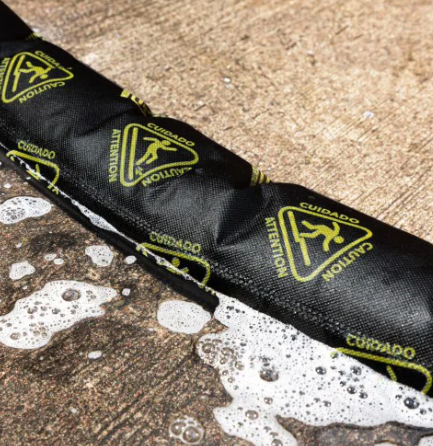
Unlike traditional sandbags which are heavy, bulky, and difficult to store, Osmo Flood Barriers arrive flat and lightweight, ready for immediate deployment when flooding threatens. Upon contact with water, the SAP technology activates, absorbing up to 400 times its weight in water and transforming the barrier into a robust, water-retaining structure that creates an effective seal against floodwater ingress.
How Osmo Flood Barriers Work
The deployment process follows three simple steps: position, pre-activate, and protect. First, position the barrier at the vulnerable entry point such as a doorway, garage entrance, or other opening. Second, pre-activate by pouring fresh water along the barrier to trigger the absorption process. Third, the barrier expands and creates a water-tight seal that protects against incoming floodwater.
The science behind Osmo barriers centres on Super Absorbent Polymer technology. SAP consists of cross-linked polymer chains that can absorb and retain extremely large amounts of liquid relative to their own mass. When water contacts the SAP crystals within the barrier, they rapidly absorb the liquid and expand, locking the water into a gel-like structure that provides structural integrity while preventing water from passing through.
This continuous sock design eliminates the gaps inherent in sandbag walls, where water can seep between individual bags. The Osmo barrier creates a complete seal along its entire length, providing significantly superior protection against water ingress.
Technical Specifications
1.5 Metre Barrier
The 1.5 metre Osmo Flood Barrier measures 1500mm x 210mm when flat, expanding to 1500mm x 210mm x 90mm when fully activated. With a dry weight of just 265 grams, the barrier is exceptionally easy to store and handle. Water absorbency capacity reaches 15 litres, providing substantial protection for standard doorways and smaller openings.
3 Metre Barrier
The 3 metre Osmo Flood Barrier measures 3000mm x 210mm when flat, expanding to 3000mm x 210mm x 90mm when fully activated. The dry weight is 512 grams, still remarkably light for a barrier of this length. Water absorbency capacity reaches 30 litres, suitable for wider openings, garage doors, or creating longer defensive lines.
Key Features and Benefits
Lightweight and Compact Storage: Osmo barriers store flat, taking minimal space in cupboards, garages, or storage areas. A homeowner can easily store enough barriers to protect all vulnerable entry points without requiring significant storage space.
Rapid Deployment: While sandbag walls require hours to construct and significant physical effort, Osmo barriers can be deployed in minutes. This rapid deployment capability is crucial when flood warnings provide limited notice.
Superior Seal Quality: The continuous sock design creates an unbroken barrier against water, eliminating the gaps that compromise sandbag effectiveness.
Environmentally Responsible: Osmo barriers are manufactured using over 50% reclaimed materials and contain no toxic substances. The barriers are safe to handle and environmentally friendly.
Made in the UK: Manufactured at Osmo Products' facility in Hereford, these barriers support British manufacturing and ensure consistent quality standards.
Comparing Osmo Barriers with Traditional Sandbags
Traditional sandbags have been the default flood protection method for decades, but they present significant drawbacks that modern alternatives address. Understanding these differences helps property owners make informed decisions about their flood protection strategy.
Weight Comparison: A filled sandbag weighs between 15-20 kilograms, making handling physically demanding and potentially impossible for elderly or less mobile residents. An Osmo 3m barrier weighs just 512 grams dry, allowing easy handling by anyone.
Storage Requirements: Sandbags require substantial storage space and often arrive empty, requiring property owners to source sand and fill bags manually. Osmo barriers store flat and arrive ready to use.
Effectiveness: Sandbags are inherently porous, with water seeping through the fabric and between bags. Studies have shown that sandbag walls allow significant water passage. Osmo barriers create a continuous, water-tight seal.
Deployment Time: Constructing an effective sandbag wall requires hours of physical labour and proper technique. Osmo barriers deploy in minutes.
Disposal: After flooding, sandbags are contaminated with floodwater and must be disposed of as potentially hazardous waste in bulk quantities. Osmo barriers are significantly lighter and easier to dispose of properly.
Practical Applications
Residential Protection
Homeowners across the region can use Osmo barriers to protect their properties at multiple vulnerable points. External doors represent the primary point of water ingress during flooding events. Positioning 1.5m barriers at standard doorways or 3m barriers at wider entrances provides immediate protection.
Garage doors present particular challenges due to their width and the difficulty of creating effective seals. Multiple Osmo barriers can be positioned end-to-end to create continuous protection across wide openings. The barriers can also be stacked to increase the height of protection where deeper flooding is anticipated.
Basement and cellar stairs create pathways for water to reach lower levels. Positioning barriers at the top of basement stairs prevents water from flowing down to vulnerable lower areas.
Commercial and Industrial Applications
Businesses face significant financial losses from flood damage, making effective protection essential. Osmo barriers can protect shop fronts, warehouse entrances, office buildings, and industrial facilities. The rapid deployment capability is particularly valuable for businesses that cannot afford extended closure for flood preparation.
Retail premises often have large display windows and wide entrances that are difficult to protect with traditional methods. Osmo barriers provide flexible protection options that can adapt to various commercial configurations.
Important Usage Considerations
While Osmo Flood Barriers provide excellent flood protection, users should understand certain limitations and best practices for optimal performance.
Water Type Compatibility: Osmo barriers are designed for use with fresh water. They are not suitable for direct use with oil-contaminated water or salt water. For coastal areas, barriers should be pre-activated with fresh water before floodwater arrives, allowing the SAP to absorb fresh water and then resist salt water ingress.
Single Use Design: Osmo barriers are designed for single use. Once activated and used during a flood event, the barriers should be disposed of appropriately and replaced with fresh barriers for future protection. This single-use design ensures optimal performance each time protection is needed.
Contamination Considerations: Floodwater frequently contains sewage, chemicals, and other contaminants. Used barriers should be treated as potentially contaminated waste and disposed of according to local authority guidance.
Height Limitations: Standard Osmo barriers provide approximately 90mm of inflated height. For deeper flooding, barriers can be stacked to increase protection height. Property owners should assess their specific flood risk to determine appropriate barrier quantities.
Building Your Flood Protection Strategy
Effective flood protection requires a comprehensive approach that combines awareness, preparation, and appropriate equipment. Property owners should develop a complete flood protection strategy that addresses their specific vulnerabilities.
Assess Your Property: Identify all potential water entry points including doors, garage entrances, air vents, and any other openings at or near ground level. Consider the likely direction of floodwater approach and prioritise protection accordingly.
Calculate Requirements: Based on the dimensions of each entry point, calculate the total length of barrier protection required. Consider purchasing additional barriers for perimeter protection or to replace any barriers used during flood events.
Plan Storage and Access: Store barriers in an accessible location where they can be quickly retrieved when flood warnings are issued. Ensure all household members know where barriers are stored and how to deploy them.
Register for Flood Warnings: Sign up for Environment Agency flood warnings to receive advance notice of potential flooding. Early warning provides crucial time for barrier deployment.
Practice Deployment: Before an actual flood event, practice positioning barriers at each entry point. This familiarisation ensures rapid, effective deployment when protection is needed.
The Financial Case for Flood Protection
Flood damage to UK properties typically results in insurance claims between £20,000 and £40,000, with some claims reaching significantly higher. Beyond direct financial costs, flooding causes immense disruption, stress, and in some cases health impacts for affected residents.
The cost of comprehensive Osmo Flood Barrier protection for a typical property represents a small fraction of potential flood damage costs. This investment provides peace of mind and practical protection that can prevent devastating losses.
Insurance considerations also favour properties with flood protection measures in place. Some insurers offer premium reductions for properties with documented flood protection equipment, and claims may be processed more favourably when property owners have taken reasonable precautions.
Why Choose Hall-Fast for Your South West Flood Protection Needs
Hall-Fast Industrial Supplies has been serving customers since 2006, building a reputation for quality products, competitive pricing, and excellent customer service. As an authorised Osmo Flood Barrier supplier, Hall-Fast provides South West customers with direct access to these innovative flood protection products.
With over 200,000 product lines available, Hall-Fast offers comprehensive solutions for flood protection alongside industrial supplies, safety equipment, and building materials. This broad product range means customers can source all their flood preparation requirements from a single trusted supplier.
Hall-Fast supplies customers throughout the United Kingdom and exports to 82 overseas markets, demonstrating the company's capability to serve customers of all sizes with reliable delivery and professional service. South West customers benefit from Hall-Fast's central UK location and efficient distribution network.
Taking Action Today
The time to prepare for flooding is before flood warnings are issued. South West property owners who wait until flooding threatens often find themselves unable to obtain protection equipment or without sufficient time to deploy it effectively.
By investing in Osmo Flood Barriers now, property owners gain the security of knowing they have effective protection ready to deploy at a moment's notice. This preparation provides genuine peace of mind during periods of heavy rainfall and storm warnings.
Contact Hall-Fast Industrial Supplies today to discuss your flood protection requirements. Our knowledgeable team can help you assess your needs, recommend appropriate products, and ensure you have comprehensive protection for your property.
Contact Hall-Fast Industrial Supplies
Hall-Fast Industrial Supplies
Unit 4, Aria Park
Mansfield
NG18 4ZE
United Kingdom
Telephone: 01623 645 645
Website: www.hall-fast.com/contact
Established 2006 | Over 200,000 Product Lines | Serving UK and 82 Export Markets