In industrial environments across the UK, effective storage solutions are critical for maintaining organization, ensuring efficiency, protecting valuable assets, and complying with increasingly stringent regulations. Among the various storage options available, metal storage cabinets represent one of the most versatile and durable solutions for industrial facilities managing tools, parts, consumables, documents, and specialized materials.
For facility managers, safety officers, and procurement specialists, selecting the right metal storage cabinets requires careful consideration of numerous factors, including specific storage needs, space constraints, security requirements, environmental conditions, and regulatory compliance. This comprehensive guide explores the essential considerations for UK industrial operations when selecting metal storage cabinets for various applications.
Understanding the Strategic Value of Industrial Storage Cabinets
Before examining specific cabinet options, it's important to recognize the multifaceted benefits proper storage solutions provide:
Operational Efficiency Enhancement
Proper storage directly impacts productivity:
- Reduced time spent searching for tools and materials
- Decreased downtime waiting for parts or components
- Improved inventory control reducing stockouts and overstock
- Enhanced workspace organization increasing workflow efficiency
Asset Protection and Longevity
Quality storage protects valuable investments:
- Prevention of damage to delicate tools and equipment
- Protection from environmental contaminants (dust, moisture)
- Security against unauthorized use or theft
- Proper organization reducing loss and misplacement
Compliance and Risk Mitigation
Storage plays a critical role in regulatory compliance:
- Proper segregation of incompatible materials
- Secure storage of controlled or hazardous substances
- Documentation organization for audit preparedness
- Risk reduction through appropriate containment
Workplace Safety Improvement
Organized storage enhances safety:
- Reduction of trip hazards from items left in walkways
- Prevention of falling object hazards
- Ergonomic access reducing strain injuries
- Clear emergency access and evacuation paths
"Industrial storage cabinets represent much more than simple organization—they're a fundamental component of operational excellence and regulatory compliance," explains Malcolm Hall, Managing Director at Hall-Fast. "The right storage solutions contribute directly to productivity, safety, and asset protection while helping maintain compliance with increasingly complex regulations."
Key Categories of Industrial Metal Storage Cabinets
The diverse storage challenges in industrial environments require specialized cabinet types:
Heavy-Duty Workshop Cabinets
These robust units address tool and equipment storage:
Standard Tool Cabinets
- Designed for general workshop tool storage
- Typically feature adjustable shelving
- Often include reinforced doors with industrial locks
- Available in various heights and widths for different spaces
Modular Drawer Cabinet Systems
- Feature multiple drawers of varying depths
- Often include drawer dividers for organization
- Typically offer higher density storage than shelving
- Available with specialized drawer liners for tool protection
Mobile Tool Cabinets
- Include heavy-duty casters for mobility
- Often feature brake mechanisms for stability when stationary
- Available with integrated worksurfaces
- Typically include drawer retention mechanisms preventing opening during movement
Specialized Tool Storage
- CNC tooling cabinets with specialized inserts
- Machinist cabinet systems for precision tools
- Maintenance cart systems for mobile repair operations
- Trade-specific cabinet configurations for specialized tools
Industrial Parts and Component Storage
These organizational systems manage production components:
Small Parts Cabinets
- Multiple drawer configurations for small components
- Often include plastic bins or dividers for organization
- Typically feature label systems for easy identification
- Available in various sizes from bench-top to floor-standing
Heavy-Duty Parts Cabinets
- Reinforced shelving for heavier components
- Higher load capacities than standard cabinets
- Often include shelf lips or doors to prevent items falling
- Typically feature adjustable shelf configurations
Specialized Component Storage
- Electronics component cabinets with ESD protection
- Fastener organization systems with labelled compartments
- Plumbing and fitting storage with specialized compartments
- Categorized storage systems for manufacturing consumables
High-Density Storage Solutions
- Slide-out shelf systems maximizing space utilization
- Vertical storage solutions for long items
- Carousel systems for maximum density in minimum footprint
- Mobile aisle systems for warehouse component storage
Safety and COSHH Cabinets
These specialized units address storage of hazardous or controlled materials:
COSHH Compliant Chemical Storage
- Designed for chemical storage compliance
- Feature spill containment sumps
- Include appropriate ventilation
- Available with specific chemical compatibility
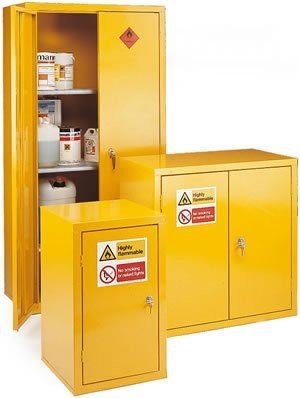
Flammable Storage Cabinets
- Fire-resistant construction for flammable materials
- Feature self-closing doors with three-point locking
- Include flame arrestors and vents
- Available in various sizes and configurations
Acid and Corrosive Storage
- Corrosion-resistant construction and finishes
- Polyethylene trays for spill containment
- Segregated storage for incompatible materials
- Often feature specific warning labelling
First Aid and PPE Cabinets
- Clearly marked for emergency identification
- Often include transparent panels for visual inventory
- Available with specialized compartments for different PPE
- Typically include locking mechanisms for controlled access
Document and Data Storage
These secure units protect critical information:
Fire-Resistant Document Cabinets
- Constructed to protect paper documents from fire damage
- Rated for specific time periods of fire protection
- Often include humidity control features
- Available with various security locking options
Technical Drawing Cabinets
- Horizontal storage for large-format drawings
- Shallow drawers preventing document damage
- Often include indexing systems for organization
- Available in various sizes for different document formats
Media and Data Storage
- Specialized protection for electronic media
- Often include enhanced fire protection for digital media
- Feature humidity control for data integrity
- May include specialized locking for data security
Archive and Records Storage
- High-capacity systems for long-term document storage
- Often include file hanging systems
- Available with fire protection features
- Typically feature high-security locking mechanisms
Critical Factors in Industrial Storage Cabinet Selection
Several key considerations should guide cabinet selection:
Storage Requirements Analysis
Understanding specific needs is essential:
Item Characteristics
- Physical dimensions of items being stored
- Weight and load distribution considerations
- Special protection needs (shock, vibration, dust)
- Access frequency and retrieval efficiency
Quantity and Volume
- Current storage volume requirements
- Future growth projections and expandability
- Seasonal variation in inventory levels
- Turnover rate affecting access requirements
Organization Systems
- Categorization methods for stored items
- Labelling and identification requirements
- Visual management integration
- Inventory tracking compatibility
Special Protection Needs
- Moisture sensitivity of stored items
- Security requirements for high-value materials
- Contamination prevention for sensitive components
- Environmental control for specialized materials
Environmental Considerations
The installation environment affects appropriate solutions:
Space Constraints and Layout
- Available floor space and height
- Door clearances and aisle widths
- Weight-bearing capacity of flooring
- Integration with workflow and adjacency needs
Environmental Conditions
- Temperature and humidity fluctuations
- Exposure to dust, dirt, or airborne contaminants
- Potential for water exposure or flooding
- Proximity to heat sources or cold areas
Usage Patterns
- Traffic patterns around storage areas
- Multi-shift access requirements
- Shared vs. dedicated storage users
- Frequency of reorganization needs
Facility Integration
- Visual consistency with other furnishings
- Integration with facility security systems
- Compatibility with cleaning and maintenance regimes
- Fire protection system considerations
Construction and Durability Features
Physical characteristics determine longevity:
Material and Gauge
- Steel thickness appropriate for the application
- Appropriate material for environmental conditions
- Reinforcement in high-stress areas
- Corrosion resistance requirements
Door and Drawer Construction
- Hinge quality and durability
- Drawer slide load capacity and extension
- Door reinforcement preventing warping
- Closure mechanisms and quality
Surface Finishes
- Powder coat vs. wet paint durability
- Chemical resistance of finishes
- Anti-microbial options for specific environments
- Specialty finishes for harsh conditions
Structural Features
- Welded vs. bolted construction considerations
- Load-bearing capacity of shelves and drawers
- Levelling and anchoring provisions
- Modular expandability features
Security and Access Control
Protection requirements vary significantly:
Locking Mechanisms
- Key locking systems and key management
- Combination or digital lock options
- Integration with facility access control systems
- Override access for emergencies
Access Monitoring
- Audit trail capabilities for sensitive storage
- Visual monitoring through transparent panels
- Integration with inventory management systems
- User access level controls
Physical Security
- Tamper resistance features
- Reinforced lock areas preventing forced entry
- Concealed hinges for enhanced security
- Anchoring provisions preventing removal
Emergency Access
- Fire service access provisions
- Emergency override mechanisms
- Integration with facility emergency procedures
- Compliance with fire regulations for specific contents
Industry-Specific Storage Applications in the UK
Different sectors present unique storage challenges:
Manufacturing and Production
These environments typically require:
- Durable storage withstanding industrial conditions
- Often 5S and lean manufacturing compatibility
- Integration with production material flow
- Specific storage for production-specific tooling
Common storage solutions include:
- Line-side small parts cabinets for assembly operations
- Tool control systems with shadow boards
- Mobile maintenance cabinets for production support
- 5S-optimized storage for work cell organization
Maintenance and Facilities Management
These operations need:
- Comprehensive tool and part organization
- Often mobile storage for distributed maintenance
- Security for high-value maintenance equipment
- Specialized storage for maintenance consumables
Typical solutions include:
- Mobile maintenance carts with secure storage
- Specialized cabinets for facility-specific components
- COSHH cabinets for maintenance chemicals
- Key and access control storage systems
Laboratory and Research Environments
These specialized settings require:
- Chemical and sample storage compliance
- Often clean operation with minimal particulates
- Secure storage for sensitive materials
- Specialized environment control for samples
Common applications include:
- Laboratory chemical storage cabinets
- Sample storage with environmental control
- Equipment and instrument secure storage
- Documentation and research data protection
Logistics and Warehouse Operations
These distribution-focused operations need:
- High-density storage maximizing space utilization
- Often integration with picking systems
- Security for high-value inventory
- Documentation and shipping supplies organization
Standard solutions include:
- High-density drawer systems for small parts
- Secure cabinets for high-value inventory
- Workstation-integrated storage for shipping areas
- Mobile storage systems for flexible operations
Emerging Trends in Industrial Storage Cabinets
The industrial storage sector continues to evolve with several notable developments:
Smart Storage Integration
Technology enhancement includes:
- RFID-integrated cabinets tracking contents
- Automated inventory monitoring systems
- Electronic access control with audit trails
- IoT sensors monitoring environmental conditions
Modular and Reconfigurable Systems
Flexibility focus includes:
- Interchangeable components allowing customization
- Easily reconfigurable internal arrangements
- Scalable systems expanding with changing needs
- Multi-functional solutions combining storage with workspaces
Enhanced Ergonomics and Safety
User-centered improvements include:
- Height-adjustable solutions reducing strain
- Drawer systems with progressive opening resistance
- Improved handle designs preventing hand injuries
- Anti-tip technologies preventing accidents
Sustainable and Eco-Friendly Options
Environmental considerations include:
- Higher recycled content in manufacturing
- PVC-free powder coating systems
- Energy-efficient manufacturing processes
- Extended product lifecycles through durability improvements
Implementation Best Practices
Beyond selection, successful storage implementation requires systematic approaches:
Assessment and Planning
Comprehensive evaluation includes:
- Complete inventory analysis of items requiring storage
- Workflow and process mapping for optimal placement
- Space utilization planning maximizing efficiency
- Integration with overall facility organization systems
Organization System Development
Effective implementation requires:
- Consistent labelling and identification standards
- Documented organization methods for sustainability
- Training programs ensuring proper usage
- Maintenance procedures for organization systems
Installation and Setup
Proper deployment ensures performance:
- Correct assembly following manufacturer specifications
- Proper levelling and anchoring for safety
- Appropriate location addressing workflow needs
- Adherence to relevant building and safety codes
Ongoing Management Programs
Sustaining organization requires:
- Regular audits of cabinet contents and organization
- Maintenance of labelling and identification systems
- Periodic review of security and access requirements
- Continuous improvement of storage configurations
Cost Considerations Beyond Purchase Price
When evaluating industrial storage cabinets, total cost of ownership extends beyond initial investment:
Productivity Impact
Organizational benefits deliver returns:
- Reduced time searching for tools and materials
- Decreased downtime from missing components
- Improved inventory accuracy reducing procurement costs
- Enhanced workspace efficiency increasing output
Asset Protection Value
Protection of contents creates savings:
- Extended tool and equipment lifespan
- Reduced damage and loss of components
- Decreased theft and unauthorized use
- Improved quality through proper component storage
Compliance Value
Regulatory adherence prevents costs:
- Reduced risk of COSHH and hazardous material violations
- Decreased liability from improper material storage
- Simplified audit preparation and compliance demonstration
- Prevention of incidents resulting from improper storage
Lifecycle Cost Analysis
True cost evaluation considers:
- Expected service life in specific applications
- Maintenance requirements and associated costs
- Reconfiguration flexibility as needs change
- Residual value and potential redeployment
Getting Expert Assistance with Industrial Storage Cabinet Selection
Given the complexity of industrial storage requirements and the significant impact on operations, many UK facilities benefit from expert guidance. Working with knowledgeable suppliers can help navigate the often confusing array of options to find solutions that balance organization, security, durability, and cost-effectiveness.
Hall-Fast offers comprehensive solutions for industrial storage, including selection guidance, custom configurations, and implementation support. Their team understands the unique challenges faced by UK industrial operations and can help develop storage strategies tailored to specific facility requirements.
For additional assistance in selecting the right metal storage cabinets for your industrial application, contact a specialist at Hall-Fast via sales@hall-fast.com or visit their industrial commercial equipment page for more information on available products and solutions.
With the right approach to industrial storage cabinet selection and implementation, UK facilities can achieve significant improvements in operational efficiency, regulatory compliance, and asset protection while optimizing valuable workspace and protecting critical materials.