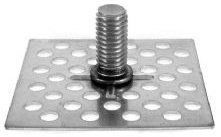
Joining thin materials presents unique engineering challenges that conventional fastening methods struggle to address effectively. Traditional mechanical fasteners often create unacceptable protrusions, damage delicate substrates, or simply cannot engage sufficiently with minimal material thickness. These limitations become particularly problematic in applications where weight, space constraints, aesthetics, or material integrity are critical considerations. Low-profile bonding fasteners represent a specialized solution that overcomes these challenges, providing engineers and manufacturers with superior options for creating secure attachments to thin materials without compromising their inherent properties. This comprehensive guide explores the applications, advantages, and implementation of low-profile bonding fasteners specifically designed for thin material joining, available through trusted industrial suppliers like Hall-Fast.
The Thin Material Fastening Challenge
Working with thin materials presents several distinctive challenges that traditional fasteners cannot adequately address:
Inherent Material Limitations
- Insufficient Engagement Depth: Minimal material for conventional fastener threads
- Structural Vulnerability: Tendency for thin materials to deform or crack during installation
- Surface Distortion Risk: Visible "pillowing" or bulging around fastening points
- Edge Distance Constraints: Limited material requiring precise fastener placement
- Stress Concentration Sensitivity: Thin sections highly vulnerable to localized forces
Application-Specific Requirements
- Minimal Protrusion Needs: Many applications requiring flush or near-flush surfaces
- Weight Optimization Demands: Every gram critical in transportation and portable devices
- Space Constraint Management: Limited clearance for fastener heads or hardware
- Aesthetic Consideration: Visible fasteners detracting from premium appearances
- Assembly Process Limitations: Restricted access for conventional installation methods
Performance and Reliability Concerns
- Vibration Resistance Challenges: Thin material connections prone to loosening
- Load Distribution Issues: Concentrated forces causing material failure
- Thermal Expansion Management: Different materials creating stress during temperature changes
- Fatigue Vulnerability: Connection points susceptible to cyclic loading failure
- Corrosion and Galvanic Concerns: Thin materials quickly compromised by degradation
These converging challenges have driven innovative engineers and manufacturers to seek specialized fastening approaches that can create reliable connections without the limitations of traditional methods.
Low-Profile Bonding Fasteners: Engineered for Thin Material Applications
Low-profile bonding fasteners represent a sophisticated joining technology specifically engineered to address the unique requirements of thin material applications. Available from UK suppliers like Hall-Fast, these innovative components combine minimal height profiles with distributed load design to create secure connections without material compromise.
Core Technology Principles
The fundamental concept behind low-profile bonding fasteners involves:
- Distributed Force Mechanics: Spreading loads across larger surface areas
- Minimal Height Engineering: Reducing protrusion to absolute minimum
- Adhesive Integration Design: Working synergistically with structural adhesives
- Material-Specific Optimization: Tailoring connection approach to substrate properties
- Stress Flow Management: Directing forces to prevent thin material damage
This approach delivers substantial advantages over traditional mechanical fasteners when working with materials where thickness is a limiting factor.
BigHead Low-Profile Bonding Fasteners: Precision Solutions for Thin Materials
For engineers and manufacturers seeking reliable fastening solutions for thin materials, BigHead Bonding Fasteners represent the gold standard in engineered joining technology. Available through Hall-Fast, these specialized components incorporate several advanced design features:
- Ultra-Thin Profile Engineering
The distinctive design provides crucial advantages for minimal thickness applications:
- Sub-Millimetre Head Heights: Offering profiles as low as 0.5mm in certain variants
- Extended Diameter-to-Height Ratio: Distributing forces across optimal surface area
- Edge-Tapered Geometries: Preventing stress concentration at boundaries
- Smooth Transition Contours: Eliminating sharp angles that could initiate material failure
- Weight-Optimized Construction: Minimizing mass addition to lightweight assemblies
This head design ensures secure attachment without compromising the structural integrity or space constraints of thin material applications.
- Material-Specific Compatibility
A critical advantage of BigHead low-profile fasteners is their exceptional compatibility with diverse thin materials:
- Thin Sheet Metal Applications: Creating secure connections to aluminum, steel, or titanium
- Composite Material Integration: Fastening to carbon fibre, fiberglass, or hybrid laminates
- Plastic and Polymer Attachment: Securing components to thin thermoplastic or thermoset materials
- Lightweight Panel Systems: Mounting to honeycomb, foam-core, or sandwich constructions
- Decorative Surface Materials: Fastening to veneers, laminates, or thin stone
This material versatility makes these fasteners essential for engineers working with advanced thin materials where conventional fastening methods prove inadequate or damaging.
- Connection Type Versatility
The BigHead system offers multiple connection options despite the low profile:
- Threaded Stud Configurations: Providing external thread in various sizes and standards
- Threaded Socket Designs: Offering female thread receptacles for bolt attachment
- Floating Thread Options: Allowing position adjustment for alignment tolerance
- Specialized Terminal Variants: Supporting wire, cable, or connector attachment
- Custom Connection Designs: Addressing unique application requirements
This connection versatility ensures compatibility with overall assembly requirements while maintaining the crucial low-profile characteristics.
Industry Applications for Low-Profile Bonding Fasteners
Low-profile bonding fasteners from Hall-Fast serve diverse applications across manufacturing sectors:
Transportation and Aerospace
The transportation industry represents one of the most established applications for low-profile bonding fasteners:
- Aircraft Interior Panel Mounting: Securing lightweight cabin components
- Automotive Body Panel Attachment: Fastening thin exterior components
- Rail Vehicle Interior Construction: Mounting panels in passenger compartments
- Marine Bulkhead and Panel Systems: Creating connections in boat and ship construction
- Recreational Vehicle Component Mounting: Securing fixtures to thin RV walls
The combination of weight reduction, minimal protrusion, and vibration resistance makes these fasteners particularly valuable in transportation applications where efficiency and durability are paramount.
Electronics and Technology
The electronics sector utilizes low-profile bonding fasteners extensively:
- Enclosure and Housing Assembly: Creating clean connections on thin device casings
- Display Module Mounting: Securing screens with minimal intrusion
- Thermal Management Systems: Attaching cooling components to thin substrates
- Internal Component Securing: Mounting circuit boards and modules within devices
- Wearable Technology Construction: Creating connections in ultra-thin wearable devices
The minimal profile, weight reduction, and clean aesthetics make these fasteners increasingly common in consumer and industrial electronic applications.
Architectural and Display Systems
Modern design applications benefit from low-profile fastening solutions:
- Decorative Panel Mounting: Securing thin facing materials without visible hardware
- Signage and Wayfinding Installation: Creating clean attachments for information displays
- Exhibition and Display Construction: Building lightweight, reconfigurable structures
- Retail Fixture Assembly: Developing premium display systems with clean appearances
- Furniture Component Attachment: Securing decorative surfaces to underlying structures
The clean visual appearance and structural reliability make these fasteners particularly valuable in design-focused applications where aesthetics are critical.
Industrial Equipment Manufacturing
Even in traditional industrial sectors, low-profile fasteners provide unique advantages:
- Access Panel Creation: Developing serviceable closures with minimal protrusion
- Control Panel Mounting: Securing interface components with clean surfaces
- Thin-Wall Equipment Housing: Attaching components to limited-thickness enclosures
- Instrumentation Assembly: Creating connections in precision measurement devices
- Safety Guard Installation: Mounting protective elements with minimal projection
These applications demonstrate the versatility of low-profile bonding fasteners across diverse manufacturing industries.
Technical Performance Advantages for Thin Material Applications
- Structural Integrity Preservation
Low-profile bonding fasteners deliver significant advantages for protecting thin materials:
- Stress Distribution Optimization: Spreading forces to prevent localized failure
- Material Deformation Prevention: Eliminating distortion common with conventional fasteners
- Fatigue Resistance Enhancement: Reducing cyclical stress concentration
- Dynamic Load Management: Handling vibration and movement without loosening
- Thin Edge Capability: Creating secure connections close to material boundaries
These structural benefits often permit the use of thinner, lighter materials than would be possible with traditional fastening methods.
- Space and Weight Optimization
The engineered approach behind low-profile bonding fasteners delivers practical advantages:
- Minimal Height Projection: Reducing required clearance by up to 90% versus conventional fasteners
- Significant Weight Reduction: Decreasing connection mass for efficiency-critical applications
- Space Utilization Improvement: Allowing components in previously unusable tight clearances
- Assembly Density Enhancement: Enabling more compact overall designs
- Material Thickness Reduction: Permitting thinner substrates with distributed loading
These space and weight advantages translate directly to improved efficiency, reduced material costs, and enhanced design possibilities.
- Aesthetic and Design Enhancement
Low-profile bonding fasteners enable superior visual and design outcomes:
- Nearly Invisible Connections: Creating seamless-appearing surfaces
- Clean Surface Continuity: Maintaining uninterrupted visual planes
- Design Freedom Enhancement: Enabling previously impossible thin material applications
- Premium Finish Preservation: Eliminating surface distortion around attachment points
- Mixed Material Compatibility: Facilitating diverse material combinations
These design capabilities provide significant competitive advantages in products where appearance and material selection are critical to market success.
Implementation Guidance for Engineers and Manufacturers
To maximize the benefits of low-profile bonding fasteners for thin material applications, professionals should consider several implementation factors:
- Design Phase Considerations
Early integration of low-profile fastening technology yields the greatest benefits:
- Load Analysis and Fastener Selection: Matching specifications to application requirements
- Fastener Placement Optimization: Strategic positioning for maximum structural efficiency
- Adhesive System Selection: Choosing appropriate chemistry for specific materials
- Thermal and Environmental Assessment: Considering operating condition effects
- Assembly Sequence Planning: Determining optimal installation timing in production
This early planning ensures designs take full advantage of low-profile bonding fastener capabilities while addressing practical implementation requirements.
- Surface Preparation and Installation
Proper installation processes are critical for optimal performance with thin materials:
- Material-Specific Cleaning Protocols: Establishing appropriate preparation procedures
- Adhesive Application Precision: Developing consistent application techniques
- Curing Parameter Management: Controlling temperature, time, and pressure variables
- Fixturing Method Development: Creating appropriate holding systems during curing
- Quality Verification Procedures: Implementing effective inspection techniques
Following established best practices ensures reliable, consistent performance in production environments.
- Testing and Validation Approaches
Thorough validation ensures low-profile bonding fasteners meet performance requirements:
- Static Load Testing: Verifying strength under steady-state conditions
- Vibration and Dynamic Analysis: Confirming performance under movement and cycling
- Environmental Exposure Evaluation: Validating durability under operating conditions
- Accelerated Aging Assessment: Predicting long-term performance through simulation
- Production Process Verification: Ensuring consistent results in volume manufacturing
These validation approaches provide the data needed for confident implementation in critical applications.
Sourcing Quality Low-Profile Bonding Fasteners
Hall-Fast has established itself as a premier supplier of low-profile bonding fasteners to engineers and manufacturers. As an industrial supplier serving customers nationwide and globally, Hall-Fast offers several distinct advantages:
- Technical Expertise: Providing application-specific guidance for thin material applications
- Comprehensive Product Range: Offering variants optimized for different materials and thicknesses
- Quality Assurance: Supplying fully certified products with appropriate documentation
- Design Support Capability: Assisting with fastener selection and implementation
- Responsive Service: Supporting production schedules with reliable supply
For more information about low-profile bonding fasteners for your specific thin material applications, contact Hall-Fast to discuss your requirements with their knowledgeable team. Their extensive range of high-quality fastening solutions ensures you'll find the right low-profile bonding fasteners for your thin material joining challenges.
Case Study: Precision Instrumentation Manufacturer
A manufacturer of advanced measurement equipment faced significant challenges with their ultra-thin enclosure design:
Challenges:
- Aluminum enclosure wall thickness of only 0.8mm provided minimal material for fastening
- Internal components required secure mounting with no protrusion outside the case
- Vibration during transportation caused conventional fasteners to loosen
- Assembly process needed to accommodate limited internal access
- Premium product positioning demanded flawless external appearance
Solution: The company implemented BigHead low-profile bonding fasteners from Hall-Fast, strategically positioned during the enclosure manufacturing process.
Results:
- Successfully secured internal components to 0.8mm aluminum with zero external protrusion
- Eliminated fastener loosening through improved vibration resistance
- Reduced assembly time by 35% through simplified installation process
- Maintained perfect external aesthetics supporting premium product positioning
- Enabled 12% weight reduction compared to previous thicker-wall design
This real-world example demonstrates the transformative potential of low-profile bonding fasteners in precision thin material applications.
Emerging Trends in Thin Material Fastening Technology
As manufacturing continues to push boundaries with thinner, lighter materials, fastening technology evolves alongside:
- Ultra-Micro Variants: Even lower profile designs for increasingly thin applications
- Smart Material Integration: Fasteners incorporating monitoring or adaptive capabilities
- Multi-Functional Designs: Combining attachment with additional features like thermal management
- Automated Installation Systems: Precision robotics for consistent placement and bonding
- Enhanced Simulation Tools: Better prediction of performance in complex assemblies
Forward-thinking engineers who embrace these advanced joining technologies position themselves advantageously for the next generation of thin material applications.
Conclusion: Advancing Manufacturing Through Specialized Fastening Technology
For engineers and manufacturers working with thin materials across diverse industries, low-profile bonding fasteners represent a critical technology that preserves the advantages of minimal thickness while creating secure attachments. By distributing loads, minimizing protrusion, and maintaining material integrity, these innovative fasteners enable designs that would be impossible with conventional joining methods.
BigHead low-profile bonding fasteners, available through Hall-Fast, offer a proven solution that delivers exceptional performance while enabling creative design approaches and manufacturing efficiency. Whether for transportation applications, electronic devices, architectural elements, or industrial equipment, these specialized fasteners create new possibilities for working with the thinnest materials.
By implementing appropriate low-profile bonding fastener technology, engineers can achieve improved design freedom, reduced weight, enhanced aesthetics, and superior structural integrity—all contributing to competitive advantage in markets where material optimization is increasingly critical.
Hall-Fast - Your Trusted Supplier for Low-Profile Bonding Fasteners for Thin Materials