Forklift trucks are the backbone of modern industry. From warehouses and distribution centres to construction sites, farms, and manufacturing plants, these powerful machines keep goods moving, shelves stocked, and supply chains running on time. Whether you are purchasing your first forklift truck or expanding an existing fleet, understanding the different types available, the features that matter most, and how to match the right machine to your operation is essential for making a sound investment.
This comprehensive guide covers everything you need to know about forklift trucks — the different categories and how they work, which industries they serve, the safety regulations that govern their use in the UK, and practical advice on choosing, maintaining, and getting the most from your equipment. Along the way, we will introduce the extensive range of forklift trucks and material handling solutions available from Hall-Fast, one of the UK's leading industrial equipment suppliers.
What Is a Forklift Truck?
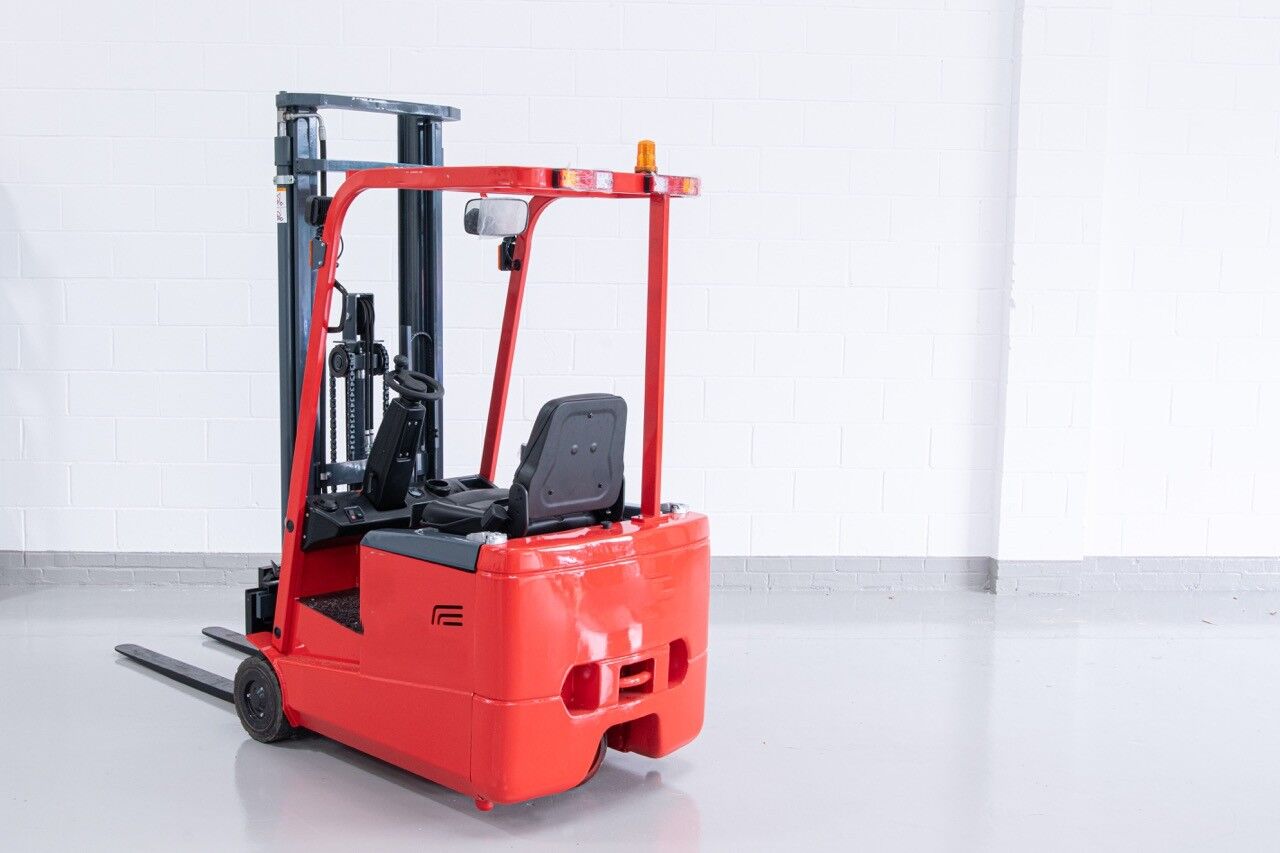
A forklift truck is a powered industrial vehicle fitted with a pronged lifting mechanism — known as forks — at the front, used to raise, lower, and transport heavy loads over short distances. The forks slide beneath pallets, crates, or other load carriers, and a hydraulic mast raises them to the required height for stacking, loading, or unloading. Forklift trucks are sometimes referred to simply as forklifts, lift trucks, fork trucks, or powered industrial trucks.
The first recognisable forklift trucks appeared in the early twentieth century, evolving from simple platform trucks and motorised hand carts used in factories during the First World War. By the 1920s, manufacturers had developed machines with hydraulic lifting systems and standardised forks capable of handling palletised loads. The introduction of standardised pallet sizes in the 1930s and 1940s — driven largely by wartime logistics — cemented the forklift truck as an indispensable piece of industrial equipment. Today, the global forklift truck market is worth tens of billions of pounds, and millions of units are in operation worldwide across virtually every sector of the economy.
Modern forklift trucks range from compact, manually operated pallet trucks and walkie stackers through to enormous container handlers capable of lifting loads in excess of 50 tonnes. The category also includes highly specialised machines such as narrow-aisle reach trucks, order pickers, telehandlers, and rough terrain forklifts designed for use on uneven ground.
Types of Forklift Trucks
Choosing the right forklift truck begins with understanding the different types available and the applications each is designed for. Below, we explore the most common categories of forklift truck used in UK industry today.
Counterbalance Forklift Trucks
The counterbalance forklift is the most recognisable and widely used type of forklift truck. It features forks at the front and a heavy counterweight at the rear of the chassis, which offsets the weight of the load being carried. This design allows the operator to drive directly up to a pallet, insert the forks, and lift without the need for additional stabilising arms or outriggers.
Counterbalance forklifts are available in three-wheel and four-wheel configurations. Three-wheel models offer a tighter turning circle, making them well suited to operations where space is limited, while four-wheel models provide greater stability when handling heavier loads or operating on uneven surfaces. Power options include electric battery, diesel, LPG (liquefied petroleum gas), and petrol, giving operators flexibility to choose a machine that suits their working environment — electric models for indoor use where emissions and noise must be minimised, and internal combustion models for outdoor applications where extended run times are needed.
These machines are the workhorses of warehouses, loading docks, manufacturing facilities, and builder's merchants across the UK. Their straightforward design makes them relatively simple to operate, and they are available in a huge range of lifting capacities, from around 1.5 tonnes up to 8 tonnes or more for heavy-duty models.
Pallet Trucks
Pallet trucks — sometimes called pallet jacks — are the simplest and most cost-effective type of forklift truck. They are designed primarily for horizontal transport, lifting pallets just enough to clear the floor surface so they can be moved from one location to another. Hall-Fast supplies a comprehensive range of pallet trucks in both manual and electric configurations.
Manual pallet trucks use a hydraulic pump operated by the handle to raise the forks a few centimetres off the ground. They are inexpensive, require virtually no maintenance, and are found in practically every warehouse, stockroom, and retail backroom in the country. Electric pallet trucks add battery-powered drive and lift mechanisms, taking the physical effort out of moving heavy pallets over longer distances. They are particularly valuable in high-volume operations where staff would otherwise spend significant amounts of time and energy pushing loaded manual trucks across the floor.
Pallet trucks are available with standard or long forks, weighing-scale integrations for inventory management, and stainless-steel construction for use in food production and pharmaceutical environments where hygiene is paramount.
Powered Stackers
Powered stackers — also known as walkie stackers or electric stackers — bridge the gap between pallet trucks and full-sized counterbalance forklifts. They combine horizontal transport capability with a powered mast that can raise loads to heights suitable for low to medium-level racking. Hall-Fast's range of industrial powered stackers includes models to suit a wide variety of operational requirements.
These machines are walk-behind units, meaning the operator walks alongside or behind the stacker rather than riding on it. This keeps the overall footprint compact, allowing powered stackers to work in narrower aisles than a counterbalance forklift would require. They are an excellent choice for small to medium-sized warehouses, stockrooms, and production areas where goods need to be placed onto shelving or racking at heights of up to around five or six metres.
Powered stackers are available in straddle-leg and counterbalanced configurations. Straddle-leg models have outrigger legs that straddle the pallet for stability, while counterbalanced stackers use a weight at the rear of the machine and can therefore pick up standard closed-bottom pallets without the legs getting in the way. The choice between the two depends on the type of pallets you use and the clearance available in your racking system.
Hall-Fast also supplies a broader selection of stackers, including manual and semi-electric models for lighter duties and tighter budgets.
Reach Trucks
Reach trucks are designed specifically for narrow-aisle warehouse operations. They feature a unique mast that can extend forward — or "reach" — into racking to place or retrieve pallets, then retract for safe travel down the aisle. This telescopic capability allows reach trucks to work in aisles as narrow as 2.5 metres while accessing racking heights of 10 metres or more.
These machines are almost exclusively electric powered and are used indoors on smooth, level floors. They require a skilled operator and are typically found in large distribution centres and warehouses where maximising cubic storage capacity is a priority. Reach trucks represent a significant investment compared to powered stackers, but for operations with high-density racking systems, they deliver unmatched efficiency and space utilisation.
Rough Terrain Forklift Trucks
Standard forklift trucks are engineered for smooth, flat surfaces — warehouse floors, factory aisles, and paved loading bays. But many industries need to move heavy loads across far more challenging ground. Rough terrain forklift trucks are built with larger pneumatic tyres, higher ground clearance, reinforced chassis, and more powerful drivetrains to handle mud, gravel, sand, slopes, and other uneven surfaces.
These machines are commonly found on construction sites, in lumber yards, on farms, and at outdoor storage facilities. They are typically diesel powered for extended run times and maximum torque, and they are available with both straight masts and telescopic booms (the latter being classified as telehandlers).
For businesses that need rough terrain capability without the cost of a full-sized diesel forklift, Hall-Fast supplies the Electric Rough Terrain Pallet Stacker — a specialist electric stacker with all-terrain wheels and enhanced stability systems designed to operate on gravel, soil, and other uneven surfaces. This machine offers a cost-effective alternative for operations that require occasional outdoor use without maintaining a separate fleet of heavy plant equipment.
Telehandlers
Telehandlers — telescopic handlers — combine the load-carrying capability of a forklift truck with the reach of a crane. They feature a telescopic boom fitted with a fork carriage that can extend both upwards and forwards, allowing operators to place loads at heights and distances that a standard forklift mast cannot reach.
Telehandlers are widely used in construction, agriculture, and industrial applications where loads need to be placed on scaffolding, upper floors, rooftops, or at the far side of obstacles. They can also be fitted with a wide range of attachments — buckets, winches, work platforms, grab forks — making them one of the most versatile machines on any job site.
Order Pickers
Order picker trucks are designed for warehouse operations where individual items need to be picked from racking rather than whole pallets. The operator stands on a platform that rises with the forks, giving them direct access to goods stored at height. These machines are essential in e-commerce fulfilment centres and any operation that handles a high volume of individual order lines.
Side Loaders
Side loader forklift trucks feature forks mounted on the side of the machine rather than the front, allowing them to pick up and carry long, bulky loads such as timber, steel sections, pipes, and sheet materials. The load sits alongside the truck, keeping the overall length short enough to navigate narrow aisles. Side loaders are a common sight in timber yards, steel stockholders, and building materials suppliers.
Forklift Truck Power Sources
The choice of power source has a significant impact on where and how a forklift truck can be used, as well as its running costs, maintenance requirements, and environmental footprint.
Electric Battery
Electric forklift trucks are powered by rechargeable lead-acid or lithium-ion batteries. They produce zero tailpipe emissions and operate quietly, making them the preferred choice for indoor use in warehouses, food production facilities, pharmaceutical plants, and any environment where air quality and noise levels are a concern. Modern lithium-ion batteries offer rapid charging, opportunity charging (topping up during breaks rather than requiring a full charge cycle), and significantly longer service lives than traditional lead-acid cells.
The main consideration with electric forklifts is battery life. A fully charged battery will typically last a full eight-hour shift, but operations running multiple shifts may need spare batteries or machines equipped with fast-charging lithium-ion technology. Electric forklifts also tend to have lower running costs and reduced maintenance requirements compared to internal combustion models, as they have fewer moving parts and no engine oil, filters, or exhaust systems to service.
Diesel
Diesel forklift trucks deliver high torque, long run times, and robust performance in demanding outdoor environments. They are the standard choice for construction sites, lumber yards, ports, and any application where the machine needs to operate continuously throughout the day without pausing to recharge. Diesel engines cope well with heavy loads and steep gradients, and refuelling takes minutes rather than hours.
The trade-off is emissions and noise. Diesel forklifts are generally not suitable for enclosed indoor use due to exhaust fumes, and they are subject to emissions regulations that may affect their use in certain urban areas and environmentally sensitive locations.
LPG (Liquefied Petroleum Gas)
LPG-powered forklifts offer a compromise between diesel and electric. They produce fewer emissions than diesel, can be used in well-ventilated indoor environments, and provide the convenience of quick refuelling — swapping an empty gas cylinder for a full one takes less than a minute. LPG forklifts are popular in mixed indoor/outdoor operations where electric charging infrastructure is not available.
Petrol
Petrol-powered forklifts are relatively uncommon in UK industry today but are still found in some lighter-duty applications. They tend to be noisier and less fuel-efficient than diesel or LPG alternatives and are generally being phased out in favour of cleaner power options.
Industries That Rely on Forklift Trucks
Forklift trucks serve an extraordinarily wide range of industries. Understanding how different sectors use these machines helps illustrate why choosing the right type and specification matters.
Warehousing and Distribution
This is the largest market for forklift trucks in the UK. Warehouses and distribution centres use counterbalance forklifts, reach trucks, powered stackers, pallet trucks, and order pickers in combination to receive inbound goods, store them in racking systems, pick orders, and load outbound vehicles. The rise of e-commerce has driven enormous growth in this sector, increasing demand for efficient, high-throughput material handling equipment.
Construction
Construction sites use rough terrain forklifts and telehandlers to unload delivery vehicles, move building materials around the site, and lift loads to upper levels. The demanding ground conditions, heavy loads, and outdoor exposure make durability and all-terrain capability essential requirements.
Manufacturing
Manufacturing plants use forklift trucks to feed raw materials to production lines, move work-in-progress between stations, and transport finished goods to storage or despatch areas. Electric counterbalance forklifts and powered stackers are particularly popular in manufacturing environments due to their zero-emission operation and compact manoeuvrability.
Retail and Wholesale
Supermarkets, DIY stores, builder's merchants, and cash-and-carry outlets use a combination of pallet trucks, powered stackers, and small counterbalance forklifts to manage stock. Space is often limited in retail environments, making compact, manoeuvrable machines essential.
Agriculture
Farms and agricultural operations use rough terrain forklifts and telehandlers to handle hay bales, animal feed, fertiliser bags, palletised crops, and machinery components. The ability to operate on soft ground, mud, and uneven terrain is critical in agricultural applications.
Food and Beverage
The food and beverage industry has specific requirements for forklift trucks, including stainless-steel construction for hygiene, electric power for emission-free operation in enclosed production areas, and cold-store specifications for use in chilled and frozen storage environments.
Forklift Truck Safety in the UK
Operating a forklift truck carries significant safety responsibilities. In the UK, workplace transport accidents — including those involving forklift trucks — account for a substantial number of serious injuries and fatalities every year. Employers have a legal duty to ensure that forklift operations are carried out safely, and there are several key regulations and standards that govern the use of these machines.
Key Legislation
The primary legislation covering forklift truck use in the UK includes the Health and Safety at Work etc. Act 1974, the Provision and Use of Work Equipment Regulations 1998 (PUWER), the Lifting Operations and Lifting Equipment Regulations 1998 (LOLER), and the Workplace (Health, Safety and Welfare) Regulations 1992. Together, these laws require employers to ensure that forklift trucks are suitable for their intended purpose, properly maintained, and operated only by trained and competent individuals.
Operator Training
Anyone who operates a forklift truck in the UK must receive adequate training. While there is no single legally mandated forklift licence, the Health and Safety Executive (HSE) recommends training that follows the Approved Code of Practice (ACOP) L117, which outlines a three-stage process covering basic training, specific job training, and familiarisation training on the particular machine and site where the operator will work.
Several accrediting bodies offer nationally recognised forklift truck training qualifications, including the RTITB (Road Transport Industry Training Board), ITSSAR (Independent Training Standards Scheme and Register), and AITT (Association of Industrial Truck Trainers). Operators should hold a current certificate from one of these bodies as a minimum.
Daily Pre-Use Checks
Before using a forklift truck at the start of each shift, the operator should carry out a thorough pre-use inspection. This typically includes checking tyre condition and pressure, fluid levels (hydraulic oil, engine oil, coolant, and battery electrolyte as applicable), the condition of forks for cracks or excessive wear, the operation of brakes, steering, lights, and warning devices, the function of the hydraulic lift and tilt mechanisms, and the general condition of safety devices such as seat belts, overhead guards, and mirrors.
Any defects found during the pre-use check should be reported immediately and the machine taken out of service until repairs have been carried out. Maintaining a written record of daily checks is considered best practice and may be required under your organisation's safety management system.
Safe Operating Practices
Key safe operating practices for forklift truck operators include always wearing a seat belt where one is fitted, never exceeding the rated load capacity of the machine, travelling with the forks lowered and the mast tilted back, using the horn at blind corners and junctions, maintaining a safe speed appropriate to the conditions, never carrying passengers unless the machine is specifically designed for it, keeping a safe distance from pedestrians and other vehicles, and never leaving a forklift truck unattended with the engine running or the forks raised.
Pedestrian Safety
Managing the interaction between forklift trucks and pedestrians is one of the most important safety considerations in any workplace. Best practice includes segregating pedestrian and vehicle routes wherever possible using physical barriers, floor markings, and signage. Where segregation is not practicable, a safe system of work should be established with clear right-of-way rules, designated crossing points, and appropriate warning systems.
Hall-Fast supplies a range of road and warehouse safety products including barrier systems, floor markings, and signage to help you create a safer working environment around forklift operations.
Forklift Truck Attachments and Accessories
One of the great advantages of forklift trucks is their versatility. With the right attachments, a single forklift can be adapted to handle a wide variety of tasks that would otherwise require multiple pieces of specialist equipment. Hall-Fast offers an extensive selection of forklift attachments, cages, and equipment designed to expand the capabilities of your forklift fleet.
Fork Extensions
Fork extensions slide over the existing forks to increase their length, allowing the forklift to handle longer loads such as oversized pallets, timber, and sheet materials. Hall-Fast's heavy-duty fork extensions are value-engineered from durable 6mm thick steel with a pressed folded channel design for additional strength. A plated underside prevents the extensions from riding up, rounded tip profiles allow easy entry into loads, and a removable heel pin enables drive-in fitting without manual handling. They are CE marked and supplied with a Certificate of Conformity.
Safety Cages and Work Platforms
When workers need to carry out tasks at height — changing light bulbs, accessing high-level racking, performing maintenance on building services — a forklift-mounted safety cage provides a safe and compliant method of elevating personnel. Hall-Fast supplies single-person and two-person forklift safety cages with features including automatic locking safety gates, non-slip flooring, and fully enclosed mesh sides to prevent dropped items.
For operations involving telehandlers, the Galvanised Forklift Telehandler Safety Cage 1400 offers a premium, corrosion-resistant option with a hot-dip galvanised finish for extended service life in outdoor and harsh environments.
Forklift Buckets
Forklift buckets transform a standard forklift into a loader, capable of scooping, transporting, and tipping loose materials such as sand, gravel, aggregate, mulch, animal feed, and grain. Hall-Fast supplies two main types.
The Carriage Mounted Forklift Bucket attaches directly to the forklift carriage for maximum stability and is hydraulically operated for infinitely controllable discharge rates. Volumetric capacities range from 0.2m³ to 1.0m³, and the hydraulic tipping function allows the operator to discharge from within the cab, improving both productivity and safety.
The Forklift High Lift Bucket is a fork-mounted scoop that provides high-lift capabilities thanks to the forks sitting low into the bucket. Its free-standing design allows quick fitting and removal, and simple mechanical operation keeps maintenance costs low.
Tipping Skips
Tipping skips are fork-mounted containers designed for collecting and disposing of waste materials. They are widely used on construction sites, in factories, and in recycling operations. Hall-Fast supplies tipping skips in a range of capacities from 40 litres to 200 litres, including lidded, mesh-sided, heavy-duty, and regular-duty configurations to suit different waste types and operational demands.
Lifting Hoists and Jibs
The Forklift Lifting Hoist 1000kg Capacity provides a crane-like lifting capability from your forklift, allowing you to pick up and position loads using slings, chains, or hooks. Forklift jibs and crane arms extend your lifting reach even further, enabling the handling of awkward or oversized items that cannot easily be placed on forks.
Drum Handling Equipment
For businesses that handle drums containing liquids, powders, or granular materials, specialist drum handling attachments allow safe lifting, rotating, and pouring. These attachments are particularly valuable in chemical, food processing, pharmaceutical, and manufacturing operations where drums need to be moved and emptied frequently.
How to Choose the Right Forklift Truck
With so many types, configurations, and specifications available, selecting the right forklift truck for your operation requires careful consideration of several factors.
Load Capacity
The most fundamental specification for any forklift truck is its rated load capacity — the maximum weight the machine can safely lift. It is important to choose a forklift with a capacity that comfortably exceeds the heaviest loads you will handle on a regular basis. Operating at or near the maximum rated capacity increases wear on the machine and reduces safety margins. As a general rule, choose a forklift rated for at least 20% more than your heaviest typical load.
Bear in mind that the rated capacity applies at a specific load centre — usually 500mm from the face of the forks. If the centre of gravity of your loads is further forward (for example, when handling unusually deep pallets), the effective capacity of the forklift will be reduced.
Lift Height
Consider the maximum height to which you need to raise loads. If you are placing pallets into racking, measure the height of the top beam plus the clearance needed above the load. If you only need to move pallets at ground level, a pallet truck or low-lift stacker will be sufficient and far more cost-effective than a high-mast forklift.
For low to medium-height stacking, the industrial powered stackers available from Hall-Fast offer an excellent balance of lift height, compact dimensions, and affordability.
Operating Environment
Where the forklift will be used has a major influence on the right choice of machine.
Indoor operations on smooth floors are best served by electric forklifts, powered stackers, or pallet trucks. These produce no emissions, run quietly, and are compact enough to navigate standard warehouse aisles. For outdoor use on paved surfaces, diesel or LPG counterbalance forklifts are typically the most practical option. For unpaved or uneven surfaces, a rough terrain forklift, telehandler, or the Electric Rough Terrain Pallet Stacker from Hall-Fast may be required.
If your operation involves both indoor and outdoor work, look for machines that can transition between environments — electric models are increasingly capable of outdoor use on hard surfaces, while LPG forklifts can be used in well-ventilated indoor areas.
Aisle Width
The width of the aisles in your warehouse or storage area dictates the size and type of forklift you can use. Standard counterbalance forklifts typically require aisles of 3.5 metres or more. Reach trucks can work in aisles as narrow as 2.5 metres. Powered stackers and walkie stackers require similar or slightly wider clearances, depending on the model.
If you are designing a new storage layout, consider the aisle width requirements of your forklift equipment from the outset. Narrower aisles mean more storage space, but they require more specialised (and often more expensive) handling equipment.
Frequency of Use
How often the forklift will be used influences both the type of machine and the power source you should choose. For occasional use — a few pallets per day — a manual pallet truck or basic stacker may be perfectly adequate and will cost a fraction of a powered machine. For continuous use throughout a full shift, invest in a powered forklift with a battery or fuel capacity to match your operational hours.
Budget
Forklift trucks range in price from a few hundred pounds for a basic manual pallet truck to tens of thousands of pounds for a large counterbalance forklift or reach truck. Rather than focusing solely on the purchase price, consider the total cost of ownership, which includes purchase or hire costs, fuel or electricity, maintenance and servicing, operator training, insurance, and the cost of any attachments or accessories.
In many cases, a less expensive machine paired with the right attachments can deliver comparable capability to a more costly specialist vehicle. For example, combining a standard forklift with a set of fork extensions and a forklift bucket gives you long-load handling and loose material capability without purchasing additional machines.
Forklift Truck Maintenance Best Practices
Proper maintenance is essential for keeping forklift trucks safe, reliable, and cost-effective over their working lives. A well-maintained forklift will last longer, break down less frequently, and retain more of its resale value.
Thorough Examination
Under LOLER, forklift trucks used for lifting operations must undergo a thorough examination by a competent person at prescribed intervals — typically every 12 months for general lifting equipment, or every 6 months if the forklift is used to lift people (for example, with a safety cage attachment). The thorough examination goes beyond a standard service and assesses the structural integrity of safety-critical components including the mast, forks, chains, and hydraulic systems.
Planned Preventive Maintenance
Establish a planned preventive maintenance (PPM) schedule based on the manufacturer's recommendations and the intensity of use. A typical PPM programme for a forklift truck includes regular oil and filter changes (for internal combustion models), hydraulic fluid checks and top-ups, brake inspection and adjustment, tyre inspection and replacement, chain tension checks and lubrication, battery maintenance (checking electrolyte levels, cleaning terminals, and equalisation charging for lead-acid batteries), and inspection of safety features including lights, horns, mirrors, and seat belts.
Fork Inspection
Forks are the most heavily stressed component on a forklift truck and must be inspected regularly for signs of wear, cracking, bending, and surface damage. Forks should be replaced when the thickness at any point has been reduced by 10% or more from the original specification, when there are visible cracks (particularly at the heel where the vertical and horizontal sections meet), or when the fork tips differ in height by more than 3% of the fork length.
Battery Care
For electric forklift trucks, the battery is one of the most expensive components and requires proper care to achieve its full service life. Best practices include charging the battery fully after each shift (avoid partial charges with lead-acid batteries), keeping the battery clean and dry, checking and maintaining electrolyte levels for flooded lead-acid cells, avoiding deep discharges below 20% state of charge, and storing batteries in a well-ventilated area away from extreme temperatures.
Lithium-ion batteries require less active maintenance than lead-acid types and offer the advantage of opportunity charging — topping up during breaks and meal times — without damaging the cells.
Complementary Handling and Lifting Equipment
Forklift trucks rarely work in isolation. Most material handling operations rely on a combination of equipment types to move goods efficiently from receiving to storage to despatch. Hall-Fast supplies a comprehensive range of handling and lifting equipment that works alongside forklift trucks to create a complete material handling system.
Scissor Lift Tables
Scissor lift tables raise loads to a comfortable working height, reducing the need for operators to bend, stretch, or lift manually. They are widely used at packing stations, on production lines, and in any application where goods need to be positioned ergonomically. Scissor lifts are available in a range of platform sizes, lifting capacities, and height ranges.
Sack Trucks
Sack trucks are lightweight, manoeuvrable hand trucks designed for moving individual items such as boxes, barrels, appliances, and gas cylinders. They are ideal for last-mile delivery, moving goods through doorways and up steps, and general-purpose material handling where a forklift would be impractical.
Platform Trucks
Platform trucks provide flat, sturdy decks for transporting a wide variety of goods around a warehouse, factory, or retail environment. Available in numerous sizes and configurations with options including mesh sides, drop-down panels, and turntable steering, they are an essential part of any material handling toolkit.
Chain Hoists
Chain hoists are used for vertical lifting operations where a forklift truck cannot reach or would be impractical — for example, lifting heavy equipment onto elevated platforms, positioning machinery during installation, or loading goods onto high shelving. Manual chain hoists offer a simple, portable lifting solution, while electric chain hoists provide powered operation for heavier or more frequent lifting tasks.
Drum Handling Equipment
Drum handling equipment encompasses a wide range of specialist devices for lifting, transporting, rotating, and dispensing drums. From simple drum trolleys and cradles to powered drum rotators and forklift-mounted drum handlers, the right equipment makes drum handling safer and more efficient.
Electric Tugs
Electric tugs are compact, battery-powered vehicles designed to push or pull heavy wheeled loads such as trolleys, cages, bins, and trailers. They eliminate the need for manual pushing of heavy loads, reducing the risk of musculoskeletal injuries and improving efficiency in hospitals, airports, warehouses, and manufacturing plants.
The Future of Forklift Trucks
The forklift truck industry is evolving rapidly, driven by advances in technology, changing environmental regulations, and the demands of modern logistics operations.
Electrification
The shift from internal combustion to electric power is accelerating across the forklift industry. Improvements in lithium-ion battery technology — offering faster charging, longer cycle life, and higher energy density — are making electric forklifts viable for an ever-wider range of applications, including heavy-duty outdoor use. Many fleet operators are transitioning entirely to electric power to reduce carbon emissions, improve air quality, lower running costs, and simplify maintenance.
Automation and Autonomous Forklifts
Automated guided vehicles (AGVs) and autonomous mobile robots (AMRs) are beginning to supplement or replace human-operated forklifts in some high-volume warehouse and manufacturing environments. These machines use a combination of sensors, cameras, lidar, and sophisticated software to navigate facilities, pick up and deliver loads, and interact safely with human workers. While fully autonomous forklift fleets remain relatively rare, semi-autonomous features such as automatic load detection, collision avoidance, and guided navigation are becoming increasingly common on new machines.
Telematics and Fleet Management
Modern forklift trucks can be equipped with telematics systems that monitor machine performance, operator behaviour, fuel or energy consumption, and maintenance requirements in real time. Fleet managers can use this data to optimise utilisation, reduce downtime, improve safety, and lower operating costs. Telematics is becoming a standard feature on new machines from major manufacturers.
Hydrogen Fuel Cells
Hydrogen fuel cell technology is emerging as a potential alternative to battery electric power for forklift trucks, particularly in operations that require long run times and rapid refuelling. Fuel cell forklifts can be refuelled in minutes rather than hours, produce only water as a byproduct, and deliver consistent performance throughout the shift without the gradual power reduction that can affect battery-powered machines as the charge depletes.
Ergonomics and Operator Comfort
Manufacturers are placing increasing emphasis on operator comfort and ergonomics, recognising that a comfortable operator is a more productive and safer operator. Features such as adjustable seats and steering columns, low-vibration cabins, intuitive electronic controls, climate-controlled cabs, and reduced noise levels are becoming standard on mid-range and premium forklift trucks.
Frequently Asked Questions About Forklift Trucks
Do I need a licence to operate a forklift truck in the UK?
There is no statutory forklift licence in the UK. However, the law requires that all forklift operators receive adequate training before they are permitted to operate the machine. In practice, this means completing a training course accredited by a recognised body such as RTITB, ITSSAR, or AITT, and receiving a certificate or card confirming competence. Employers are responsible for ensuring that all operators are properly trained.
How long does a forklift truck last?
The lifespan of a forklift truck depends on the type of machine, how intensively it is used, and how well it is maintained. A well-maintained electric counterbalance forklift in a single-shift warehouse operation might last 10,000 to 15,000 operating hours or more — roughly 7 to 10 years. Heavy-duty machines in multi-shift or outdoor operations may have shorter working lives. Proper maintenance, regular inspections, and timely replacement of worn components are the keys to maximising forklift longevity.
What is the difference between a forklift truck and a pallet truck?
A forklift truck has a vertical mast and can raise loads to significant heights for stacking into racking or loading onto shelving. A pallet truck raises loads only a few centimetres off the ground — just enough to transport them horizontally across a floor. Powered stackers sit between the two, offering moderate lift heights and horizontal transport capability.
How much does a forklift truck cost?
Prices vary enormously depending on the type and specification. A basic manual pallet truck might cost as little as £200 to £300, while a powered stacker typically ranges from £2,000 to £8,000 or more. New counterbalance forklift trucks start from around £15,000 for small electric models and can exceed £50,000 for large diesel or specialised machines. Used forklifts, hire arrangements, and lease agreements can all help to manage costs.
What maintenance does a forklift truck need?
Essential maintenance includes daily pre-use checks by the operator, planned preventive maintenance at regular intervals (typically based on operating hours), and a thorough examination under LOLER every 6 or 12 months depending on the application. Specific maintenance tasks vary by machine type but typically include oil and filter changes, hydraulic system servicing, brake and tyre checks, chain and mast inspection, and battery maintenance for electric models.
Can I use a forklift truck to lift people?
Forklift trucks should only be used to lift people when they are fitted with an approved work platform or safety cage specifically designed for that purpose, and when certain strict conditions are met. The work platform must be securely attached to the forks, the forklift must be on firm, level ground, and the operator must remain at the controls at all times while the platform is elevated. Hall-Fast supplies a range of forklift safety cages designed to comply with EN 14502-1 standards for safe personnel lifting.
What is the maximum speed of a forklift truck?
Most forklift trucks have a maximum unladen travel speed of between 15 and 25 km/h, depending on the type and model. However, safe operating speed in a workplace is typically much lower — often 8 to 10 km/h or less, depending on the conditions. Operators should always travel at a speed appropriate to the environment, taking into account floor conditions, visibility, proximity of pedestrians, and the nature of the load being carried.
Why Buy Forklift Trucks and Equipment from Hall-Fast?
Since its establishment in 2006, Hall-Fast has built a reputation as one of the UK's most comprehensive and trusted industrial equipment suppliers. Based in Mansfield, Nottinghamshire, the company serves over 150,000 customers across more than 100 countries worldwide, supplying approximately 200,000 products from leading global brands.
When you purchase forklift trucks or material handling equipment from Hall-Fast, you benefit from competitive pricing backed by our Price Promise — we will not be beaten on price for any like-for-like product, a three-year warranty on many products with full testing and CE certification, free UK mainland delivery on online orders over £54.99 with many items available for next-day despatch, expert advice from our knowledgeable sales team who can help you select the right equipment for your specific requirements, and a comprehensive range that covers everything from a single pallet truck to a complete material handling system including forklift trucks, stackers, pallet trucks, forklift attachments, scissor lift tables, chain hoists, and much more.
Hall-Fast has been recognised with numerous prestigious industry awards for business excellence and international trade, reflecting the company's commitment to quality, service, and value. As an ISO 9001:2015 certified business, we maintain rigorous quality standards across everything we do.
Browse the Complete Forklift Truck Range at Hall-Fast
Ready to find the right forklift truck or material handling equipment for your business? Browse our complete forklifts range online, or explore the full handling and lifting category to discover the breadth of solutions available. For expert advice tailored to your specific operational requirements, contact our specialist sales team on 01623 645645 or email sales@hall-fast.com.
Whether you need a single pallet truck for a small workshop, a fleet of powered stackers for a distribution centre, or a comprehensive set of forklift attachments to maximise the versatility of your existing equipment, Hall-Fast has the products, the expertise, and the service to keep your operation moving safely and efficiently.