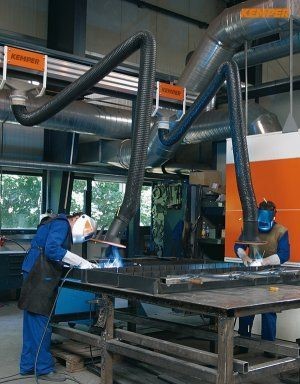
The Science of Effective Ventilation
Welding fume ventilation is a complex engineering challenge that requires a holistic approach to workplace safety. An effective system does more than simply move air—it strategically captures, filters, and removes potentially harmful particles.
Key Components of Advanced Ventilation Systems
- Capture Hoods
- Positioned to intercept fumes at their source
- Designed to match specific welding processes
- Minimize fume dispersion
- Ducting Systems
- Efficient air movement pathways
- Minimal friction design
- Corrosion-resistant materials
- Filtration Technologies
- Multi-stage filtration
- HEPA and carbon filter combinations
- Particle size-specific capture mechanisms
Regulatory Compliance and Safety Standards
Modern ventilation systems must meet stringent requirements:
- OSHA regulations
- HSE guidelines
- Industry-specific safety standards
- Occupational exposure limits
Calculation Considerations
Effective ventilation requires precise engineering:
- Cubic feet per minute (CFM) requirements
- Capture velocity
- Workplace layout
- Specific welding processes
Technological Innovations
Cutting-edge ventilation systems now incorporate:
- Smart monitoring technologies
- Real-time air quality tracking
- Adaptive filtration systems
- Energy-efficient designs
Selecting the Right System
Professionals should consider:
- Welding process type
- Workspace configuration
- Material being welded
- Frequency of welding operations
Expert Support from Hall-Fast
Explore comprehensive welding protection solutions tailored to your specific industrial needs.
Personalized Consultation
- Direct line: (01623) 645 645
- Email: sales@hall-fast.com