The Complete Buyer’s Guide to Cost-Effective Industrial Sweeping from Hall-Fast
Introduction: The Smart Choice for Outdoor Industrial Sweeping
For businesses across the United Kingdom, maintaining clean yards, factory forecourts, loading areas, and car parks is both a legal obligation and an operational necessity. Debris-strewn surfaces create slip-and-trip hazards, accelerate wear on vehicle tyres and bearings, project an unprofessional image to visitors and clients, and can even attract regulatory scrutiny from the Health and Safety Executive. Yet many businesses struggle to justify the expense of a dedicated ride-on sweeping machine when their primary cleaning need centres on outdoor areas that see periodic rather than continuous debris accumulation.
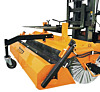
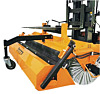
This is precisely the problem that the BEMA 20 Hydraulic Forklift Sweeper is designed to solve. Available from Hall-Fast Industrial Supplies, the BEMA 20 is a German-engineered, cost-effective hydraulic sweeper attachment that transforms any standard forklift truck into a powerful outdoor cleaning machine. With a simple connection to your forklift’s existing hydraulic system, this robust and reliable sweeper can be operational in minutes, delivering professional-grade results at a fraction of the cost of standalone sweeping equipment.
In this comprehensive guide, we examine every aspect of the BEMA 20 Hydraulic Forklift Sweeper in detail. We cover its full technical specifications, the engineering principles that underpin its performance, practical guidance on installation and maintenance, the regulatory framework that makes professional sweeping equipment an important investment, and how the BEMA 20 compares to other models in the BEMA range. Whether you are a facilities manager researching your first sweeper purchase, an operations director looking to optimise cleaning efficiency, or a procurement professional comparing options, this guide will equip you with all the information you need to make a confident, informed decision.
What Is a Hydraulic Forklift Sweeper and How Does It Work?
A hydraulic forklift sweeper is a specialised industrial cleaning attachment that mounts directly onto a standard forklift truck and draws its power from the vehicle’s on-board hydraulic system. Rather than investing in a separate sweeping machine with its own engine, fuel supply, operator station, and maintenance requirements, a hydraulic forklift sweeper allows businesses to repurpose equipment they already own, turning an underutilised or idle forklift into a highly effective cleaning tool at minimal additional cost.
The Operating Principle
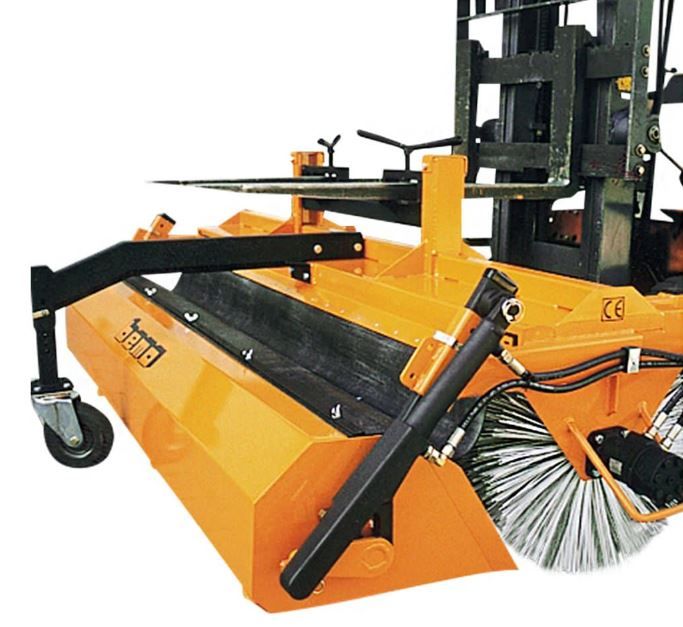
The sweeper attaches to the forklift via the vehicle’s carriage or fork pockets and connects to the spare hydraulic function through quick-release hoses. When the operator engages the hydraulic circuit, pressurised oil flows to a Gerotormotor housed within the sweeper, which drives a heavy-duty rotary brush at speeds of up to 150 revolutions per minute. As the forklift moves forward, the spinning brush lifts debris from the ground surface and directs it into an integrated collection hopper mounted behind the brush. When the hopper is full, the operator simply raises the forklift’s mast to elevate the sweeper, tips the hopper over a skip or waste container, and returns to work. The entire emptying cycle takes a matter of seconds.
Why Businesses Choose Hydraulic Sweepers Over Alternatives
The appeal of a hydraulic forklift sweeper lies in its elegant combination of simplicity, efficiency, and economy. Manual sweeping with brooms and shovels is labour-intensive, inconsistent, and prohibitively slow across large areas. Standalone ride-on sweepers offer excellent performance but represent a substantial capital commitment, require dedicated storage space, and impose their own fuel, insurance, and maintenance costs. A hydraulic forklift sweeper delivers mechanised sweeping power using infrastructure you already have, turning what would otherwise be a major equipment purchase into a modestly priced attachment that pays for itself quickly through labour savings alone.
For many businesses, particularly those with intermittent sweeping requirements rather than continuous all-day cleaning needs, the hydraulic forklift sweeper represents the most intelligent and cost-effective approach to premises cleanliness. And within the hydraulic forklift sweeper category, the BEMA 20 stands as the definitive entry-level choice, offering genuine German engineering quality at a price point that makes professional sweeping accessible to businesses of every size.
BEMA 20 Hydraulic Forklift Sweeper: Full Technical Specifications
The BEMA 20 is engineered to deliver robust, reliable sweeping performance for outdoor applications. The following sections detail every critical specification to help you assess compatibility with your existing equipment and evaluate its suitability for your operational environment.
Available Sweeping Widths
The BEMA 20 is offered in three sweeping width configurations, each paired with an appropriately sized waste collection hopper:
|
Model Variant |
Sweeping Width |
Hopper Capacity |
Weight (excl. options) |
|
BEMA 20 / 1550 |
1,550 mm |
165 litres |
150 kg |
|
BEMA 20 / 1850 |
1,850 mm |
195 litres |
170 kg |
|
BEMA 20 / 2300 |
2,300 mm |
245 litres |
190 kg |
The choice of sweeping width should be guided by the operational environment. The 1,550 mm model suits yards and areas where the forklift needs to navigate between parked vehicles, skips, or stored materials. The 1,850 mm variant provides an excellent balance of coverage and manoeuvrability for general-purpose factory yard and premises sweeping. The 2,300 mm model offers maximum area coverage per pass, making it the most productive choice for large, open surfaces such as car parks, industrial estates, and distribution centre aprons.
Main Brush System
The BEMA 20 features a 520 mm diameter heavy-duty main rotary brush constructed from a steel and PPN (polypropylene) mixture. This combination of materials is specifically engineered for outdoor sweeping applications where the brush encounters a diverse range of debris types and surface conditions. The steel wire elements provide aggressive cutting action against compacted and stubborn material, while the PPN bristles offer flexibility and effective fine-particle collection.
The brush rotates at speeds of up to a maximum of 150 revolutions per minute, with a recommended operating range of 100 to 150 rpm. This speed range ensures effective debris collection across the full spectrum of materials typically encountered in outdoor industrial environments, from fine sand and grit to coarse gravel, leaves, packaging waste, and general yard detritus.
Hydraulic Drive System
Power is delivered to the main brush via a Gerotormotor, the same proven hydraulic motor technology used across the entire BEMA range. This motor design is renowned for its reliability, smooth power delivery, and long service life, even under the demanding conditions of daily industrial use.
|
Hydraulic Parameter |
Specification |
|
Motor Type |
Gerotormotor |
|
Hydraulic Connection |
Single or double system with return flow |
|
Maximum Operating Pressure |
180 bar |
|
Minimum Fluid Throughput |
20 litres per minute |
|
Maximum Brush Speed |
100–150 rpm |
The requirement for a minimum fluid throughput of 20 litres per minute at up to 180 bar operating pressure is comfortably within the capability of most modern forklift trucks in the two-tonne class and above. However, it is always advisable to verify your specific forklift’s hydraulic output before purchasing to ensure full compatibility.
Construction and Build Quality
The BEMA 20 features a stable and rigid construction with a mechanical swivelling system that allows the operator to guide the sweeper smoothly and accurately across the working surface. The heavy-duty steel shroud provides robust protection for the internal brush and drive components, while the standard series paint finish in orange RAL 2011 offers excellent corrosion resistance and high visibility in busy operational environments.
The hydraulic waste collection hopper is integrated into the sweeper’s design and operates via the forklift’s mast lift mechanism for convenient, hands-free emptying at height. The hopper is generously proportioned for each sweeping width variant, allowing extended sweeping runs before an emptying stop is required.
Compliance and Certification
Every BEMA 20 unit supplied by Hall-Fast is delivered fully tested and certified for compliance with the latest Health and Safety Regulations. The sweeper carries CE and UKCA markings and is supplied with a Certificate of Conformity confirming its compliance with the Machinery Directive (2006/42/EC). This comprehensive certification provides documented evidence of regulatory compliance that can be presented to HSE inspectors, external auditors, and insurance assessors.
Optional Equipment: Extending the BEMA 20’s Capabilities
While the standard BEMA 20 configuration delivers excellent sweeping performance straight out of the box, a range of optional accessories is available to enhance its capabilities for specific applications and environments.
Water Spray System
The optional water spray system significantly reduces airborne dust generation during the sweeping process. The system comprises a 240-litre water tank with an internal filter and an electric pressure pump that delivers a controlled mist of water into the brush path. The water binds fine dust particles before they can become airborne, which is particularly valuable when sweeping dusty materials such as concrete residue, sand, or dried soil. All water-related components are manufactured from corrosion-resistant materials to ensure long-term reliability. The electric pump requires an electrical connection to the forklift, which is a straightforward installation on most modern trucks.
Hydraulic Side Brushes
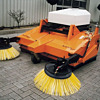
For operations where sweeping right up to walls, kerbs, fences, or the base of racking and storage is important, hydraulic side brushes can be added to the BEMA 20. These 600 mm diameter side brushes are available for the left side, the right side, or both, and include a stop valve for individual control along with automatic side and height adaptation that ensures consistent ground contact. Each side brush is hydraulically driven and connects to the sweeper’s existing hydraulic circuit.
Water Spray for Side Brushes
Where side brushes are fitted in conjunction with the water spray system, an additional spray function can be specified for the side brushes themselves. This ensures that dust suppression is maintained across the full sweeping width, including the extended reach areas covered by the side brushes. A stop valve is included for independent control of the side brush spray function.
Ideal Applications for the BEMA 20 Hydraulic Forklift Sweeper
The BEMA 20 is specifically engineered for outdoor sweeping applications, and its robust construction and powerful brush system make it exceptionally well suited to a wide range of industrial and commercial environments.
Factory Yards and Industrial Forecourts
Manufacturing operations generate a constant stream of waste material that finds its way into surrounding yard areas. Metal offcuts, packaging materials, production dust, and general industrial detritus accumulate rapidly, creating both safety hazards and a poor visual impression for visiting clients and suppliers. The BEMA 20 provides a fast, efficient means of clearing these areas as part of a regular maintenance routine, ensuring that yards remain clean, safe, and presentable at all times.
Builder’s Merchants and Construction Material Yards
Businesses handling construction materials such as aggregate, sand, cement, timber, and bricks face particular challenges in maintaining clean yard surfaces. These materials are heavy, abrasive, and tend to spread widely across operating areas through vehicle movements and loading activities. The BEMA 20’s steel and PPN mix brush is specifically formulated to handle these coarse, demanding materials, while the generous hopper capacity minimises the frequency of emptying stops during sweeping runs across large storage yards.
Logistics and Distribution Centres
The areas surrounding loading docks, goods-in bays, and vehicle manoeuvring zones in logistics facilities are subject to constant contamination from packaging materials, broken pallets, stretch wrap fragments, and general waste. Keeping these areas clean is essential for operational efficiency, vehicle safety, and compliance with workplace health and safety regulations. The BEMA 20 can be deployed as part of a quick end-of-shift cleaning routine that takes only minutes to complete.
Car Parks and Retail Environments
Commercial property managers responsible for maintaining car parks, retail parks, and industrial estates find the BEMA 20 an invaluable tool for keeping surfaces clean and presentable. Leaves, litter, sand, gravel spillage, and general detritus accumulate rapidly in these environments, particularly during autumn and winter months. The BEMA 20’s wide sweeping coverage allows vast areas to be cleaned quickly and efficiently, maintaining a positive first impression for customers and tenants.
Agricultural and Rural Operations
Farms, agricultural merchants, and rural businesses deal with unique debris challenges including soil, animal feed spillage, straw, and seasonal organic matter. The BEMA 20’s heavy-duty brush system handles these varied materials effectively, helping to maintain clean, safe yard areas around storage buildings, feed mills, livestock housing, and vehicle workshops.
Waste Management and Recycling Facilities
Sites involved in waste processing and recycling generate significant quantities of loose material around tipping areas, sorting halls, and vehicle access routes. Regular sweeping is essential both for operational efficiency and regulatory compliance, and the BEMA 20’s large hopper capacity and robust construction make it an ideal tool for maintaining cleanliness in these demanding environments.
Installation, Setup, and Getting Started
One of the BEMA 20’s most compelling practical advantages is the speed and simplicity of its installation. There is no complex commissioning process, no specialist tooling required, and no need for external technicians. A competent forklift operator can have the sweeper mounted, connected, and operational within minutes.
Mounting the Sweeper
The BEMA 20 attaches to the forklift via standard fork pockets. The operator positions the forklift in front of the sweeper, lowers the forks to the appropriate height, and slides them into the attachment pockets. The sweeper’s mechanical swivelling system provides a positive, secure connection that keeps the attachment stable during operation. Once mounted, the operator should check that the sweeper sits level and that the brush makes even contact with the ground across its full width.
Connecting the Hydraulics
With the sweeper physically mounted, the next step is to connect the hydraulic hoses. The BEMA 20 connects to the forklift’s spare hydraulic function via quick-release couplings, ensuring a clean, drip-free connection that can be made and broken in seconds. The system requires either a single or double hydraulic circuit with return flow. If your forklift does not have a spare hydraulic function available, it is possible to tap into the existing sideshift circuit, though this does mean the sideshift function will be unavailable while the sweeper is connected. For the optional water spray system, an additional electrical connection is required to power the pump.
Pre-Operation Checks
Before commencing sweeping operations, the operator should perform a brief series of pre-use checks. These include confirming that the hydraulic connections are secure and free from leaks, verifying that the brush rotates smoothly and at the correct speed when the hydraulic function is engaged, checking that the brush height is set appropriately for the surface to be swept, and confirming that the collection hopper lifts and tips correctly. These checks take only a moment to complete and ensure safe, effective operation from the first pass.
Capacity and Stability Considerations
It is essential to remember that adding any attachment to a forklift truck changes the vehicle’s operating characteristics. The weight of the BEMA 20, which ranges from 150 kg for the 1,550 mm model to 190 kg for the 2,300 mm variant, must be factored into the forklift’s rated residual capacity calculation. In many cases, a new capacity plate will need to be issued to reflect the reduced load capacity when the sweeper is attached. Operators should consult the forklift manufacturer’s documentation and, if necessary, arrange for a professional capacity assessment before putting the sweeper into regular service.
Maintenance Best Practices for Long-Term Performance
The BEMA 20 is engineered for minimal maintenance, but like all industrial equipment, regular attention to key wear items and system components will ensure consistent performance and a long operational life.
Brush Inspection and Replacement
The main brush is the primary wear component on the BEMA 20. The rate of wear depends on the operating surface, the type and volume of debris being swept, and the frequency of use. Sweeping on rough concrete or tarmac surfaces wears bristles faster than sweeping on smooth asphalt. Similarly, sweeping abrasive materials like sand and aggregate causes faster wear than sweeping lighter debris like leaves and packaging.
Operators should visually inspect the brush condition at regular intervals and monitor the brush height adjustment to gauge remaining bristle length. When the brush can no longer be lowered sufficiently to maintain effective ground contact across its full width, a replacement is required. BEMA brushes are available in the standard steel and PPN mix configuration, and replacement is a straightforward procedure that can be completed on site without specialist tools.
Hydraulic System Maintenance
The hydraulic connections between the sweeper and the forklift should be inspected before each use for signs of oil leakage, hose wear, or coupling damage. Quick-release couplings should be kept clean and free from grit or debris that could compromise the seal. The Gerotormotor itself is a sealed unit that requires no routine user-level maintenance, but any unusual noises, vibrations, or changes in performance should prompt an immediate inspection by a qualified hydraulic engineer.
Hopper and Housing Care
The collection hopper should be emptied completely after each sweeping session to prevent the accumulation of moisture-retaining debris that could accelerate corrosion. The interior of the hopper and the brush housing should be inspected periodically for any build-up of compacted material that could impede brush rotation or hopper movement. The exterior paintwork should be inspected for chips or scratches and touched up as necessary to maintain the corrosion protection provided by the RAL 2011 finish.
Water Spray System Maintenance
Where the optional water spray system is fitted, the tank should be drained and the system flushed at regular intervals to prevent the build-up of sediment and mineral deposits. The internal filter should be inspected and cleaned or replaced according to the manufacturer’s schedule, and the electric pump should be checked for correct operation. During winter months when there is a risk of freezing, the water system should be drained completely when not in use to prevent frost damage to the tank, hoses, and pump.
Health, Safety, and Regulatory Compliance
The use of industrial cleaning equipment in the United Kingdom is subject to a comprehensive framework of health and safety legislation. The BEMA 20 is designed and certified to help businesses meet their obligations under this framework.
The Health and Safety at Work etc. Act 1974
The cornerstone of UK workplace safety legislation, the Health and Safety at Work etc. Act 1974, places a general duty on employers to ensure, so far as is reasonably practicable, the health, safety, and welfare of their employees and anyone else who may be affected by their operations. Maintaining clean, debris-free working surfaces is a fundamental aspect of this duty, particularly in environments where forklift trucks, delivery vehicles, and pedestrians share the same space. The BEMA 20 provides a systematic, efficient, and auditable means of discharging this responsibility.
Workplace (Health, Safety and Welfare) Regulations 1992
These regulations impose specific obligations on employers regarding the condition of workplace floors and traffic routes. Regulation 12 requires that floors be suitable for their purpose, free from obstructions, and maintained in a condition that does not expose any person to health or safety risks. The accumulation of debris, dust, and waste materials on floors and yard surfaces can constitute a breach of these requirements, making regular and effective sweeping an essential part of any workplace management plan.
Provision and Use of Work Equipment Regulations 1998 (PUWER)
PUWER places obligations on employers to ensure that work equipment is suitable for its intended use, properly maintained, and used only by people who have received adequate training. The BEMA 20’s CE and UKCA certification confirms its compliance with the essential health and safety requirements for work equipment, while Hall-Fast’s supply of every unit with a Certificate of Conformity and full test documentation provides the audit trail that PUWER compliance requires.
COSHH Considerations
The Control of Substances Hazardous to Health Regulations 2002 are relevant where sweeping activities may generate airborne dust that could pose an inhalation risk to workers. While the BEMA 20 is primarily designed for outdoor use where natural ventilation provides significant dilution, the optional water spray system offers an effective engineering control for dust suppression when sweeping particularly dusty materials such as cement residue, dried soil, or fine aggregate. This proactive approach to dust management demonstrates compliance with COSHH principles and supports a positive health and safety culture.
Risk Assessment Integration
The deployment of a BEMA 20 sweeper should be incorporated into the site’s risk assessment documentation. Key risk factors to address include the effect of the attachment on forklift stability and rated capacity, the competence and training of operators, the management of pedestrians in sweeping zones, operating procedures for connecting and disconnecting hydraulic hoses, and the safe disposal of collected waste material. With these risks properly assessed and controlled, the BEMA 20 represents a significant net reduction in overall workplace risk through the elimination of manual sweeping hazards and the consistent maintenance of clean working surfaces.
Comparing the BEMA Range: Choosing the Right Model for Your Needs
BEMA manufactures a comprehensive range of forklift hydraulic sweepers, each targeting a specific combination of performance requirements, operating environments, and budget parameters. Understanding the key differences helps ensure you select the model that delivers the best value for your particular application.
|
Specification |
BEMA 20 |
BEMA 25 |
BEMA 40 |
|
Market Position |
Entry-level / Budget |
Mid-range |
Premium / Deluxe |
|
Primary Use |
Outdoor |
Outdoor |
Indoor and Outdoor |
|
Main Brush Diameter |
520 mm |
580 mm |
660 mm |
|
Brush Material |
Steel/PPN mix |
Steel/PPN mix |
PPM industrial segments |
|
Machine Housing |
Open frame |
Partial enclosure |
Fully enclosed |
|
All-Round Dust Skirt |
No |
Standard |
Yes, with rubber bumpers |
|
Hydroblock |
No |
No |
Standard |
|
Side Brush Size |
600 mm |
600 mm |
800 mm |
|
Water Spray Tank |
240 litres |
240 litres |
200 litres |
|
bema Control Unit |
Not available |
Not available |
Available |
|
Third Support Wheel |
No |
No |
Yes (250 mm) |
When the BEMA 20 Is the Right Choice
The BEMA 20 is the ideal choice for businesses whose sweeping requirements are primarily or exclusively outdoor, and where cost-effectiveness is a key decision factor. If your operation involves regular yard sweeping, car park maintenance, or the clearance of coarse outdoor debris, the BEMA 20 delivers genuine German-engineered quality and performance at the most accessible price point in the range. Its straightforward design means lower acquisition cost, simpler maintenance, and fewer components to service over the machine’s operational life.
When to Consider Stepping Up
If your sweeping requirements include indoor environments where dust control is critical, or if you need the enhanced control and protection features of a hydroblock system, the BEMA 25 or BEMA 40 may be more appropriate. The BEMA 25 offers a step up in brush size and build quality for demanding outdoor applications, while the BEMA 40’s fully enclosed housing and advanced control systems make it the definitive choice for operations that demand near-dust-free performance across both indoor and outdoor environments. Hall-Fast stocks the complete BEMA range and can advise on the best model for your specific requirements.
Calculating the Return on Investment
The financial case for investing in a BEMA 20 Hydraulic Forklift Sweeper is compelling, with measurable savings typically visible within the first few months of operation.
Labour Savings
The single most significant financial benefit is the dramatic reduction in the time and labour required for premises sweeping. A single forklift operator equipped with a BEMA 20 can clean outdoor areas in a fraction of the time required by a team armed with brooms and shovels. In practical terms, a yard area that might take a team of three workers two hours to sweep manually can be completed by one operator with a BEMA 20 in twenty to thirty minutes. Over the course of a year, these time savings translate into hundreds or even thousands of pounds in reduced labour costs, depending on the size of the area and the frequency of sweeping.
Equipment Utilisation
Most forklift trucks in industrial operations spend a proportion of each working day idle, whether during break periods, shift changes, or simply during natural lulls in material handling activity. The BEMA 20 allows these periods of downtime to be converted into productive cleaning time, maximising the return on your existing forkl