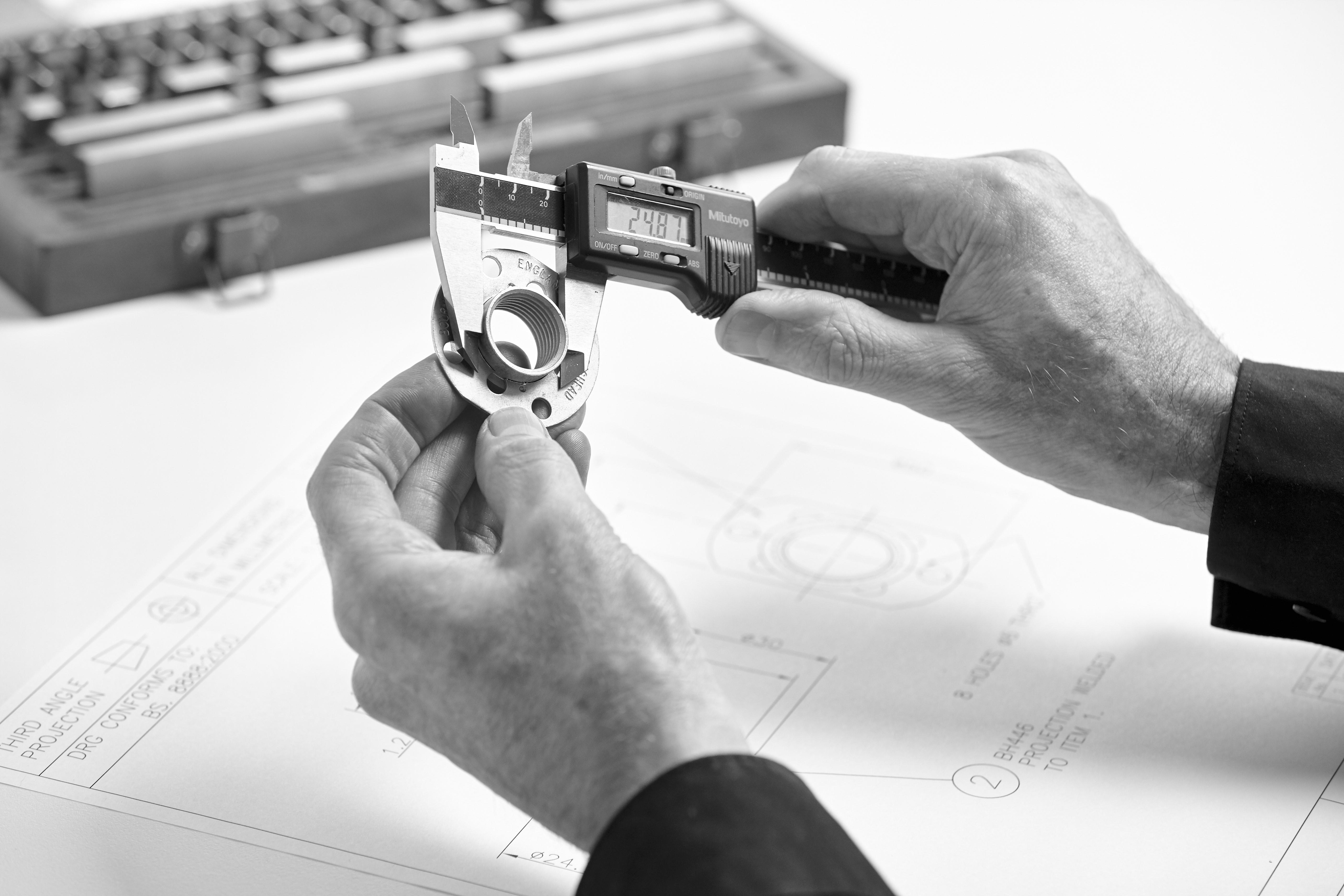
In today's manufacturing landscape, engineers and designers constantly seek ways to improve product quality while reducing weight, assembly time, and long-term maintenance costs. Bighead fasteners have emerged as a game-changing solution across diverse industries, offering unique advantages over traditional fastening methods.
This article explores five cutting-edge applications where bighead fastening systems are revolutionizing how products are built—demonstrating why these specialized components have become essential in modern manufacturing.
Understanding Bighead Fastener Technology
Before diving into specific applications, let's clarify what makes bighead fasteners unique.
Bighead fasteners feature a significantly enlarged flat head connected to a threaded stud, bolt, or other fixing element. This expanded head distributes load forces across a wider area, creating stronger connections with less material stress. The design allows these fasteners to be bonded, welded, or embedded into base materials, enabling secure attachments without penetrating or damaging the substrate.
For those new to this technology, Hall-Fast's bighead bonding fasteners provide an excellent reference point to understand the variety of options available in today's market.
Application 1: Advanced Composite Structures in Aerospace
The Challenge
Aerospace engineers face extraordinary pressure to reduce aircraft weight while maintaining structural integrity. Every gram matters when calculating fuel efficiency over an aircraft's service life. Traditional fastening methods often require drilling holes through expensive composite panels, creating stress concentration points and potential failure sites.
The Bighead Solution
Leading aerospace manufacturers now employ bighead fasteners that bond directly to carbon fibre components without penetrating the material. These systems allow for:
- Preservation of the composite's structural integrity
- Elimination of hole-drilling that might damage expensive materials
- Significant weight reduction compared to traditional bolt-nut combinations
- Improved fatigue resistance in components experiencing vibration
- Streamlined assembly of interior elements like panels, seating, and storage compartments
A major aircraft manufacturer recently reported a 3.2% weight reduction in cabin fittings by switching to bighead fastening systems—translating to substantial fuel savings over the aircraft's operational lifetime.
Application 2: Revolutionary Marine Construction Techniques
The Challenge
Marine environments present unique fastening challenges: constant moisture exposure, galvanic corrosion between dissimilar metals, and the critical need to maintain watertight integrity. Traditional through-hull fasteners create potential leak points and often require additional sealing and maintenance.
The Bighead Solution
Modern boat builders increasingly rely on bighead fasteners to mount hardware and fixtures without compromising hull integrity. Benefits include:
- Elimination of through-hull drilling that could compromise watertight integrity
- Reduced galvanic corrosion by isolating different metals
- More evenly distributed loads across fiberglass or composite surfaces
- Improved impact and vibration resistance in high-stress applications
- Significantly reduced maintenance requirements and extended service life
A performance yacht manufacturer implementing bighead bonding fasteners for deck hardware reported:
"We've reduced warranty claims related to hardware mounting failures by 78% since converting to bighead systems. The improved aesthetic appearance—with no visible hardware backings below deck—has become a significant selling point for our premium vessels."
Application 3: Architectural Cladding and Façade Systems
The Challenge
Modern buildings often feature dramatic façades using materials ranging from glass and aluminum to composite panels and natural stone. Engineers must secure these elements safely while accommodating thermal expansion, building movement, and extreme weather conditions—all while preserving aesthetic appeal.
The Bighead Solution
Architectural bighead fasteners provide concealed mounting solutions that address these complex requirements:
- Invisible fixings that maintain clean visual aesthetics
- Accommodation of thermal expansion without stress concentration
- Corrosion resistance for decades of outdoor exposure
- Quick installation compared to traditional bracket systems
- Ability to connect dissimilar materials without direct contact (reducing thermal bridging)
A recent commercial development in Singapore implemented a ventilated façade system using specialized bighead fasteners that allowed for:
- 40% faster installation compared to conventional systems
- Elimination of visible fixing points on the building exterior
- Enhanced thermal performance by reducing thermal bridging
- Superior wind-load resistance in the typhoon-prone region
Application 4: Electric Vehicle Battery Enclosures
The Challenge
Electric vehicle manufacturers face unique challenges when designing battery enclosures. These critical components must be lightweight yet extraordinarily strong, while providing electrical isolation, thermal management, and crash protection. Traditional fastening methods often add weight and create thermal bridges.
The Bighead Solution
Advanced EV producers have pioneered the use of specialized bighead fasteners in battery module mounting, with remarkable results:
- Electrical isolation between components with different potential
- Reduced thermal bridging between battery cells and external structures
- Vibration damping that extends battery life and connection reliability
- Weight reduction compared to traditional metal brackets and bolts
- Simplified assembly and maintenance procedures
A leading electric vehicle manufacturer recently highlighted how specialized bighead fastening systems contributed to achieving an additional 12km of range through weight reduction and improved thermal efficiency in their battery pack design.
Application 5: Medical Equipment Manufacturing
The Challenge
Medical equipment requires exceptional standards for cleanliness, reliability, and maintenance. Devices often incorporate materials with different properties—metals, plastics, composites—that must be joined securely while maintaining sterile surfaces without crevices where contaminants might collect.
The Bighead Solution
Precision medical equipment manufacturers have adopted bighead fasteners for applications including:
- Mounting components in MRI and imaging equipment where non-magnetic solutions are essential
- Creating smooth, crevice-free surfaces in equipment requiring regular sterilization
- Securing components in portable medical devices where weight reduction is critical
- Assembling diagnostic equipment that must dampen vibration for accurate readings
- Manufacturing hospital furniture requiring highly durable, easily cleaned surfaces
A medical imaging equipment producer noted that switching to specialized bighead fasteners allowed them to create a completely non-magnetic mounting system for sensitive components—eliminating image artifacts that previously occurred with standard fasteners.
The Future of Bighead Fastening Technology
As manufacturing continues to evolve, bighead fastening systems are advancing to meet new challenges:
- Smart Fasteners: Emerging technologies include bighead fasteners with embedded sensors that monitor structural integrity, temperature, or vibration.
- Advanced Materials: New bighead variants utilizing titanium, carbon-reinforced polymers, and other high-performance materials push the boundaries of strength-to-weight ratios.
- Automation Compatibility: The latest designs feature standardized geometries specifically developed for robotic installation, supporting Industry 4.0 initiatives.
- Sustainability Focus: Manufacturers are developing bighead fasteners explicitly designed for end-of-life disassembly, supporting circular economy principles and material recovery.
Selecting the Right Bighead Fastening Solution
When evaluating bighead fasteners for your specific application, consider these critical factors:
- Load Requirements: Calculate the tensile, shear, and peel forces the connection will experience.
- Environmental Conditions: Consider temperature ranges, chemical exposure, UV exposure, and moisture levels.
- Base Materials: Different substrate materials may require specific bighead variants and adhesive systems.
- Installation Method: Evaluate whether bonding, welding, or mechanical attachment is most appropriate.
- Lifecycle Requirements: Consider whether the connection needs to be permanent or if future disassembly is required.
For expert guidance on selecting the optimal solution for your specific application, Hall-Fast's comprehensive range of bighead bonding fasteners provides options for virtually every industry need, backed by technical support to ensure proper specification.
Conclusion
The innovative applications highlighted in this article represent only a fraction of the ways bighead fasteners are transforming modern manufacturing. Their unique ability to create strong connections between dissimilar materials, distribute loads effectively, and enable clean, aesthetically pleasing designs makes them increasingly essential across industries.
As engineering challenges grow more complex, these specialized fastening systems will continue to evolve, enabling designs that would be impossible with conventional fastening methods.
Whether you're developing aerospace components, marine equipment, architectural systems, electric vehicles, or medical devices, exploring the potential of bighead fastening technology may reveal unexpected opportunities to enhance product performance, reduce weight, and streamline manufacturing processes.
For more information on implementing bighead fastening solutions in your specific application, explore Hall-Fast's selection of specialized bighead bonding fasteners engineered for diverse manufacturing challenges.