Everything You Need to Know Before Buying a 1500kg Electric Forklift Truck for Your Warehouse, Distribution Centre, or Manufacturing Facility
Introduction: Why the 1500kg Electric Forklift Truck Is the Backbone of Modern Warehousing
The 1500kg electric forklift truck has become one of the most sought-after pieces of material handling equipment in the United Kingdom and across the globe. As businesses increasingly prioritise operational efficiency, sustainability, and workplace safety, the 1500kg electric forklift truck stands out as the ideal solution for a vast range of industries. From small warehouses and retail stockrooms to large-scale distribution centres and manufacturing plants, this versatile machine has earned its reputation as the workhorse of modern logistics.
But what exactly makes the 1500kg electric forklift truck such an attractive investment? The answer lies in its perfect balance of capacity, manoeuvrability, energy efficiency, and low total cost of ownership. With a rated load capacity of 1,500 kilograms, this class of forklift handles the vast majority of standard palletised goods found in everyday warehouse operations. Whether you are moving shrink-wrapped consumer products, boxed components, raw materials on pallets, or finished goods ready for dispatch, a 1500kg electric forklift truck provides the lifting power you need without the excess bulk and running costs of larger machines.
In this comprehensive guide, we will explore every aspect of the 1500kg electric forklift truck, from its core specifications and key features to the practical considerations you should weigh before making a purchase. We will examine the advantages of electric power over traditional diesel and LPG alternatives, discuss the latest advances in lithium-ion battery technology, and provide guidance on UK regulations, operator training requirements, and long-term maintenance strategies. By the end of this article, you will have a thorough understanding of why the 1500kg electric forklift truck is the right choice for your operation and how to select the best model for your specific needs.
What Is a 1500kg Electric Forklift Truck?
Defining the 1500kg Capacity Class
A 1500kg electric forklift truck is a battery-powered industrial vehicle designed to lift, carry, and stack loads of up to 1,500 kilograms. The rated capacity is measured at a standard load centre distance, typically 500mm from the face of the forks to the centre of gravity of the load. This standardisation ensures that operators and warehouse managers can reliably assess whether a given load falls within the safe operating limits of the machine.
The 1500kg capacity class occupies a particularly valuable position in the forklift market. It sits above lighter-duty pallet trucks and stackers, which typically handle loads up to 1,000kg, and below the heavier 2,000kg to 3,500kg counterbalance forklifts favoured in more demanding industrial environments. This middle-ground positioning means the 1500kg electric forklift truck delivers substantial lifting capability while maintaining a compact footprint, excellent manoeuvrability, and lower energy consumption compared to its larger counterparts.
How Electric Forklifts Differ from Diesel and LPG Models
The fundamental difference between an electric forklift truck and its internal combustion engine (ICE) counterparts lies in the power source. While diesel and liquefied petroleum gas (LPG) forklifts rely on burning fossil fuels to generate mechanical power, the 1500kg electric forklift truck draws its energy from rechargeable battery packs. This seemingly simple distinction has profound implications for operating costs, environmental impact, workplace health, noise levels, and maintenance requirements.
Electric forklifts produce zero direct emissions at the point of use. This makes them the only viable option for indoor environments where air quality is a concern, such as food processing facilities, pharmaceutical warehouses, cold storage units, and enclosed distribution centres. Even in environments where ventilation is adequate, the absence of exhaust fumes creates a healthier and more pleasant workplace for operators and nearby staff.
Noise is another significant differentiator. A typical diesel forklift generates noise levels of 85 to 100 decibels during operation, which can require hearing protection and limits communication between workers. By contrast, a 1500kg electric forklift truck operates at substantially lower noise levels, often below 75 decibels. This reduction in noise pollution not only improves operator comfort but also enables operations during antisocial hours in noise-sensitive locations such as residential areas or shared commercial premises.
Key Features and Specifications of a 1500kg Electric Forklift Truck
Load Capacity and Load Centre
The defining specification of any forklift is its rated load capacity. For the 1500kg electric forklift truck, this means the machine can safely lift and transport loads of up to 1,500 kilograms when the centre of gravity of the load is positioned at the standard 500mm load centre distance. It is critical to understand that exceeding the rated capacity or operating with loads whose centre of gravity falls outside the specified load centre distance can compromise the stability of the forklift and create serious safety hazards.
In practical terms, the 1500kg capacity is ideally suited to handling standard Euro pallets and UK standard pallets loaded with typical warehouse goods. A standard Euro pallet measures 1200mm by 800mm and, when loaded with consumer goods, beverages, packaged food products, or light industrial components, frequently weighs between 500kg and 1,400kg. This means the 1500kg electric forklift truck can comfortably handle the overwhelming majority of pallet loads encountered in general warehousing and distribution operations.
Mast Types and Lift Heights
The mast is the vertical assembly at the front of the forklift that raises and lowers the forks. The 1500kg electric forklift truck is typically available with several mast configurations to suit different operational requirements. The most common options include the standard two-stage mast, the three-stage triple telescopic mast, and the full free-lift mast.
A standard two-stage mast provides a reliable and cost-effective lifting solution for operations where goods are stacked to moderate heights, typically up to 3,000mm. For operations that require higher stacking, the three-stage triple telescopic mast extends in three stages to reach heights of 4,500mm to 6,000mm or more, while maintaining a compact overall height when fully lowered. This makes the triple mast particularly valuable in facilities with limited overhead clearance, such as when loading and unloading shipping containers or operating in buildings with low ceilings.
The full free-lift feature is an important consideration for operations that involve working inside containers or under mezzanine floors. With a full free-lift mast, the forks can be raised to a significant height before the outer mast stages begin to extend. This means the overall height of the forklift remains unchanged during the initial phase of the lift, allowing the machine to operate in height-restricted areas without risk of collision with overhead structures.
Battery Technology: Lead-Acid vs Lithium-Ion
Battery technology is one of the most important considerations when selecting a 1500kg electric forklift truck. The two primary options available in the current market are traditional lead-acid batteries and modern lithium-ion batteries, each with distinct advantages and trade-offs.
Lead-acid batteries have been the industry standard for decades. They are well-understood, widely available, and carry a lower upfront purchase cost. However, they require regular maintenance, including topping up with distilled water, equalisation charging, and careful monitoring of electrolyte levels. Lead-acid batteries also take considerably longer to charge, typically requiring eight hours for a full charge cycle plus an additional cooling period before the forklift can return to service. For operations running multiple shifts, this often necessitates the purchase of spare battery packs and the installation of dedicated battery changing equipment.
Lithium-ion batteries represent a significant advancement in electric forklift technology. They offer substantially faster charging times, with many systems capable of reaching full capacity in as little as one to two hours. Opportunity charging, where the battery is topped up during natural breaks in the work schedule such as lunch periods and shift changes, is particularly effective with lithium-ion technology and can eliminate the need for battery swaps entirely. Furthermore, lithium-ion batteries are virtually maintenance-free, have a longer operational lifespan measured in charging cycles, and deliver consistent power output throughout the discharge cycle, meaning the forklift maintains peak performance even as the battery level drops.
The 1500kg electric forklift truck equipped with an advanced lithium-ion battery system, such as an 80V/105Ah or 80V/150Ah configuration, delivers exceptional energy efficiency and extended operational runtime. While the initial investment for lithium-ion technology is higher than lead-acid, the reduced maintenance costs, longer battery lifespan, and elimination of battery changing infrastructure often result in a lower total cost of ownership over the full life of the machine.
Typical Specifications at a Glance
|
Specification |
Typical Range |
|
Rated Load Capacity |
1,500 kg at 500mm load centre |
|
Lift Height (Standard Mast) |
3,000 mm – 3,300 mm |
|
Lift Height (Triple Mast) |
4,500 mm – 6,000 mm |
|
Maximum Travel Speed (Unladen) |
14 – 16 km/h |
|
Maximum Travel Speed (Laden) |
13 – 15 km/h |
|
Lifting Speed (Unladen) |
Up to 430 mm/s |
|
Lifting Speed (Laden) |
Up to 360 mm/s |
|
Turning Radius |
1,800 mm – 2,100 mm |
|
Maximum Gradeability |
15% – 17% |
|
Battery Type |
Lead-acid or Lithium-ion (48V – 80V) |
|
Overall Width |
1,050 mm – 1,150 mm |
|
Overall Length (incl. forks) |
2,800 mm – 3,200 mm |
|
Service Weight |
2,800 kg – 3,500 kg |
|
Tyre Options |
Pneumatic, cushion, or solid rubber |
Manoeuvrability and Turning Radius
One of the standout advantages of the 1500kg electric forklift truck is its exceptional manoeuvrability. With a typical turning radius of 1,800mm to 2,100mm, these machines can navigate the tight aisle configurations found in modern warehouses with relative ease. The minimum right-angle channel width, which represents the narrowest aisle in which the forklift can turn with a standard pallet, typically ranges from 3,400mm to 3,700mm for four-wheel counterbalance models.
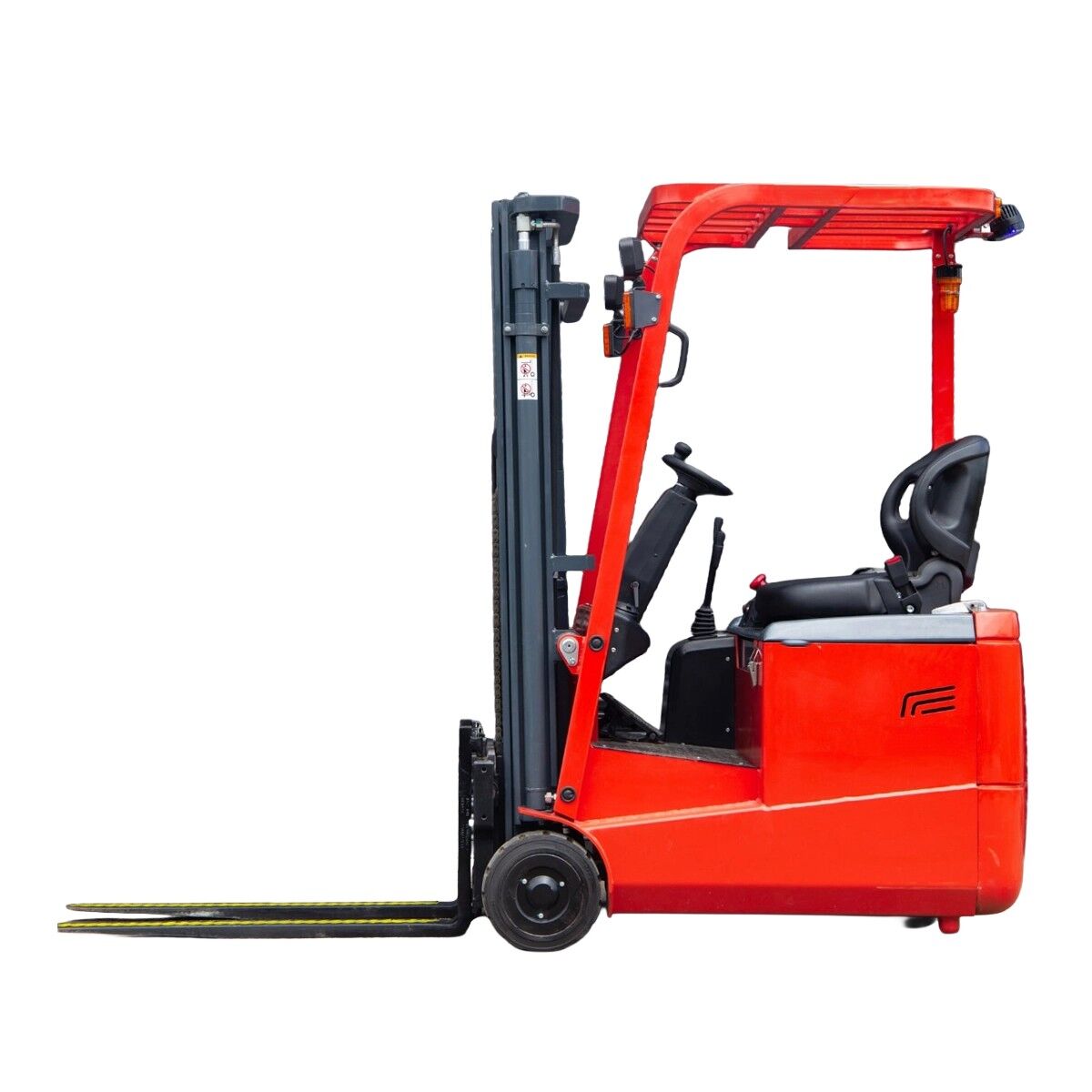
Three-wheel electric forklift variants offer even greater agility. By replacing the traditional rear axle with a single rear drive and steer wheel, three-wheel models achieve a significantly tighter turning circle. This design makes them particularly well-suited to operations where space is at a premium, such as small warehouses, retail stockrooms, and manufacturing cells where every square metre of floor space matters.
Ergonomics and Operator Comfort
Modern 1500kg electric forklift trucks are designed with significant attention to operator ergonomics. The sit-down driving configuration provides a comfortable operating position for prolonged shifts, with adjustable seats, tilt-adjustable steering columns, and well-positioned hydraulic controls that minimise fatigue and repetitive strain. The dashboard layout typically includes a clear digital display showing battery charge level, hour meter, fault codes, and other operational data that helps the operator monitor the machine in real time.
The low vibration characteristics of electric drive systems are another important ergonomic advantage. Unlike diesel engines, which produce continuous vibration transmitted through the chassis and seat, electric motors operate with minimal vibration. This reduction in whole-body vibration exposure helps protect operators from the musculoskeletal disorders that can develop over years of forklift operation, contributing to lower absenteeism and a healthier workforce.
Advantages of Choosing a 1500kg Electric Forklift Truck
Zero Emissions for Cleaner Indoor Air Quality
Perhaps the most compelling advantage of the 1500kg electric forklift truck is its zero-emission operation. In enclosed warehouse environments, the accumulation of exhaust fumes from diesel or LPG forklifts can pose serious health risks to workers, including respiratory irritation, headaches, and long-term exposure concerns related to carbon monoxide and particulate matter. By eliminating direct emissions entirely, the electric forklift creates a fundamentally healthier working environment.
This characteristic is not merely a matter of employee welfare; it has tangible commercial implications. Operations in the food and beverage sector, pharmaceutical manufacturing, and cold chain logistics increasingly require emission-free material handling equipment to meet hygiene standards, regulatory requirements, and customer expectations. Choosing a 1500kg electric forklift truck ensures compliance with these standards without the need for expensive ventilation systems or operational restrictions.
Significantly Lower Operating Costs
The financial case for the 1500kg electric forklift truck is increasingly compelling. Electricity costs per operating hour are substantially lower than diesel fuel or LPG costs for an equivalent machine. Depending on local energy tariffs and usage patterns, electric forklift operators can expect to spend 50 to 80 percent less on energy compared to diesel alternatives.
Maintenance costs are similarly reduced. The electric drivetrain has far fewer moving parts than an internal combustion engine, eliminating the need for engine oil changes, oil filter replacements, fuel filter changes, spark plug replacements, exhaust system repairs, and radiator maintenance. The regenerative braking systems found on many electric forklifts also reduce wear on mechanical brake components, extending the intervals between brake servicing. When these savings are aggregated over the typical 10,000 to 15,000 operating hours expected from a quality forklift, the total cost of ownership for a 1500kg electric forklift truck is often 20 to 40 percent lower than an equivalent diesel model, even after accounting for the higher initial purchase price.
Reduced Noise Pollution
The quiet operation of the 1500kg electric forklift truck is an advantage that extends beyond simple operator comfort. In environments where communication between workers is essential, reduced noise levels improve the clarity of verbal instructions and warning signals, contributing directly to workplace safety. In multi-shift operations or facilities located near residential areas, the low noise output allows extended operating hours without generating noise complaints or violating local authority noise restrictions.
Enhanced Precision and Control
Electric drive systems offer inherently smoother and more precise speed control compared to mechanical transmissions. The instantaneous torque delivery characteristic of electric motors provides responsive acceleration without the jerky power delivery sometimes experienced with diesel or LPG forklifts. This smoothness is particularly valuable when handling fragile or sensitive loads, performing precise stacking operations, or navigating in close proximity to racking systems and other infrastructure.
Many 1500kg electric forklift trucks also feature programmable performance settings that allow managers to configure speed limits, acceleration rates, and lift speeds according to the requirements of their operation. Different performance profiles can be assigned to different operators based on their experience level, providing an additional layer of safety and control.
Sustainability and Corporate Responsibility
As businesses face increasing pressure to demonstrate their environmental credentials, the adoption of electric material handling equipment sends a clear signal to customers, investors, and regulatory bodies. The 1500kg electric forklift truck contributes to measurable reductions in scope 1 and scope 2 carbon emissions, supporting corporate sustainability reporting and Environmental, Social, and Governance (ESG) commitments. For companies pursuing ISO 14001 environmental management certification or similar frameworks, the transition to electric forklifts is a practical and impactful step.
Applications and Industries for the 1500kg Electric Forklift Truck
Warehousing and Distribution
The primary domain of the 1500kg electric forklift truck is the warehouse and distribution centre. Here, the machine excels at the core tasks of receiving incoming goods, putting away stock to designated racking locations, picking orders for dispatch, and loading outbound vehicles. The 1500kg capacity aligns perfectly with the weight profile of most standard pallet loads in general merchandising, consumer electronics, household goods, and FMCG (fast-moving consumer goods) supply chains.
Manufacturing and Production
In manufacturing environments, the 1500kg electric forklift truck plays a vital role in moving raw materials from receiving areas to production lines, transporting work-in-progress between workstations, and conveying finished goods to storage or shipping areas. The zero-emission operation is particularly valued in clean manufacturing environments, such as electronics assembly, food production, and pharmaceutical compounding, where air quality standards are stringent.
Retail and E-Commerce Fulfilment
The rapid growth of e-commerce has driven a corresponding expansion in fulfilment centre capacity across the UK. These facilities typically handle a high volume of relatively light, palletised goods, making the 1500kg electric forklift truck an ideal choice. The compact dimensions and tight turning radius enable efficient operation in the dense racking configurations common to e-commerce fulfilment centres, while the quiet operation supports round-the-clock shifts without disturbing adjacent operations or communities.
Cold Storage and Temperature-Controlled Environments
Cold storage facilities present unique challenges for forklift operation. The enclosed, refrigerated environment makes ventilation difficult and expensive, ruling out diesel or LPG forklifts in many cases. The 1500kg electric forklift truck is inherently suited to these conditions, producing no exhaust fumes that would need to be extracted from the chilled space. Many manufacturers offer cold storage specification packages that include condensation-resistant electronics, heated operator cabins, and battery heating systems to maintain optimal performance in sub-zero temperatures.
Loading and Unloading Vehicles and Containers
The 1500kg electric forklift truck is frequently used for loading and unloading goods from lorries, vans, and shipping containers at docks and goods-in areas. The full free-lift mast option is particularly valuable for container work, as it allows the forks to be raised within the confined height of a standard shipping container without the mast extending beyond the container roof. The combination of adequate capacity, compact dimensions, and precise control makes the 1500kg electric forklift an efficient and safe tool for dock operations.
UK Regulations and Compliance for Electric Forklift Operations
Health and Safety at Work Act 1974
The Health and Safety at Work Act 1974 is the foundational legislation governing workplace safety in the United Kingdom. Under this Act, employers have a duty to ensure, so far as is reasonably practicable, the health, safety, and welfare of all employees. This duty extends to the provision of safe equipment, adequate training, and a working environment free from unnecessary risks. The Act established the Health and Safety Executive (HSE), the government body responsible for enforcing workplace safety standards, including those related to forklift operations.
LOLER: Lifting Operations and Lifting Equipment Regulations 1998
The Lifting Operations and Lifting Equipment Regulations (LOLER) 1998 apply directly to forklift trucks and other lifting equipment used in the workplace. Under LOLER, employers must ensure that all lifting operations are properly planned, appropriately supervised, and carried out in a safe manner. The regulations require that forklift trucks undergo thorough examination by a competent person at specified intervals, typically every 12 months, or every 6 months if the equipment is used for lifting people. Records of these examinations must be kept and made available for inspection.
PUWER: Provision and Use of Work Equipment Regulations 1998
The Provision and Use of Work Equipment Regulations (PUWER) 1998 require employers to ensure that all work equipment, including 1500kg electric forklift trucks, is suitable for its intended purpose, maintained in a safe condition, and used only by persons who have received adequate training and instruction. PUWER also requires that equipment is inspected regularly and that a maintenance log is kept to document all inspections, servicing, and repairs.
Operator Training and Certification
Under UK law, it is illegal to operate a forklift truck without appropriate training and certification. There is no formal government-issued forklift licence in the UK; instead, employers are responsible for ensuring that all operators have completed an accredited training programme that covers theoretical knowledge, practical skills, and a competency assessment. Training courses are categorised by truck type, with separate certifications required for counterbalance forklifts, reach trucks, pallet trucks, and other equipment types.
For the 1500kg electric forklift truck, operators will typically require a counterbalance forklift certificate. The training programme for a novice operator usually spans three to five days and covers pre-operational checks, safe driving techniques, load handling, stacking and de-stacking, and emergency procedures. Experienced operators transitioning from diesel or LPG forklifts to electric models may require a shorter conversion course, as the fundamental operating principles are similar but there are important differences in the controls, battery management, and regenerative braking behaviour.
Employers should also schedule regular refresher training, typically every three to five years, to ensure that operators maintain their skills and remain aware of current best practices and any changes to workplace procedures or equipment. Penalties for operating forklifts without proper certification can be severe, with employers facing fines of up to twenty thousand pounds and potential prosecution under health and safety legislation.
Battery Safety and Charging Regulations
Electric forklifts introduce specific safety considerations related to battery management and charging. The HSE provides guidance on the safe charging and maintenance of forklift batteries, covering topics such as the designation of dedicated charging areas with adequate ventilation, the provision of eye wash stations and spill containment equipment in battery rooms, and the training of personnel responsible for battery maintenance. Lithium-ion batteries, while requiring less routine maintenance than lead-acid alternatives, must be charged using the correct charger and in accordance with the manufacturer’s instructions to prevent thermal events.
Choosing the Right 1500kg Electric Forklift Truck for Your Business
Assessing Your Operational Requirements
Selecting the ideal 1500kg electric forklift truck begins with a thorough assessment of your operational requirements. Key factors to consider include the typical weight and dimensions of the loads you handle, the maximum lift height required, the width of your aisles and operating areas, the surface conditions of your floors, and the number of operating hours per shift and per day.
For operations that primarily involve ground-level pallet movements with occasional stacking to two or three levels, a standard mast configuration with a lift height of 3,000mm to 3,300mm may be perfectly adequate. Conversely, operations with deep racking systems reaching five or six levels will require a triple telescopic mast with a lift height of 5,000mm or more. It is important to match the mast specification to your actual requirements, as over-specifying the mast adds unnecessary weight and cost to the machine.
Three-Wheel vs Four-Wheel Configuration
The choice between a three-wheel and four-wheel 1500kg electric forklift truck depends largely on the space available in your operating environment. Three-wheel models offer a significantly tighter turning radius and are ideal for narrow aisles, small warehouses, and operations where space is constrained. However, four-wheel models generally provide greater stability, particularly when operating on uneven surfaces, outdoor areas, or loading docks with dock levellers.
If your operation involves a mix of indoor and outdoor work, or if you frequently handle loads at the upper end of the 1500kg capacity range, the four-wheel configuration is likely the better choice. For predominantly indoor operations in a well-maintained, smooth-surfaced warehouse, the three-wheel model’s superior agility may deliver greater overall productivity.
Tyre Selection: Pneumatic, Cushion, or Solid Rubber
The tyre selection for your 1500kg electric forklift truck should be driven by the surfaces on which the machine will operate. Pneumatic tyres, filled with air, provide excellent shock absorption and traction on rough, uneven, or outdoor surfaces. They are the best choice for operations that involve loading docks, yards, and mixed indoor-outdoor use.
Cushion tyres, made from solid rubber fitted directly onto the wheel rim, offer a lower ride height that is advantageous in environments with low overhead clearance. They are best suited to smooth, flat indoor surfaces such as polished concrete warehouse floors. Solid rubber tyres provide a compromise between the two, offering puncture resistance and reasonable ride comfort on moderately uneven surfaces.
Evaluating Battery Options
Your choice of battery technology will have a significant impact on the daily operating pattern and long-term costs of your 1500kg electric forklift truck. For single-shift operations with a consistent work pattern, a lead-acid battery with overnight charging may provide a cost-effective solution. For multi-shift operations, high-intensity use, or environments where battery changing is impractical, lithium-ion batteries offer clear advantages in terms of fast charging, opportunity charging capability, and reduced maintenance.
Consider the total cost of ownership when comparing battery options. While a lithium-ion battery may cost two to three times more than an equivalent lead-acid battery at the point of purchase, the elimination of maintenance costs, longer cycle life, faster charging, and avoidance of battery changing equipment and spare batteries often makes lithium-ion the more economical choice over the ten-year lifespan of the forklift.
Optional Equipment and Attachments
The 1500kg electric forklift truck can be configured with a range of optional equipment and attachments to enhance its versatility. Common options include side shift carriages that allow lateral adjustment of the forks without repositioning the entire machine, fork positioners that enable hydraulic adjustment of fork spacing, and integrated weight scales that display the load weight on the operator’s dashboard.
Other popular accessories include LED work lights for improved visibility in dimly lit areas, blue spot safety lights that project a visible warning on the floor ahead of or behind the forklift to alert pedestrians, reversing cameras for enhanced rearward visibility, and rain canopies or full cabins for outdoor use in inclement weather.
Maintenance and Servicing Your 1500kg Electric Forklift Truck
Daily Pre-Operational Checks
Maintaining a 1500kg electric forklift truck in safe and reliable condition begins with daily pre-operational checks performed by the operator at the start of each shift. These checks should cover the following areas as a minimum: inspection of the forks for cracks, bending, or excessive wear; verification that the mast and carriage move smoothly through their full range of travel; testing of the horn, lights, and reversing alarm; checking tyre condition and inflation pressure (for pneumatic tyres); testing the footbrake and parking brake for firm operation; verifying that the battery charge level is adequate for the planned shift; and inspecting the overall condition of the machine for fluid leaks, loose components, or damage.
Any defects identified during pre-operational checks should be reported immediately and the forklift should be taken out of service until the issue has been rectified. Maintaining a written or digital record of daily checks is not only good practice but is also a requirement under PUWER and demonstrates due diligence in the event of an incident.
Scheduled Servicing Intervals
In addition to daily operator checks, the 1500kg electric forklift truck should undergo scheduled preventive maintenance at intervals specified by the manufacturer, typically every 250 to 500 operating hours or every three to six months, whichever comes first. Scheduled servicing generally includes inspection and adjustment of the braking system, lubrication of mast chains, rollers, and pivot points, inspection and testing of the hydraulic system including hoses, cylinders, and fluid levels, testing of all electrical connections and wiring, inspection of the steering system, and a comprehensive functional test of all safety systems.
For lithium-ion battery systems, scheduled maintenance is minimal compared to lead-acid batteries. However, it is still important to periodically inspect the battery management system, check for any fault codes, and verify that the charging system is functioning correctly. Lead-acid batteries require more frequent attention, including regular checks of electrolyte levels, terminal cleaning, and equalisation charging to maintain cell balance and maximise battery lifespan.
LOLER Thorough Examinations
As noted in the regulations section, your 1500kg electric forklift truck must undergo a thorough examination by a competent person at intervals not exceeding 12 months. This examination is more rigorous than routine servicing and involves a detailed inspection of all load-bearing components, safety systems, and structural elements of the forklift. The competent person will issue a report detailing the condition of the machine and identifying any defects that require attention. It is a legal requirement to retain these examination records and to address any defects promptly.
Total Cost of Ownership: Understanding the Financial Case
Purchase Price vs Lifetime Value
When evaluating the investment in a 1500kg electric forklift truck, it is essential to look beyond the initial purchase price and consider the total cost of ownership (TCO) over the expected life of the machine. The TCO encompasses the purchase price, energy costs, maintenance and repair costs, battery replacement costs, insurance, operator training, and eventual residual value or disposal costs.
While the upfront cost of a 1500kg electric forklift truck may be higher than an equivalent diesel or LPG model, the lower ongoing operating costs typically deliver a favourable TCO within three to five years. The energy cost advantage of electricity over diesel fuel, combined with the significantly reduced maintenance burden of the electric drivetrain, creates compounding savings over each year of operation. When lithium-ion battery technology is selected, the further elimination of battery maintenance and replacement costs strengthens the financial case.
Energy Cost Comparison
|
Cost Factor |
Electric (Li-ion) |
Diesel |
|
Energy/Fuel Cost per Hour |
£0.80 – £1.50 |
£3.50 – £5.00 |
|
Annual Energy/Fuel (2,000 hrs) |
£1,600 – £3,000 |
£7,000 – £10,000 |
|
Annual Maintenance |
£800 – £1,500 |
£2,000 – £3,500 |
|
Estimated 5-Year Running Cost |
£12,000 – £22,500 |
£45,000 – £67,500 |
The figures above are illustrative estimates based on typical UK energy prices and servicing costs. Actual costs will vary depending on usage patterns, energy tariffs, and the specific maintenance contract in place. However, the overall trend is clear: the 1500kg electric forklift truck delivers substantial savings over its operational lifetime.
Residual Value and End-of-Life Considerations
Well-maintained electric forklifts tend to hold their value better than diesel equivalents in the used equipment market. The growing demand for emission-free material handling equipment, combined with the relatively lower wear and tear on electric drivetrains, means that a quality 1500kg electric forklift truck can command a favourable resale price at the end of its primary working life. Lithium-ion equipped models are particularly sought-after on the secondary market due to the longevity and desirability of the battery technology.
Safety Best Practices for Operating a 1500kg Electric Forklift Truck
Operator Conduct and Awareness
Safe operation of a 1500kg electric forklift truck begins with a well-trained and attentive operator. Fundamental safety practices include maintaining a clear line of sight at all times, travelling in reverse when the load obstructs forward vision, sounding the horn at intersections and blind corners, observing posted speed limits, and maintaining a safe following distance from other vehicles and pedestrians. Operators should never carry passengers on the forklift unless it is equipped with an approved passenger seat, and should never use the forks to lift or transport people unless a purpose-built work platform cage is fitted and the operation has been properly risk-assessed.
Load Management
Proper load management is critical to preventing tip-over accidents, which represent one of the most serious hazards in forklift operations. Operators should always ensure that loads are stable, evenly distributed, and secured before lifting. The forks should be fully inserted under the pallet before lifting, and the load should be tilted slightly back against the carriage during transport. When stacking loads at height, the operator should approach the racking slowly, position the forks at the correct height, and tilt the mast forward only when the forks are directly over the racking beams.
Pedestrian Safety
Managing the interaction between forklifts and pedestrians is a critical safety priority in any warehouse environment. Physical separation between forklift traffic routes and pedestrian walkways is the most effective control measure. Where physical separation is not possible, clearly marked crossing points, warning signs, floor markings, and barriers should be used to manage the risk. Blue spot safety lights, which project a bright spot on the floor ahead of or behind the moving forklift, provide an additional visual warning to pedestrians and are increasingly specified as standard equipment on new 1500kg electric forklift trucks.
Charging Safety
Battery charging should always take place in a designated, well-ventilated area. For lead-acid batteries, which produce hydrogen gas during charging, the charging area must have adequate ventilation to prevent the accumulation of flammable gas concentrations. Smoking, naked flames, and ignition sources must be prohibited in battery charging areas. Operators should be trained in the safe connection and disconnection of charging cables, the correct use of personal protective equipment when handling batteries, and the emergency procedures to follow in the event of a battery spill or thermal event.
Why Buy Your 1500kg Electric Forklift Truck from Hall-Fast
Hall-Fast has established a strong reputation as a trusted supplier of industrial and commercial equipment across the United Kingdom. With decades of experience serving the material handling needs of businesses in warehousing, manufacturing, distribution, and logistics, Hall-Fast offers the expertise and product knowledge to help you select the right 1500kg electric forklift truck for your specific operational requirements.
When you purchase a 1500kg electric forklift truck from Hall-Fast, you benefit from competitive pricing, nationwide delivery, and access to a knowledgeable team that can advise on specifications, accessories, and configuration options tailored to your workplace. Hall-Fast’s comprehensive range of handling and lifting equipment means you can source your forklift alongside complementary products such as pallet trucks, stackers, forklift attachments, safety cages, and warehouse safety equipment, simplifying your procurement process and ensuring consistency across your material handling fleet.
The Hall-Fast website provides detailed product information, specifications, and competitive pricing for the 1500kg electric forklift truck and a wide range of related equipment. Their customer service team is available to discuss your requirements, provide quotations, and arrange delivery to your site. Whether you are purchasing your first forklift or expanding an existing fleet, Hall-Fast offers the products, support, and value for money that UK businesses depend on.
Frequently Asked Questions About 1500kg Electric Forklift Trucks
How long does a 1500kg electric forklift truck battery last on a single charge?
Battery life depends on the battery type, capacity, and intensity of use. A lithium-ion battery rated at 80V/150Ah can typically power a 1500kg electric forklift truck through a full eight-hour shift of moderate-intensity work. Lead-acid batteries generally provide similar run times but with a longer recharging cycle. For multi-shift operations, lithium-ion batteries with opportunity charging capability offer the advantage of being topped up during breaks without full discharge-recharge cycles.
Can a 1500kg electric forklift truck be used outdoors?
Yes, a 1500kg electric forklift truck can be used outdoors, provided the surface conditions are suitable. Models fitted with pneumatic tyres offer the best traction and ride comfort on uneven or rough surfaces. However, electric forklifts should not be operated in heavy rain, standing water, or extreme weather conditions unless specifically rated for such environments. For mixed indoor-outdoor applications, discuss your requirements with the supplier to ensure the appropriate specification is selected.
What training is required to operate a 1500kg electric forklift truck in the UK?
All forklift operators in the UK must complete an accredited training programme covering theoretical knowledge and practical skills, followed by a competency assessment. For the 1500kg electric forklift truck, a counterbalance forklift training certificate is typically required. Novice operator courses usually take three to five days, while conversion courses for experienced operators may be completed in one to two days. Regular refresher training at three to five-year intervals is also recommended.
How does the 1500kg electric forklift truck compare to a 2000kg or 2500kg model?
The 1500kg electric forklift truck is lighter, more compact, and more energy-efficient than 2000kg or 2500kg models. It is the ideal choice for operations where the majority of loads fall within the 1500kg threshold, as the smaller machine offers lower purchase costs, reduced energy consumption, a tighter turning radius, and better manoeuvrability in confined spaces. If your operation regularly handles loads exceeding 1500kg, a higher-capacity model may be necessary, but for general warehousing and distribution, the 1500kg class provides the best balance of capability and efficiency.
What is the expected lifespan of a 1500kg electric forklift truck?
With proper maintenance and servicing, a quality 1500kg electric forklift truck can be expected to deliver reliable service for 10,000 to 15,000 operating hours or more. In a typical single-shift operation averaging 1,500 to 2,000 hours per year, this equates to a working life of approximately seven to ten years. Lithium-ion batteries typically offer 2,500 to 5,000 charging cycles before significant capacity degradation, further supporting the long-term viability of the investment.
Is financing available for 1500kg electric forklift trucks?
Many suppliers and third-party finance providers offer a range of financing options for the 1500kg electric forklift truck, including hire purchase, finance lease, operating lease, and contract hire arrangements. These options allow businesses to spread the cost of the investment over time, preserve working capital, and potentially benefit from tax efficiencies. Contact your chosen supplier to discuss the financing options available for your purchase.
Conclusion: Making the Smart Choice with a 1500kg Electric Forklift Truck
The 1500kg electric forklift truck represents a smart, future-proof investment for businesses across the United Kingdom. Its combination of reliable lifting capacity, zero-emission operation, low running costs, quiet performance, and excellent manoeuvrability makes it the ideal material handling solution for a wide range of industries and applications. Whether you operate a small warehouse, a busy distribution centre, a temperature-controlled storage facility, or a manufacturing plant, the 1500kg electric forklift truck delivers the performance and efficiency your operation demands.
As the UK continues to pursue its sustainability goals and businesses face increasing pressure to reduce their environmental footprint, the transition from fossil-fuel-powered forklifts to electric alternatives is not just advisable—it is increasingly essential. The 1500kg electric forklift truck, with its proven technology, declining costs, and advancing battery capabilities, is at the forefront of this transition.
By choosing a quality 1500kg electric forklift truck from a reputable supplier like Hall-Fast, you gain access to a reliable machine backed by expert advice, competitive pricing, and the comprehensive range of supporting equipment you need to optimise your material handling operations. Explore the 1500kg electric forklift truck available at Hall-Fast today and take the next step towards a more efficient, sustainable, and productive workplace.
Ready to invest in a 1500kg Electric Forklift Truck?
Visit Hall-Fast online or call 01623 645645 to speak with an