Maintaining safe, accessible paths during winter months represents a critical responsibility for property owners, facility managers, and public authorities tasked with ensuring pedestrian safety. Rock salt for paths has proven itself as the most practical and effective solution for preventing slips, falls, and injuries that can result from icy or snow-covered walkways. This comprehensive guide examines every aspect of using rock salt for path maintenance, from understanding the unique challenges of pedestrian surfaces to implementing professional-grade strategies that ensure safety while considering environmental impacts and cost efficiency.
Understanding the Unique Challenges of Path Maintenance
Paths present distinct challenges compared to larger surfaces like driveways or parking areas, requiring specialized approaches to rock salt application and winter maintenance. The concentrated foot traffic on paths creates polished ice surfaces that prove particularly hazardous, as repeated footfalls compress snow into dense, slippery layers that resist traditional treatment methods. Unlike vehicular surfaces where tire action helps distribute salt and break up ice, pedestrian paths rely entirely on chemical action and gravity for ice control, demanding more precise application strategies.
The diverse materials used in path construction further complicate maintenance efforts. Concrete sidewalks, brick walkways, natural stone paths, and wooden boardwalks each respond differently to rock salt treatment, with varying degrees of susceptibility to damage from freeze-thaw cycles and chemical exposure. Understanding these material-specific considerations helps property managers develop targeted approaches that maintain safety while preserving infrastructure investments. Modern decorative surfaces like stamped concrete or exposed aggregate require particular attention to prevent staining or surface degradation while maintaining adequate traction.
Drainage patterns significantly influence ice formation on paths, with low spots, shaded areas, and zones where roof runoff concentrates creating persistent problem areas that require focused attention. These microclimates within the pathway system may experience dramatically different conditions than surrounding areas, necessitating customized treatment strategies. Successful path maintenance requires mapping these problem zones and developing specific protocols that address their unique characteristics while maintaining overall system safety.
The Critical Importance of Rock Salt for Path Safety
The selection of rock salt for paths stems from its optimal combination of effectiveness, availability, and cost-efficiency in preventing the accidents that make winter walkways so dangerous. Slip-and-fall incidents on icy paths represent one of the leading causes of winter injuries, resulting in significant medical costs, lost productivity, and potential liability claims that can devastate property owners. Rock salt provides reliable protection against these hazards when properly applied, creating safer conditions that protect both pedestrians and property owners from the consequences of winter accidents.
The immediate visibility of rock salt on paths provides important psychological benefits beyond its physical ice-melting properties. Pedestrians can clearly see treated areas, increasing confidence and encouraging normal walking patterns rather than the tentative shuffling that often leads to falls. This visual indicator proves particularly valuable in public spaces where users need reassurance that maintenance has been performed, reducing anxiety and improving overall pedestrian flow during winter conditions.
Legal and insurance considerations make rock salt for paths not just advisable but often mandatory for responsible property management. Many jurisdictions require property owners to maintain safe pedestrian surfaces, with specific timeframes for snow removal and ice treatment after winter weather events. Insurance policies may require documented winter maintenance programs, with rock salt application forming a cornerstone of defensible maintenance practices. Failure to maintain paths adequately can result in significant liability exposure, making proper rock salt use a critical risk management tool.
Comprehensive Product Selection for Path Maintenance
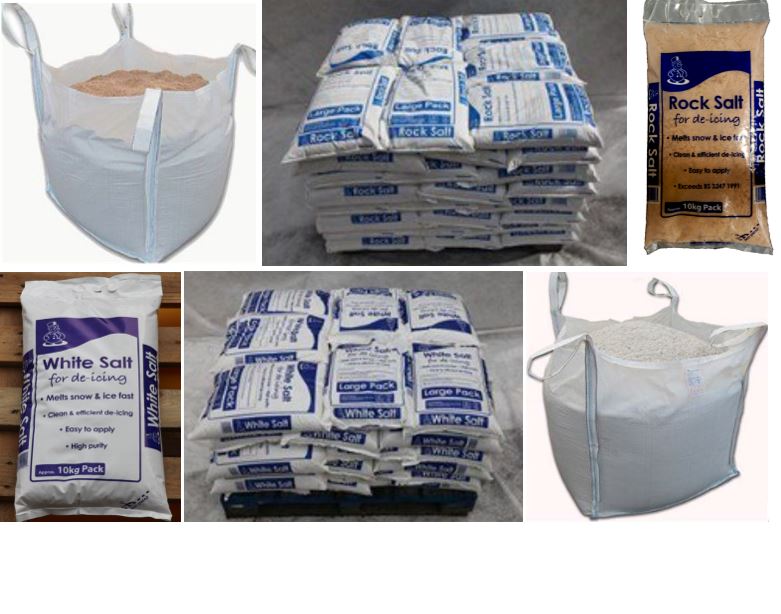
Selecting appropriate rock salt products for path maintenance requires careful consideration of application scale, storage limitations, and handling requirements specific to pedestrian surfaces. Hall-Fast offers extensive options tailored to different operational needs, from small residential properties to extensive public pathway networks. Their Rock Salt Bulk Bag provides maximum economy for large-scale operations maintaining extensive pathway systems, though most path maintenance operations benefit from more manageable packaging formats.
The Rock Salt Pallet of 100 Bags 10KG represents an ideal solution for most path maintenance operations, providing convenient handling while maintaining bulk purchase economics. The 10kg size allows easy transport to multiple path locations without requiring mechanical assistance, particularly important for maintenance staff working in areas inaccessible to vehicles. This format enables strategic placement of supplies near high-priority paths, reducing response time during weather events.
For operations with adequate handling equipment and storage facilities, Hall-Fast's Rock Salt Pallet of 40 Bags 23KG offers improved efficiency through reduced handling frequency. While requiring more physical capability or mechanical assistance for transport, this format suits facilities with centralized storage and distribution systems serving multiple pathway zones. The larger bags reduce packaging waste and handling time while maintaining product quality through Hall-Fast's robust packaging design.
Premium White Salt Options for High-Traffic Paths
Aesthetic considerations and cleanliness requirements often elevate white salt as the preferred choice for high-visibility pedestrian paths, particularly in commercial, healthcare, and hospitality settings. Hall-Fast's White Salt Bulk Bag provides large-scale users with a premium product that minimizes tracking and residue while delivering superior melting performance. The refined nature of white salt, with purity levels exceeding 99%, ensures efficient ice control with minimal environmental impact.
The reduced tracking characteristic of white salt proves especially valuable for paths leading to building entrances, where traditional rock salt creates maintenance challenges and aesthetic concerns. Healthcare facilities, where cleanliness standards remain paramount, particularly benefit from white salt's cleaner dissolution and minimal residue. The reduced cleanup requirements translate to labor savings that often offset the premium price, making white salt economically viable for quality-conscious operations.
Hall-Fast's white salt packaging options, including the White Salt Pallet of 100 Bags 10KG and White Salt Pallet of 40 Bags 23KG, ensure premium products remain practical for operations prioritizing appearance and cleanliness. These options allow facilities to maintain high standards without sacrificing operational efficiency or breaking budgets.
Application Techniques Specific to Pedestrian Paths
Effective rock salt application on paths requires techniques adapted to pedestrian traffic patterns and the unique characteristics of walkway surfaces. Unlike vehicular areas where traffic helps distribute salt, paths require precise initial placement to ensure comprehensive coverage and optimal melting action. The narrower width of most paths allows for more controlled application but demands attention to avoid waste through overspread onto adjacent landscaping or unnecessary overlap.
Hand-spreading remains common for path maintenance, offering precise control and accessibility to areas where mechanical spreaders cannot operate. Developing consistent spreading techniques ensures uniform coverage while preventing the waste associated with uneven application. A sweeping side-to-side motion while walking at a steady pace produces better results than stationary dumping, which creates concentrated spots that waste product and may damage surfaces. Training maintenance staff in proper hand-spreading techniques improves efficiency and reduces material costs.
For longer paths or operations maintaining multiple walkways, push-type broadcast spreaders designed for sidewalk applications provide improved efficiency and consistency. These units, available through Hall-Fast's comprehensive tools selection, feature adjustable spread widths that match common path dimensions while preventing overspreading onto adjacent areas. Calibration before each season ensures accurate application rates, while regular maintenance during the season maintains consistent performance despite corrosive salt exposure.
Timing Strategies for Path Treatment
The timing of rock salt application on paths proves even more critical than for vehicular surfaces, as pedestrian traffic cannot be easily redirected during treatment and recovery periods. Pre-treatment before anticipated precipitation provides the highest safety value, preventing initial ice formation and reducing slip hazards throughout the weather event. This proactive approach requires accurate weather monitoring and the flexibility to mobilize maintenance crews based on forecast conditions rather than waiting for visible accumulation.
Early morning treatment schedules accommodate typical pedestrian traffic patterns, ensuring paths are safe before peak usage periods. For commercial and institutional properties, this often means treatment between 4:00 and 6:00 AM, allowing time for rock salt to work before employees and visitors arrive. Residential paths may permit later treatment, though considerations for school children and commuters still favor early morning application. Developing location-specific timing protocols based on actual usage patterns optimizes safety outcomes while managing labor costs.
Evening reapplication addresses refreezing risks as temperatures drop and residual moisture from daytime melting creates hazardous conditions. This second treatment proves particularly important for paths that receive limited sunlight or those subject to roof runoff or other water sources. The lower pedestrian traffic during evening hours allows more aggressive treatment without concerns about tracking, making this an ideal time for thorough application that provides overnight protection.
Managing Different Path Materials and Surfaces
Various path materials require adjusted rock salt application strategies to maintain safety while preventing damage to expensive infrastructure. Traditional concrete sidewalks tolerate rock salt well when properly constructed and sealed, though older or deteriorating concrete may suffer accelerated damage from freeze-thaw cycles exacerbated by salt use. Regular sealing and prompt repair of cracks and spalling helps protect concrete paths while maintaining their compatibility with rock salt treatment.
Brick and paver paths present unique challenges due to their jointed construction and potential for differential movement. Rock salt can accelerate mortar deterioration in older installations, while the joints themselves can trap salt and moisture, leading to efflorescence and staining. Using white salt reduces staining risk, while careful application focusing on surface treatment rather than joint saturation helps preserve these attractive but sensitive surfaces. Hall-Fast's premium white salt options provide ideal solutions for maintaining these decorative pathways.
Natural stone paths, including flagstone, slate, and limestone installations, require particular care as some stones react negatively to salt exposure. Limestone and certain sandstones prove especially vulnerable to salt damage, experiencing surface deterioration and discoloration with repeated exposure. For these sensitive materials, minimal rock salt application combined with prompt mechanical snow removal and alternative traction aids may provide better long-term results while maintaining acceptable safety levels.
Environmental Considerations for Path Salt Management
The concentrated nature of path salt application raises environmental concerns that require careful management to protect adjacent landscaping and water resources. Paths typically border lawns, gardens, and ornamental plantings that suffer damage from salt exposure through direct application, splash, or runoff. Implementing buffer zones and precision application techniques minimizes this collateral damage while maintaining necessary safety standards for pedestrian surfaces.
Proper drainage management prevents salt-laden runoff from accumulating in sensitive areas or entering storm water systems at concentrated levels. Installing barriers or redirecting drainage away from plantings helps protect valuable landscaping investments. Some operations use burlap or temporary barriers during winter to shield sensitive plants from salt spray, removing these protections during spring to restore aesthetic appeal. These mitigation measures, combined with careful application, allow responsible path maintenance without sacrificing environmental quality.
Spring remediation activities help reverse any salt accumulation that occurs despite preventive measures. Thorough flushing of path edges and adjacent soil helps dilute salt concentrations before growing season begins. Applying gypsum to affected soil areas can help displace sodium ions and improve soil structure damaged by salt exposure. These restorative practices, combined with selection of salt-tolerant plants for path borders, create resilient landscapes that withstand necessary winter maintenance activities.
Safety Equipment and Procedures for Path Maintenance
Personnel safety during path salt application requires appropriate equipment and procedures that protect workers while maintaining operational efficiency. The repetitive nature of path treatment, often involving extensive walking and manual spreading, creates ergonomic risks that proper equipment and technique can minimize. Hall-Fast's comprehensive safety at work collection provides essential protective equipment for winter maintenance operations.
Slip-resistant footwear with adequate insulation protects workers from the very hazards they work to eliminate for others. Ice cleats or traction aids provide additional security when working on untreated surfaces or during active precipitation. Insulated, waterproof gloves protect hands from salt exposure and cold while maintaining dexterity needed for spreading operations. High-visibility clothing ensures worker safety when operating near vehicle traffic or in low-light conditions common during winter storms.
Ergonomic considerations become critical during extended path maintenance operations. Proper lifting techniques when handling salt bags prevent back injuries, while rotating tasks reduces repetitive stress. Providing mechanical aids like carts or wheelbarrows for transporting salt to distant paths reduces physical strain. Scheduling adequate breaks during long treatment sessions prevents fatigue-related injuries and maintains work quality throughout the shift.
Calculating Rock Salt Requirements for Path Networks
Accurate estimation of rock salt needs for path maintenance prevents both shortages that compromise safety and excess inventory that creates storage challenges. Begin by measuring total path length and average width to determine treatment area. Most paths require 2-4 pounds of rock salt per 100 square feet for effective treatment, though this varies based on local conditions and path materials. Multiply area by application rate and expected number of treatments per season to determine base requirements.
Consider variation in treatment needs across different path segments when calculating requirements. High-traffic areas near building entrances require more frequent treatment than remote paths with minimal use. Shaded areas that retain ice longer need higher application rates than sunny exposures. Problem zones where water accumulates demand focused attention with increased material allocation. Developing zone-specific calculations improves accuracy while identifying opportunities for targeted inventory placement.
Historical weather data provides essential context for seasonal planning, though climate variability increasingly challenges historical norms. Analyze previous years' treatment frequency, storm severity, and seasonal duration to establish baseline expectations. Add 25-30% contingency reserves to accommodate severe seasons or unexpected weather patterns. Hall-Fast's flexible ordering and reliable delivery, detailed on their contact us page, supports just-in-time inventory strategies that balance carrying costs with availability assurance.
Professional Standards for Path Maintenance Services
Commercial path maintenance services must meet increasingly sophisticated standards as property owners recognize the importance of professional winter maintenance for liability protection and property preservation. Service providers maintaining strong supplier relationships, such as those with Hall-Fast, ensure reliable material access throughout the season while benefiting from bulk pricing that improves service economics. Professional operations distinguish themselves through systematic approaches that ensure consistent, documented service delivery.
Service agreements for path maintenance should clearly specify response triggers, treatment areas, and material specifications. Unlike vehicular surfaces where accumulation depth triggers service, path maintenance often requires more frequent attention due to pedestrian safety requirements. Zero-tolerance policies for ice on critical paths may necessitate daily monitoring and treatment during active winter weather. Clear communication about service levels helps property owners understand cost structures while ensuring appropriate safety standards.
Documentation requirements for path maintenance continue expanding as liability concerns drive demand for verifiable service records. Time-stamped photos, GPS tracking, and detailed service logs provide evidence of proper maintenance that proves valuable in defending against slip-and-fall claims. Professional services invest in technology and training that ensures comprehensive documentation while maintaining operational efficiency. Hall-Fast's support for professional contractors, evidenced through their about us page describing worldwide distribution capabilities, helps service providers maintain professional standards.
Accessibility Compliance and ADA Considerations
Maintaining paths in compliance with accessibility regulations requires understanding how rock salt application affects mobility-impaired pedestrians using wheelchairs, walkers, or other assistive devices. The Americans with Disabilities Act (ADA) mandates maintaining accessible routes free from hazards, including ice and snow accumulation. Rock salt application helps meet these requirements but must avoid creating new barriers through excessive accumulation or uneven melting patterns that produce rough surfaces.
Wheelchair users face particular challenges with salt-treated paths, as residue can corrode chair components and accumulated salt creates resistance to wheel movement. Using appropriate application rates that achieve melting without excessive residue helps maintain accessibility while protecting equipment. White salt's cleaner properties make it preferable for paths serving healthcare facilities or areas with high accessibility device usage, reducing both maintenance issues and equipment damage.
Tactile warning surfaces and other accessibility features require special attention during winter maintenance. These textured surfaces can trap salt and ice, compromising their function and creating hazards. Careful application focusing on maintaining texture visibility while preventing ice accumulation demands precision and understanding of these features' importance. Regular inspection ensures accessibility features remain functional throughout winter despite challenging maintenance conditions.
Technology Integration in Path Maintenance
Modern technology increasingly supports efficient, effective path maintenance through improved monitoring, application, and documentation systems. Infrared sensors detect surface temperature and moisture conditions on critical paths, triggering alerts when treatment becomes necessary. These systems prove particularly valuable for detecting black ice conditions that visual inspection might miss, preventing accidents through timely intervention.
GPS-enabled spreaders, even in push-type units, provide precise tracking of treated areas and material usage. This technology ensures complete coverage while preventing wasteful overlap, optimizing material usage and labor efficiency. Integration with maintenance management software creates comprehensive records valuable for both operational improvement and liability protection. Real-time monitoring allows supervisors to track progress during storm events, redirecting resources as needed to maintain service levels.
Weather monitoring specific to path conditions helps optimize treatment timing and material selection. Ground-level sensors provide more accurate surface temperature data than general weather stations, improving treatment decisions. Predictive analytics based on historical patterns and current conditions help anticipate problem areas and pre-position resources for rapid response. These technological advances, combined with traditional maintenance expertise, create sophisticated programs that maintain safety while managing costs.
Training and Certification for Path Maintenance Personnel
Professional path maintenance requires specialized knowledge and skills that general maintenance staff may lack, making comprehensive training essential for effective service delivery. Understanding pedestrian traffic patterns, surface materials, and accessibility requirements enables workers to make informed decisions about treatment methods and timing. Regular training updates ensure staff remain current with best practices and regulatory requirements while building expertise that improves service quality.
Equipment operation training extends beyond basic spreader use to include calibration procedures, maintenance requirements, and troubleshooting techniques. Workers must understand how different conditions affect equipment performance and how to adjust techniques accordingly. Safety training covering personal protective equipment, hazard recognition, and emergency procedures protects workers while maintaining productivity during challenging conditions.
Environmental stewardship training has become increasingly important as regulations and public awareness of salt impacts grow. Understanding best management practices for minimizing environmental impact while maintaining safety standards helps organizations balance competing priorities. This includes proper storage and handling procedures, precision application techniques, and integrated management strategies that reduce overall salt usage. Hall-Fast's commitment to supporting professional development, reflected in their comprehensive product information and technical support, helps organizations maintain high training standards.
Cost Management Strategies for Path Maintenance
Effective cost management in path maintenance requires understanding all expense components and identifying optimization opportunities without compromising safety. Material costs, while significant, often represent less than half of total program expenses when labor, equipment, and overhead are considered. Accurate cost tracking by path segment or zone identifies high-cost areas where alternative strategies might prove beneficial.
Bulk purchasing through suppliers like Hall-Fast provides immediate cost savings through volume pricing while ensuring material availability during peak demand periods. Their diverse packaging options allow organizations to balance bulk savings with handling efficiency, optimizing total program costs rather than focusing solely on material price. Strategic inventory placement near high-priority paths reduces transportation time and labor costs during treatment operations.
Technology investments that improve efficiency often provide rapid payback through reduced labor and material costs. GPS tracking systems that eliminate redundant coverage, automated alerts that optimize treatment timing, and improved documentation that reduces liability exposure all contribute to long-term cost reduction. Viewing technology as investment rather than expense helps organizations build competitive advantages while improving service quality.
Quality Assurance and Continuous Improvement
Maintaining consistent quality in path maintenance requires systematic monitoring and improvement processes that identify problems before they affect safety or service perception. Regular inspections during and after treatment verify coverage completeness and effectiveness, allowing immediate correction of any deficiencies. Post-event reviews analyzing what worked well and what needs improvement create learning opportunities that enhance future performance.
Customer feedback provides valuable perspective on service quality and identifies priorities that may differ from operational assumptions. Regular surveys, accessible communication channels, and proactive engagement help understand user needs and expectations. This input guides resource allocation and service improvements that enhance satisfaction while maintaining cost effectiveness. Hall-Fast's customer focus, demonstrated through their numerous awards and community engagement, exemplifies the commitment to quality that distinguishes leading suppliers.
Performance metrics tracking response times, treatment effectiveness, material usage efficiency, and safety outcomes provide objective measures of program success. Comparing performance across different paths, conditions, and treatment methods identifies best practices that can be standardized across operations. Benchmarking against industry standards and leading organizations drives continuous improvement while validating program effectiveness.
Future Trends in Path Maintenance
The path maintenance industry continues evolving in response to changing demographics, climate patterns, and technological capabilities. Aging populations increase demand for consistently safe pedestrian surfaces, raising expectations for winter maintenance quality. Climate variability creates more challenging conditions with frequent freeze-thaw cycles and extreme events that test traditional maintenance approaches. These trends drive innovation in products, equipment, and service delivery methods.
Alternative de-icing products specifically formulated for pedestrian surfaces continue emerging, offering potential advantages in effectiveness, environmental impact, or cost. Organic-based products derived from agricultural byproducts may provide environmentally friendly options for sensitive areas. Heated path systems, while expensive to install, eliminate chemical treatment needs for critical areas. These alternatives complement rather than replace rock salt for most applications, providing options for specific situations.
Automation and robotics promise to revolutionize path maintenance in coming years. Autonomous spreaders could treat paths continuously during events, optimizing application based on real-time conditions. Robotic snow removal systems could clear paths before ice formation, reducing salt requirements. While widespread adoption remains years away, early adopters already experiment with these technologies in controlled environments. Hall-Fast's commitment to innovation, evidenced by their diverse product offerings across consumables, fasteners and small components, and specialty items, positions them to support evolving industry needs.
Conclusion: Excellence in Path Safety Through Rock Salt Management
Rock salt for paths remains the cornerstone of pedestrian safety during winter months, providing reliable, cost-effective ice control that prevents accidents and ensures accessibility. Understanding the unique challenges of path maintenance, from material considerations to accessibility requirements, enables property managers to develop comprehensive programs that protect pedestrians while managing costs and environmental impacts. The critical importance of maintaining safe paths extends beyond simple liability concerns to encompass social responsibility for community member safety.
Hall-Fast's extensive product range, from bulk quantities to convenient packaged options in both traditional and premium white salt varieties, supports every type and scale of path maintenance operation. Their commitment to quality, customer service, and comprehensive solutions makes them ideal partners for organizations seeking reliable supply chains for winter path maintenance. Combined with their broader selection of winter management products and equipment, Hall-Fast provides complete solutions addressing every aspect of professional path maintenance.
Success in path maintenance requires more than simply spreading rock salt on walkways. It demands understanding of pedestrian needs, strategic planning for various weather scenarios, proper equipment selection and maintenance, trained personnel, and commitment to continuous improvement. By partnering with established suppliers like Hall-Fast and implementing professional best practices, organizations can maintain safe, accessible paths throughout winter while managing costs effectively and protecting environmental resources. For more information about their products and services, visit their website or contact their knowledgeable staff who can guide you toward optimal solutions for your specific path maintenance requirements.