Ice formation presents one of winter's most dangerous challenges, creating hazardous conditions that threaten safety and disrupt daily activities across residential, commercial, and industrial settings. Rock salt for ice control has proven itself as the most widely adopted solution for managing these risks, offering an optimal combination of effectiveness, affordability, and availability that makes it indispensable for winter safety management. This comprehensive guide examines every aspect of using rock salt for ice control, from the scientific principles underlying its effectiveness to practical application strategies that maximize safety while minimizing environmental impact.
The Science Behind Rock Salt's Ice-Melting Properties
Understanding how rock salt for ice works at the molecular level helps users optimize its application and appreciate why it remains the preferred choice for ice management worldwide. When rock salt contacts ice, it initiates a process called freezing point depression, fundamentally altering the physical properties of water. The sodium and chloride ions dissociate in the thin layer of water that exists even on ice surfaces, disrupting the organized crystalline structure that keeps water in its solid state. This disruption prevents water molecules from forming the rigid bonds necessary for ice formation, effectively lowering the freezing point from the standard 32°F (0°C) to approximately 20°F (-6.7°C).
The endothermic nature of this dissolution process means rock salt actually absorbs heat from its surroundings as it dissolves, which might seem counterintuitive for a substance used to melt ice. However, the freezing point depression effect far outweighs this cooling, and the resulting brine solution continues to prevent refreezing even as temperatures fluctuate. This persistent action makes rock salt particularly valuable for maintaining safe conditions over extended periods, rather than requiring constant reapplication as conditions change.
The effectiveness of rock salt for ice varies with temperature, concentration, and environmental conditions. At temperatures approaching rock salt's effective limit, the melting process slows considerably, requiring higher application rates or supplementary products. Understanding these limitations helps users develop comprehensive ice management strategies that adapt to changing conditions while maintaining consistent safety standards.
Comprehensive Benefits of Rock Salt for Ice Management
The dominance of rock salt in ice control applications stems from multiple advantages that collectively make it superior to most alternatives for routine winter maintenance. Cost-effectiveness remains paramount, with rock salt typically costing a fraction of specialized de-icing products while delivering reliable results across most winter conditions. This economic advantage becomes particularly significant for large-scale operations managing extensive areas or requiring frequent applications throughout long winter seasons.
Immediate visibility represents another crucial advantage of rock salt for ice treatment. The distinctive granular appearance allows applicators to monitor coverage, identify treated areas, and avoid over-application that wastes product and potentially damages surfaces. This visual feedback proves invaluable during storm conditions when rapid treatment of multiple areas requires efficient resource allocation and clear communication among maintenance teams.
The widespread availability of rock salt ensures consistent supply even during severe weather events when demand peaks. Hall-Fast's extensive inventory and distribution network, accessible through their comprehensive industrial and commercial equipment platform, guarantees customers maintain adequate supplies regardless of weather severity or duration. Their ability to provide both bulk quantities and manageable packaging options accommodates diverse customer needs while ensuring cost-effective procurement strategies.
Product Selection: Choosing the Right Rock Salt for Your Ice Control Needs
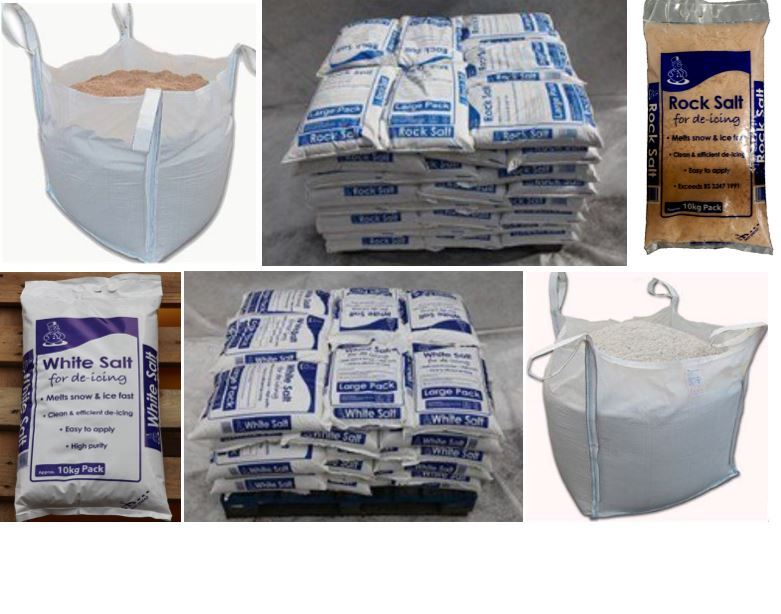
Selecting appropriate rock salt products for ice management requires careful consideration of application scale, storage capabilities, and specific site requirements. Hall-Fast offers a comprehensive range designed to meet varying needs, from residential homeowners managing walkways to industrial facilities maintaining vast parking areas. Their Rock Salt Bulk Bag represents the ultimate economy option for large-scale users, providing maximum value for organizations with appropriate storage and handling equipment.
For operations requiring more flexible inventory management, Hall-Fast's Rock Salt Pallet of 100 Bags 10KG offers an ideal balance between bulk purchasing advantages and practical handling considerations. The 10kg format allows easy distribution among multiple users or locations while maintaining the cost benefits of volume purchasing. This packaging proves particularly popular among property management companies, educational institutions, and businesses maintaining multiple facilities.
Larger facilities often prefer Hall-Fast's Rock Salt Pallet of 40 Bags 23KG, which reduces handling frequency while providing substantial quantities for extended operations. The 23kg size optimizes the balance between portability and volume, suitable for both manual application and use with mechanical spreading equipment. This format particularly benefits operations with dedicated maintenance staff and appropriate material handling equipment.
Premium White Salt Options for Specialized Applications
While traditional brown rock salt serves most ice control needs effectively, certain applications benefit from the refined properties of white salt. Hall-Fast's white salt products provide premium solutions for situations where residue, staining, or purity concerns take precedence. The White Salt Bulk Bag delivers large-scale users the same economical bulk format while providing the aesthetic and performance advantages of refined salt.
White salt's higher purity level, typically exceeding 99% sodium chloride content, translates directly to improved melting efficiency and reduced environmental impact. Fewer impurities mean less residue tracked into buildings, reduced staining on concrete and stone surfaces, and minimal impact on surrounding soil and vegetation. These advantages make white salt particularly valuable for high-traffic commercial entrances, healthcare facilities, and upscale residential properties where appearance and cleanliness standards remain paramount.
Hall-Fast provides white salt in the same convenient packaging formats as traditional rock salt, including the White Salt Pallet of 100 Bags 10KG and White Salt Pallet of 40 Bags 23KG. These options ensure customers can access premium products without sacrificing the handling and storage conveniences they require for efficient operations.
Strategic Application Methods for Maximum Ice Control
Effective ice management with rock salt requires more than simply spreading product on frozen surfaces. Strategic application begins with understanding ice formation patterns specific to each property. Low-lying areas where water accumulates, north-facing surfaces that receive limited sunlight, and zones where foot or vehicle traffic compresses snow into ice require priority attention. Developing site-specific application maps ensures consistent treatment of problem areas while avoiding waste in less critical zones.
Pre-treatment represents the most effective strategy for ice control, applying rock salt before precipitation begins to prevent initial ice bonding. This proactive approach requires significantly less product than treating established ice and provides better safety outcomes. Weather monitoring and accurate forecasting become essential tools for timing pre-treatment applications, with many professional operations utilizing detailed meteorological services to optimize their treatment schedules.
Application rates must balance effectiveness with economy and environmental responsibility. General guidelines suggest 100-150 grams per square meter for pre-treatment and up to 300 grams per square meter for existing ice conditions, though these rates require adjustment based on temperature, ice thickness, and expected traffic. Hall-Fast's complete range of winter management products includes calibrated spreaders and application equipment that ensure accurate, consistent distribution while minimizing waste.
Temperature Considerations and Performance Optimization
Rock salt's effectiveness for ice control diminishes as temperatures drop, with practical effectiveness ending around 20°F (-6.7°C). Understanding this temperature relationship helps users anticipate when alternative strategies or products become necessary. As temperatures approach rock salt's lower limit, the melting process slows dramatically, requiring increased application rates to achieve acceptable results. This diminishing return makes temperature monitoring essential for cost-effective ice management.
Optimizing rock salt performance in marginal temperatures involves several strategies. Combining rock salt with sand or other abrasives provides immediate traction improvement while the slower melting process proceeds. Pre-wetting rock salt with brine solution accelerates initial melting and helps salt adhere to surfaces, reducing bounce and scatter during application. Some operations blend rock salt with small amounts of calcium or magnesium chloride to extend the effective temperature range while maintaining cost advantages.
Surface temperature often differs from air temperature, particularly on sunny days when dark pavement absorbs solar radiation. Understanding these microclimatic variations helps optimize application timing and rates. Bridge decks and elevated structures typically freeze first due to cold air circulation above and below, requiring earlier treatment than ground-level surfaces. Shaded areas maintain lower temperatures throughout the day, necessitating higher application rates or more frequent treatment to maintain safe conditions.
Environmental Impact and Responsible Use Practices
While rock salt for ice provides essential safety benefits, responsible use requires understanding and mitigating potential environmental impacts. Sodium chloride can accumulate in soil, potentially affecting pH levels and plant health. Implementing buffer zones between treated areas and sensitive vegetation helps protect landscaping investments while maintaining necessary safety standards. Using precision application equipment and following recommended rates minimizes excess salt entering the environment.
Proper storage prevents environmental contamination before application even begins. Hall-Fast's sealed packaging protects product integrity while preventing unintended environmental exposure through runoff or wind dispersion. Once opened, transferring rock salt to covered, waterproof containers maintains quality while preventing environmental release. Storage areas should feature impermeable surfaces and drainage controls to contain any spillage and prevent contamination of soil or water resources.
Consider integrated ice management approaches that reduce overall salt usage while maintaining safety standards. Mechanical snow removal before ice formation reduces the amount of salt needed for treatment. Improving drainage eliminates standing water that becomes hazardous ice. Anti-icing applications using liquid brine can provide effective prevention with less total salt than traditional reactive approaches. These complementary strategies create comprehensive programs balancing safety requirements with environmental stewardship.
Equipment Selection and Maintenance for Ice Control Operations
Successful rock salt application for ice management depends heavily on appropriate equipment selection and maintenance. Hand-held broadcast spreaders suit small areas and spot treatment, providing adequate coverage for residential properties and targeted problem areas. These units, available through Hall-Fast's comprehensive tools selection, offer adjustable flow rates and spread patterns to match specific application requirements.
Walk-behind spreaders increase efficiency for moderate-sized areas, allowing single operators to treat sidewalks, parking lots, and access roads quickly and consistently. Features like pneumatic tires, adjustable spread widths, and calibrated application rates ensure professional results while minimizing operator fatigue. Regular calibration maintains accuracy, preventing over-application that wastes product and under-application that compromises safety.
Vehicle-mounted spreaders become essential for large-scale ice control operations. These units range from tailgate spreaders suitable for pickup trucks to sophisticated hydraulic systems for dedicated winter maintenance vehicles. Proper sizing ensures adequate capacity without overloading vehicles, while features like variable speed controls and GPS-guided application systems optimize efficiency and documentation. Regular maintenance, including thorough cleaning after each use and component inspection, ensures reliable operation throughout the season.
Safety Protocols for Handling and Applying Rock Salt
Working with rock salt for ice control requires appropriate safety measures to protect workers and bystanders. While rock salt presents minimal hazards during normal use, prolonged exposure can cause skin irritation and dryness. Providing workers with appropriate personal protective equipment, readily available through Hall-Fast's extensive safety at work catalog, ensures comfort and protection during extended application sessions.
Eye protection becomes critical when using mechanical spreaders or working in windy conditions. Salt particles can cause significant eye irritation, making safety glasses or goggles essential equipment for all personnel involved in ice control operations. Similarly, dust masks prevent inhalation of fine particles, particularly important when loading spreaders or working with dry material in enclosed spaces.
Proper lifting and handling techniques prevent musculoskeletal injuries that represent the most common hazards in ice control operations. Training workers on safe lifting practices, providing mechanical aids for heavy bags, and rotating tasks to prevent repetitive strain injuries create safer working environments. Hall-Fast's various packaging sizes accommodate different physical capabilities, with their 10kg bags suitable for most workers and mechanical assistance recommended for handling bulk bags or palletized loads.
Calculating Requirements and Inventory Management
Accurate calculation of rock salt requirements for ice control prevents both costly shortages during critical periods and excessive inventory that creates storage challenges and ties up capital. Begin by calculating total treatment area, including all surfaces requiring regular ice control. Multiply this area by expected application rate and frequency to determine seasonal requirements. Most regions require 20-30 applications per season, though this varies considerably based on climate and weather patterns.
Historical weather data provides valuable insight for inventory planning. Analyze previous years' storm frequency, duration, and severity to establish baseline requirements. Add contingency reserves of 20-30% to account for severe seasons or unexpected weather patterns. This buffer ensures adequate supplies during peak demand periods when procurement becomes challenging and prices typically increase.
Hall-Fast's flexible ordering and delivery options support effective inventory management strategies. Their ability to maintain substantial stocks and provide rapid delivery, as detailed on their contact us page, allows customers to balance carrying costs with availability assurance. Establishing account relationships enables quick reordering when conditions demand additional supplies, while their worldwide distribution capabilities ensure consistent access regardless of location.
Comparing Rock Salt with Alternative Ice Control Products
Understanding alternative ice control products helps users make informed decisions when rock salt's limitations require supplementary or replacement options. Calcium chloride maintains effectiveness at extremely low temperatures, working down to -25°F (-32°C), making it valuable for severe cold conditions where rock salt fails. However, its significantly higher cost, typically three to five times that of rock salt, limits its use to critical applications or extreme conditions.
Magnesium chloride offers another alternative, providing effective melting with reduced environmental impact compared to rock salt. Its lower chloride content and reduced corrosivity make it preferable for sensitive applications, though cost considerations again favor rock salt for routine large-scale use. Some operations develop blended products, combining rock salt's economy with small amounts of alternative chlorides to extend temperature range and improve performance.
Acetate-based de-icers represent the premium end of the ice control spectrum, offering superior environmental compatibility and minimal corrosivity. These products find application in airports, where traditional chlorides could damage aircraft, and environmentally sensitive areas where chloride restrictions apply. While highly effective, their extreme cost relative to rock salt restricts use to specialized applications where their unique properties justify the expense.
Professional Ice Management Services
Many property owners rely on professional contractors for ice control, making understanding of service standards and practices valuable for both providers and consumers. Professional services typically maintain relationships with suppliers like Hall-Fast to ensure reliable product access throughout the season. Their bulk purchasing power and efficient application equipment often provide better value than self-management for many properties.
Service agreements should clearly specify trigger conditions for treatment, whether based on weather forecasts, actual precipitation, or property owner request. Understanding response times, especially during storm events when multiple properties require simultaneous treatment, helps set realistic expectations. Quality contractors maintain detailed records of applications, including dates, times, quantities, and weather conditions, providing documentation for liability purposes and service optimization.
When evaluating professional services, verify their supply chain reliability and contingency planning. Established contractors maintain relationships with multiple suppliers and stockpile adequate inventory to ensure service continuity during supply disruptions. Their equipment maintenance programs and backup systems prevent service interruption due to mechanical failures. Insurance coverage, including general liability and pollution liability specific to ice control operations, protects both contractors and property owners from potential claims.
Regional Variations in Ice Control Strategies
Geographic location significantly influences ice control strategies and rock salt effectiveness. Coastal regions face unique challenges from ocean-influenced weather patterns that create frequent freeze-thaw cycles. The maritime climate's higher humidity levels affect both ice formation patterns and rock salt storage requirements. These areas often require more frequent applications due to persistent moisture and refreezing conditions, making bulk purchasing through suppliers like Hall-Fast particularly economical.
Continental climates with stable cold temperatures present different challenges. While ice formation may be less frequent than in maritime areas, extreme cold can exceed rock salt's effective temperature range for extended periods. These regions require contingency plans using alternative products or acceptance of reduced effectiveness during severe cold. Storage becomes critical, as winter conditions may prevent delivery for extended periods.
Urban environments introduce additional complexity through heat island effects, pollution impacts on ice formation, and infrastructure protection requirements. Buildings and pavement retain heat, creating microclimates that affect ice formation patterns and treatment requirements. Air pollution can alter freezing points and ice characteristics, sometimes requiring adjusted application strategies. Regulations limiting chloride use to protect infrastructure and water resources may necessitate alternative products or application methods despite higher costs.
Technological Advances in Ice Control
Modern technology increasingly influences rock salt application for ice management, improving efficiency and documentation while reducing environmental impact. GPS-guided application systems ensure consistent coverage and prevent overlap, reducing total salt usage while maintaining safety standards. These systems generate detailed records of treatment areas, application rates, and timing, valuable for both operational optimization and liability documentation.
Weather monitoring and forecasting technology has revolutionized proactive ice management. Sophisticated road weather information systems provide real-time surface temperature and condition data, enabling precise application timing. Predictive models anticipate ice formation based on temperature trends, humidity, and precipitation forecasts, allowing pre-treatment that prevents ice formation rather than reactive treatment after hazardous conditions develop.
Liquid brine application represents a significant advancement in rock salt utilization. Pre-wetting solid rock salt with brine accelerates melting and improves surface adhesion, reducing material loss from traffic displacement. Direct brine application for anti-icing requires less total salt than traditional solid application while providing equal or superior prevention. Hall-Fast's comprehensive range supports both traditional and advanced application methods, ensuring customers can adopt technologies appropriate for their operations.
Training and Certification for Ice Control Personnel
Professional ice management requires skilled personnel understanding both theoretical principles and practical application techniques. Training programs covering rock salt properties, application strategies, and environmental considerations ensure consistent, effective treatment while minimizing waste and environmental impact. Many regions offer certification programs validating operator competency and promoting industry best practices.
Equipment operation training ensures safe, efficient use of application machinery. This includes calibration procedures, maintenance requirements, and troubleshooting common problems. Understanding how environmental conditions affect equipment performance helps operators adjust techniques for optimal results. Safety training covering personal protective equipment, hazard recognition, and emergency procedures protects workers while maintaining operational efficiency.
Environmental stewardship training has become increasingly important as regulations and public awareness of chloride impacts grow. Understanding best management practices for minimizing environmental impact while maintaining safety standards helps organizations balance competing priorities. This includes proper storage and handling procedures, precision application techniques, and integrated management strategies that reduce overall salt usage.
Future Trends in Ice Control and Rock Salt Usage
The ice control industry continues evolving in response to environmental concerns, technological advances, and changing weather patterns. Climate variability increases the unpredictability of winter weather, requiring more flexible and responsive ice management strategies. Extreme weather events may become more frequent, demanding larger contingency reserves and more sophisticated response planning.
Environmental regulations increasingly influence ice control practices, with some jurisdictions implementing chloride limits for sensitive watersheds. These restrictions drive adoption of alternative products and precision application technologies that minimize salt usage while maintaining safety standards. Hall-Fast's commitment to providing diverse product options, as evidenced by their extensive consumables and equipment ranges, positions them to support evolving industry requirements.
Innovation in ice control products and applications continues advancing the industry. Enhanced rock salt formulations incorporating corrosion inhibitors, colorants for visibility, and performance additives expand application possibilities. Alternative products from agricultural and industrial byproducts offer potential environmental and performance advantages. Application technologies including automated systems, drone monitoring, and artificial intelligence-driven optimization promise continued efficiency improvements.
Making Informed Purchasing Decisions
Selecting rock salt suppliers requires evaluating multiple factors beyond simple price comparison. Product quality, including purity levels and consistency, directly affects application effectiveness and required quantities. Reliable availability throughout the season prevents disruption during critical periods when safety depends on timely treatment. Hall-Fast's established reputation, validated through numerous awards and industry recognition, demonstrates their commitment to quality and service excellence.
Consider total value rather than just product cost when evaluating suppliers. This includes delivery reliability, packaging options that match your handling capabilities, and support services like technical assistance or training. Hall-Fast's comprehensive approach, offering everything from bulk quantities to convenient smaller packages plus complementary products and equipment, provides single-source convenience that simplifies procurement and ensures compatibility.
Establishing account relationships with reliable suppliers like Hall-Fast provides advantages beyond simple purchasing convenience. Priority access during shortage periods, volume pricing benefits, and credit terms that improve cash flow management support operational efficiency. Their extensive brands portfolio ensures access to specialized products when specific applications require alternatives to standard rock salt.
Conclusion: Optimizing Rock Salt for Effective Ice Management
Rock salt for ice remains the foundation of winter safety management, providing reliable, economical ice control for countless properties worldwide. Understanding its properties, applications, and limitations enables users to develop comprehensive strategies that maximize safety while minimizing costs and environmental impacts. From residential driveways to major commercial facilities, proper rock salt selection and application ensures safe passage through winter's challenges.
Hall-Fast's extensive product range, from bulk bags to convenient palletized options in both traditional and white salt varieties, accommodates every scale and type of ice control operation. Their commitment to quality, demonstrated through industry recognition and community engagement, ensures customers receive products and support that deliver consistent, professional results. Combined with their comprehensive selection of complementary products and equipment, Hall-Fast provides complete solutions for winter ice management challenges.
Success in ice control requires more than just spreading rock salt on frozen surfaces. It demands understanding of ice formation mechanics, strategic planning for various weather scenarios, proper equipment selection and maintenance, and commitment to environmental responsibility. By partnering with established suppliers like Hall-Fast and implementing professional best practices, organizations can maintain safe conditions throughout winter while managing costs and environmental impacts effectively. For detailed information about products, pricing, and account establishment, visit Hall-Fast's website or contact their knowledgeable staff who can guide you toward optimal ice control solutions tailored to your specific requirements.