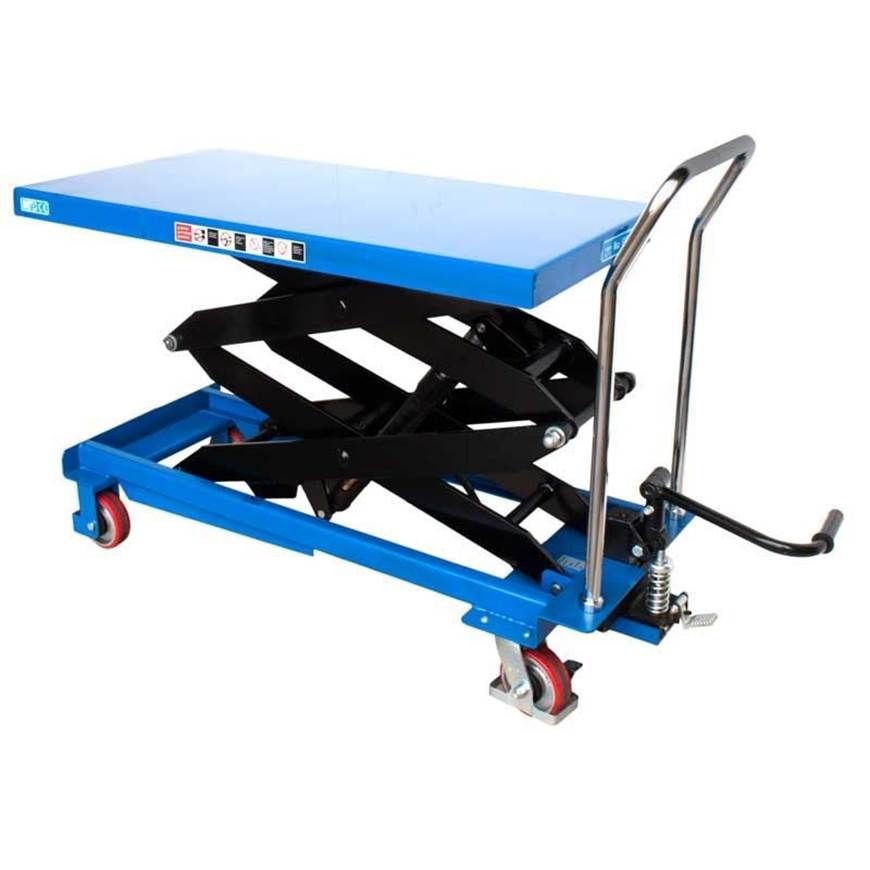
Electric System Operation: Electric scissor lift tables employ electromechanical actuation, typically using an electric motor driving a gearbox connected to a ball screw or acme screw mechanism that converts rotational motion to linear force. This direct mechanical linkage extends the scissor mechanism to elevate the platform.
Comparative Analysis of Key Performance Factors
- Lifting Capacity
Hydraulic Systems:
- Superior capacity range (typically 500kg to 10,000kg+)
- Excellent power-to-size ratio with compact components
- Consistent force throughout stroke length
- Economical scaling for higher capacities
- Straightforward reinforcement for extreme loads
- Natural overload protection through pressure relief
Electric Systems:
- Moderate capacity range (typically 100kg to 3,000kg)
- Higher component size relative to capacity
- Potential force variations through extension range
- More significant cost increases for higher capacities
- Generally requires more substantial mechanism components
- Requires electronic overload protection systems
- Precision and Control
Hydraulic Systems:
- Good general positioning accuracy (typically ±5-10mm)
- Some potential for drift under sustained loading
- Speed control through flow regulation
- Generally smoother operation with natural damping
- Potentially simpler controls for basic applications
- May require additional components for precise positioning
Electric Systems:
- Excellent positioning accuracy (typically ±2-5mm)
- Minimal drift with mechanical locking
- Precise speed control through motor regulation
- Digital control interface capability
- Position memory and programmable heights
- Superior repeatability for precision applications
- Environmental Considerations
Hydraulic Systems:
- Potential for fluid leaks in aging systems
- Requires containment considerations in sensitive environments
- Operating temperature affects fluid viscosity and performance
- Higher noise levels from pump and motor operation
- Greater environmental concerns with fluid disposal
- Less suitable for ultra-clean or food environments
Electric Systems:
- No hydraulic fluid eliminating leak concerns
- Cleaner operation for sensitive environments
- Less affected by ambient temperature variations
- Generally quieter operation (especially screw mechanisms)
- Reduced environmental impact concerns
- Suitable for clean room and food processing areas
- Maintenance Requirements
Hydraulic Systems:
- Regular fluid level checks and replacement
- Filter inspection and replacement schedule
- Seal maintenance and replacement over time
- Potential for fluid contamination issues
- System bleeding requirements after service
- More components requiring periodic inspection
Electric Systems:
- Minimal lubrication requirements
- Fewer wearing components in many designs
- No fluid-related maintenance
- Typically longer intervals between service
- Simpler troubleshooting with electronic diagnostics
- Generally cleaner maintenance procedures
- Energy Efficiency
Hydraulic Systems:
- Continuous pump operation during holding (unless equipped with auto-shutoff)
- Some energy loss through fluid friction and heat
- Higher continuous power consumption
- Potentially less efficient in frequent start-stop applications
- Greater energy consumption during sustained operation
- Typically higher overall energy requirements
Electric Systems:
- Minimal power consumption when maintaining position
- Direct drive efficiency with fewer power conversion losses
- Lower standby energy requirements
- More efficient in intermittent operation
- Potential for regenerative systems in larger models
- Generally lower overall energy consumption
- Installation and Integration
Hydraulic Systems:
- Self-contained hydraulic pack on most models
- Minimal electrical requirements (typically single-phase power)
- Less sensitive to power quality issues
- Simpler interface requirements for basic operation
- More challenging integration with automated systems
- Less network connectivity without additional components
Electric Systems:
- Direct electrical connection without hydraulic infrastructure
- Generally simpler installation process
- Greater control integration possibilities
- Easier interfacing with facility automation systems
- Enhanced connectivity for Industry 4.0 environments
- Better suited for sophisticated operational integration
- Initial and Lifetime Costs
Hydraulic Systems:
- Typically lower initial purchase cost
- Higher ongoing maintenance expenses
- Potentially higher energy costs over lifetime
- Component replacement costs over operational life
- Fluid replacement and disposal expenses
- Generally higher lifetime ownership cost for many applications
Electric Systems:
- Typically higher initial purchase cost
- Lower ongoing maintenance expenses
- Reduced energy consumption costs
- Fewer replacement components over lifetime
- No hydraulic fluid-related expenses
- Often lower total ownership cost over operational life
Application-Specific Recommendations
Based on application characteristics, the following general recommendations apply:
Hydraulic Systems Optimal For:
- Higher capacity requirements (2,000kg+)
- Budget-sensitive initial purchase decisions
- Harsh industrial environments with substantial loads
- Applications where precision is secondary to power
- Situations requiring maximum lifting force in minimal space
- Operations where maintenance expertise is readily available
Electric Systems Optimal For:
- Precision positioning applications requiring accuracy
- Clean environments including food and pharmaceutical
- Energy-efficiency prioritized operations
- Applications with frequent positioning changes
- Situations requiring minimal maintenance
- Integration with sophisticated control systems
- Quiet operation requirements in noise-sensitive areas
Hybrid and Specialized Alternatives
For applications with mixed requirements, consider these alternatives:
Electro-Hydraulic Systems: Combining an electric pump with hydraulic actuation, offering improved control precision while maintaining hydraulic power advantages.
Battery-Powered Hydraulic: Self-contained hydraulic systems with integrated battery power, providing mobility without sacrificing hydraulic lifting capability.
Pneumatic-Hydraulic Hybrids: Utilizing compressed air to power hydraulic systems, combining pneumatic cleanliness with hydraulic force multiplication.
Hall-Fast's technical specialists can provide detailed guidance on selecting between electric and hydraulic scissor lift tables based on your specific application requirements, helping you identify the optimal power system for your unique operational needs.
Explore our complete range of both electric and hydraulic scissor lift tables online to compare specifications, features, and application suitability across all power system options.