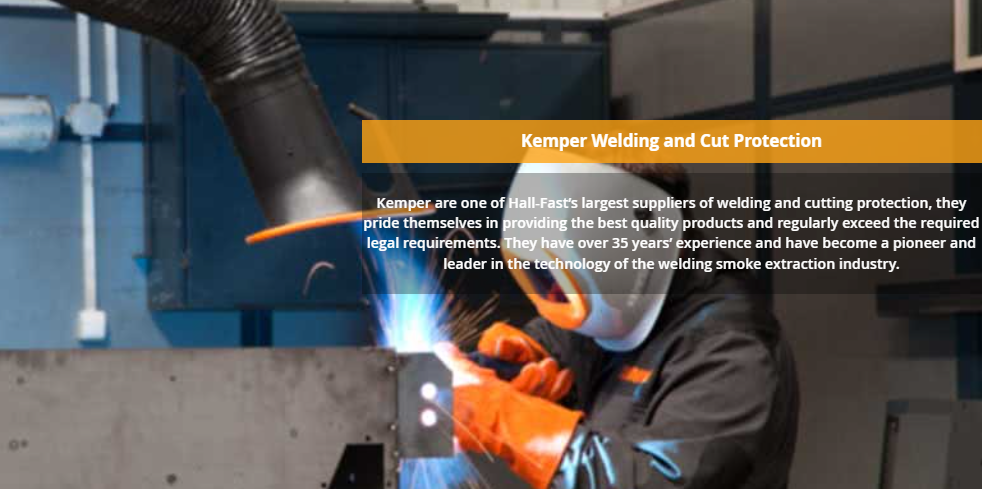
Welding fume ventilation solutions are essential for maintaining a safe and healthy work environment, as welding produces hazardous fumes that can be harmful when inhaled. Effective ventilation systems remove these fumes from the air, protecting welders and other workers from exposure. There are several solutions available depending on the scale of the welding operation, the workspace, and the type of welding performed.
Take a look at our range of Kemper Welding Fume Ventilation products https://www.hall-fast.com/brands/kemper
Key Welding Fume Ventilation Solutions:
- Local Exhaust Ventilation (LEV) Systems
- Description: LEV systems capture welding fumes directly at the source before they spread into the workspace.
- Components:
- Hoods or Nozzles: Positioned near the welding area to capture fumes.
- Ductwork: Carries the fumes away from the welding site.
- Filters: Remove harmful particles from the fumes before releasing clean air.
- Applications: Suitable for fixed workstations, welding booths, or robotic welding setups.
- Example: Fume arms or extraction hoods placed close to the welding torch.
- Portable Fume Extractors
- Description: Mobile units that can be moved to different work areas to capture welding fumes at the source.
- Features:
- Flexible Arms: Positioned near the welder’s workspace for maximum fume capture.
- HEPA or Carbon Filters: Used to trap hazardous particles and gases.
- Applications: Ideal for small workshops or work environments where welders move between different areas.
- Example: A portable extraction unit with a long reach arm positioned next to the welding point.
- Dilution Ventilation
- Description: This system dilutes welding fumes by increasing overall air movement in the workshop.
- Components:
- Fans or Air Movers: Installed to circulate air and reduce the concentration of welding fumes.
- Exhaust Systems: Remove contaminated air from the space, typically used in conjunction with fresh air intake.
- Applications: Used in large areas or when other localized systems are not feasible.
- Limitation: It does not eliminate fumes at the source and may not be sufficient in heavy welding environments.
- Downdraft Tables
- Description: These tables are designed with built-in ventilation systems that pull fumes downward, away from the welder's breathing zone.
- Features:
- Perforated Surface: Draws fumes away as welding occurs on the tabletop.
- Filtration Units: Clean the air before it is recirculated or vented outside.
- Applications: Ideal for small part welding, grinding, and other light-duty welding tasks.
- Best Practices for Welding Fume Ventilation:
- Capture at the Source: Always aim to extract fumes as close to the welding point as possible to prevent their spread.
- Regular Maintenance: Clean and replace filters and ducts regularly to ensure the system functions effectively.
- Compliance: Ensure ventilation systems meet OSHA, COSHH (UK), or other regional safety regulations regarding welding fumes.
- Air Quality Monitoring: Install sensors to monitor air quality and ensure ventilation systems are maintaining safe fume levels.
Implementing the right combination of these ventilation solutions helps create a safer environment and reduces the risk of long-term health problems for welders and other workers.
For assistance with the design of a welding ventilation system that is specific to your exact requirements please contact us sales@hall-fast.com