Understanding Safety Boot Certification: Essential Knowledge for Workplace Protection
Safety boot certification provides crucial verification that footwear meets specific performance standards designed to protect workers against workplace foot hazards. These standardized certification systems establish minimum performance requirements for various protective features, creating consistent benchmarks that allow safety managers to select appropriate footwear for specific workplace hazards with confidence in its protective capabilities.
The global landscape of safety footwear certification encompasses several key standards addressing different regional requirements and protection categories. EN ISO 20345 represents the European standard for safety footwear, establishing performance categories from SB (basic protection) through S5 (comprehensive protection including waterproofing). ASTM F2413 provides American standards with specific coding for different protection types including impact, compression, metatarsal, and electrical hazards. AS/NZS 2210 governs Australian and New Zealand requirements with similar classification structures. These standardized approaches allow meaningful comparison between different footwear options despite variations in design and construction.
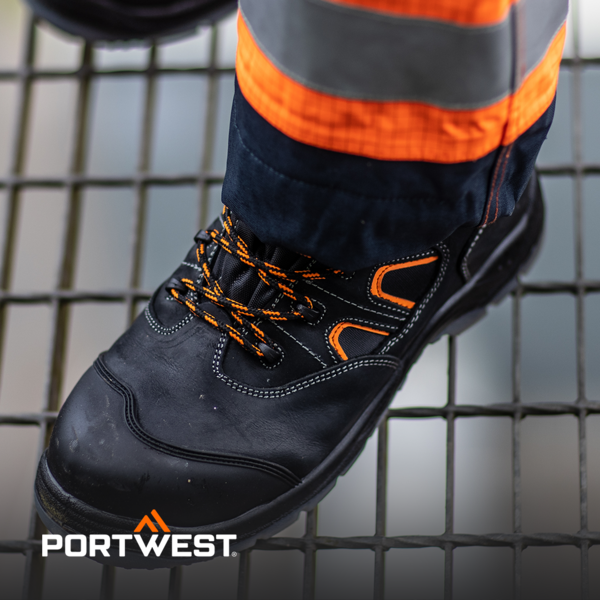
Portwest's safety footwear collection stands out through its comprehensive certification documentation across multiple international standards. Their products undergo rigorous testing by accredited laboratories to verify performance against relevant protection parameters. This thorough certification process provides clear, documented evidence of protection capabilities, simplifying compliance verification for safety managers while ensuring workers receive footwear with reliable protective characteristics appropriate for their specific workplace hazards.
Understanding certification markings enables informed safety boot selection based on workplace-specific requirements. Toe protection ratings indicate the energy absorption capacity of protective toe caps under impact and compression forces. Slip resistance codes identify tested performance on different surface types and contaminants. Penetration resistance markings verify protection against objects puncturing through the sole. Electrical hazard certifications confirm insulation properties against accidental contact with energized circuits. These standardized indicators allow precise matching of footwear features to identified workplace hazards.
Beyond meeting minimum certification requirements, several factors distinguish exceptional safety footwear from merely compliant products. Protection margins exceeding minimum standards provide additional safety buffers against varied workplace conditions. Durability characteristics ensure protective features maintain their integrity throughout the footwear's service life. Comfort elements impact wearer acceptance and proper usage, particularly important for footwear worn through entire shifts. Portwest addresses these considerations through integrated design approaches that balance certified protection with practical workplace needs.
For organizations seeking to implement comprehensive foot protection programs based on certified performance rather than subjective assessments, understanding safety boot certification provides essential knowledge for effective protection selection. Portwest's clearly documented certifications across multiple international standards simplify this process, allowing confident selection of appropriate protection for specific workplace hazards.
Explore Portwest's complete certified safety footwear collection at Hall-Fast's Portwest workwear section to find specialized protection with documented certification appropriate for your specific workplace requirements and regional compliance needs.