Introduction: Why White ESD Safety Trainers Are Harder to Find Than They Should Be
Search for "white ESD safety trainer" and you'll quickly discover one of the safety footwear market's most persistent blind spots. While black and dark-coloured safety shoes dominate catalogue after catalogue, the genuine demand for white safety footwear — from pharmaceutical manufacturers, cleanroom operatives, food industry workers, laboratory technicians and anyone working in an environment where light-coloured footwear is preferred, mandated or simply expected — has largely gone unmet.
Most workers in these environments face the same frustrating compromise: choose a white safety shoe that looks the part but delivers mediocre protection, or choose a properly specified ESD safety trainer in a colour that violates your workplace's dress code. Neither option is acceptable when you're spending eight to twelve hours a day on your feet in an environment where both appearance and protection genuinely matter.
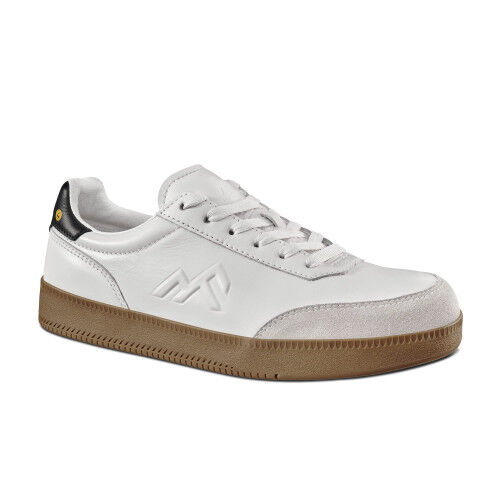
The Rock Fall RF504 Lotus White ESD Safety Trainer was built to end that compromise.
Combining a clean, crisp white leather upper with a full suite of certified safety features — steel toecap, PS-rated penetration resistant midsole, ESD certification, anti-static rating, SR-rated slip resistance and a bio-based outsole — the RF504 Lotus is the white ESD safety trainer the market has been waiting for. And it does all of this within a genuinely attractive, low-profile trainer silhouette that looks as good beyond the working day as it does on the production floor.
In this article, we'll cover everything you need to know: who needs white ESD safety footwear and why, what makes the RF504 Lotus stand out, how it compares to the alternatives, and why it belongs at the top of your shortlist whether you're buying for yourself or specifying footwear for a team.
Who Actually Needs White Safety Footwear?
Before we look at the RF504 Lotus in detail, it's worth understanding the distinct group of industries and environments that genuinely need — or strongly prefer — white safety footwear. This isn't a niche market. It's a broad swathe of the UK and global workforce that has been poorly served for too long.
Pharmaceutical Manufacturing
Pharmaceutical production environments operate under strict hygiene and contamination control protocols. Light-coloured footwear — particularly white — is widely preferred or mandated in these settings because contamination (dirt, debris, chemical residues) is immediately visible against a white upper. This visibility isn't cosmetic. It's a contamination control mechanism. A white shoe with a dark stain is a prompt for cleaning or replacement. The same contamination on a black shoe might go unnoticed.
Pharmaceutical manufacturing environments are also routinely ESD-sensitive. Static discharge near delicate formulation equipment, sensitive electronics or in environments where flammable materials are present creates real risk. ESD-certified white safety footwear is therefore a genuine operational requirement for many workers in this sector — not a preference, but a compliance necessity.
Cleanroom Environments
Cleanrooms — controlled environments designed to minimise particulate contamination — operate across electronics, semiconductor, medical device, aerospace and pharmaceutical manufacturing. They are, almost by definition, environments with strict dress codes: gowning requirements, dedicated footwear protocols and a strong preference for light-coloured shoes and covers that make contamination visible.
In ISO-classified cleanrooms, footwear is one of the primary routes by which particles are introduced into the controlled environment. ESD control is also critical in electronics and semiconductor cleanrooms, where a single uncontrolled static discharge can destroy components worth thousands of pounds. White ESD-certified footwear sits at the intersection of cleanroom aesthetics and ESD compliance — and genuine options have historically been scarce.
Food and Beverage Production
Food industry safety standards — from BRCGS and SQF certification to general HACCP protocols — frequently include requirements for light-coloured footwear in production areas. The reasoning mirrors pharmaceutical logic: visible contamination is controllable contamination. White safety shoes allow supervisors, hygiene auditors and wearers themselves to spot soiling that might represent a contamination risk.
While food production environments don't always require ESD certification, anti-static properties are valued in many packaging and processing areas where static can attract airborne particles or interfere with equipment. A white safety trainer with anti-static capability is a strong specification for food manufacturing roles.
Laboratory and Research Environments
Laboratories — particularly those involved in electronics research, materials science, chemistry and life sciences — frequently maintain both ESD control protocols and light-coloured footwear preferences. Researchers and technicians working at lab benches with sensitive equipment need footwear that meets ESD standards without the institutional grey or black aesthetic that dominates most of the market.
Healthcare-Adjacent Manufacturing
Medical device manufacturing, dental equipment production and similar healthcare-adjacent sectors share many of the hygiene and contamination control priorities of pharmaceutical manufacturing, with similar preferences for light-coloured footwear in production areas.
Anyone Who Simply Prefers White
Beyond regulatory or environmental drivers, there's a growing group of workers across construction, logistics, engineering and general industrial roles who simply prefer white or light-coloured safety trainers for aesthetic reasons. The rise of workwear as a style category — driven in part by the "gorpcore" and utilitarian workwear trends — has brought new attention to safety footwear aesthetics. White trainers specifically have been a dominant fashion trend, and workers who care about how they look don't want to check their style at the site entrance.
The White Safety Trainer Problem: Why Most Options Fall Short
The demand for white ESD safety footwear is clear. So why has the market been so slow to respond? The answer comes down to several overlapping challenges that make white safety footwear genuinely harder to manufacture and maintain than its darker counterparts.
The Durability Challenge
White leather and synthetic materials show wear, scuffs and staining far more readily than dark coloured materials. A safety trainer that looks pristine on day one needs to maintain at least a reasonable appearance through weeks and months of industrial use. Cheap white safety footwear fails this test quickly — the upper discolours, the midsole yellows and the overall appearance deteriorates within weeks, creating both a visual and potential hygiene concern in environments that mandate clean, presentable footwear.
The Rock Fall RF504 Lotus addresses this with an LWG Gold-rated water repellent leather upper — a genuine quality leather that resists moisture and surface soiling and maintains its integrity over time. This isn't a synthetic white coating over a low-grade base. It's properly specified, durably finished leather chosen with longevity in mind.
The Protection Compromise
Many white safety shoes on the market prioritise aesthetics over substance. Light colours are more commonly found on lower-specification safety footwear — basic S1 or S1P rated shoes that lack the full protection suite required in demanding industrial environments. Finding white safety footwear with ESD certification, steel toecap, penetration resistant midsole and slip resistance in combination has historically required significant research and often resulted in disappointment.
The RF504 Lotus carries S1P ESD SRC certification — combining steel toecap impact protection, penetration resistance, anti-static and ESD properties, and SRC-level slip resistance in a single, fully specified shoe. It doesn't ask wearers to compromise protection for colour.
The Style Compromise
At the other end of the spectrum, white safety footwear that does carry proper certification often achieves it in a dated, institutional-looking design — thick-soled, boxy, clearly workwear-first. For workers in customer-facing roles, pharmaceutical offices, laboratory settings or simply anyone who values how their workwear looks, these options are unappealing.
The RF504 Lotus is designed from the outset with a classic low-profile cup-sole construction and a sleeker, lower-profile toe shape — a trainer aesthetic that would look at home on a high street as readily as on a production floor. That balance of genuine style and genuine protection is what the market has been missing.
Rock Fall RF504 Lotus: Complete Feature Breakdown
Let's examine in detail what the RF504 Lotus brings to the table and why each feature matters.
ESD Certification and Anti-Static Rating
The RF504 Lotus carries full ESD certification to EN ISO 20345 combined with EN 61340-5-1, the international standard for ESD protection in footwear. It is also anti-static (AS) rated, providing continuous dissipation of static charge throughout the working day.
Understanding the distinction between these two designations is important for buyers and procurement teams. Anti-static footwear (AS marking) provides electrical resistance within a broad range and is appropriate for general static control in most industrial environments. ESD footwear provides a tighter, more precisely controlled resistance range specifically calibrated for environments where sensitive electronic components or materials are handled.
The RF504 Lotus's dual certification means it is compliant with formal ESD control programmes and suitable for the most demanding static-sensitive environments, not just general industrial settings. For pharmaceutical manufacturers, cleanroom operators and electronics producers, this is a critical distinction.
Steel Toecap Protection
The RF504 Lotus features a steel safety toecap tested and certified to withstand the impact and compression forces specified under EN ISO 20345. The steel toecap guards against dropped tools, falling equipment and crushing forces that represent a real and ongoing hazard in manufacturing, engineering and industrial environments.
Importantly, the steel toecap in the RF504 Lotus is integrated into the shoe's low-profile silhouette without adding visible bulk or excessive weight. The streamlined toe shape — a deliberate design choice that distinguishes the Lotus from the boxy safety shoes of previous generations — means the protective element doesn't compromise the trainer's clean aesthetic.
A note on steel versus composite toecaps: steel toecaps provide reliable, proven protection at a lower cost than composite alternatives and are suitable for the vast majority of industrial applications. They do conduct temperature and are not suitable for environments requiring non-metallic footwear (such as some security-screened zones). For most wearers in ESD-sensitive manufacturing environments, the steel toecap in the RF504 Lotus is entirely appropriate.
PS-Rated Penetration Resistant Midsole
Underfoot protection matters as much as toe protection in many working environments. The PS-rated flexible penetration resistant protective midsole in the RF504 Lotus protects against sharp objects — nails, screws, metal shards, glass and other debris — that can penetrate footwear from below.
The "flexible" designation is significant. Earlier generations of penetration resistant midsoles were made from steel, adding weight and reducing the natural flex of the foot during walking. Modern composite penetration resistant inserts provide equivalent protection with greater flexibility and lighter weight — allowing the foot to move more naturally over a full working shift. The RF504 Lotus uses this approach, maintaining all-day comfort without sacrificing underfoot defence.
SR-Rated Slip-Resistant Outsole
Slip and trip accidents remain one of the most common causes of workplace injury in the UK, accounting for a significant proportion of all non-fatal injuries reported under RIDDOR each year. Slip-resistant footwear is a first line of defence — and the RF504 Lotus's SRC-rated slip-resistant outsole is tested and verified against the most demanding slip resistance standards.
SRC rating under EN ISO 13287 requires performance on both ceramic tile with sodium lauryl sulphate solution (the standard for wet, contaminated hard floors) and steel floor with glycerol (the standard for oily industrial surfaces). SRC-rated footwear has passed both tests — providing genuine all-surface grip validation rather than a single-surface certification.
The outsole is also fuel oil resistant, maintaining grip and structural integrity when exposed to oils, lubricants and fuels common in engineering and industrial environments.
Solum Bio-Based Outsole Compound
The RF504 Lotus's outsole compound incorporates Solum's bio-based pellets — a renewable feedstock-derived material that reduces the outsole's reliance on fossil-fuel-derived petroleum rubber. This isn't a token gesture. Incorporating bio-based materials into outsole compounds at meaningful levels represents genuine progress in reducing the carbon intensity of safety footwear manufacture.
Solum's bio-based technology delivers equivalent performance to conventional outsole compounds in slip resistance, abrasion resistance and fuel oil resistance — meaning the environmental benefit comes without any functional trade-off. You're getting the same durable, high-grip outsole with a smaller planetary footprint.
LWG Gold-Rated Water Repellent Leather Upper
The white leather upper of the RF504 Lotus is sourced from a Leather Working Group (LWG) Gold-certified tannery — the highest tier of LWG certification, awarded to tanneries demonstrating exemplary performance across water stewardship, chemical management, energy use, waste reduction and supply chain traceability.
For buyers and procurement teams with sustainability reporting requirements, LWG Gold certification provides independently verified, auditable evidence of responsible leather sourcing — a meaningful contribution to supply chain sustainability credentials.
The leather is water repellent treated, creating a surface barrier that resists moisture ingress and surface soiling in everyday working conditions. This is particularly important for a white upper, where liquid staining would be immediately visible and potentially problematic in hygiene-sensitive environments.
GRS-Certified Recycled Polyester Lining Mesh and Laces
The lining mesh and laces of the RF504 Lotus are made from 100% recycled post-consumer polyester, certified to the Global Recycled Standard (GRS). GRS certification provides independent, third-party verification of recycled content claims and requires supply chain compliance with defined social and environmental criteria.
Notably, the RF504 Lotus includes recycled polyester laces — a detail not always found in competitively priced safety footwear and one that demonstrates a commitment to sustainable materials that extends through every component of the shoe, however small.
Recycled polyester lining performs comparably to virgin polyester for breathability and moisture management, while diverting post-consumer plastic waste from landfill and reducing the demand for virgin petroleum-derived fibre.
Recycled TPU Heel Components
The internal structural components that maintain the shape of the RF504's heel section are made from recycled thermoplastic polyurethane (TPU). These components play a critical role in keeping the shoe fitting correctly over time — a poorly shaped heel counter leads to slippage, blistering and reduced protection effectiveness. Using recycled TPU for these components gives new life to material that would otherwise become industrial waste, without compromising structural performance.
Shock-Absorbing Comfort Footbed
Long shifts on hard floors — whether pharmaceutical production lines, cleanroom environments or warehousing operations — generate cumulative impact forces that travel from the foot up through the ankle, knee and lower back. The RF504 Lotus's shock-absorbing comfort footbed is designed to absorb and redistribute these forces, reducing fatigue and maintaining support throughout an extended working day.
The footbed is removable, allowing for airing between shifts and providing the option to use a custom orthopaedic insole where required — though buyers using custom insoles in ESD-controlled environments should verify that their chosen insole does not interfere with the shoe's electrical resistance properties.
Fully Sustainable Packaging
Rock Fall's commitment to sustainability extends to the RF504 Lotus's fully sustainable packaging — completing a product story that is consistent from raw material sourcing through manufacture to the moment the shoe reaches the end user.
Rock Fall's Better Materials Framework: Sustainability With Standards
The sustainability features of the RF504 Lotus aren't assembled from miscellaneous green-sounding choices. They're the product of Rock Fall's Better Materials Framework — a structured, company-wide approach to materials selection that prioritises independently verified, standards-backed sustainable alternatives at every stage of the product.
This matters because sustainability claims in the footwear industry (and consumer goods more broadly) are frequently vague, unverifiable or misleading. Terms like "eco-friendly," "green" and "sustainable" appear on products without any supporting evidence, eroding consumer trust and making genuine progress harder to identify.
Rock Fall's approach is different. Each sustainable material choice in the RF504 Lotus is backed by a recognised, independently audited certification:
- LWG Gold for leather sourcing — the gold standard for tannery environmental performance
- GRS for recycled polyester — global third-party verification of recycled content and supply chain compliance
- Solum bio-based pellets — verified renewable feedstock content in the outsole compound
For procurement teams navigating increasingly complex corporate sustainability requirements and green claims legislation, this level of documented supply chain transparency is both practically useful and commercially differentiating.
The RF504 Lotus in the Workplace: Industry-Specific Applications
Pharmaceutical Production Lines
In a pharmaceutical manufacturing environment, the RF504 Lotus ticks every relevant box. The white upper meets visual contamination monitoring requirements. The ESD and anti-static certification satisfies static control protocols. The steel toecap and penetration resistance provide mandatory safety coverage. The water repellent leather upper supports hygiene standards. And the LWG Gold and GRS credentials contribute to supply chain sustainability reporting.
For health and safety managers specifying footwear for pharmaceutical production personnel, the RF504 Lotus simplifies procurement by meeting multiple compliance requirements in a single product.
Electronics Manufacturing and Assembly
On electronics assembly lines and in component manufacturing environments, ESD control is a production quality issue as much as a safety issue. Uncontrolled static discharge from footwear can damage or destroy sensitive components at sub-threshold voltages — long before any human sensation. The RF504 Lotus's ESD certification to EN 61340-5-1 provides the verified, programme-compliant protection that electronics manufacturers require.
Cleanroom Operations
In lower-classification cleanrooms (ISO Class 6 and above) where over-shoes or full gowning is not required, the RF504 Lotus's clean white leather upper and ESD certification make it a strong choice. The water repellent leather is easier to wipe down and surface-clean than fabric or mesh alternatives, supporting cleanliness standards between shifts.
Food Manufacturing and Processing
For food production environments where light-coloured footwear is specified and hygiene is paramount, the RF504 Lotus combines the visual contamination visibility of a white upper with proper safety certification and an outsole compound designed for slip resistance on the wet, greasy and food-contaminated surfaces common in food manufacturing.
Laboratory and Research Settings
For laboratory workers handling sensitive electronic equipment or working in ESD-controlled bench environments, the RF504 Lotus offers the ESD performance of industrial safety footwear in a trainer format that's proportionate to a laboratory setting's requirements — professional in appearance, certified in performance.
Caring for Your White RF504 Lotus: Keeping It Clean and Compliant
White footwear requires more active maintenance than dark-coloured alternatives, particularly in working environments. Here's how to keep the RF504 Lotus performing and looking its best:
Daily Cleaning Routine
Wipe the leather upper with a clean, slightly damp cloth at the end of each shift to remove surface dirt and light soiling before it sets. In pharmaceutical or food environments where cleaning protocols are formalised, the water repellent leather upper can withstand appropriate surface cleaning agents — always check compatibility with your workplace's approved cleaning products.
Deeper Cleaning
For more stubborn soiling, use a pH-neutral leather cleaner applied with a soft cloth. Work in gentle circular motions, then wipe clean with a damp cloth and allow to dry naturally. Avoid abrasive cleaning materials that could scratch or dull the leather surface.
Maintaining the Water Repellent Finish
The water repellent finish on the leather upper will benefit from periodic re-treatment with a compatible leather conditioner or water repellent spray. This helps maintain both the moisture resistance and the leather's suppleness over time. Treatment frequency will depend on usage intensity — in wet or dirty environments, more frequent treatment may be beneficial.
Drying
Always dry the RF504 Lotus naturally at room temperature. Never place on radiators, use a tumble dryer or apply direct heat — high temperatures can warp the leather upper, damage the adhesive bonds within the sole unit and degrade the structural components of the shoe. If the shoes become heavily saturated, stuff loosely with paper towel to help maintain shape while drying.
Lace Maintenance
The GRS-certified recycled polyester laces can be removed and washed separately if heavily soiled. Replacement laces in white are widely available.
ESD Performance Maintenance
In ESD-controlled workplaces, footwear should be tested at the designated footwear testing station as required by your ESD control plan — typically at the start of each shift or at defined intervals. ESD performance is dependent on the integrity of both the outsole and the internal components; significant wear to the outsole or any structural damage to the shoe may affect electrical resistance properties and should prompt replacement.
When to Replace
Regardless of appearance, safety footwear should be replaced when there is visible damage to the toecap area, significant outsole wear that compromises slip resistance, any separation of the upper from the sole, or any other structural compromise. In ESD environments, failed footwear testing is an absolute replacement trigger. Most quality safety footwear provides between one and three years of reliable service under normal industrial use.
Buying Guide: What to Look for in a White ESD Safety Trainer
If you're evaluating the RF504 Lotus alongside other options on the market, here are the key criteria to apply:
Verified ESD Certification
Confirm that ESD certification is to EN 61340-5-1 and that it is independently verified — not self-declared. Request certification documentation if purchasing at volume for an ESD control programme. The RF504 Lotus's certification is fully verifiable and suitable for formal ESD footwear policies.
Genuine White Construction
Check whether the white colour is a full leather or quality material construction, or a white coating or finish over a lower-grade base. White coatings peel and discolour rapidly with industrial use. The RF504 Lotus uses a genuine leather upper that maintains its appearance with proper care.
Full Safety Specification
In demanding environments, S1P ESD SRC is the specification to look for — combining toecap protection (S), penetration resistance (P), ESD certification and SRC slip resistance. Lower specifications such as S1 (no penetration resistance) or S1 ESD without SRC slip resistance may not meet your environment's requirements.
Sustainability Credentials That Can Be Verified
Look for specific standards — LWG, GRS, named bio-based material suppliers — rather than vague "eco-friendly" language. The RF504 Lotus's sustainability credentials are all standards-backed and independently auditable.
Comfort for Long Shifts
A removable shock-absorbing footbed, flexible midsole and well-constructed cup sole all contribute to day-long comfort. Ask about footbed specifications and whether the shoe accommodates custom orthotics if required.
Employer Specification Guide: Procuring the RF504 Lotus for Your Workforce
For health and safety managers, procurement leads and EHS professionals specifying white ESD safety footwear for teams, the RF504 Lotus addresses several compliance and operational requirements simultaneously:
EN ISO 20345 Compliance: The RF504 Lotus is fully certified to the European safety footwear standard, satisfying PPE procurement requirements under UK and EU regulations.
ESD Control Programme Integration: With certification to EN 61340-5-1, the RF504 Lotus can be integrated into formal ESD footwear programmes with confidence. Pair with appropriate flooring and personnel grounding measures for a compliant ESD control system.
Hygiene and Dress Code Compliance: The white leather upper satisfies visual contamination monitoring requirements in pharmaceutical, food and cleanroom environments. The water repellent finish supports surface cleaning protocols.
Sustainability Reporting: For organisations with ESG commitments or supply chain sustainability reporting requirements, the RF504 Lotus's LWG Gold, GRS and Solum bio-based credentials provide verifiable, standards-backed data for sustainability disclosures.
Duty of Care: Providing properly specified, correctly fitting safety footwear that meets the specific requirements of employees' working environments is a core element of employer duty of care under the Health and Safety at Work Act 1974 and PPE at Work Regulations. The RF504 Lotus meets all relevant specifications for ESD-sensitive, hygiene-controlled industrial environments.
Frequently Asked Questions: White ESD Safety Trainers
Why do some environments require white safety footwear?
White and light-coloured footwear is preferred or mandated in pharmaceutical, food production, cleanroom and similar environments because contamination — dirt, debris, chemical residues — is immediately visible against a white surface. This visibility supports contamination control protocols and hygiene monitoring. It is also associated with the clean, professional aesthetic required in these settings.
Can white safety footwear be maintained to a hygienic standard in industrial use?
Yes, with appropriate care. Water repellent leather uppers like those on the RF504 Lotus resist surface soiling and can be wiped down and cleaned regularly. The key is establishing a daily cleaning routine and using compatible cleaning products. White footwear will always require more active maintenance than dark coloured alternatives.
Is the RF504 Lotus suitable for use in an ISO classified cleanroom?
The RF504 Lotus is well-suited to lower-classification cleanrooms (ISO Class 6 and above) where personal footwear is worn directly. For higher-classification cleanrooms requiring dedicated cleanroom footwear, full gowning or over-shoe protocols, additional specification advice should be sought from your cleanroom protocol manager.
Does the steel toecap in the RF504 Lotus set off metal detectors?
Yes. Steel toecap footwear will activate metal detection equipment. If your role involves passing through security screening or working with metal detection equipment, a composite toecap alternative should be specified. If the RF504 Lotus is otherwise the right specification for your environment, discuss your requirements with Hall-Fast or your Rock Fall supplier.
Can I use my own insoles in the RF504 Lotus?
The comfort footbed is removable and the shoe will accommodate aftermarket insoles. However, buyers using custom insoles in ESD-controlled environments must verify that their chosen insole does not affect the shoe's electrical resistance properties. Some insole materials are electrically insulating and may compromise ESD performance. Always test footwear with custom insoles in place using your ESD footwear tester before relying on the combination for ESD protection.
How often should ESD footwear be replaced?
Safety footwear should be replaced when there is visible structural damage, significant outsole wear or failed ESD testing. Under normal industrial use with regular care, quality safety trainers typically provide one to three years of service. In aggressive environments, replacement cycles may be shorter.
Is the RF504 Lotus available in other colours?
The RF504 Lotus is the white variant in this silhouette. Rock Fall offers a wide range of ESD safety trainers in other colourways across their product range. Contact Hall-Fast or your Rock Fall supplier for the full current range.
What is the difference between S1P ESD SRC and other safety ratings?
S1P indicates a closed heel (full upper construction), steel or composite toecap protection and penetration resistant midsole. ESD indicates electrostatic discharge certification to EN 61340-5-1. SRC indicates the highest level of slip resistance certification, tested on both wet tile and oily steel surfaces. A shoe carrying all three designations — as the RF504 Lotus does — meets a comprehensive specification suitable for demanding industrial environments.
The Verdict: Is the Rock Fall RF504 Lotus the Best White ESD Safety Trainer?
The white ESD safety trainer market is small, underserved and dominated by compromise. Most products either nail the white aesthetic at the expense of proper safety specification, or deliver the safety credentials in a design that fails to meet the aesthetic requirements of hygiene-sensitive or customer-facing environments.
The Rock Fall RF504 Lotus genuinely does both. It carries full ESD certification, anti-static rating, steel toecap protection, PS-rated penetration resistance and SRC slip resistance — a complete S1P ESD SRC specification — in a clean, low-profile white leather trainer that looks as much at home on a city street as on a pharmaceutical production line.
Layer on top of that a sustainability story that is backed by independently certified standards rather than vague claims — LWG Gold leather, GRS-certified recycled polyester, recycled TPU components and a Solum bio-based outsole — and the RF504 Lotus stands as one of the most comprehensively specified white safety trainers available on the UK market.
For individual buyers in pharmaceutical, cleanroom, food production, electronics manufacturing or laboratory settings who have spent years searching for white ESD footwear that actually delivers on both dimensions — the Lotus is the answer.
For procurement teams and health and safety managers specifying footwear for female and male employees in hygiene-sensitive ESD environments, the RF504 Lotus simplifies specification by meeting multiple compliance requirements in a single, well-designed product.
White safety footwear this well specified, this well made and this well considered is rare. The Rock Fall RF504 Lotus earns its place at the top of the list.
Where to Buy the Rock Fall RF504 Lotus White ESD Safety Trainer
The RF504 Lotus (Product Code: RF504) is available now from Hall-Fast Industrial Supplies — one of the UK's leading safety workwear and PPE specialists.
Click here to buy the Rock Fall RF504 Lotus White ESD Safety Trainer from Hall-Fast — with fast UK delivery and competitive pricing across individual and bulk orders.
For employer accounts, volume purchasing and specification support, contact the Hall-Fast team directly.
Rock Fall is a leading UK safety footwear brand with over 30 years of experience developing protective footwear for demanding work environments. The RF504 Lotus is part of their ongoing commitment to providing workers across all industries with footwear that meets the highest standards of protection, comfort and sustainability.