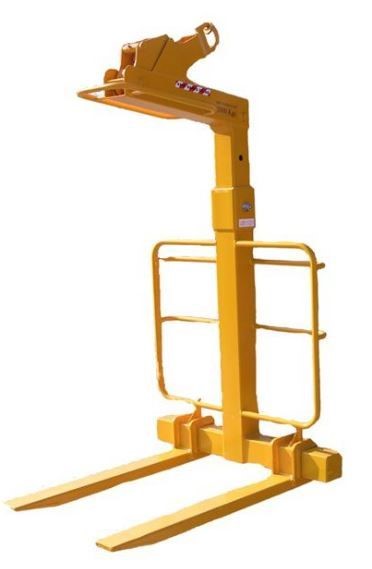
The specialized requirements of overhead crane pallet handling demand equipment specifically engineered for the unique challenges of lifting loads from above rather than below. Unlike forklift operations where pallets rest on supporting forks, overhead handling creates distinct dynamics that require purpose-designed attachments to ensure both efficiency and safety during material movement operations.
Overhead crane pallet handling introduces several fundamental challenges:
- Load Balancing: Palletized loads often have uneven weight distribution that becomes problematic when lifted from above
- Entry Alignment: Positioning forks for clean entry into pallet channels without direct visibility from below
- Load Stability: Maintaining horizontal orientation throughout the lifting and transport process
- Operational Control: Managing load movement without the direct contact and feedback available to forklift operators
- Safety Considerations: Addressing the potential for loads to shift, tilt, or fall during overhead transport
Self-levelling pallet crane forks address these challenges through design features specifically engineered for overhead handling operations:
- Automatic Balancing Mechanisms: Gravity-based systems that continuously adjust to maintain horizontal positioning regardless of load distribution
- Tapered Fork Design: Entry profiles optimized for clean insertion into pallet channels even with limited visibility
- Adjustable Width Settings: Adaptability to accommodate various pallet sizes and styles
- Integrated Safety Features: Locking mechanisms and load guards that prevent unintended disengagement
- Visual Alignment Indicators: Reference points that assist operators in positioning from a distance
Organizations implementing specialized equipment for overhead crane pallet handling typically experience significant improvements in operational metrics, including faster handling cycles, reduced product damage, and enhanced safety performance. The investment in purpose-designed attachments delivers returns through both immediate efficiency gains and long-term reductions in handling incidents.
Selecting the appropriate equipment for overhead crane pallet handling requires consideration of several operational factors:
- Load Characteristics: Typical weights, dimensions, and distribution patterns of palletized materials
- Handling Environment: Facility layout, aisle widths, stacking heights, and operational constraints
- Crane Specifications: Lifting capacity, hook design, and control systems of existing equipment
- Throughput Requirements: Volume and frequency of pallet movements within the operation
- Safety Protocols: Specific requirements for load security and handling procedures
For operations seeking to optimize their overhead material movement capabilities, specialized pallet handling attachments provide engineered solutions that address the unique challenges of crane-based transport. Explore overhead handling options and discover equipment specifically designed for the demands of your operational environment.